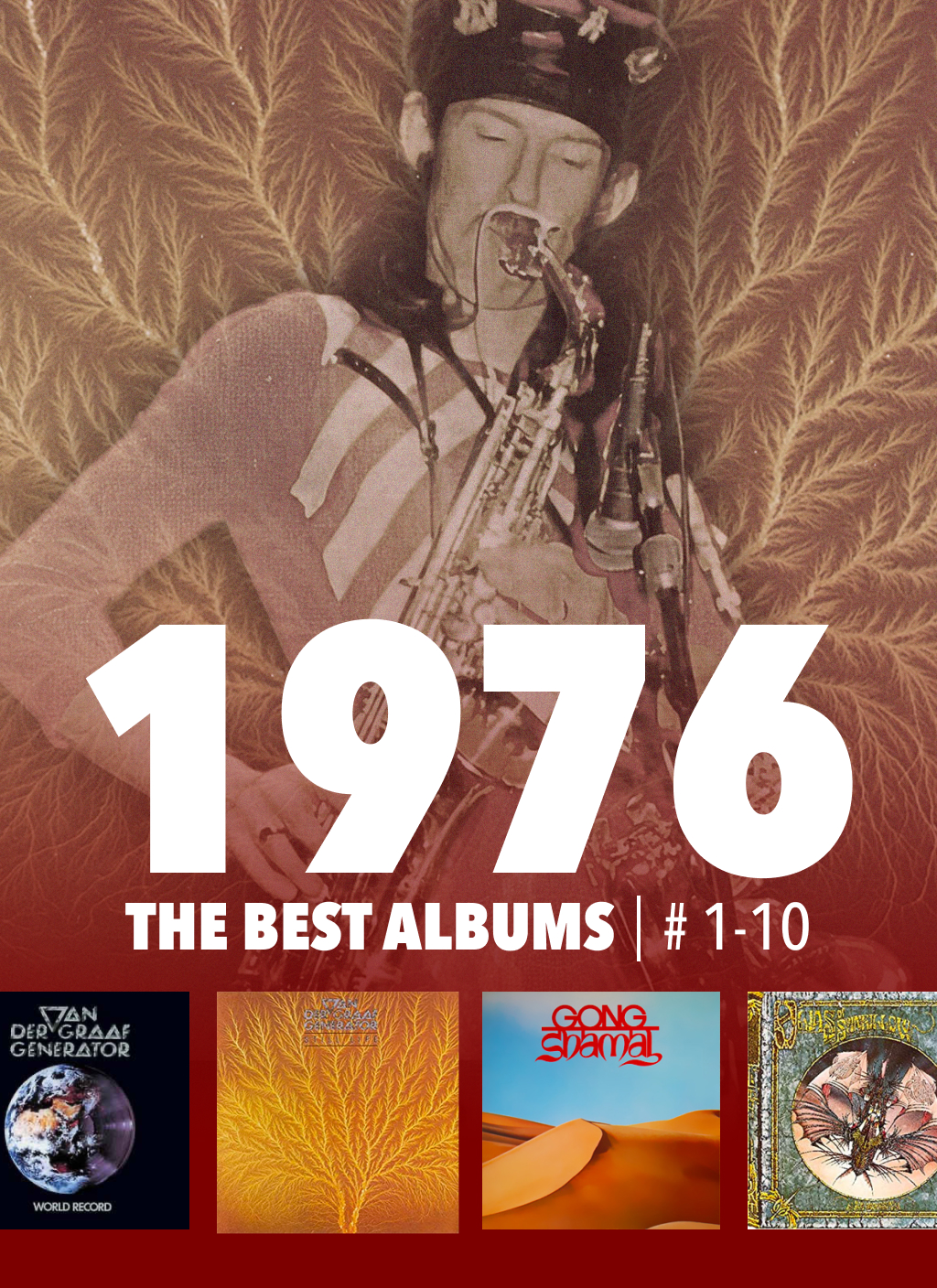
The author’s picks for the best albums of 1976, ranked 1-10.
In the Year by Year series, I’ll go through my favourite albums from 1969 to the present day.
- Van der Graaf Generator: Still Life (UK) *****
- Gong: Shamal (UK) *****
- Van der Graaf Generator: World Record (UK) *****
- Jon Anderson: Olias Of Sunhillow (UK) *****
- Genesis: A Trick Of The Tail (UK) ****½
- Picchio dal Pozzo: s/t (IT) ****½
- Michael Mantler: The Hapless Child And Other Inscrutable Stories (AT) ****½
- The Alan Parsons Project: Tales of Mystery And Imagination (UK) ****½
- 801: 801 Live (UK) ****½
- Camel: Moonmadness (UK) ****½
The Best Albums of 1975
1. Van der Graaf Generator: Still Life
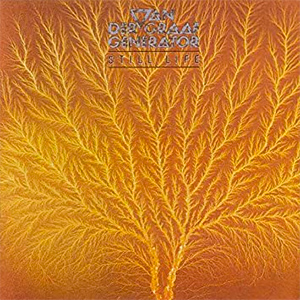
Still Life is the sixth studio album by Van der Graaf Generator.
Founded in 1967, Van der Graaf Generator underwent a radical transformation in 1975 with the release of Godbluff, which came after a hiatus of a few years.
Godbluff marked the beginning of a period lasting just over a year during which the band’s creative fire burned perhaps more brightly than ever before. The driving force behind it all was, of course, vocalist Peter Hammill , who composed incredible material at an even more incredible pace. The Godbluff sessions yielded six magnificent songs, two of which were ultimately saved for the next album, titled Still Life.
The leftover tracks—the solemn and majestic “Pilgrims” and the energetic, ferocious “La Rossa,” were by no means B-side material; they were left for the next album simply because the four tracks ultimately selected for Godbluff formed such a seamless whole that there was no reason to disrupt it with additional tracks…
2. Gong: Shamal
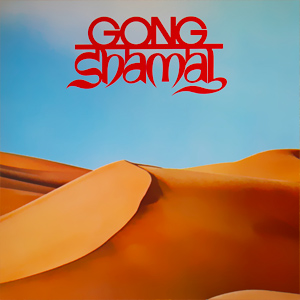
Shamal is the sixth studio album by Gong, founded in 1967.
Gong’s previous album, You (1974), was a tremendous artistic success, but after its release, the band itself was in turmoil. There were philosophical (some of which involved illegal substances) and musical conflicts between the band members, which ultimately led to a minor fistfight and the departure of keyboardist Tim Blake. A little later, beat mystic Daevid Allen, who had not only founded the band but was also its main visionary, left Gong. Shortly after this, vocalist Gilly Smith was replaced by Hillage’s girlfriend Miguette Giraudy, who had already made a small appearance on the band’s album You.
Guitarist Steve Hillage was the obvious candidate to succeed Allen, and at first it seemed that he might even be interested in taking his mentor’s place as leader of Gong. However, after a brief period of searching, Hillage became more interested in his solo career, which he had begun in 1975 with his excellent album Fish Rising…
3. Van der Graaf Generator: World Record
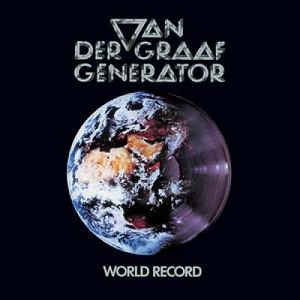
World Record is the seventh studio album by Van der Graaf Generator, which was formed in 1967.
Peter Hammill was at the top of his game in the mid-1970s. Or rather, one could say that Hammill was at the top of his game throughout the entire 1970s, but it was specifically in the middle of that magical decade that his creative output was at its peak. After Van Der Graaf Generator broke up in the summer of 1972, he had released no fewer than four solo albums by 1975. On top of that, in February 1975, Van Der Graaf Generator made a comeback, and that move yielded no fewer than three new studio albums in exactly one year. And Hammill composed roughly 95% of the songs on those albums. And all this without compromising on quality! In fact, a significant portion of the music that Hammill/VdGG created between 1972 and 1976 ranks among his and the band’s finest work…
4. Jon Anderson: Olias Of Sunhillow
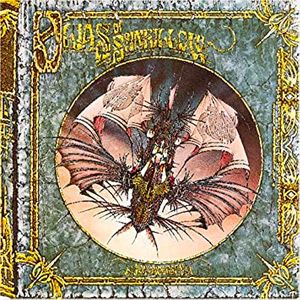
Olias Of Sunhillow is the first solo album by Yes vocalist Jon Anderson.
Formed in 1968, Yes had achieved a great deal by 1976. Yes had played a significant role in taking progressive rock to a new artistic level and had released seven studio albums, the most recent of which had sold millions despite their strangeness and complexity. By the mid-70s, the band had also become one of the most popular live acts in the rock world. It’s no wonder that after eight years of nearly non-stop recording and touring, the band members were craving a little break from each other. In the end, however, the Yes guys didn’t get to take a vacation, as their record label, Atlantic, offered Yes a unique opportunity: each band member would get to make their own solo album.
The members of Yes thus set about working on their albums, each in their own way and in their own style. Jon Anderson took the project extremely seriously. For him, this would be an opportunity to prove that he was a true visionary musician, not just a vocalist riding the crest of a wave created by Yes’s virtuoso instrumentalists…
5. Genesis: A Trick Of The Tail
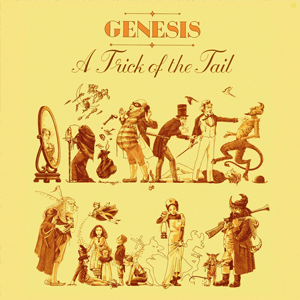
A Trick Of The Tail is Genesis’ seventh studio album and the first without Peter Gabriel.
When vocalist Peter Gabriel left Genesis in the summer of 1975, the British music press predicted the band’s demise. Journalists did not believe that the band could survive without its charismatic frontman. The remaining four members, Tony Banks (keyboards), Mike Rutherford (bass), Phil Collins (drums), and Steve Hackett (guitar), were also somewhat concerned, but as insiders, they understood something that the music press and even many of their fans had failed to grasp: Genesis had never been just a backing band for the visionary Gabriel.
On the contrary. Genesis operated quite democratically, and although Gabriel certainly played a significant role as one of the composers and lyricists of Genesis’ music, Rutherford and Banks also made important contributions from the very beginning…
6. Picchio dal Pozzo: s/t
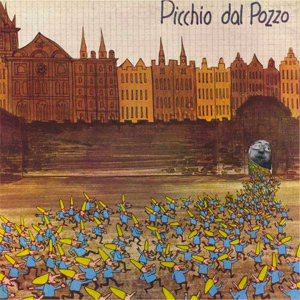
Picchio dal Pozzo is the debut album by the band of the same name, which was formed in Genoa, Italy, in 1976.
Canterbury is a small town in southeastern England that gave rise to its own subgenre of progressive rock, known as the Canterbury scene. A hallmark of the Canterbury scene was the fusion of jazz with nascent progressive rock, making it a form of English jazz-rock; however, the style also frequently incorporated strong influences from psychedelic rock and pop—elements not typically found in jazz-rock—which added a unique twist. The final touch to the Canterbury style is its distinctive, very British brand of absurd humor, which was often a mix of Monty Python and pure Dada. And since this was the Canterbury scene, it was of course also typical that the bands or musicians had some geographical connection to that city. For example, the genre’s pioneering bands Soft Machine and Caravan had clear roots specifically in the city of Canterbury. Despite this, the Canterbury style also spread relatively quickly to continental Europe. The Dutch band Supersister was one of the pioneers of the Canterbury scene outside Britain, followed a little later by, among others, the French band Moving Gelatine Plates and the Belgian band Cos. One of the finest non-English Canterbury records, however, is the debut by the Italian band Picchio dal Pozzo.
Picchio dal Pozzo makes no secret of its influences; in fact, this debut album is dedicated to Roberto Viatti—that is, of course, the Canterbury legend Robert Wyatt, known for his work with Soft Machine, among others. Yet Picchio dal Pozzo’s music is by no means a direct copy; the band’s sound is quite distinctive and versatile. The first track, “Merta,” is a good example of the band’s unique sound. “Merta” is built on the tinkling of chimes, the swirling of saxophones, and the wailing of atonal human voices, creating a hypnotic, drone-like soundscape that seems to wrap around itself. From this quirky start, the band then branches out in many different directions, at times coming close to “real” jazz, but without settling too clearly into any specific genre for long. The pop influences often typical of the Canterbury scene are hardly audible on this album.
The music of the four-piece Picchio dal Pozzo, bolstered by seven guest musicians, is primarily instrumental, but the human voice is used extensively—and very creatively—as one instrument among others. There are also brief vocal passages in a few places. Aldo De Scalzi’s keyboards and highly original-sounding synthesizers play a significant role on the album, but the overall sound is quite acoustic, with saxophones, flute, and various clinking percussion instruments given plenty of space. The balance between accessible, melodic music and more avant-garde experimentation and playfulness is delightfully perfect.
Instrumentally, the band’s music occasionally reaches the kind of complexity typical of the Canterbury scene. In the album’s longest track, the ten-minute and truly magnificent “Seppia,” they go even further than usual, and in that track, clear Henry Cow influences can be heard. About four years after their debut, on the album Abbiamo tutti i suoi problemi, Picchio dal Pozzo shifted in an even more complex direction, with the Henry Cow influences only growing stronger.
Picchio dal Pozzo offers a refreshing alternative to the typical grand, romantic symphonic prog bands of the Italian prog scene and is highly recommended, for example, to fans of Hatfield And The North. Picchio dal Pozzo’s debut is definitely one of the best non-English Canterbury albums, if not the best. In addition to this achievement, Picchio dal Pozzo is also one of the best Italian prog albums, rivaled only by Area’s best albums.
Best tracks: ”Merta”, ”Seppia”, ”Napier”
Vuoden 1975 parhaat levyt löydät täältä
7. Michael Mantler: The Hapless Child And Other Inscrutable Stories
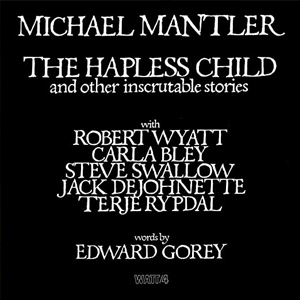
The Hapless Child And Other Inscrutable Stories, Michael Mantler’s third solo album.
Michael Mantler (b. 1943), a classically trained trumpeter and composer born in Austria, moved to New York in the 1960s to pursue his career. Mantler’s music occupies an intriguing space at the intersection of avant-garde jazz and modern art music. In 1966, he began collaborating with avant-garde jazz pianist and composer Carla Bley, a partnership that led not only to marriage and a child, Karen Mantler, but also to many excellent recordings made together. The couple also founded their own studio, called Grog Kill, and their own record label, Watt. It was within this infrastructure that The Hapless Child and Other Inscrutable Stories was born, on which Mantler’s music comes closer to the world of progressive rock than ever before…
8. The Alan Parsons Project: Tales Of Mystery And Imagination
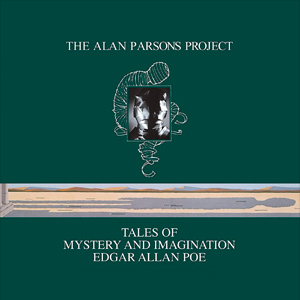
Tales Of Mystery And Imagination is The Alan Parsons Project’s first album.
The Alan Parsons Project. From that name, one might imagine that the band—or, well… the project—is run with an iron fist by a lone auteur named Alan Parsons (b. 1948). In reality, however, the project consists of two equal partners. As a producer and sound engineer among the best in his field, Alan Parsons does participate in the songwriting process, but the primary responsibility for composing—and especially for writing the lyrics—actually lay with a gentleman named Eric Woolfson (1946–2009).
Alan Parsons worked for years as a staff engineer at EMI’s Abbey Road Studios, contributing as an assistant engineer to the production of The Beatles’ Abbey Road (1969), among other projects…
Read also:
- Review: Flea – Honora (2026)
- Review: Pink Floyd – Animals (1977)
- Levyarvio: Flea – Honora (2026)
- Review: Yes – Magnification (2001)
- Review: Jethro Tull – Songs From The Wood (1977)
- Review: A.W. Yrjänä – Eidolon (2026)
- Review: Rush – Roll The Bones (1991)
- Review: David Sylvian – Gone To Earth (1986)
- Review: David Bowie – Low (1977)
9. 801: 801 Live
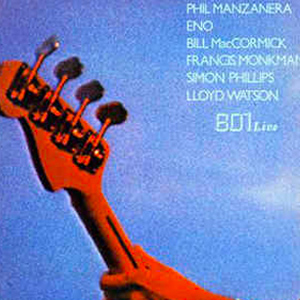
801 is a supergroup formed by guitarist Phil Manzarena, named after lyrics from Brian Eno’s song “The True Wheel” (“We are the 801. We are the central shaft”), which Manzarena and Eno co-wrote
Manzanera’s band Roxy Music took a break in 1976 while singer Bryan Ferry focused on his solo career. Manzanera also began work on his own solo album. However, production of the album, titled Listen Now, stalled badly, and Manzanera decided to put the project on hold and play a bunch of therapy gigs instead. Manzanera thus assembled a stellar band consisting mainly of the crew who had worked on Listen Now. The goal was mainly to have fun and play a bunch of gigs across Europe…
10. Camel: Moonmadness
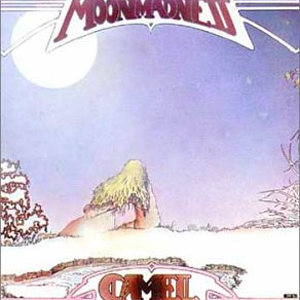
Moonmadness is the fourth studio album by Camel, which was formed in 1971.
Camel, that likable second-tier British prog band, nearly managed to join the ranks of superstars like Yes and ELP with their 1975 album The Snow Goose, which exceeded all expectations. The Snow Goose was a completely instrumental album, enhanced by a small symphony orchestra, but on their fourth album, Camel returns to more conventional prog rock with vocals.
Following the laid-back and serene The Snow Goose, Moonmadness is clearly a more rocking and energetic album, bearing some resemblance to the band’s second album, Mirage. Moonmadness is, in a way, an updated and slightly polished version of the raw-sounding Mirage. Moonmadness is also the band’s final album to feature the entire original quartet: Andrew Latimer (guitar, flute, vocals), Peter Bardens (keyboards, vocals), Doug Ferguson (bass, vocals), and Andy Ward (drums)…
Author: JANNE YLIRUUSI
You can find other parts of the Year by Year series here.
 Pienemmät Purot
Jätä kommentti