
So is Peter Gabriel’s fifth studio album.
Over the decades, we have come to think of Peter Gabriel as an art-rock superstar and a sort of rock “head of state” who takes a prominent stand in the media on important issues. As recently as the mid-1980s, however, Gabriel was still just a cult artist playing experimental rock, despite having nearly 20 years in the music business behind him.
Gabriel, of course, had already garnered a great deal of attention from music enthusiasts through Genesis, the band he had founded. However, in the mid-1970s, when he left the band, Genesis was still significantly less popular than its direct competitors Yes, Jethro Tull, and Emerson, Lake & Palmer. Not to mention Pink Floyd.
Gabriel’s solo career didn’t exactly take off with a bang commercially speaking. And no wonder, since his third and fourth albums in particular featured highly experimental music that was only loosely disguised as pop-rock. Despite a few minor hit singles, Gabriel had become stuck in the category of mid-tier artists, touring venues with capacities of a couple thousand people.
So would change all of this permanently.
The album cover alone is a strong indication that things were changing. On the previous four albums, the album title did not appear on the covers. In fact, the albums didn’t have any titles at all (although the fourth album had been released in the U.S. under the title Security at the record label’s insistence), but now he relented to the label’s demands, and the new record was titled So. Gabriel called it a “non-name,” chosen in part because it could be easily turned into a logo-like symbol that would be convenient to use not only on the album cover but also in other marketing materials.
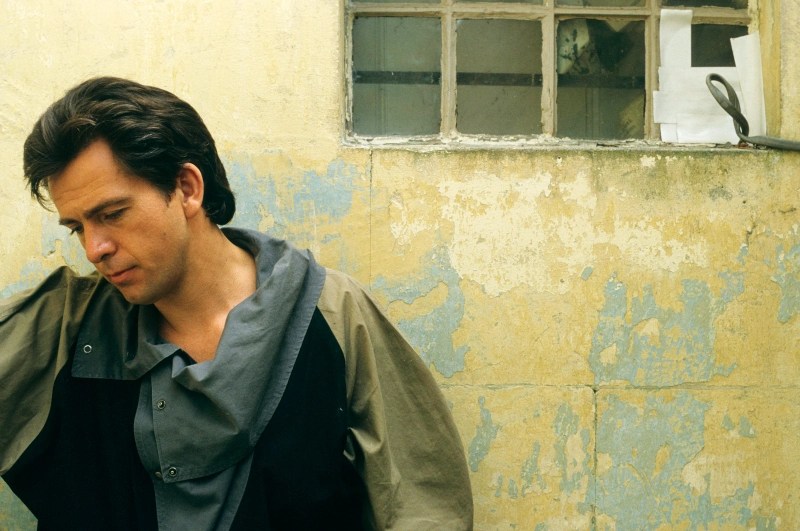
The cover art also represented a dramatic shift in style. Whereas Gabriel’s face had been obscured or distorted in some way on previous covers, he now appears on the cover in all his classic handsomeness in a stylish, minimalist black-and-white photograph by Trevor Key (the same artist who created the iconic cover for Mike Oldfield’s Tubular Bells). According to the record label, the previous covers had driven away the female audience. Now Gabriel was ready for the mainstream. At least as far as the visual presentation was concerned.
What about the music? The art-rock sound of previous albums—which featured fairly stripped-down sound with ethnic elements—is now complemented by a healthy dose of R&B and soul influences, the latter of which had been a favorite of Gabriel’s since his youth. The soundscape is richer and more accessible, and the song structures largely follow the conventions of pop music.
Gabriel considered Bill Laswell and Nile Rodgers as producers, but ultimately chose Daniel Lanois, with whom he had already produced the soundtrack for the film Birdy, released the previous year. It is interesting that Gabriel considered Rodgers, as this disco/soul/funk specialist had successfully guided David Bowie from experimental music into the mainstream a few years earlier with the album Let’s Dance.
The Canadian Lanois (b. 1951) had previously worked with, among others, Brian Eno and had recently made his true breakthrough by producing U2’s hit album The Unforgettable Fire together with Eno. However, despite this success, Lanois did not switch to producing only major mainstream artists but continued to work with more experimental musicians such as Michael Brook and Roger Eno.
Read also: Review: Peter Gabriel – s/t (1980)
So kicks off powerfully with “Red Rain,” a successful blend of the old and new Gabriel. The sizzling hi-hat at the beginning of the song makes it crystal clear to the listener that times have changed; whereas the cymbals were more or less on the back burner on Gabriel’s first two albums, now a dedicated drummer was hired specifically to play the hi-hat. Stewart Copeland, the drummer known from The Police, handles the song’s nimble hi-hat work, while Gabriel’s longtime drummer Jerry Marotta pounds away more heavily on the rest of the kit.
Gabriel sings this dark-toned song with a charismatic voice that has a new edge to it, which works wonderfully, especially during the “reeed reeein” part of the chorus. There’s a great sense of pathos in Gabriel’s singing that fits perfectly with the lyrics, which speak of an apocalyptic bloodbath. There is something deeply cathartic about this brooding song and its lyrics.
“Red Rain” is a great song, and despite Copeland’s cymbal work, it would have fit in quite well on a few of Gabriel’s earlier albums as well.
The same cannot be said of “Sledgehammer.” “Sledgehammer,” which became the album’s and Gabriel’s big breakthrough hit, is a cheerful and upbeat white-soul rock song in which the horns blare while Gabriel spits out lyrics full of playful naughtiness. Although Gabriel’s influences come from Marvin Gaye and Motown in general, “Sledgehammer” unfortunately sounds more like the plastic soul of Huey Lewis and the News.
“Sledgehammer” is, in itself, an entertaining and well-crafted pop song, but I’d be lying if I claimed it really appealed to my taste. Or that it’s the kind of music I’d hope to hear from Gabriel. The best part of the song is Tony Levin’s rich, funky bass line. The short intro with its synthesized bamboo flutes (that sound later became a real 80s cliché…) is also interesting.
“Sledgehammer” became a massive hit that finally opened up the U.S. market for Gabriel. The song’s popularity was boosted by a clever and innovative music video from Aardman Animations (best known for the Wallace and Gromit series and films) that made use of stop-motion animation.
The upbeat vibe of “Sledgehammer” gives way to the melancholic ballad “Don’t Give Up.” The song is a heartfelt duet between Gabriel and Kate Bush, with an almost gospel-like tone. Originally, Dolly Parton was slated for the female vocal part, but after she declined the honor, the spot opened up for Bush. And that’s a good thing, because the prince and princess of 1980s art rock do a wonderful job together, and it’s hard to believe that the collaboration would have worked as well with country star Parton.
“Don’t Give Up” is a mildly political song, and its lyrics were inspired not only by the Great Depression of the 1930s but also by Margaret Thatcher’s often ruthless economic policies, which were a topical issue at the time the song was written. The lyrics, however, focus on the individual level and address unemployment and the resulting sense of worthlessness.
Gabriel’s melancholic vocals, sung in the voice of a man brought to his knees, provide a striking contrast to Bush’s ethereal yet powerful vocals, which offer comfort and encouragement to the man in the lyrics who has fallen victim to hard times. The instrumentation is understated and minimalist. The song is carried mainly by Levin’s gently swaying bass riff, ethereal synthesizer pads, and Richard Tee’s R&B-inspired piano. Right at the end, the music opens up slightly, and Levin gets to play a stylish bass passage that could almost be called a bass solo.
For me, “Don’t Give Up” has always been a mixed bag. Sometimes I find it truly beautiful and moving, but the next time I listen to it, it might already seem overly sentimental and contrived.
Moved on to another town
Tried hard to settle down
For every job, so many men
So many men no-one needs
The fourth track, “That Voice Again,” raises the energy levels after the laid-back vibe of “Don’t Give Up.” Co-written with guitarist David Rhodes, “That Voice Again” is a forgotten track from So. It’s a shame, because it’s actually a pretty stylish pop song. It’s characterized by jangling synthesizers, a thick, growling bass guitar, and Manu Katché’s energetic drumming. Gabriel’s whiny vocal melody, however, isn’t particularly inspiring. That said, the verses do work better than the chorus.
In my opinion, “Mercy Street” is the absolute highlight of the entire album. Driven by jangling percussion, a flute-like synthesizer sound, and Levin’s melodic bass guitar, this atmospheric track is, at least for me, an incredibly visual experience.
Gabriel’s lyrics paint vivid images in my mind, at least. I’ve never bothered to figure out what the lyrics* are actually about. For me, the hazy images of a ruined city are enough—a lone figure drifting in a small boat along streets that have turned into rivers, pondering life and the world. There is something truly stirring in the song’s solemn yet intense atmosphere.
The rhythm of “Mercy Street” is based on the Brazilian forró rhythm, which is typically used in dance music. Gabriel, however, slows the rhythm down so much that it doesn’t make you want to dance, and “Mercy Street” is a great example of how smoothly Gabriel weaves ethnic influences into Western pop music on the So album. On Gabriel’s earlier albums, these influences were often much more overt (though still highly effective!), but on So they are often almost imperceptible.
“Mercy Street” is a magnificent song, highlighted by Gabriel’s understated yet powerfully sensual vocal performance. In many places, Gabriel’s vocals are effectively doubled as he sings harmonies with himself.
(*While researching for this article, I inevitably discovered that the lyrics to “Mercy Street” were inspired by Anne Sexton, the Pulitzer Prize-winning poet who died young.)
The sixth track, “Big Time,” returns to the humorous pop vibe of “Sledgehammer.” This time, the driving force is funk influences rather than soul. The synthesized bass rumbles, and the music is punctuated by cheap-sounding electric organ riffs (which were actually played on an expensive Prophet-5 synthesizer). Gabriel is backed by a chorus of three female singers who, in the end, take the song firmly into the realm of saccharine American rock. The lyrics, of course, aim to parody the American “more is more” attitude.
“Big Time” is mostly an annoying song, even though I really like (once again!) Tony Levin’s bass track. Actually, this time it’s a bass track by Levin and drummer Stewart Copeland, since they played it together. Levin handled the fingerpicking, and Copeland pounded the strings with a drumstick. This later gave rise to an innovation Levin called “funk fingers”: he attached drumsticks to his fingers and has since used this method to play many interesting bass lines on his own solo albums, Gabriel’s albums, and for prog legend King Crimson
And then something completely different. After the racket optimized for radio stations, “We Do What We’re Told (Milgram’s 37)” sounds stranger than it actually is. Built on understated synthesizers, sweetly rolling sequenced rhythms, and wordless vocalizations flowing like waves in the background, the song is based on psychologist Stanley Milgram’s famous experiment and paints a chillingly dystopian picture of people blindly following the orders of authority figures.
“We Do What We’re Told To Do” seems to aim for the quirkiness of earlier albums, and it’s no surprise that it was originally composed around the time of Gabriel’s third album.
The original vinyl version ended with ”We Do What We’re Told,” but the CD and cassette versions included the bonus track ”This Is the Picture (Excellent Birds).” The song was co-written with singer/performance artist Laurie Anderson. Gabriel and Anderson had been working on it as early as 1984 but couldn’t reach an agreement, particularly regarding the bass track. Eventually, the song was released in two different versions. First on Anderson’s album Mister Heartbreak (1984) and finally as Gabriel’s version on So. The different versions are quite distinct from one another, even beyond the bass line. Anderson’s arrangement is very electronic, whereas Gabriel sticks to a more organic band sound. I have to admit that, in my opinion, Gabriel’s version is superior. And it fits perfectly on the album, even though it’s sort of a “bonus track.” In fact, it’s one of the best songs on the album. The quite hypnotic “This Is The Picture” relies heavily on a wildly groovy bass line, percussion, and the playful vocals sung as a duet by Gabriel and Anderson.
Originally intended to close the album, “In Your Eyes” was played immediately after “That Voice Again” due to the limitations of vinyl. Gabriel had always wanted the song to be the album’s final track, but since vinyl records don’t reproduce bass sounds as effectively on the edges of the record, its heavy bass line would have been muffled if placed there. Starting with the 2002 CD remaster, “In Your Eyes” has been the album’s final track. It’s the perfect spot for this joyful song.
On Gabriel’s fourth album, ethnic influences came to the forefront of his music. This was usually heard as tribal drumming, and the ethnic influences often had a rather menacing tone. “In Your Eyes” is a completely different story in that it is a very bright song that positively radiates the joy of life. Katché plays African tama drums (“talking drums”) alongside a standard drum kit, and Senegalese singer Youssou N’Dour makes a guest appearance on the track, singing with great inspiration in his native Wolof at the end. Gabriel’s own vocal performance on “In Your Eyes” is perhaps the best on the entire album. In the verses, there is a raw desperation in his voice that then transforms into a defiant, life-affirming energy in the choruses.
Read also
- Levyarvostelu: Peter Gabriel – Up (2002)
- Review: John Greaves & Peter Blegvad: Kew. Rhone. (1977)
- Review: Flea – Honora (2026)
- Review: Pink Floyd – Animals (1977)
- Levyarvio: Flea – Honora (2026)
- Review: Yes – Magnification (2001)
- Review: Jethro Tull – Songs From The Wood (1977)
- Review: A.W. Yrjänä – Eidolon (2026)
- Review: Rush – Roll The Bones (1991)
All in all, So is an excellent pop album, even if it feels like a slight letdown after their previous, more challenging albums, which are more to my taste. “Sledgehammer” and “Big Time” are slightly annoying tracks that pander a bit too directly to the general public, but aside from those, the song material is quite successful. The sound has also been tuned toward a more commercial direction, but producer Daniel Lanois has still managed to skillfully avoid the sterile plasticity that plagues many other contemporary albums aimed at the mass market.
Peter Gabriel’s former band, Genesis, had seen its popularity skyrocket in the early 1980s, driven in particular by Phil Collins’s natural pop instincts. Even shortly before the release of So, few would have believed that Gabriel could achieve similar success. Or that he would even aim for it. However, just as Genesis had finally joined the ranks of the true giants with their hit album Invisible Touch, an unprecedented event in pop history occurred: Peter Gabriel knocked his former band’s single “Invisible Touch” off the top spot on the U.S. singles chart with his own hit “Sledge Hammer.” Gabriel showed his former bandmates who was boss!
So sold over 5 million copies in the U.S. alone—a country where Gabriel had previously enjoyed little success. The album made him, at least for a time, a superstar and a millionaire. With his newfound wealth, he became completely independent. He built himself a massive home base, Real World Studios (which also operates as a commercial studio), and revived the WOMAD festival, which focuses on ethnic music. Gabriel also released a wealth of ethnic music on his own Real World label.
The downside to all this success was that the pace of Gabriel’s own music production slowed significantly. Three years after So, Gabriel composed the music for Martin Scorsese’s acclaimed film The Last Temptation of Christ, but fans had to wait until 1992 for his next full-length album. And after that, the pace only slowed down even further.
I’ve heard it claimed that So is a logical continuation of Gabriel’s four previous albums. It certainly isn’t. Sure, it also contains many familiar elements, but ultimately its style—tailored for the general public—is, in spirit, something entirely different from the uncompromising art rock of the previous albums, with their handcrafted feel.
So = Sell Out? Maybe so, but at least Gabriel sells with style.
Best tracks: ”Red Rain”, ”Mercy Street”, ”We Do What We’re Told To Do”, ”In Your Eyes”
Author: JANNE YLIRUUSI
Read also: Review: Peter Gabriel – i/o (2023)
Tracks
- ”Red Rain” – 5:39
- ”Sledgehammer” – 5:12
- ”Don’t Give Up” – 6:33
- ”That Voice Again” – 4:53
- ”Mercy Street” – 6:22
- ”Big Time” – 4:28
- ”We Do What We’re Told (Milgram’s 37)” – 3:22
- ”This is the Picture (Excellent Birds)” – 4:25
- ”In Your Eyes” – 5:27
Musicians
Peter Gabriel: vocals, Fairlight CMI (1–9), Prophet synthesizer (1–4, 6–8), piano (1–5, 6–8), Linn 9000 (3, 7), synthesizer (5 & 6), percussion (4), Yamaha CS-80 (6), LinnDrum (track 9), Synclavier (9) Tony Levin: bass guitars (tracks 1–5), drumstick bass (6) David Rhodes: guitars (1–5, 7–8), backing vocals (1, 5) Jerry Marotta: drums (1, 8), additional drums (5), bass guitar string tapping (6) Manu Katché: drums (2–5), percussion (3–5), tama (5,9) Chris Hughes: electronic drums, programming (1) Stewart Copeland: hi-hat (1), drums (6) Daniel Lanois: guitars (1, 2, 4), tambourine (2), surf guitar (6), 12-string guitar (track 9) Wayne Jackson: trumpet (2, 6), cornet (6) Mark Rivera: tenor saxophone (2 & 6), processed saxophone (6), alto saxophone, baritone saxophone (6) Don Mikkelsen: trombone (2, 6) P. P. Arnold: backing vocals (2, 6) Coral Gordon: backing vocals (2, 6) Dee Lewis: backing vocals (2, 6) Richard Tee: piano (3, 5, 6) Simon Clark: keyboards, backing vocals (3), Hammond organ, programming, bass guitar (7) Kate Bush: vocals (3) L. Shankar: violin (4, 8) Larry Klein: bass guitar (5, 6) Youssou N’Dour: backing vocals (9) Michael Been: backing vocals (9) Jim Kerr: backing vocals (9) Ronnie Bright: bass (9) Djalma Correa: surdo, conga drums, triangle (6) Jimmy Bralower: programming (7) Bill Laswell: bass guitar (8) Nile Rodgers: guitar (8) Laurie Anderson: synthesizer and vocals (8)
 Pienemmät Purot
Jätä kommentti