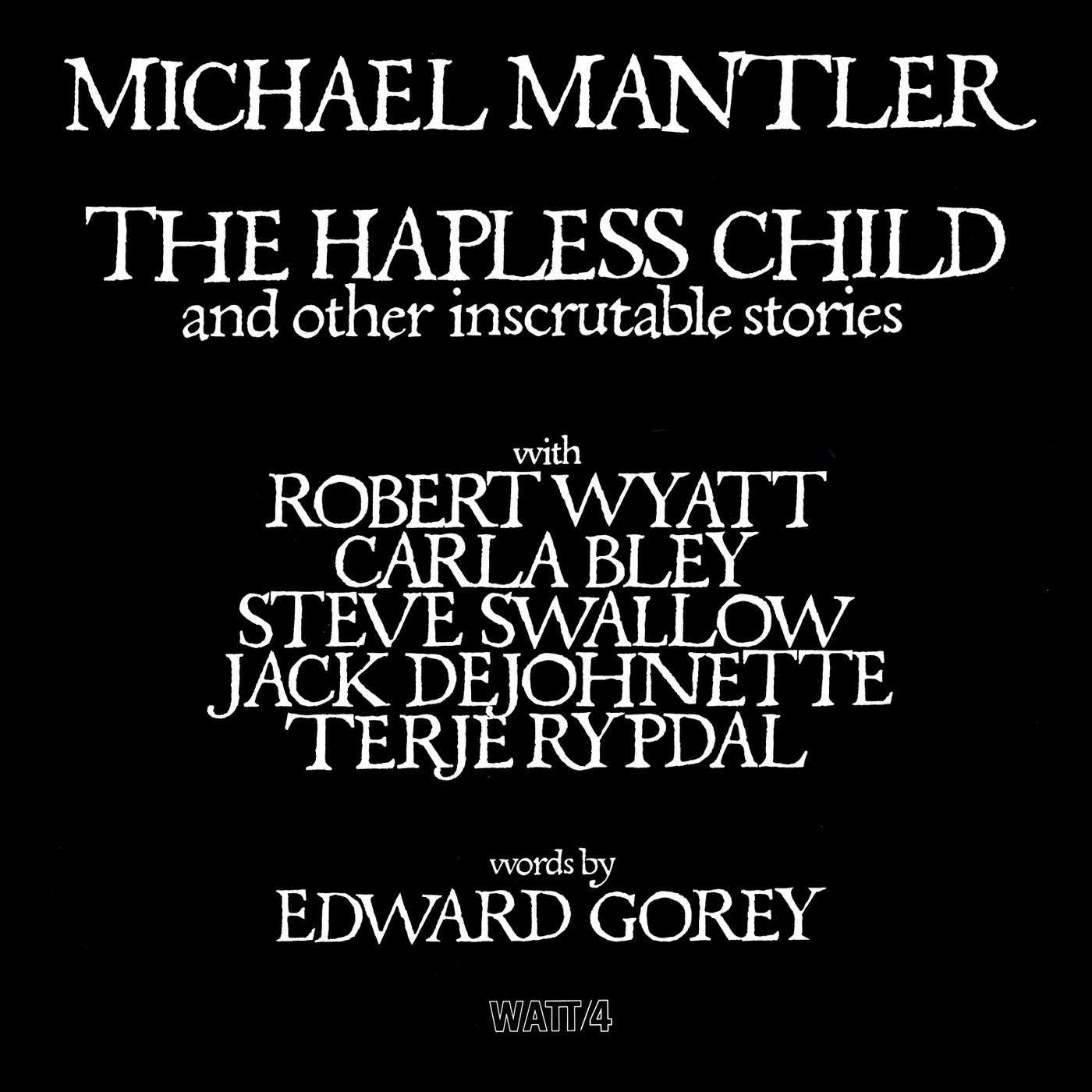
The Hapless Child And Other Inscrutable Stories, Michael Mantler’s third solo album.
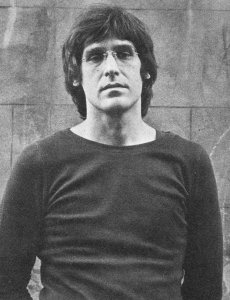
Michael Mantler (b. 1943), a classically trained trumpeter and composer born in Austria, moved to New York in the 1960s to pursue his career. Mantler’s music occupies an intriguing space at the intersection of avant-garde jazz and modern art music. In 1966, he began collaborating with avant-garde jazz pianist and composer Carla Bley, a partnership that led not only to marriage and a child, Karen Mantler, but also to many excellent recordings made together. The couple also founded their own studio, called Grog Kill, and their own record label, Watt. It was within this infrastructure that The Hapless Child and Other Inscrutable Stories was born, on which Mantler’s music comes closer to the world of progressive rock than ever before.
The Hapless Child’s dark-toned and complex music, which sounds thoroughly composed, is stylistically closer to the intricate subgenre of progressive rock known as avant-prog than to the more melodic and accessible “symphonic” mainstream. The Hapless Child’s music is much easier to associate with the oppressive angularity of Henry Cow or Univers Zero than, say, the soft melodicism of Camel. The Hapless Child’s music is quite manic and, in a way, unnerving, which may be too much for some listeners. There is also something very off-kilter and macabre about the album’s atmosphere. The mood isn’t entirely gloomy, however, as the creators clearly have a bit of a twinkle in their eye.
Mantler assembled an admirably eclectic and skilled band for his album. From Mantler’s own circle, the lineup features Carla Bley on keyboards and her talented regular bassist, Steve Swallow. The drums are handled with style by jazz drummer Jack DeJohnette (who, by the way, happens to be my favorite jazz drummer), who also played in Miles Davis’s band. The album features Norwegian guitarist Terje Rypdal, whose own albums, like Mantler’s, navigate the gray area at the intersection of jazz, art music, and progressive rock. Rypdal’s guitar solos—paradoxically both chilling and fiery—reinforce the album’s unique atmosphere. In fact, the majority of the album’s instrumental solos are performed by Rypdal.
The names I’ve listed so far come from the world of jazz, albeit from very different corners of that world. However, the expertise needed to interpret the album’s intricate lyrics was sought from a completely different direction: the world of progressive rock. Robert Wyatt, a founding member of Soft Machine and a legend among the royalty of Canterbury prog, handles the album’s highly complex vocal tracks in his own unique style.
Curiously, Mantler himself doesn’t play a single note on the album; he’s purely in the role of composer and arranger. Even the production side is handled by Carla Bley. Pink Floyd drummer Nick Mason (who also mixed the album) and Wyatt’s wife Afreda Benge appear in small speaking roles. Mason, Bley, and Mantler would cross paths many more times in the future.
The album’s first—and perhaps finest—track also sets the tone for the entire album. The intense “The Sinking Spell” gives Rypdal’s chilling and piercing guitar work free rein, and he makes the most of it magnificently. DeJohnette also does a great job on the drums. He accentuates the music mostly with cymbals in an incredibly stylish way. The outro on “The Sinking Spell” is also a welcome one of the few slightly more serene moments and even makes room for Wyatt’s unique, duck-like scat vocals.
The Hapless Child is a concept album, and all six of its 5- to 7-minute tracks are based on the strange and slightly grotesque stories of American author Edward Gorey (1925–2000). Mantler has adapted Gorey’s stories—often set in Victorian landscapes—into lyrics that depict oppressive and strange events; these are not strictly horror stories, but rather peculiar depictions of unfortunate incidents.
A good example of the stories told in The Hapless Child And Other Inscrutable Stories is the title story, “The Hapless Child.” The story is about a girl named Charlotte Sophia. Charlotte is born into a happy family, but then one tragedy follows another. Her father, a lieutenant colonel, dies in battle in Africa, and shortly thereafter her mother passes away, ravaged by illness. Charlotte is sent to live with a foster family and attend a school where she is treated harshly. Charlotte cried and cried at night until she could take it no longer and ran away from school. For some inexplicable reason, Charlotte faints on the street, and a random passerby steals a locket from her that contained a picture of Charlotte’s parents. Another man who comes along then kidnaps Charlotte and sells her to a drunken “brute.” This cruel man forces Charlotte to make artificial flowers. Charlotte survives on food scraps and tap water and eventually loses her sight almost completely. Meanwhile, Charlotte’s father returns home (surprise: he wasn’t dead after all!) and sets out to find his daughter. Day after day, the father drives around the city in his car looking for Charlotte. Charlotte manages to escape from the tyrant and runs half-blind into the street to flee. She is hit by a car. Charlotte’s father gets out of the car to look at his dying child on the street. But he no longer recognizes his child, who has changed so much. The End. Very heartwarming. Isn’t it? The coldness of the album’s stories is heightened by the matter-of-fact style in which the lyrics are written. Bad things happen. And that’s it.
Wyatt sings the lyrics in a style that is, paradoxically, at once emotional and playful, yet also starkly detached. Wyatt does a magnificent job on the album’s breathtakingly complex vocal parts. The torrent of lyrics is at times quite intense, as Wyatt has to spew out words nonstop, making the listener fear that a blood vessel might burst in his head.
Read also:
- Review: Philip Glass – Songs From Liquid Days (1986)
- Levyarvostelu: Peter Gabriel – Up (2002)
- Review: John Greaves & Peter Blegvad: Kew. Rhone. (1977)
- Review: Flea – Honora (2026)
- Review: Pink Floyd – Animals (1977)
- Levyarvio: Flea – Honora (2026)
- Review: Yes – Magnification (2001)
- Review: Jethro Tull – Songs From The Wood (1977)
- Review: A.W. Yrjänä – Eidolon (2026)
The Hapless Child’s manic energy is both the album’s weakness and its strength. The relentless energy that sweeps over the songs makes it truly exhilarating to listen to, but in the wrong frame of mind, it can also be a bit exhausting. The songs’ constant, frenzied pace also leads to them sounding a bit too similar to one another. The album would have benefited from some moments of respite to counterbalance all the intensity. Of course, there are a few of those as well. The eerie track “The Remembered Visit” is more serene than the rest of the album’s material. On the other hand, the monotonous frenzy of The Hapless Child also makes the album a truly unique and intense listening experience. As long as you’re ready for it!
The Hapless Child is, sadly, a relatively unknown release these days. Partly because the album is quite difficult to find these days. The CD edition has been out of print for quite some time, and used vinyl copies are hard to come by, at least in Finland (I eventually managed to snag a vinyl copy from Discoqs at a relatively reasonable price). Nowadays, however, the album is easier to listen to since the ECM catalog has become available on streaming services; The Hapless Child—originally recorded on Mantler and Bley’s own Watt label and now licensed to ECM—has also made its way to Spotify and other similar services.
The Hapless Child is a fascinating and original take on progressive rock, almost as if it came from outside the genre. I can think of only a few clear counterparts to this album. The first of these is Mantler’s Silence, released the following year (on which Wyatt sings again). Another related work is John Greaves and Peter Blegvad’s magnificent 1977 album Kew. Rhone. That album was recorded at Mantler and Blegvad’s Grog Kill Studios, and both also play on the album. Both Silence and Kew. Rhone. are as frantic and complex as The Hapless Child, but on the other hand, they lack its dark, oppressive atmosphere.
The Hapless Child is like a nightmarish delirium that is both unsettling and terrifying, yet so captivating that you don’t really want to wake up from it because you want to know where these strange events will ultimately lead.
Best tracks: ”The Sinking Spell”, ”The Insect God”, ”The Doubtful Guest”
Author: JANNE YLIRUUSI
Tracks:
Side A
- ”The Sinking Spell” 5:12
- ”The Object-Lesson” 4:58
- ”The Insect God” 5:00
Side B
- ”The Doubtful Guest” 4:45
- ”The Remembered Visit” 6:25
- ”The Hapless Child” 6:59
Michael Mantler: compositions Carla Bley: keyboards Robert Wyatt: vocals Terje Rypdal: guitars Steve Swallow: bass Jack DeJohnette: drums Alfreda Benge: spoken word Nick Mason: spoken word Albert Caulder: spoken word
Producer: Carla Bley
Label: Watt
You can find other album reviews here.

