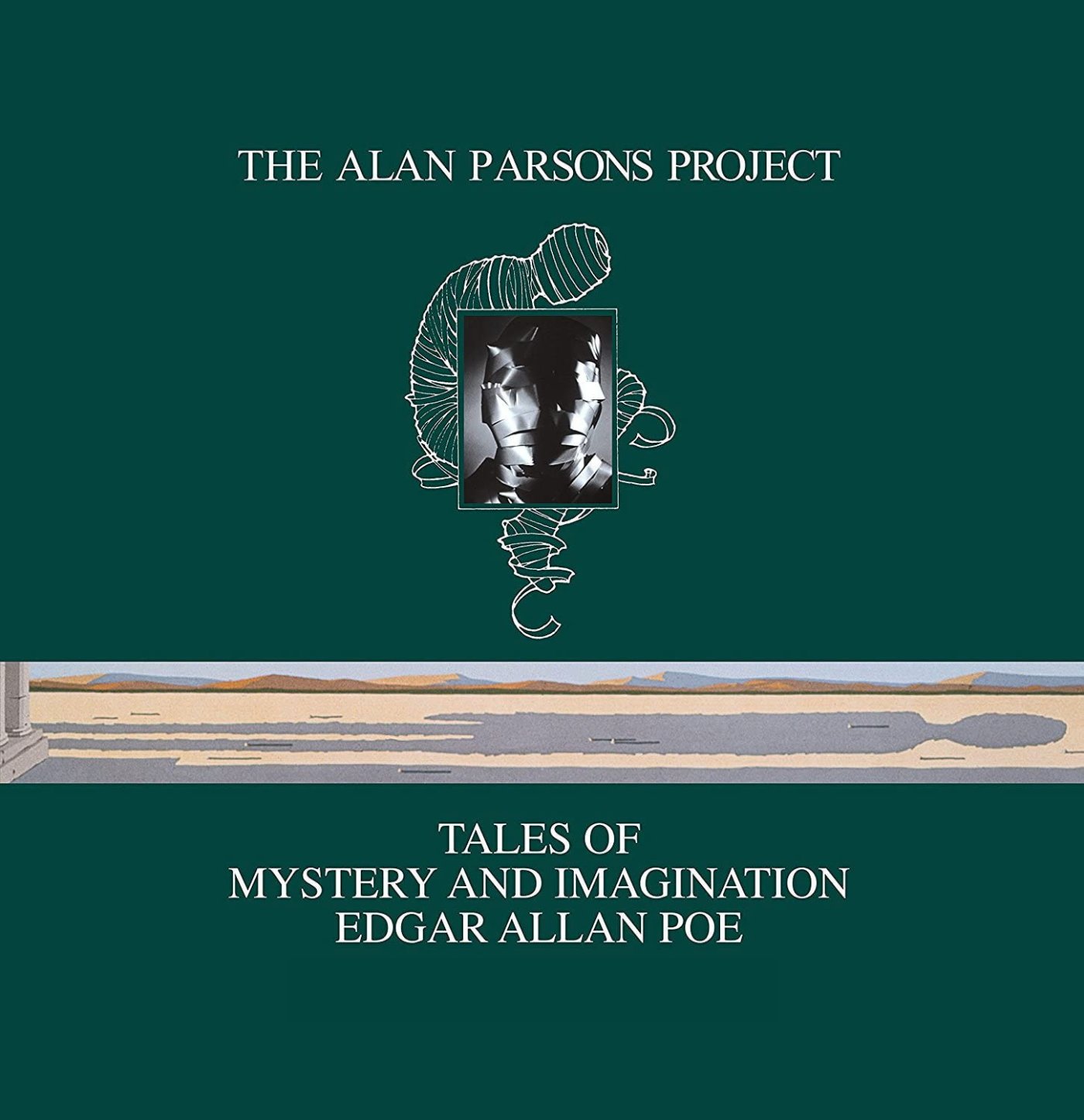
Tales Of Mystery And Imagination is The Alan Parsons Project’s first album.
The Alan Parsons Project. From that name, one might imagine that the band—or, well… the project—is run with an iron fist by a lone auteur named Alan Parsons (b. 1948). In reality, however, the project consists of two equal partners. As a producer and sound engineer among the best in his field, Alan Parsons does participate in the songwriting process, but the primary responsibility for composing—and especially for writing the lyrics—actually lay with a gentleman named Eric Woolfson (1946–2009).
Alan Parsons worked for years as a staff engineer at EMI’s Abbey Road Studios, contributing as an assistant engineer to the production of The Beatles’ Abbey Road (1969), among other projects. Through his connection with EMI, Parsons also ended up working with Pink Floyd, who recorded for the same label, and he engineered The Dark Side Of The Moon (1973), an album celebrated for its sound. That album became a massive success. Pink Floyd isn’t just any rock band that would need a visionary record producer, and Parsons’ role on Dark Side was primarily that of a technical production. Although Parsons’ influence on the artistic outcome wasn’t necessarily significant, his involvement in the creation of one of the world’s most commercially successful albums certainly gave his career a nice boost. Parsons became a full-fledged producer and produced a few moderately successful albums for acts such as Pilot and Cockney Rebel. He even managed to produce a true hit album with Al Stewart’s A Year Of The Cat, though it was released only after Parsons and Woolfson had already launched their project.
Read also: Levyarvio: Pink Floyd – The Dark Side Of The Moon (1973)
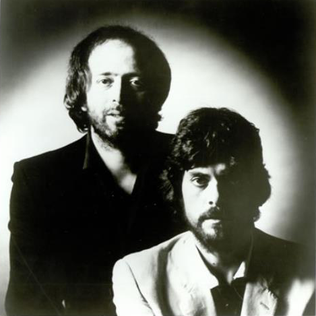
Parsons met Woolfson, a budding songwriter and session pianist, in the EMI canteen. Woolfson became Parsons’ manager for a time, and when Parsons began to feel the need for a new direction in his career a few years later, Woolfson suggested that they record an album of their own music together. The working title for the project was The Alan Parsons Project. With the first album being a success, the name stuck. One has to wonder a bit why Woolfson accepted this rather unequal name, since the band’s albums—which sold pretty well—were, after all, mostly composed and 100% written by him. Woolfson also sang on many of the band’s later hits. The luxurious soundscapes and meticulous production that Alan Parsons conjured up on his albums were certainly an important trademark of the project, but Woolfson’s modesty is still puzzling. Well, the arrangement worked in any case. The duo made ten albums together under the name The Alan Parsons Project between 1976 and 1987, which, according to at least some sources, sold a total of 50 million copies.
But what kind of music did The Alan Parsons Project make on their first album?
Tales of Mystery and Imagination sets a lasting template for future albums by The Alan Parsons Project in many ways. One of the key factors is that TAPP’s albums are always concept albums. On some albums, the theme is quite suggestive and loose, but on this first one, it is very literal. And literary. Tales of Mystery and Imagination is built around the stories of the horror/pulp writer Edgar Allan Poe (1809–1849), who led a tumultuous life. In fact, the album is also known by the longer and rather clunky title Tales of Mystery and Imagination (Edgar Allan Poe). The idea for the concept came from Woolfson, who had been mulling over the idea of an album built around Poe’s stories for a few years. Each of the album’s seven tracks depicts one of Poe’s stories or poems. Even the album’s artistic title evokes associations with Yes keyboardist Rick Wakeman’s colorful concept albums such as The Six Wives Of Henry VIII(1973), Journey to the Centre of the Earth (1974), and The Myths and Legends of King Arthur and the Knights of the Round Table (1975). Those Wakeman albums sold millions, and Woolfson and Parsons likely saw a promising market niche here.
Another characteristic feature of The Alan Parsons Project is, of course, its project-based nature. The “band” was built around Parsons and Woolfson, and there were no other permanent members, even though many musicians played on several of the Project’s albums. In particular, members of the Pilot band—which Parsons had previously produced—David Paton (bass), Ian Bairnson (guitar), and Stuart Tosh (drums) became a sort of house band for the Project.
It is also worth noting that The Alan Parsons Project did not perform live. From the very beginning, the Project remained confined to Parsons’s domain—the recording studio. This was highly unusual in the 1970s, and aside from Mike Oldfield, I can’t think of another significant band or artist who operated in the same way, relying solely on studio albums (though The Beatles, of course, were pioneers in this regard during their final years). And Oldfield, too, began touring extensively starting in the late 1970s. A lot of effort was put into studio work, and Project’s sound was always polished to perfection, with Parsons always utilizing the latest techniques.
The final notable feature of the Project was, of course, its music, which on its early albums was a highly original blend of progressive rock and pop. In a way, the Project was a pioneer of prog-pop—that is, a subgenre of progressive rock adapted into a radio-friendly format. Woolfson and Parsons’ music was rarely particularly complex or virtuosic, but at its best, the arrangements had just the right amount of the intricate, detailed complexity typical of prog, so that Project’s music seemed to rise above “ordinary pop.”
Read also:
- Review: Flea – Honora (2026)
- Review: Pink Floyd – Animals (1977)
- Levyarvio: Flea – Honora (2026)
- Review: Yes – Magnification (2001)
- Review: Jethro Tull – Songs From The Wood (1977)
- Review: A.W. Yrjänä – Eidolon (2026)
- Review: Rush – Roll The Bones (1991)
- Review: David Sylvian – Gone To Earth (1986)
- Review: David Bowie – Low (1977)
The music on Tales of Mystery and Imagination is edgier and more fast-paced than most of Project’s later albums. In fact, musically, Tales of Mystery and Imagination is somewhat reminiscent of the aforementioned keyboard wizard Rick Wakeman’s debut album, The Six Wives of Henry VIII. Although Tales of Mystery and Imagination isn’t quite as keyboard-driven, both albums share a similar captivating energy and rawness combined with a rather grandiose sound. Both are also prime examples of properly rocking progressive rock. Of course, there are plenty of differences as well. While The Six Wives Of Henry VIII features virtuoso instrumental passages, the music on Tales of Mystery and Imagination is primarily vocal and significantly more pop-oriented, with songs largely built around catchy choruses. Even at its most conventional, Tales of Mystery and Imagination still somehow breaks familiar pop formulas.
Tales of Mystery and Imagination also works significantly better as a concept album than The Six Wives of Henry VIII, thanks to Woolfson’s clever lyrics, which skillfully reflect and reinterpret Poe’s texts—sometimes quite directly, and at other times taking more liberties. I’m no great Poe expert, but I’m familiar with most of the original writings on which the album’s songs are based, and for the most part, the interpretations feel quite good.
The album opens with the stylish, intro-like instrumental “A Dream Within a Dream,” in which the drums pound steadily and the bass pulses steadily like a heart, providing a counterpoint to the ringing melody. From the bass’s heartbeat, the album transitions smoothly into one of its highlights: “The Raven.” “The Raven” depicts one of Poe’s most beloved texts, the poem “The Raven.” Unusually, the vocals on the track are sung by Alan Parsons himself. Admittedly, they’re processed through an early vocoder to sound robotic. The effect works well, but the biggest impact on the song comes from its manically exaggerated finale, which is truly magnificent to hear.
The next track, “The Tell-Tale Heart,” really cranks up the intensity, kicking off with a blood-curdling scream from legendary vocalist Arthur Brown. Brown, best known for his hit “Fire,” delivers a truly breathtaking and impressive vocal performance on this track. His singing strikes the perfect balance between aristocratic authority and almost barbaric ferocity. The orchestral accompaniment doesn’t disappoint either, pulsing powerfully and dynamically behind Brown. At the three-minute mark, the music fades tantalizingly to near silence before picking up speed again for a new surge. “The Tell-Tale Heart” is a prime example of the power that Tales Of Mystery And Imagination achieves at its best, and of how Parsons, as a talented producer, managed to draw every last drop of potential from Woolfson’s superb song ideas. It’s a shame that the tremendous intensity of “The Tell-Tale Heart” was largely missing from later The Alan Parsons Project albums, whose content was generally much tamer and more polished.
By the next track, you might think the album’s intense grip is loosening, as “The Cask of Amontillado” begins as a beautiful ballad sung by John Miles, but even that is soon built up to impressive proportions with the help of a lively, blaring horn section—the tuba rumbles and the train keeps rolling! A magnificent interpretation of one of Poe’s most thrilling stories, in which the nobleman Fortunato is walled up inside a wine cellar as revenge for his (imagined) evil deeds. The chilling “The Cask of Amontillado” captures the spirit of the original text perhaps better than any other track on the album, in my opinion.
As a side note at this point, it should be mentioned that although the songs’ themes are macabre and dark, the music of Tales of Mystery and Imagination is not particularly gloomy; rather, its lively take on horror themes is somewhat reminiscent of popular musicals in the style of Andrew Lloyd Webber. Fortunately, however, it isn’t as corny as the aforementioned gentleman’s musicals are at their worst.
From the musty murder cellar—or rather, wine cellar—depicted in “The Cask of Amontillado,” we move on to the album’s most upbeat track: “(The System of) Doctor Tarr and Professor Fether.” With its delicious chorus, this track would be perfect as a sing-along anthem for massive rock arenas. And I get that this might not sound like much of a compliment, but the song really works and is quite addictive to listen to!
Side A of the album was a true celebration of prog-pop, but Side B ventures into much more experimental territory with the 16-minute instrumental “The Fall Of The House Of Usher.” The piece includes a seven-minute orchestral section arranged by Andrew Powell, who studied under György Ligeti and was a member of the early lineup of Henry Cow. The orchestral section of “The Fall Of The House Of Usher” pays deep homage to Claude Debussy, even though he isn’t credited. Thunder and rain effects interrupt the atmospheric orchestral section, after which the track shifts to a rhythmic rock instrumental called “Intermezzo,” which is more than a little reminiscent of Pink Floyd’s work from around the time of Meddle and The Dark Side Of The Moon.
Next up is the more lyrical “Pavane” section, with its jangling guitars and zithers (yes!), is quite beautiful to listen to; this section, too, is skillfully expanded to epic proportions in the now-familiar manner, utilizing dynamics and adding more and more instruments to the mix.
“The Fall Of The House Of Usher” concludes with the “Fall” section, featuring an atonal rumble of strings reminiscent of Ligeti. The House of Usher has collapsed. Or something. “The Fall Of The House Of Usher” is a truly interesting orchestral experiment and works surprisingly well as a standalone piece, but on the other hand, it feels a bit out of place with the rest of the album’s material. I can imagine that many guys who enjoy the punchy prog-pop tracks on side A really hate “The Fall Of The House Of Usher.” And on the other hand, many fans of more avant-garde music probably wouldn’t expect to find such material on an Alan Parsons Project album…
Andrew Powell’s career took off nicely in the years that followed; shortly after this project, he ended up producing Kate Bush’s first two studio albums, and, interestingly enough, many of the musicians on those albums were the same group that played on Tales Of Mystery And Imagination. Powell also continued as the orchestrator for The Alan Parsons Project throughout the project’s entire lifespan.
After “The Fall of the House of Usher,” there’s one more vocal track: “To One in Paradise.” It’s an atmospheric, though perhaps slightly saccharine, song that feels like a bit of an anticlimax after “The Fall of the House of Usher.”
When Tales of Mystery and Imagination was first released on CD in 1987, Alan Parsons remixed the album and added some new overdubs. This new mix essentially became the album’s new de facto standard. The musical differences from the original version aren’t very significant. The drums sound slightly louder, and the overall sound is sharper and more distinct. The most obvious change is the Poe texts read by legendary film director Orson Welles in a few places. Welles recorded these text snippets for the album’s marketing campaign, and now Parsons has included them on the album. As noted, the differences between the two versions aren’t very significant, but I personally prefer the 1987 remix. Perhaps because of the slightly better sound, or perhaps simply because it’s the version I originally got to know.
Tales of Mystery and Imagination was a major undertaking for the record label, as the album—which employed over 200 musicians (including an orchestra and a couple of different choirs)—cost over $250,000, which was a lot of money in 1976 (according to an inflation calculator, that amount would be a good million dollars today). The gamble paid off, however, as the album did fairly well, even if it wasn’t a massive hit. The original record labels, 20th Century Records (USA) and Charisma (UK), were left licking their wounds regarding Project’s future successes, as the duo moved to Arista for their next album.
The Alan Parsons Project recorded all of its albums for Arista starting with I Robot in 1977, continuing until 1987, when the duo finally parted ways. Woolfson moved into the world of musicals and managed to score a few hits in that field. Alan Parsons has continued to release albums under his own name and, as the 2000s began, also started touring extensively as the music business changed to the point where it was no longer possible to make a living solely from album sales. Eric Woolfson passed away from cancer in 2009 at the age of 64.
Alan Parsons himself has called Tales of Mystery and Imagination the best album by The Alan Parsons Project, and it’s certainly easy to agree with him. Parsons and Woolfson certainly made many excellent (and a few truly terrible…) albums even after their debut, but none of the duo’s later albums achieved quite the same intensity and energy.
Best tracks: ”The Raven”, ”The Tell-Tale Heart”, ”The Cask Of Amontilladon”
Author: JANNE YLIRUUSI
Read also: Review: Michael Oldfield – Heaven’s Open (1991)
Tracks:
Side A
1. ”A Dream Within a Dream” 4:14
2. ”The Raven” 3:57
3. ”The Tell-Tale Heart” 4:38
4. ”The Cask of Amontillado” 4:33
5. ”(The System of) Dr. Tarr and Professor Fether” 4:20
Side B
1. ”The Fall of the House of Usher
”Prelude” – 7:02
”Arrival” – 2:39
”Intermezzo” – 1:00
”Pavane” – 4:36
”Fall” – 0:51″
16:10
2. ”To One in Paradise” 4:46
Musicians:
Alan Parsons: organ, synthesizer, keyboards, Projectron, guitar, recorder, vocals/vocoder Eric Woolfson: synthesizer, harpsichord, keyboards, vocals Andrew Powell: keyboards Francis Monkman: organ, keyboards Billy Lyall: piano, keyboards, Fender Rhodes electric piano, drums, glockenspiel, recorder Christopher North: Keyboards Orson Welles: spoken word (1987 remix) Leonard Whiting: vocals Arthur Brown: vocals John Miles: guitar, vocals Jack Harris: vocals Terry Sylvester: vocals Jane Powell: vocals The English Chorale: choir Smokey Parsons: vocals Bob Howes: choir direction Kevin Peek: acoustic guitar Laurence Juber: acoustic guitar) David Paton: acoustic guitar, electric guitar, bass, vocals Ian Bairnson: acoustic guitar, electric guitar David Pack: guitar Joe Puerta: bass Les Hurdle: bass Daryl Runswick: bass, double bass David Katz: violin, violin section leader David Snell: harp Burleigh Drummond: drums Stuart Tosh: drums, timpani, vocals John Leach: percussion, vocals, cimbalom, kantele Dennis Clarke: saxophone, clarinet
Producer: Alan Parsons
Label: 20th Century Recods / Charisma
 Pienemmät Purot
Jätä kommentti