
The author’s picks for the best albums of 1977, ranked 11-20.
In the Year by Year series, I’ll go through my favourite albums from 1969 to the present day.
11. Brian Eno: Before and After Science (UK) ****
12. The Alan Parsons Project: I Robot (UK) ****
13. David Bowie: ”Heroes” (UK) ****
14. Gryphon: Treason (UK) ****
15. Pekka Pohjola: Keesojen lehto (FI) ****
16. Mannheim Steamroller: Fresh Aire II (US) ****
17. Rick Wakeman: Criminal Record (UK) ****
18. Steely Dan: Aja (US) ****
19. John Williams: Star Wars (US) ****
20. Hopper / Dean / Tippett / Gallivan: Cruel But Fair (UK) ****
#21-33
Top 10 coming soon!
11. Brian Eno: Before And After Science
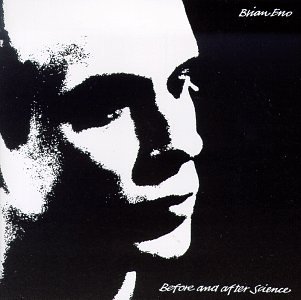
Before And Science is Brian Eno’s fifth solo album and fourth “rock” album.
Before And Science was a challenging project for Eno, as his 1975 masterpiece Another Green World had set the bar very high, and, on top of that, he had begun to grow tired of rock music. Eno’s interest was shifting more and more toward instrumental ambient music.
Eno experienced the making of Before and After Science as a veritable chore, though this is in no way apparent from the final result. Even though Before and After Science isn’t quite as magical a whole as Another Green World, it’s still a truly strong album. Considering that Eno’s interests had begun to shift away from rock music altogether, it’s also a bit odd that the final album is actually a bit more rock-oriented than Another Green World. The A-side, in particular, is quite aggressive, while the mood on the B-side calms down a bit…
12. The Alan Parsons Project: I Robot
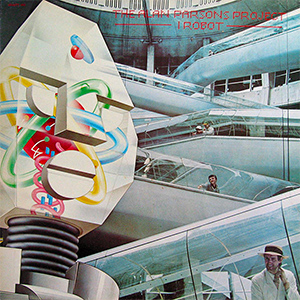
Robot is The Alan Parsons Project’s second studio album.
Originally conceived as a one-off project, the album Tales Of Mystery And Imagination — which drew inspiration from the stories of Edgar Allan Poe — was successful enough that producer Alan Parsons and songwriter Eric Woolfson decided to continue their collaboration.
Like its predecessor, I Robot is also a concept album, but whereas the concept behind Tales Of Mystery And Imagination was very literal, the theme in I Robot is only suggestive. The album was originally supposed to be based on sci-fi author Isaac Asimov’s Robot series, and specifically the book I, Robot (1950), but the rights could not be secured, so Parsons and Woolfson, being clever guys, dropped the comma from the album’s title. The theme of philosophical reflection on robotics and artificial intelligence is reportedly still present on the album, but only very subtly…
13. David Bowie: ”Heroes”
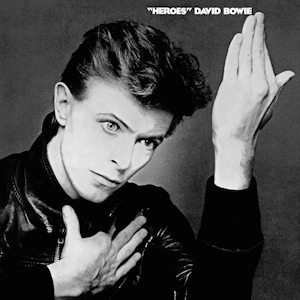
“Heroes” is David Bowie’s 12th studio album and the middle installment of the so-called Berlin Trilogy. Unlike the other two parts of the trilogy, “Heroes” was also recorded entirely in Berlin.ssä.
The first part of the Berlin trilogy, Low, continued the shift toward increasingly experimental music that Bowie had begun with Station To Station (1976). “Heroes”, on the other hand, is a natural continuation of Low, which had been released just nine months earlier, though it has a slightly heavier sound and is more rock-oriented than its predecessor.
The album was also largely produced by the same team. Tony Visconti and Brian Eno continued as producers, and the band consisted of the familiar trio of Dennis Davis (drums), Carlos Alomar (rhythm guitars), and George Murray (bass). Bowie and Eno play keyboards and guitars on the album, and Bowie’s saxophone takes center stage on the track “Sons Of The Silent Age.”
”There’s Old Wave. There’s New Wave. And there’s David Bowie …” – RCA Records’ promotional slogan for the album “Heroes”.
However, the album wasn’t fully realized with the original lineup, as Low’s lead guitarist Rick Gardiener was no longer involved for one reason or another; instead, Eno’s longtime collaborator, King Crimson’s guitar virtuoso Robert Fripp, was called in as a sort of wild card to play all the guitar solos on the album. Bowie had already tried to get Fripp on board for Iggy Pop’s The Idiot album, which he produced, but now it finally worked out.
The “Heroes” album doesn’t get off to a very promising start. The first two songs on the album, “Beauty And The Beast” and “Joe The Lion,” are somewhat annoying rock tracks. Fortunately, things improve significantly starting with the legendary title track, in which Robert Fripp’s electric guitar—with its distinctive, meandering, and twisting sound that circles the song and utilizes feedback with surgical precision—plays a prominent role. In this song, Bowie delivers one of the most breathtaking vocal performances of his career. “Heroes” is, true to its name, a heroic anthem that—unsurprisingly—doesn’t sound corny at all.
Fripp äänitti kitaraosuutensa (eli periaatteessa kaikki levyn kitarasoolot) levylle kuudessa tunnissa välittömästi saavuttuaan Berliiniin osittain niin ettei hän ollut edes kuullut kappaleista nuottiakaan ennen kuin alkoi soittamaan taustojen mukana. Hän ei myöskään saanut juuri muuta ohjeistusta David Bowielta ja tuottajapari Viscontilta ja Enolta kuin ”anna palaa!”. Toinen Frippin kitara-kohokohta kuullaan “Blackoutin” kipakan riehakkaissa sooloiluissa. David Bowien käsitellyt vokaalit toimivat aivan upeasti tandemissa Frippin kitaroiden kanssa kyseisessä kappaleessa. Soitettuaan osuutensa Fripp pakkasi kamansa ja häipyi vielä samana iltana Berliinistä.
It must be made very clear that Mr Fripp is not a workaday session musician. In Rock and Pop he is an artiste of the highest caliber, the equivalent of cellist Yo Yo Ma in the Classical world. He is a first class soloist and for that reason alone his work with David Bowie on “Heroes” and Scary Monsters is considered Classic. As the producer of these albums I can testify that Mr Fripp was not ‘told’ what to play. We asked him to invent new parts as only he can for us. We were in awe of what he played, something we could never have imagined. – Producer Tony Visconti on Robert Fripp.
Like Low, “Heroes” is a two-part album. The first half features more conventional, vocal-driven “rock songs,” while the second half offers more ambient and experimental soundscapes. To exaggerate a bit. Of course, the B-side also includes Bowie’s vocals and pop elements. This is especially true of the wonderful “The Secret Life Of Arabia,” which closes the album. The most impressive of the ambient tracks is “Neuköln,” reminiscent of Jade Warrior, which features some of the most interesting saxophone playing of Bowie’s career.
The first two tracks bring the album’s score down a bit in my ears, but overall, “Heroes” also falls short of its predecessor, in my opinion. Low is a more consistent album, and its best moments are also just a touch brighter than those on “Heroes”. All in all, however, “Heroes” is a magnificent art rock album and a wonderful, more boisterous and spontaneous little brother to Low.
Best tracks: “”Heroes””, “Sons Of The Silent Age”, “Blackout”, “V2-Schneider”, ”Neuköln”, “The Secret Life Of Arabia”
Read also:
- Levyarvostelu: Peter Gabriel – Up (2002)
- Review: John Greaves & Peter Blegvad: Kew. Rhone. (1977)
- Review: Flea – Honora (2026)
- Review: Pink Floyd – Animals (1977)
- Levyarvio: Flea – Honora (2026)
- Review: Yes – Magnification (2001)
- Review: Jethro Tull – Songs From The Wood (1977)
- Review: A.W. Yrjänä – Eidolon (2026)
- Review: Rush – Roll The Bones (1991)
14. Gryphon: Treason
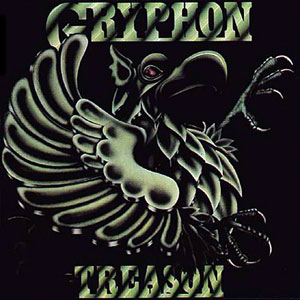
Treason is the fifth studio album by Gryphon, which was founded in 1973.
Gryphon began its career as a completely acoustic band that played medieval-style music. Gradually, the band—which had received a classical education at the Royal Academy of Music—added electric instruments to its acoustic arsenal (including the crumhorn and bassoon) and moved closer and closer to progressive rock. The band’s fourth album, Rain Dance, was already relatively “standard” symphonic progressive rock, and much of the band’s uniqueness had faded, even though the music itself was of high quality.
In 1974 and 1975, Gryphon played as the opening act for Yes on a couple of different tours, and Brian Lane, who managed Yes, had also become Gryphon’s manager. Yes’s music, as well as the success the band enjoyed, made an impression on Gryphon, and Lane—known as a shrewd manipulator—certainly pushed Gryphon, for his part, further and further toward the mainstream…
15. Pekka Pohjola: Keesojen lehto
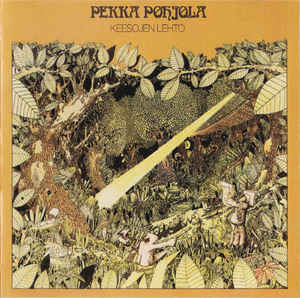
Keesojen lehto is Pekka Pohjola’s third studio album.
By the mid-1970s, it had become quite common for top Finnish rock bands to travel to Stockholm to record, as it was believed at the time that better studios were available there than in Finland. However, Finnish rock musicians had not really engaged in any significant collaboration with their foreign counterparts. Pioneering work in this area was done by Finland’s most respected rock bassist and former Wigwam musician Pekka Pohjola, who—along with drummer Vesa Aaltonen (of Tasavallan Presidentti, among others)—had played with Swedish musicians in the jazz-rock band Made In Sweden.
There were also plans to record Pohjola’s third solo album with the members of Made In Sweden. Recording had already begun in Sweden when it became clear that Tubular Bells star and multi-instrumentalist Mike Oldfield was interested in producing the album. This offer didn’t come out of the blue, as Pohjola had already visited Oldfield’s country estate studio earlier in 1976 to jam and drink whiskey. The two introverted musicians had, surprisingly, hit it off very well..
16. Mannheim Steamroller: Fresh Air II
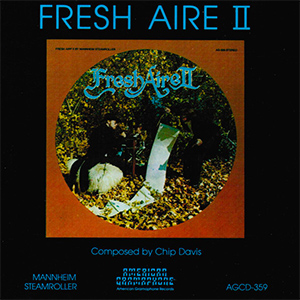
Fresh Aire II is the second studio album by the American band Mannheim Steamroller, which was founded in 1974.
Led by classically trained drummer Chip Davis, Mannheim Steamroller’s debut album Fresh Aire (which was later renamed Fresh Aire I) was a surprise hit, and Davis decided to treat his audience to more of the same. Fresh Aire II, whose somewhat contrived theme is autumn, offers music that is largely very similar to that of its predecessor.
As on the first album, the formula for Fresh Aire II’s largely instrumental music is to combine the principles of early art music (primarily from the 1700s and 1800s) with light progressive rock influences, spiced with slightly entertaining and, at times, even New Age-inspired touches.
Fresh Aire II is indeed a clever blend of the new and the old. Lutes, recorders, and harpsichords blend harmoniously with synthesizers and rock drums. The overall sound is light, and the music is extremely melodic. At times, the moods are a touch too saccharine, but for the most part, the album stays on the right side of good taste. On the progressive rock front, Camel’s The Snow Goose serves as a point of reference, while Mannheim Steamroller’s basic drum-bass-synthesizer sound at its tightest also brings to mind, to some extent, Emerson, Lake & Palmer’s simplest moments.
A new element on Fresh Aire II is the lute played by bassist Eric Hansen, which is featured quite prominently. The beautifully executed choral singing heard on the track “The Second Door” (with lyrics from Psalm 93) is also a small but fresh addition; unfortunately, however, the choir isn’t heard on the other tracks. It would have been nice to hear more of it. Structurally, another new element is that Side A of the album consists of the 15-minute “Fantasia” suite, divided into nine parts. Although the pieces in the suite don’t exactly flow seamlessly into one another, the suite—which largely revolves around the same melodic material—does bring a bit more cohesion to Fresh Aire II than its predecessor did. This is especially true since on Fresh Aire I, the mood was constantly disrupted by juxtaposing tracks played by an electronic ensemble with very short acoustic “interludes.”
Ultimately, however, the album’s best tracks are found on the B-side, where most of the acoustic material has been placed this time around. “A Shade Tree” is a charmingly understated and acoustic encounter between a string quartet and a lute, and the slightly livelier “Toota Lute”—which begins with a lute and harpsichord and follows immediately afterward—is also an excellent track that is gradually built up to something grander with the help of the strings and recorders, without ever succumbing to unnecessary excess.
In the album’s final track, “Going To Another Place,” the drums and the “band” return after a break of a few songs. The song is somehow truly captivating and melodically addictive, yet at the same time a bit cringeworthy, bringing to mind some of the truly cheesy theme songs from ’70s and ’80s TV shows. “Going To Another Place” is a song you wouldn’t really want to enjoy listening to, but somehow it still manages to win you over.
Once again, the sound quality on this album is excellent, and it’s no wonder that the band’s album Fresh Aire II has earned a reputation as a test album among audiophiles.
Fresh Aire II doesn’t offer any significant new developments in Mannheim Steamroller’s style, but the compositions and performances are once again top-notch. The band’s sound is also distinctive enough that repetition isn’t an issue in that regard either. Fresh Aire II is a highly entertaining album of light, melodic instrumental music.
Best tracks: ”The Second Door”, The Third Door”, ”Toota Lute”
17. Rick Wakeman: Criminal Record
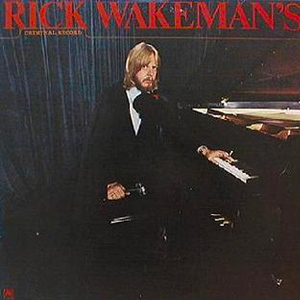
Criminal Record is Rick Wakeman’s sixth solo album. Or his seventh, if you count the somewhat obscure release Piano Vibrations (1971), which features cover songs. Criminal Record is also known by the playful title Rick Wakeman’s Criminal Record.
Wakeman, a keyboard virtuoso who joined Yes in 1971,kicked off his solo career with a bang in 1973 with The Six Wives of Henry VIII. That album featured six wildly rocking prog instrumentals that didn’t seem to have a single second of downtime. Surprisingly, the album also became a huge success.
Wakeman’s subsequent moves took his music in a direction that was at once more epic, yet also (in part intentionally) more comical. Journey to the Center of the Earth and The Myths and Legends of King Arthur and the Knights of the Round Table, laden with choirs and orchestras, were at times rather clunky affairs, featuring dreadful vocal performances and not particularly tight band playing…
18. Steely Dan: Aja
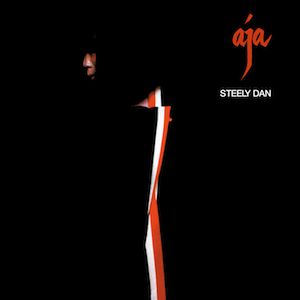
Aja is the sixth studio album by the American band Steely Dan.
By 1974, Steely Dan had become purely a studio act, and Aja continues the mission of keyboardist/vocalist Donald Fagen and guitarist Walter Becker to create perfectly polished, sophisticated pop music for adults.
Aja is even more polished than the duo’s previous albums and is almost too smooth. Not quite, though—the album’s cheerful and perfectionist groove wins over the listener, even if there aren’t really any rough edges to the music. Fagen’s raspy vocals do, at least, bring a touch of humanity to the album amid all the perfection. On the other hand, his voice does become a tad monotonous over the course of the entire album.
The role of electric guitars on Aja is significantly smaller, and they are generally replaced by saxophones. Aja brings even more jazz influences to the band’s music, and the album features a large ensemble of jazz musicians. While Steely Dan’s earlier albums were still relatively easy to categorize as rock music, with Aja, the matter is no longer so clear-cut.
The album’s finest guest appearances from the jazz world come from drummer Steve Gadd (one of the album’s six drummers!), who has played extensively with Chick Corea, and saxophonist Wayne Shorter, known from Weather Report, both of whom do a magnificent job on the album’s 8-minute title track. Both play superb solos that are beautifully integrated into the song, and Gadd’s hyperactive yet extremely controlled drumming on this track, in particular, is simply divine. It’s a shame that Gadd only appears on one track.
The title track, “Aja,” is the best song on the album, but overall the material is strong, and there isn’t a single weak link on the album. On the other hand, with the exception of the title track, it doesn’t quite reach that magical level.
Ajasta became Steely Dan’s most successful album, selling over five million copies in the U.S. alone. The downside of this success was that it gave Fagen and Becker the opportunity to disappear even deeper—not only into the sterile twilight of top-tier recording studios but also into the creativity-numbing embrace of drugs.
After this, Steely Dan’s music never again reached the level of Aja or their earlier albums. Gaucho, released three years later, was an album polished to the point of being almost completely soulless and plastic, and the less said about the duo’s comeback albums of the 2000s, the better.
Aja, however, represents the pinnacle of Steely Dan’s pop-rock/jazz fusion and is an album that is both musically sophisticated and delightfully easy to listen to.
Best tracks: ”Aja”, ”Deacon Blues”, ”I Got The News”
19. John Williams: Star Wars
Star Wars is John Williams’ first score, which he composed for the Star Wars films. The film and the soundtrack are also known as Star Wars Episode IV: A New Hope.
John Williams, who received a classical education and also pursued a career as a jazz musician, began his career as a film composer as early as the 1950s, but he didn’t make his definitive breakthrough into Hollywood’s A-list until 1975 with Steven Spielberg’s film Jaws, for which he won his second Oscar (his first came for arranging Jerry Bock’s music for the film Fiddler on the Roof)
For Jaws, Williams had composed fairly modern and minimalist music, but Spielberg’s good friend George Lucas hired him to channel the orchestral power of old Hollywood films into his new space opera. In addition to old film music, Williams’s Star Wars score, of course, also draws heavily on the music of the masters of classical composition. It is a crucial element of Lucas’s film in that it provides an important emotional connection and, in a way, a familiar point of reference to the film’s imagery, which was quite exotic at the time…
20. Hopper/Dean/Tippett/Gallivan : Cruel But Fair
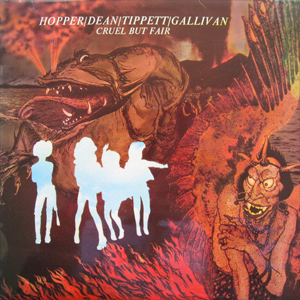
Cruel But Fair is the first studio album by the quartet Hopper/Dean/Tippett/Gallivan.
Hugh Hopper (bass), Elton Dean (saxophones), and Keith Tippett (piano, electric piano) are among the wildest and most experimental musicians in British jazz and jazz-rock. Each of their careers has been something of a counterpoint to playing it safe or chasing commercial success. Hopper and Dean are best known for their significant roles in Soft Machine, while Keith Tippett is known for his own groundbreaking avant-garde jazz albums, as well as his highly acclaimed stints with King Crimson. The American drummer Joe Gallivan, who rounds out the quartet, is a lesser-known figure, but—at least based on this album—he is also a highly skilled musician.
Stylistically, Cruel But Fair feels like a relatively natural follow-up to Soft Machine’s fourth and fifth albums, on which Soft Machine straddled the line between jazz-rock and “true” jazz. Cruel But Fair, however, features jazz that is clearly more free-form than those albums and is more distinctly associated with avant-garde jazz. Stylistically, too, Cruel But Fair does not slavishly follow in Soft Machine’s footsteps, and Tippett’s playing, in particular, differs greatly from Mike Ratledge’s gritty organ playing.
Throughout his career, Tippett has played almost exclusively acoustic piano, but on Cruel But Fair he plays a lot of electric piano. Tippett’s electric piano playing brings to mind some of Herbie Hancock’s 1970s albums, and on this album he actually plays with surprising restraint, rarely taking the lead. There are exceptions, however, such as the opening track “Seven Drones,” whose chaotic bursts feature Tippett’s signature wild “cat walking on the piano keys” style of playing.
For the most part, however, saxophonist Elton Dean takes the lead role on the album with more than just competence. A good example of Dean’s central role is the track “Echoes,” a hazy, semi-abstract ballad in which Dean’s piercing, John Coltrane-esque saxophone playing cuts through the watercolor-like atmosphere painted by the electric piano and percussion with truly delightful flair. Elton Dean is the star of the album, and his searing saxophone playing is a delight to hear throughout the record.
Cruel But Fair may not be a particularly groundbreaking or significant album, but it’s definitely worth a listen if you’re interested in experimental, Canterbury-style jazz.
Best tracks: ”Seven Drones”, ”Square Enough Fire”, ”Echoes”
Author: JANNE YLIRUUSI
This text was translated with the help of AI. You can find the original post here.
You can find other parts of the Year by Year series here.
 Pienemmät Purot
Jätä kommentti