Punk? What punk? My picks for the best albums of 1977, ranked 1–10.
- Pink Floyd: Animals (UK) *****
- John Greaves & Peter Blegvad: Kew. Rhone. *****
- Jethro Tull: Songs From the Wood (UK) *****
- David Bowie: Low (UK) *****
- Yes: Going for the One (UK) ****½
- Hugh Hopper: Hopper Tunity Box (UK) ****½
- Island: Pictures (SU) ****½
- Peter Hammill: Over (UK) ****½
- Univers Zéro: s/t (BE) ****½
- Genesis: Seconds Out (UK) ****½
1. Pink Floyd: Animals
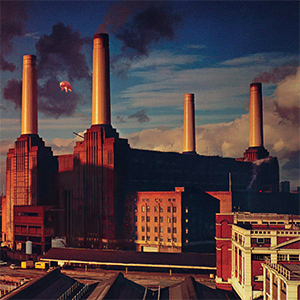
Animals is the eighth studio album by Pink Floyd, founded in 1965. It is their tenth if the soundtracks released by the band are included.
Pink Floyd’s previous album, Wish You Were Here (1975), had been a challenging project, but the resulting album was a magnificent and multifaceted work. Bassist/vocalist Roger Waters had emerged on that album even more clearly as the band’s artistic leader, and this dynamic is only reinforced on Animals. On Wish You Were Here, the band was still, to some extent, a democratic entity, but on Animals, Waters ruled with an almost dictatorial hand. With the exception of one track, all the music and lyrics on Animals are solely the work of Waters.
As I mentioned above, Wish You Were Here is a multifaceted album, but its emotional landscape can, to simplify matters somewhat, be described as tinged with a sad melancholy. Amidst the sadness, there was also a hint of anger towards the injustices of life and modern society…
2. John Greaves & Peter Blegvad : Kew. Rhone.
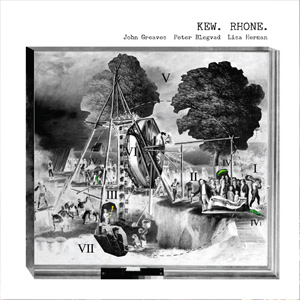
Kew. Rhone. is the first album by John Greaves and Peter Blegvad.
Bassist/composer John Greaves and songwriter Peter Blegvad met in 1975 when Blegvad’s band Slapp Happy recorded the album Desperate Straights with the assistance of Henry Cow. Greaves and Blegvad hit it off straight away and together composed the brilliant and intricate art-pop track “Bad Alchemy” for that album.
Following Desperate Straights, Slapp Happy merged with Henry Cow, and this combined line-up recorded the album In Praise Of Learning (1975). After that album, however, cracks began to appear in the band’s ranks. Slapp Happy’s keyboardist Anthony Moore left the band, and shortly afterwards Peter Blegvad was sacked because Henry Cow’s music was simply too complex for his musical abilities. Thus, only Slapp Happy’s vocalist Dagmar Krause remained a permanent member of Henry Cow…
3. Jethro Tull: Songs From The Wood
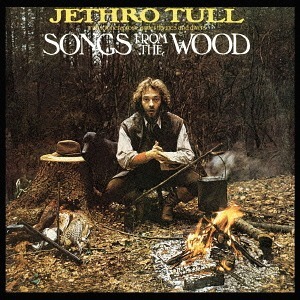
Songs From The Wood is the 10th studio album by Jethro Tull, formed in 1968.
If one is to believe the general historical narrative put forward by rock journalists, then in 1977 the music world was in the grip of the depths of the punk rock nuclear winter, and it was all over for progressive rock. The old dinosaurs had been defeated, or at least herded off to a retirement home to repent for their sins against rock orthodoxy.
In reality, most of the big names in prog, such as Yes, Genesis and Pink Floyd carried on as before and barely even noticed the new, spitting-and-swearing lot. In fact, in the late 1970s, the aforementioned bands were playing to larger audiences than ever before and releasing hit albums at a steady pace. The same applies to Jethro Tull…
4. David Bowie: Low
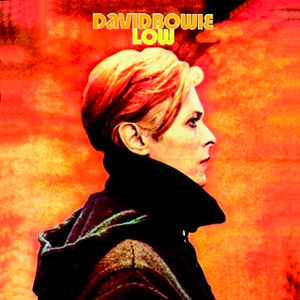
Low is David Bowie’s 11th studio album.
Low is the first installment of the “Berlin” trilogy, created in collaboration with producer Tony Visconti and creative visionary Brian Eno.
The flirtations with krautrock that began on Bowie’s Station To Station (1976) blossomed fully on Low. Bowie was extremely enthusiastic about krautrock bands such as Can, Kraftwerk, Cluster, Faust, and Neu!
In addition to a certain motorized mechanical quality, Low even seems to borrow its structure from the latter band’s album Neu! ’75 (1975). On that album, Neu! divided their music into a more melodic and conventional A-side and a more experimental B-side. Bowie’s Low clearly follows this division…
5. Yes: Going For The One
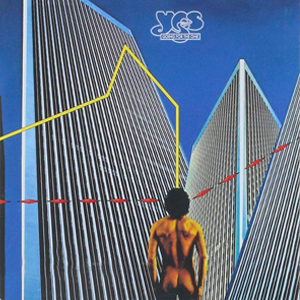
Going For The One is Yes’s eighth studio album.
Keyboardist Rick Wakeman left Yes after Tales From Topographic Oceans (1973), disappointed with the band’s musical direction. Wakeman, who had gone off on his own to work on his silly concept albums, was replaced by Swiss virtuoso Patrick Moraz, who brought a new edge and jazz-rock influences to the band’s sound.
Relayer (1974), created with Moraz, is one of Yes’s finest albums, and it was followed not only by a series of quite successful solo albums by all the members but also by the band’s most successful North American tour to date in 1976. During that time, Moraz proved that he had no shortage of musical talent. However, not everything was going smoothly…
6. Hugh Hopper: Hopper Tunity Box
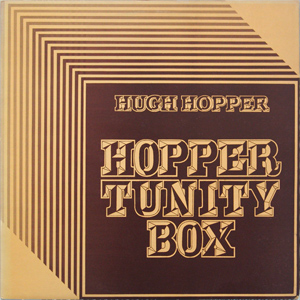
Hopper Tunity Box is the second studio album by former Soft Machine bass virtuoso Hugh Hopper (1945–2009). Between this album and his first, 1984, he also recorded the album Monster Band, though it was not released until 1979.
Hopper Tunity Box is a fascinating blend of jazz-rock and avant-garde. The album’s stellar lineup consists of the cream of British jazz and jazz-rock, featuring, among others, keyboardist Dave Stewart, horn players Gary Windo, Elton Dean, and Mark Charig, as well as drummer Mike Travis. The entire group gives it their all in their interpretations of Hopper’s complex songs. The musicians did not record together on the album; instead, each recorded their part separately, and it is surprising that the album still sounds so coherent and organic. Hopper Tunity Box effectively combines catchy riffs, beautiful melodies, experimental tape effects, and free-jazz-style horn improvisations. Of course, Hopper’s massive, powerful fuzz-effect-laden bass guitar—which is usually layered multiple times—plays a central role almost throughout the entire album. The title track features as many as six layered bass tracks.
The best track on the album is the complex and fast-paced “Gnat Prong,” which was composed using the whole-tone scale. Drummer Mike Travis makes a particularly strong impression on this track with his playing, as does Dave Stewart with his organ work. It’s an absolutely amazing song.
“Grumble,” with its hard-hitting rock and funk influences, is also a great song. “Grumble” also makes effective use of Windo, whose playing is always intriguing, with his three layered saxophone tracks riffing together delightfully. Frank Roberts plays a magnificent electric piano solo on the track.
The third track that deserves a special mention is “Miniluv,” which appeared in a different version on Hopper’s first album, 1984 (1983). Gary Windon’s fierce saxophone playing on this track is once again a thrill to hear. And what a ride it is when Windon lets his saxophone soar, with Hopper’s bass—heavily distorted by a fuzz effect—rumbling in the background to support him.
The most melodic and beautiful track on the album is “The Lonely Sea And The Sky,” in which Elton Dean shines on the saxophone. Hopper himself calls the song “a simple neo-Coltrane tune.”
The album also includes a cover version of Ornette Coleman’s composition “Lonely Woman.” Otherwise, all the songs on the album were written by Hopper.
Hopper Tunity Box offers an extremely original and avant-garde take on jazz-rock. The music on the album is delightfully experimental, at times quite complex, and often quite aggressive, yet it also features truly beautiful, hummable melodic moments. It remains surprisingly easy to listen to throughout.
Hopper Tunity Box is Hugh Hopper’s best and most consistently strong solo album.
(Nerdy fact: The album was recorded at a studio owned by Jon Anderson at the time. And the album was produced by Mike Dunne, who ran the studio on Anderson’s behalf and has recorded albums for Yes, including Close To The Edge.)
Best tracks: ”Miniluv”, ”Gnat Prong”, ”Grumble”
7. Island: Pictures
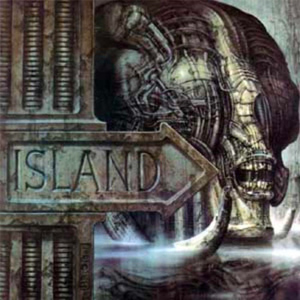
Pictures is the first and only studio album by Island, a band formed in Switzerland in 1975.
Island is a quartet led by the classically trained keyboardist Peter Scherer. During the Pictures era, the band included a vocalist, a drummer, and a wind player who played a wide variety of wind instruments. And since Scherer also handled the band’s low frequencies with bass pedals (Moog Taurus), the connection to Van Der Graaf Generator—which played with a similar lineup—is obvious.
The band’s music also sounds a bit like Van der Graaf Generator, but the music on Pictures is considerably more complex. The use of wind instruments is more refined and leans more toward classical music than VdGG’s. The sound is somewhat chamber-music-like, which links it to the avant-prog movement that was just emerging at the time…
8. Peter Hammill: Over
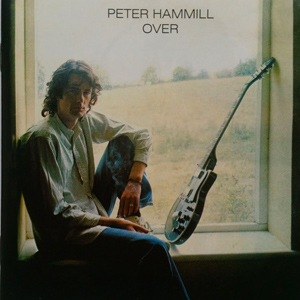
Over is Peter Hammill’s sixth solo album.
Over is Peter Hammill’s most personal solo album. On this album, he lays his emotions completely bare. Whereas Hammill’s lyrics had previously often dealt with existential anguish on a general level or pondered the fate of humanity on a cosmic scale, Over delves deep into Hammill’s own conflicting emotions following his breakup with his long-time girlfriend. Hammill discovered that his girlfriend had cheated on him with one of his close friends, and Over poignantly explores the breakup that followed and the intense emotions it stirred. Throughout the album, Hammill vacillates between anger, self-pity, and self-loathing, eventually reaching a sense of acceptance and the possibility of a fresh start.
In his lyrics, Hammill doesn’t succumb to the black-and-white “women are deceitful” theme often typical of rockers; instead, he understands that the betrayal he suffered was largely a result of his own behavior and his own failings.
“Crying Wolf,” driven by a truly raw and powerful guitar riff, kicks off the album with a bang. Hammill has called the riff the best of his career, and I don’t necessarily disagree.
The album’s most proggy offering is the eight-minute, meandering “Time Heals,” featuring backing from the rhythm section familiar from Van der Graaf Generator: Nic Potter (bass) and Guy Evans (drums). In the song, Hammill, speaking with great conviction, tries to convince himself that the old cliché “time heals” is true, but the despair evident in his voice makes it clear to the listener that the matter isn’t necessarily quite that simple. Evans’s drums sound a bit odd in this track, but otherwise the song is truly impressive.
The album is at its most raw in the song “Alice (Letting Go),” where Hammill’s vocals—recorded up close—tell a story steeped in self-pity, accompanied only by a strumming acoustic guitar. In the lyrics, Hammill tries to come to terms with and accept the breakup that is currently taking place. With little success.
“This Side Of The Looking Glass” stands out from the rest of the album thanks to its orchestral arrangement. The dramatic and rich-sounding orchestra runs the risk of making the track sound a bit corny, but Michael Brandin’s arrangement maintains good taste, and it’s interesting that they’ve managed to avoid mixing in any rock instruments at all. This is, therefore, an arrangement rare for a “rock album,” in which the vocalist sings with only a symphony orchestra in the background.
“Betrayed” is my favorite track on the whole album. In it, Hammill unleashes his darkest emotions and practically spits out angry words at the person who betrayed him, declaring that nothing matters anymore and that the world is, in fact, a total shithole. The song has all the makings of an embarrassing teen angst track, but fortunately, Hammill is a skilled enough writer AND performer that, in my opinion, he manages to avoid falling into that trap. Graham Smith’s truly piercing violin provides impressive backing on the track. No wonder Hammill recruited him as a member of the new Van der Graaf lineup shortly after the Over sessions.
Over doesn’t really have any weak moments; rather, the album’s stripped-down intensity keeps the listener firmly in its grip until the very end. The final track, “Lost And Found,” offers a glimmer of light after all the anguish. The album’s protagonist begins to overcome his pain and is ready to start a new life.
Over is a truly impressive emotional roller coaster. That said, it’s a roller coaster whose tunnel sections are considerably longer than usual. Over is the best “breakup album” I’ve ever heard.
Best tracks ”Crying Wolf”, ”Time Heals”, ”Betrayed”, ”Lost And Found”
9. Univers Zero: s/t
Univers Zero is the debut album by the Belgian band of the same name. The album is also known as 1313.
Drummer/composer Daniel Denis began his career with Soft Machine — and in Arkham, a band that played zeuhl-influenced progressive rock. Denis and Arkham’s keyboardist Jean-Luc Manderlier were invited to join the French band Magma, but Denis’s time with the band lasted only a few shows, as he felt underutilized—his role was largely limited to filling in for drummer Christian Vander whenever Vander, the band’s leader, wanted to sing.
Denis returned to Belgium and joined the jazz-rock band Necronomicon. Little by little band’s musical direction changed as jazz influences were phased out. The band’s name was changed to Univers Zero, and instead of American influences, the revitalized band began drawing on European traditions, particularly the art music of the early 20th century. The band’s most important influences were composers such as Igor Stravinsky, Bela Bartok, and Krzysztof Penderecki, who created innovative and challenging music…
10. Genesis: Seconds Out
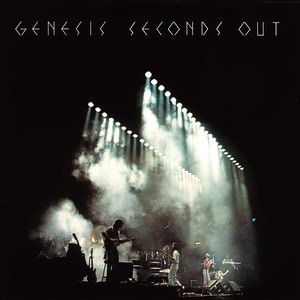
Seconds Out is the second live album by Genesis, which was founded in 1967.
Genesis’s first live album, the 1973 Genesis Live, was a modest single-vinyl release, but with Seconds Out, Genesis jumped on the double-vinyl bandwagon. And why not? The band already had a substantial amount of high-quality material in its live repertoire. The band had also steadily grown in popularity over the years, so there was certainly demand for a proper live release (Seconds Out went straight to number four on the UK charts, even though, according to some reports, punk had already destroyed progressive rock by this point…).
Along with their growing popularity, many other things related to Genesis had changed since their previous live album. The band’s colorful frontman, Peter Gabriel, had left the Genesis lineup a couple of years earlier, which had led drummer Phil Collins to take over as lead vocalist. This had significant consequences for the band’s live lineup. On studio albums, Collins continued to handle both vocals and drums, but live, that wasn’t an option. Of course, there are drummers/vocalists in the world who handle both roles simultaneously during shows, but Genesis’s music is so complex that the result in this case would hardly have met the high standards of a band so particular about quality.
So, for the 1976 A Trick Of The Tail tour, the band hired Bill Bruford—a virtuoso known from Yes and King Crimson—as a second drummer to back up Collins. Bruford handled the drums while Collins sang (he handles the job a bit shakily at times, but for the most part really well), but during the instrumental sections, Collins would also jump behind the drums, allowing the audience to enjoy the collaboration of two top-tier prog drummers. Unfortunately, on Seconds Out, Bruford and Collins’ collaboration is heard on only one track (“Cinema Show”), as in 1977 Bruford declined the invitation to join the next tour, longing to return to his own music. To replace Bruford, they hired Chester Thompson, who had played with Frank Zappa and Weather Report, among others. A skilled drummer in his own right, Thompson became a permanent and obedient stand-in for Collins for decades (Bruford had occasionally annoyed the band by taking too many liberties with his parts). The double-drumming on the instrumental tracks is a powerful listen, as Thompson largely replicates the parts played by Collins. It may not be the most creative way to use two drummers, but the end result still sounds great in its own way.
Lue myös: Bill Brufordin haastattelu
With the exception of “Cinema Show,” played by Bruford, all the other songs on Seconds Out were recorded over three nights in Paris during the band’s 1977 “Wind And Wuthering” tour. The 95-minute album features songs from all of Genesis’s albums except for the first two. A Trick of the Tail is represented by no fewer than four tracks. That said, in terms of total running time, Foxtrot (1972) takes the cake, as the band also performs an excellent full-length, 24-minute version of that album’s epic “Supper’s Ready.” Some even consider the Seconds Out version better than the original. Personally, I wouldn’t go that far, since this version doesn’t quite capture the original’s peculiar magic, but it’s still a respectable interpretation. On the other hand, I understand why some prefer the Seconds Out version, since Genesis’s musicians were at the peak of their musical abilities at this point, and their playing exudes a whole new level of authority compared to the vibe of 1972.
For me, the highlight of Seconds Out is “Cinema Show,” where the band plays a truly mind-blowing version with an extended instrumental section in which Collins and Bruford pound the drums together like nobody’s business. It’s truly a delight to hear Bruford’s crisp, trademark drum sound in a Genesis context.
The album also ends on a high note: “Dance On Volcano” blends seamlessly into “Los Endos” (the album A Trick Of The Tail begins and ends with these songs), and this pair easily outshines their studio versions. These tracks, with their fast-paced instrumental sections, seem tailor-made for a live performance. “Dance On Volcano” also features a brief drum duet—with no other band members—by Collins and Thompson, and for once, you have to say that the drum solo (okay, duet) could have been a little longer!
The title Seconds Out stems from the fact that guitarist Steve Hackett had left the band shortly before the album’s release. “Second one out…”—a reference to Hackett’s departure in the wake of Peter Gabriel. But what about Anthony Phillips and the band’s first couple of drummers? Why aren’t they counted? Well, be that as it may, Hackett’s departure apparently influenced the mixing decisions to such an extent that his guitar isn’t heard much on the album. Or rather, it’s been mixed down to the point of being nearly inaudible. It’s a bit questionable, but on the other hand, it doesn’t really seem to hurt the album, and in Hackett’s truly pivotal moments (such as “Firth Of The Fifth”), the guitar is certainly brought to the forefront where it belongs.
Seconds Out is a great package, but there are two things I find myself missing: it would have been nice to hear more versions played by Bruford, and I would have liked to see a few more songs from Wind And Wuthering included on the album (right now it only features the dull “Afterglow”) because the cold and bleak sounds on that album really take away from the experience, and it would have been nice to hear interpretations of those songs with the superior soundscape of Seconds Out.
Seconds Out is not only a farewell to Steve Hackett but also marks the beginning of the end for Genesis as a prog band. Seconds Out is packed with superbly performed progressive rock, and the band’s setlists had not yet been infiltrated by formulaic pop music. Seconds Out is one of the finest live albums of the 1970s.
Best tracks: ”Robbery Assault & Battery”, ”Firth Of The Fifth”, ”Supper’s Ready”, ”Cinema Show”, ”Los Endos”
Author: JANNE YLIRUUSI
You can find the other episodes of the Year by Year series here.


Jätä kommentti