
The author’s picks for the best albums of 2024, ranked 11-21.
In the Year by Year series, I’ll go through my favourite albums from 1969 to the present day.
11. The Smile: Cutouts (UK) ****
12. Jon Anderson & The Band Geeks: True (UK/US) ****
13. Needlepoint: Remnants Of Light (NO) ****
14. John Zorn : New Masada Quartet, Vol. 3 (US) ****
15. Dave Newhouse: Natura Morta (US) ****
16. Aquaserge : La Fin de l’Economie (FR) ****
17. Nala Sinephro: Endlessness (UK) ****
18. Nik Bärtsch’s Ronin : Spin (CH) ****
19. Fred Frith: Fifty (UK) ****
20. Cheer-Accident : Vacate (US) ****
Top-10 coming soon!
Katso vuoden 2023 parhaat levyt täältä
11. The Smile: Cutouts
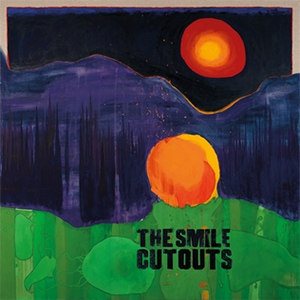
Cutouts is The Smile’s third studio album.
Formed in 2020, The Smile is a band whose members Thom Yorke and Jonny Greenwood are better known for Radiohead. The trio is completed by jazz drummer Tom Skinner, who plays in Sons Of Kemet, among others.
The Smile released their second studio album Wall Of Eyes in January 2024. Cutouts, recorded in the same sessions, hit the shelves in October just nine months later. So history repeats itself; Radiohead also recorded two albums at the same time in the early 2000s and released them in quick succession. These albums are, of course, Kid A (2000) and Amnesiac (2001), which are among the band’s most acclaimed.
12. Jon Anderson & The Band Geeks: True

True is Jon Anderson’s first album with The Band Geeks.
Yes founding member singer/songwriter Jon Anderson made his first solo album in 1976 with Olias Of Sunhillow. Since then, he continued his solo career alongside Yes until 2008 when he was forced to leave the band due to health concerns. Since then, Anderson, now 79, made a full recovery, but a return to Yes, now managed by guitarist Steve Howe, has not been possible. And it won’t be as long as it’s up to Howe.
In his solo career, Anderson has constantly and enthusiastically experimented with different styles with varying degrees of success. Before leaving Yes, Anderson seemed to consciously avoid Yes-style progressive rock, even though there were often progressive elements in his music. This has changed somewhat over the last ten years. Invention Of Knowledge (2016), made with The Flower Kings’ leader Roine Stolt, and Anderson’s own 1000 Hands – Chapter One (2019) leaned more clearly towards symphonic prog. Still, True seems more clearly an attempt to make the kind of music you’d expect from Yes than either of those albums….
13. Needlepoint: Remnants Of Light

Remnants Of Light is Needlepoint’s sixth studio album.
Led by Norwegian guitarist/multi-instrumentalist Bjørn Klakegg, Needlepoint has been releasing consistently high-quality prog albums with more than a hint of the Canterbury scene every three years or so since 2010.
Needlepoint’s albums have a natural, even slightly homemade feel. This was apparent in the first albums in the form of slightly sloppy sounding sounds, but this hasn’t been a problem for a while now and the organic nature of the soundscape on Remnants Of Light is also a purely positive thing, especially when compared to the typical Pro-Tools polished and turbocharged productions of today.
Remnants Of Light is a small-scale music. Sensitive. The songs are short (4-6 min.) so they don’t have time to prog on the scale of some of Needlepoint’s previous albums. The Canterbury feel is also somewhat pushed aside and replaced by folk influences. Especially in the songs ”Head In The Sand” and ”Another Inch Towards You” there is even a lovely Celtic feel that I don’t remember encountering on Needlepoint albums before. Old fans of the band shouldn’t be alarmed though; Needlepoint’s basic sound is largely unchanged and there are still plenty of tasty little prog hooks in the music.
Needlepoint’s previous album Walking Up That Valley was a complete success. Remnants Of Light doesn’t quite match it, but it too offers a very sympathetic dose of melodic light prog.
Best tracks: ”While Our World Is Still Revolving”, ”Another Inch Towards You”
Read also:
- Review: Cos – Viva Boma (1976)
- Levyarvio: King Crimson – The ConstruKction Of Light (2000)
- Review: Camel – Moonmadness (1976)
- Review: Gong – Gazeuse! (1976)
- Review: Mike Johnson – The Gardens Of Loss (2026)
- Levyarvio: Mike Johnson – The Gardens Of Loss (2026)
- Levyarvio: Led Zeppelin – Presence (1976)
- Vuosi vuodelta : Parhaat levyt 2000 – Sijat 11-20
- Review: Univers Zero – Ceux Du Dehors (1981)
14. John Zorn : New Masada Quartet, Vol. 3

John Zorn is releasing a lot of albums these days where he only acts as composer/artistic director and does not participate in the playing at all. There are exceptions. One of these is the New Masada Quartet, formed in 2021. The quartet, which has released two studio albums, features Zorn alongside bassist Jorge Roeder, drummer Kenny Wollesen and guitarist Julian Lage.
Recorded in New York, New Masada Quartet, Vol. 3 is the quartet’s first live album and proves that Zorn, at 71, is still a highly competent instrumentalist. His alto sax still sounds fiercely energetic when needed and screams with impressive incisiveness in the upper register.
The music of the New Masada Quartet is upbeat avant-garde jazz at the more melodic end of the spectrum. The music is at times playful and surprisingly lyrical and at other times very intense and almost violent. Klezmer influences are a central part of many of Zorn’s projects and so it is with the New Masada Quartet, but this time with a little less emphasis. New Masada Quartet, Vol. 3 even slips into the blues at one point, although this is quickly abandoned for a different mood with the ethnic scales of Zorn’s saxophone. Klezmer blues is apparently also possible!
Soloistically, the album is very much Zorn’s show, as Lage’s clean-sounding electric guitar is easily overshadowed by Zorn’s powerful blowing saxophone. On the other hand, Lage’s gentle playing plays an important role as a kind of softening of the overall sound. With Zorn alone, the atmosphere would be too extreme. Of course, Lage does occasionally shine in the lead role with his nimble soloing. A very skilful guitarist, even if his sound is a bit too clean for my taste. Overall, the quartet plays challenging music with an exhilaratingly loose, relaxed, yet clearly committed approach.
A curious feature of the 53-minute, six-track New Masada Quartet, Vol. 3 is that the songs are not indexed as separate tracks on CD or streaming releases. I don’t mind this so much because I always listen to the albums as a whole, but it would be nice to see directly which song is being played at any given time.
The recording is of high quality, except for the drums, which sound a bit flat. Zorn’s saxophone in particular cuts through with a downright ferocious sound. There is also some audience reaction interspersed throughout the songs, which adds a nice authentic live energy.
New Masada Quartet, Vol. 3 doesn’t offer anything particularly groundbreaking in terms of Zorn’s extensive catalogue, but it’s still a highly entertaining document of the New Masada Quartet’s live performance and the fact that Zorn is still not being shy with his horn.
Best tracks: ”Acharei Mot”, ”Dalquiel”, ”Rahtiel”
15. Dave Newhouse: Natura Morta

Dave Newhouse , who previously played in The Muffins, has in the past released solo work mainly under the name Manna/Mirage. In 2024, however, Newhouse announced that Autobiographie would be his last release under the Manna/Mirage name and that he would use his own name in the future.
I had the opportunity to ask Newhouse directly about this change. This is how he answered:
”It was the title of the first Muffins album. I chose it for my solo projects because my own name would not have any listener recognition, but the name ‘Manna/Mirage’ would connect my audience to the music of The Muffins. But I always felt guilty riding off of that album name. So…time to let it go.”
The name doesn’t hurt the man, and it certainly doesn’t hurt the music project, so now that that’s out of the way we can get down to the business of Natura Morta’s music.
Stylistically, Natura Morta doesn’t offer any great turning point in Newhouse’s music, as Natura Morta is a very natural continuation of the Manna/Mirage albums. So again we have mainly instrumental music that successfully balances between gentle Canterbury-style music and more edgy avant-prog. Alongside the tasty melodies there is always enough friction and intrigue.
The musicians playing on the album are also mostly familiar from Manna/Mirage albums. The band features regular drummer Sean Rickman and bass guitarists Jerry King and Guy Segers (ex-UniversZero). Newhouse himself plays keyboards, percussion and a huge variety of wind instruments.
The whole band plays again skilfully, although this time Rickman, the drummer, is, in my opinion, guilty of overplaying here and there.
Man Out Of Time (2021) featured a memorable visit from former Henry Cow guitarist Fred Frith. This time, John Greaves from the same band makes a cameo. Unfortunately, Greaves’ short awkward vocal part is not a particularly interesting attraction, although the reminiscence of Phil Miller and Pip Pyle in the lyrics is a sympathetic touch (and Luciano Margorani successfully channels Miller in his guitar solo).
A few other guests can be heard throughout the album, including on violin, pedal-steel guitar and percussion.
The highlights of the album are the first three tracks ”X Tensions”, ”Moondog Heaven” and ”Stinker Wink Takes A Walk”. Of course, there’s not much to complain about in the rest of the material either.
For example, the title track, which is full of intricate rhythms and Segers’ buzzing bass guitar soars tastefully through the proceedings, also deserves a mention.
”In the opening section of ’X Tensions’, Ricman’s manic, reckless drumming is a little distracting, though certainly a deliberate build-up of tension in itself, but Mark Stanley’s long and winding electric guitar solo is absolutely delightful.
”Moondog Heaven” is a fun, percussively pounding 7/8 time signature, a hypnotic tribute to the eccentric composer Louis Thomas Hardin aka Moondog.
”Stinker Wink Takes A Walk” begins as a playfully militaristic and richly orchestrated marching tune that eventually escalates into a wild jazz tune led by Newhouse’s ferocious baritone saxophone.
So Natura Morta doesn’t really open up any new angles in Newhouse’s output, but I don’t think that’s a problem because there really isn’t too much progressive rock in the world where musical sophistication and playful approachability meet in quite this way.
Natura Morta is only available in a 300 strong CD edition so hurry up if you want it on your shelf!
Best tracks: ”X Tensions”, ”Moondog Heaven”, ”Stinker Wink Takes A Walk”, ”Natura Morta”
16. Aquaserge : La Fin de l’Economie

La Fin de l’Economie is Aquaserge’s seventh studio album.
The world is full of bands like Deep Purple and AC/DC that sound more or less the same from year to year and decade to decade. Then there are bands like Aquaserge, formed in France in 2005, where you never know what direction they’re going to take with their new album.
Aquaserge’s previous album The Possibility Of A New Work For Aquaserge ( 2021) was very avant-garde and the whole album was dedicated to exploring modern art music of the 20th century. After that experiment, La Fin de l’Economie (”the end of the economy”) sounds almost pop. Quirky and experimental pop, but pop nonetheless. La Fin de l’Economie doesn’t really make the pop charts. Not even in France, even if the charming jazz chanson of’A plus’, for example, might be thought to inspire outright national pride.
La Fin de l’Economie also sounds at times remarkably much like the 2000s production of avant-proge pioneer Aksak Maboul, which has also taken a more pop-oriented turn. But who influenced whom? It seems that nowadays the influences between Aksak Maboul and Aquaserge go both ways.
La Fin de l’Economie is largely the work of guitarist/vocalist Benjamin Gilbert, and this time guitars and keyboards take centre stage instead of wind instruments. The clarinets and saxophones still have some delicious parts to play.
The songs, sung in French (with alternating male and female vocalists), are short and melodic. The 12 tracks on the album range in duration from two minutes to five. However, especially on the b-side of the album, it is noticeable that the pop spirit still contains a lot of more avant-garde elements. For example, the jerky rhythm of ”La Police Tueta” (”The Police Kill”) is punctuated by strange alarms and distractions, and the vocal parts themselves are intermittent fast patter.
To be honest, I wish Aquaserge had continued to explore modern art music a little longer, as they did on their previous album, but Aquaserge does what it wants to do and fortunately always with quality and originality. La Fin de l’Economie is further proof that Aquaserge is one of the most vibrant progressive bands around today.
Best tracks: ”Le saut du tigre”, ”Sommets”, ”Copychat”, ”Je suis galaxie”, ”A plus”, ”La Police Tue”, ”Amerikaine”
17. Nala Sinephro: Endlessness

Endlessness is Nala Sinephro’s second solo album.
Belgian-born but now London-based harpist Nala Sinephro (b. 1996) released her first solo album Space 1.8. via Warp Record in 2021. The album, which featured instrumental ambient jazz, was well received, but Sinephro’s second album Endlessness is a significant improvement on her debut.
Space 1.8. was a bit too much background music and although Endlessness may also sound like the background music of a trendy hipster café, its themes have more depth and substance. A little bit of restrained grit has also been planted here and there.
Endlessness consists of a ten-part ”Continuum” that is easy to relate to a musical continuum of spiritual jazz like Alice Coltrane’s, although Sinephro’s music is easier to listen to.
Floating Point and saxophonist Pharaoh Sanders’ joint album Promises (2021) is also an obvious point of reference. Both albums create a floating cloud of soft hypnotic ambience where electronic and acoustic instrumentation with understated string arrangements intertwine seamlessly.
Alongside Sinephry’s own harp and modular synthesizers, Nubya Garcia ’ s saxophone takes centre stage, but also Sheila Maurice-Grey’s flugelhorn, which can be heard here and there among the strings. Drums are only heard on four tracks on the album. Natcyet Wakili of Sons Of Kemet and Morgan Simpson of Black Midi are doing the job with understated elegance.
Endlessness is easy to dismiss as mere musical wallpaper. However, I have found myself getting caught up in the music in a way that the average ambient cannot. And even if Endlessness is just background music, it is extremely stylish as such.
Best tracks: “Continuum 1”, “Continuum 6”
18. Nik Bärtsch’s Ronin : Spin

Spin is the seventh studio album by Nik Bärtsch’s Ronin.
Swiss classical pianist Nik Bärtsch founded Ronin in 2001. From the beginning, the quartet’s music has been an exciting blend of minimalist art music and jazz with a touch of funk. Bärtsch himself has called his music zen-funk. The term ritual groove music is also often used in Bärtsch’s speeches.
Ronin, who recorded for ECM for a long time, has moved on to Spin, under the umbrella of Bärtsh’s own label, Ronin Rhythm Records. The line-up has also changed slightly since the last album (Awase, 2018). The bass guitar is now played by Jeremias Keller, who joined the band in 2020. The quartet is completed by Kaspar Rast (drums) and Sha (wind instruments), who have played alongside pianist Bärtsch for a long time.
However, the changes described above have not had a dramatic impact on the music itself. Bärtsch’s long hypnotic compositions (this time 10-15 minutes) are still based on rather minimalist harmonic material, kicked forward by disciplined, snapping rhythms. Rhythmically, Ron’s music is very sophisticated and they invariably run in irregular time signatures and often in polymetric fashion. Despite this, the quartet manages to conjure up effortlessly captivating grooves. Ronin’s approach makes the complex sound easy.
One of the small differences between Spin and the older albums is that the music this time feels somehow brighter than before. The tempos are slightly faster and the music sounds somehow more light-hearted and liberated.
The first track ”Modul 66″ even reminds me of post-rock as Keller’s playing brings a more rocky beat to the mix. Modul 23”, which alternates between different time signatures, surprises us with its synthesizer pads in the midst of Ronin’s usually very staccato music. At least in my memory this is the first time in the Ronin catalogue that Bärtsch plays a synthesizer in addition to the piano. In itself a small change that seems surprisingly dramatic considering Ronin’s very minimalist and disciplined musical framework.
SoSpin continues in Bärtsh’s distinctive style without any major upheavals, and if you’ve liked Ronin’s previous albums you’ll like this one too. Unless you’ve reached a saturation point in ritual groove music. I thought I had, but apparently I was wrong so many times Spin has already ended up spinning on my turntable.
Best tracks: ”Modul 66”, ”Modul 23”, ”Modul 70_51”
19. Fred Frith: Fifty

In 1974, an album was released that aroused great interest, at least among more experimentally oriented guitarists. It was the first solo album Guitar Solos by Fred Frith, who at the time was mainly known for Henry Cow.
Contrary to what the name might suggest, this was not your typical guitar heroics with wild guitar soloing thrown on top of a rock beat, but a very experimental album. However, the title is apt in the sense that it is music that Frith has created playing guitar alone. And completely without any additional overdubs. Each of the eight tracks on the album was recorded in one take. The result is not at all like typical guitar strumming, but Frith plays a so-called prepared guitar on the album. Or sometimes even two guitars at the same time! The result was eerie and experimental music that doesn’t resemble any traditional guitar repertoire.
With the 50th anniversary of Guitar Solos, the time was right to release a new vinyl edition. The boss of the record company that released the vinyl edition suggested to Frith that a sequel be made. Frith is not a retrospective or nostalgic musician, but surprisingly he agreed. So with Fifty, Frith returns to a prepared solo guitar, using exactly the same guitar (a modified 1936 Gibson K-11) and the same equipment as 50 years ago. So there are no loopers or similar digital-era gadgets.
Of course, 50 years later, Fifty cannot sound as innovative as Guitar Solos, but I find it more enjoyable to listen to than the original while still retaining its experimental edge. This is perhaps not surprising given that Frith now has half a century more experience of improvisation behind him. Frith continues to use and abuse his guitar with delightful versatility. On the first track ”Dawns” Frith’s guitar sounds as sultry and mysterious as a Japanese koto and the next track ”Outer Order” is full of intense guitar scraping and wrenching clatter and clang. This is just a small example of the scale of Frith’s unusual guitar playing.
Fifty is a modern little gem of experimental solo guitar.
At the time of writing, Fifty is only available to buy together with Guitar Solos on vinyl or as a digital album.
Best tracks: “Dawns”, “Outer Order”, ”Jack’s Neap Tide”, ”Locomoting”
20. Cheer-Accident : Vacate

Founded in Chicago in 1981 and led by drummer/multi-instrumentalist Thymme Jones, Cheer-Accident is one of those bands whose new albums you can never really guess what’s coming out this time. Generally speaking, Cheer-Accident’s music can be defined under the broad skies of avant-garde rock, but more strictly speaking, the band’s thirty or so albums are full of surprises.
This time the surprise is that Cheer-Accident made a pop album! Sort of. You could almost say that Vacate is the closest to the usual pop that Cheer-Accident has ever done, but right off the bat, you have to mention that nobody really makes music like Vacate!
At the heart of Vacate are the vocals and piano of Thymme Jones. Jones’ main instrument is usually the drums, but this time they are completely absent from most of the 12 short tracks on the album.
Vacate’s mostly acoustic arrangements are understatedly elegant. Alongside the piano and trumpet played by Jones, there is sometimes a violin, sometimes a cello or wind instruments such as a French horn or flute. Even the trombone sometimes plays a central role. The bass guitar is only heard a few times on the album, so the trombone takes over the low frequencies here and there.
Some of the songs could almost be described as piano ballads, although with the exception of one track there is always other instrumentation in support. Jones handles the vocals surprisingly well for the most part, but in the only real vocal/piano duet on the album, ”Promise”, it is very refreshing to hear Bethany DeGaetano Smoker’s vocal visit. What a soulful and beautiful voice she has!
The band’s frontman Thymme Jones has said that Burt Bacharach (1928-2023) was a major source of inspiration for Vacate. I admit that my knowledge of the output of this master of sophisticated entertainment music is so limited that I probably wouldn’t have made the connection without forewarning, but knowing what I do know, at least in the case of the bossa-nova ’Gilbert’, the connection is clear. So the whole album is, in a way, Cheer-Accident’s take on easy-listening music!
Vacate is one of the last recording projects of the late production guru Steve Albin. The dry, natural soundscape Albin created for the album brings a certain sense of detachment to the material. I’m not sure if that’s a good thing or a bad thing. Probably good. Perhaps a warmer and fuller production would have made Jones’ exceptionally sincere and emotive songs sound even mawkish.
For me, Vacate doesn’t rank among Cheer-Accident’s great albums, but its distinctive chamber pop is yet another testament to the band’s breadth and endless ability to surprise their listeners.
Best tracks: ”Closer”, ”Beached”, ”Price”, ”Promise”
Author: JANNE YLIRUUSI
Other parts of the Year by Year series can be found here.

 Pienemmät Purot
Jätä kommentti