
The author’s picks for the best albums of 2025, ranked 11-25.
In the Year by Year series, I’ll go through my favourite albums from 1969 to the present day.
- Darrifourcq Hermia Ceccaldi : Unicorn And Flexibility (FR/BE) ****
- Tuomo & Markus And Verneri Pohjola : Music For Roads (FI) ****
- Cheer-Accident : Admission (US) ****
- Gloyw: My Father Was A Tree (FR/UK) ****
- Ilkka Arola Sound Tagine : Adventures In The Now (FI) ****
- Mike Oldfield / David Bedford : The Orchestral Hergest Ridge (UK) ****
- Sebastian Fagerlund: Autumn Equinox (FI) ****
- Univers Zero : Live At The Triton 2009 (BE) ****
- Ukandanz : Evil Plan የክፋት እቅድ (FR/ET) ****
- Black Flower : Kinetic (BE) ****
- Perry’s Mort : Craftsman’s Day Trip (FI) ****
- Yazz Ahmed : A Paradise In The Hold (BH) ****
- Eclectic Maybe Band : Cosmic Light Clusters (BE) ****
- Fred Frith: Fred Frith And The Gravity Band (UK) ****
- Radiohead : Hail To The Thief (Live Recordings 2003-2009) (UK) ****
See the best albums of 2024 here.
11. Darrifourcq Hermia Ceccaldi : Unicorn And Flexibility
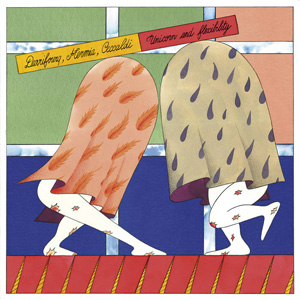
Unicorn And Flexibility is the third studio album by French-Belgian trio Darrifourcq Hermia Ceccaldi.
Two of the musicians in this unique trio, Sylvain Darrifourcq (drums) and Valentin Ceccaldi (cello), come from France, and the trio is completed by Belgian Manuel Hermia (saxophones). All three are virtuoso-level players.
The band’s previous album, Kaiju Eats Cheeseburgers (2020), largely encapsulated the trio’s style, which is also closely embraced by this third album, Unicorn And Flexibility. Darrifourcq Hermia Ceccaldi’s music can be classified as brutal jazz – music that is often heavily based on improvisation, where the structure of the songs is created through intensity, texture, and extremely physical playing, rather than through traditional jazz harmonies or grooves. Dissonance, extended techniques (such as Ceccaldi’s scratching cello and percussive sounds) and complex time signatures are typical elements of brutal jazz, which Darrifourcq, Hermia and Ceccaldi also make use of.
Unicorn And Flexibility offers the same quietly simmering intensity familiar from previous albums, including the rhythmic stretching of space and time. Slow, repetitive sequences erupt into furious storms of sound. Unicorn And Flexibility is music of extremes: on the one hand, quiet minimalism (often tinged with unnerving noises) and patiently building tension; on the other, sudden, extremely violent explosions of sound and controlled chaos.
Unicorn And Flexibility does not seem to rise quite to the heights of its predecessor, partly perhaps because the element of surprise is missing, with the music largely recycling the same techniques. However, it would be unfair to accuse Darrifourcq Hermia Ceccaldi of a lack of innovation, as this is only their third album together, which, despite its familiarity, moves in a very original terrain within the broader field of jazz. Darrifourcq Hermia Ceccaldi have developed their own musical language, and that doesn’t happen very often.
Best tracks: ”Moustache et vernis, sans cape et sans collants”, ”Homo Narrans”, ”Fatification”
12. Tuomo & Markus And Verneri Pohjola : Music For Roads
Tuomo Prättälä and Markus Nordenstreng met in spring 2007 at a Woodstock memorial concert held in Helsinki as part of the Maailma kylässä festival. Both wanted to perform songs by The Band, and their joint performance led to friendship and eventually to long-term collaboration.
However, it took almost a decade for the duo’s debut album, Dead Circles (2016), to be released, but when it finally came out, it received positive feedback – albeit with fairly limited attention. Their next album, Game Changing (2023), raised the bar even higher, receiving praise even on an international level and a spot in the top 10 of the Finnish album chart. I enjoyed Game Changing myself, but I wasn’t really blown away by it.
The third album, Music For Roads, changes the formula quite radically, even though the Americana heart still beats strongly. Now Finland’s most respected jazz trumpeter, Verneri Pohjola, has been brought in as an equal partner. At the same time, the music has moved even more strongly in the direction of jazz, and most significantly, the vocals that were previously at the center have been left out entirely. The result is a completely instrumental album (with the exception of the bonus track ”Waiting Room,” sung by guest guitarist Marc Ribot).
This proves to be the right decision. Nordenstreng’s vocals on previous albums were not particularly interesting, and singing about American tragedies from a Finnish perspective sounded false at times. Music For Roads certainly moves in just as un-Finnish landscapes as its predecessor, but in instrumental form, the ”cultural thefts” seem at least easier to digest. Maybe it matters, maybe it doesn’t – in any case, the end result is convincing.
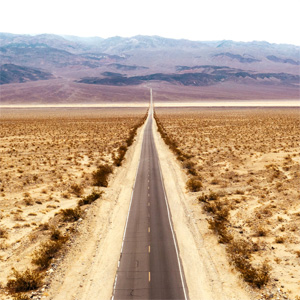
Now that the music can flow freely without the constraints of choruses, it seems to capture the very landscape suggested by the album cover: a dreamlike desert and a straight road leading to the mountains. Music For Roads paints pictures of an old pickup truck speeding through the desert, leaving a cloud of dust in its wake. It’s hard to say how much the cover influences this mental image – but in the end, it doesn’t matter. The cover and the music form a seamless work of art, supporting each other.
Instruments strongly associated with Americana, such as the banjo and dulcimer, jingle alongside Pohjola’s trumpet. At the same time, Prättälä’s Moog and Mellotron occasionally bring in prog-like colors. The whole is both traditional and boldly seeking new tones, nostalgic in mood but still a fresh combination of American folk and Nordic jazz. All in all, a truly successful fusion.
Like Game Changing, Music For Roads is a meticulously produced and finely crafted album. The album was mainly recorded live with the entire seven-piece band playing in the same space, which is rare these days but often rewarding. As long as you have skilled musicians and a competent engineer. And now that’s the case. The sound recorded on tape is exceptionally rich and gives the music a spacious, wide-screen feel. As a small curiosity, it’s worth mentioning that the album is probably the world’s first analog recording to also be available in Dolby Atmos.
I’m not a car guy, but if I ever ended up driving through the desert, one thing is certain: Music For Roads would be part of the soundtrack for the trip.
Best tracks: ”Appalachian Landscape”, ”Anyhow Lane”
13. Cheer-Accident : Admission
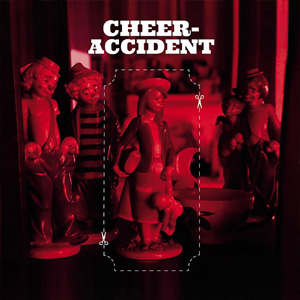
Admission is Cheer-Accident’s 26th studio album.
Founded in the early 1980s, American avant-rock band Cheer-Accident is known for a) always having surprises in store and b) never sounding the same from one album to the next. The latter is true this time around as well, but the biggest surprise with Admission is actually that it doesn’t surprise.
Cheer-Accident’s previous album, Vacate, was a semi-acoustic work that drew inspiration from Burt Bacharach’s sophisticated pop music. Admission leans toward a more electronic sound and sounds quite different from its predecessor, but on the other hand, Cheer-Accident has traveled these art rock paths before, for example on the albums Fades (2018) and Here Comes The Sunset (2022).
Admission seamlessly combines piano ballad-like sections with buzzing guitar riffs, lush synthesizers, and polished multi-layered vocal arrangements (featuring alternating male and female singers). The pop hooks may not be as sharp as on Fades, but both the riffs and choruses are certainly catchy. Of course, the album doesn’t veer into pure pop, as the accessible parts are usually overshadowed by dissonance or some other slight oddity lurking around the corner.
The highlight of the album is the tasty riffing of ”Cold Comfort,” which at first seems like a krautrock-inspired jam, but ultimately changes shape quite naturally and deliciously. At the end of the seven-minute song, there is a dramatic twist when it becomes oppressive in the last minute, with numerous overlapping trumpets and synthesizers creating a frenzied buzz, punctuated by strange shouts. A very Cheer-Accident-like twist.
The band’s leader, drummer, and multi-instrumentalist Thymme Jones has declared the album to be the band’s best. I wouldn’t go quite that far, but I would say that Admission ranks among the top quarter of the band’s extensive output. The compact 36-minute Admission offers consistently strong but somewhat unsurprising Cheer-Accident music. Which, in fact, is surprising in itself when it comes to Cheer-Accident!
Best tracks: ”Cold Comfort”, ”Weird Organ”, ”Gold-Plated Savior”
14. Gloyw: My Father Was A Tree

My Father Was A Tree is Gloyw’s debut album.
Singer-bassist John Greaves is best known for his role in the pioneering avant-prog band Henry Cow, but he has also played in numerous other projects and bands, such as National Health, Soft Heap, and The Lodge, as well as releasing a large number of solo albums.
Greaves’ latest band, Gloyw (gloyw is a Welsh word meaning bright and shining), is a power trio featuring guitarist Olivier Mellano and drummer Régis Boulard. Mellano has worked on alternative rock and symphonic projects, while Boulard’s roots lie in improvisation and experimental rock. Boulard is also a member of the current John Greaves Band lineup.
The album’s title comes from the song ”Le Garçon Vert” featured on Greaves’ solo album La petite bouteille de linge (1991). Originally a jazzy piece arranged for a ten-piece horn section, the song has now been transformed into something completely new: fast and heavy rock. The album also includes a new, more powerful and aggressive interpretation of Greaves’ slightly more recent song ”Kew Rhone is Real” (Life Size, 2018).
However,My Father Was A Tree is not just a Greaves show, as most of the material was composed and improvised together with Mellano and Boulard. Stylistically, the album is quite diverse: at times, its bright guitars are reminiscent of dream pop, while at other times, the noisy soundscapes bring to mind post-rock. The defiantly raucous John Lennon cover ”Working Class Hero” sounds like Nick Cave And The Bad Seeds’ post-punk, and most of the time the music rocks quite hard somewhere between art rock and avant-prog.
Greaves’ singing voice no longer sounds as it used to, and in many places one could speak of spoken word rather than actual singing. However, this is surprisingly little of a bother, as Greaves’ voice – often mixed to the surface – is still extremely charismatic to listen to. Greaves, who has lived in Paris for a long time, switches smoothly between English and French from song to song.
My Father Was A Tree is yet another shining example of how 75-year-old John Greaves is still a creative artist. Hopefully, this won’t be Gloyw’s only album.
Best tracks: ”A Word – The Passing Strange”, ”Un Bout de mon Cœu”, ”Kew Rhone is Real”, ”My Father Was A Tree”, ”Working Class Hero”
Read also:
- Review: Camel – Moonmadness (1976)
- Review: Gong – Gazeuse! (1976)
- Review: Mike Johnson – The Gardens Of Loss (2026)
- Levyarvio: Mike Johnson – The Gardens Of Loss (2026)
- Levyarvio: Led Zeppelin – Presence (1976)
- Vuosi vuodelta : Parhaat levyt 2000 – Sijat 11-20
- Review: Univers Zero – Ceux Du Dehors (1981)
- Levyarvio: Steve Walsh – Glossolalia (2000)
- Year by Year : Best Albums of 1976 – 21-29
15. Ilkka Arola Sound Tagine : Adventures In The Now

Adventures In The Now is Ilkka Arola Sound Tagine’s third studio album.
Adventures In The Now is exactly what its name suggests: adventurous, effortlessly melodic music that feels both playful and thoughtful.
This time, the band’s leader, Ilkka Arola, leaves the oud completely aside and focuses on the bouzouki, whose sharp and clear sound is given plenty of space on the album – sometimes even at the expense of his own trumpet and Topi Korhonen’s guitar. The solution works, as Arola’s bouzouki licks are not only technically skilled but also delightfully fun to listen to. The dialogue between the new and the old comes together naturally as futuristic-sounding synthesizers intertwine with the traditional bouzouki. At times, we also hear Sofia Tarkkainen’s wordless vocals, which bring airiness and human warmth to the melodies.
At the heart of the music is a lively, cheerful groove that never slips into excessive sweetness. There is usually a suitable dose of Slavic melancholy to balance the whole. Jazz may not be quite as central to the music as on the band’s previous albums, but the atmosphere still has the spontaneity typical of jazz. This lively and breathing atmosphere is also due to the recording technique: the songs were recorded efficiently in 1–3 takes with the whole band playing together. The rhythms come to the fore more clearly than on previous albums, but the melodies have not been forgotten – the best proof of this is ”Surrenderer,” whose heroic theme brings to mind the best moments of Pekka Pohjola.
The album opener, ”Ice Cream Is,” even veers toward pop. The instrumental track could almost be Arppa (Finnish pop artist with jazzy twist) without vocals, but it still rides on a heavy Turkish disco groove, with the bouzouki playing a North African-style melody. Tarkkanes’s wordless sighs and Arola’s short but intense synthesizer solo round off the whole. The album’s finale, ”Last 10 Minutes,” opens with heavy synthesizers reminiscent of Vangelis – a beautiful and wistful ending to a 38-minute journey.
There are currently numerous high-quality ethno-jazz bands operating around the world, but among Finnish names, Ilkka Arola Sound Tagine is undoubtedly at the forefront. Adventures In The Now proves once again that this quintet has no reason to feel ashamed alongside the international elite. The result is a truly tasty and playful ethno-fusion jazz album, with a light pop angle that adds a new kind of appeal.
Best tracks: ”Ice Cream Is”, ”Mothers With Feathers”, ”The Flying Cyborg Whales”
16. Mike Oldfield / David Bedford : The Orchestral Hergest Ridge

When Mike Oldfield’s debut album Tubular Bells, released in 1973, became a surprise smash hit, the record company Virgin found itself with a somewhat unusual problem. Tubular Bells was the company’s first release, and now they had a potential superstar on their hands who didn’t want to go on tour and promote his hit. One way the record company tried to solve the problem was Virgin boss Richard Branson’s idea to hire Oldfield’s old bandmate David Bedford from Kevin Ayers’ band to arrange an orchestral version of the album. If Oldfield refused to perform his one-man orchestral work live, then a real symphony orchestra would have to do it. Although Bedford had played rock music in Ayers’ band alongside Oldfield, he was not just any rocker, but a graduate of the Royal Academy of Music who specialized in avant-garde art music.
Since Bedford himself moved between academic art music and progressive rock, he was an excellent choice to orchestrate Oldfield’s rock symphony. Oldfield himself has not been particularly complimentary about the end result (perhaps he is a little jealously protective of his own work?), but I think it is a very successful orchestral interpretation of the subject matter, which does not resort to the most obvious choices. Released in January 1975, The Orchestral Tubular Bells is definitely one of the best rock-goes-classical arrangements. Admittedly, Tubular Bells also offers a more fertile starting point for the subject than the average rock or pop album.
In the case of Hergest Ridge, the follow-up to Tubular Bells released in 1974, the situation remained unchanged in the sense that Oldfield, who was introverted and suffered from panic attacks, was still not going on tour. So, soon after completing his orchestral score for Tubular Bells, Bedford began writing arrangements for Hergest Ridge as well.
In my review of Hergest Ridge, I described the album’s music as pastoral symphonic poetry, and due to its more coherent structure and more natural development of themes than its predecessor, it is even more suitable for performance by a symphony orchestra than Tubular Bells. Bedford once again succeeds admirably in his task.
The Orchestral Tubular Bells was quickly released as an album in 1975, but the orchestral version of Hergest Ridge remained in limbo for decades. Perhaps this was because the original Hergest Ridge did not become a phenomenon like Tubular Bells, or perhaps Oldfield even opposed its release. In 2025, however, the small FM Concerts Broadcast label finally released The Orchestral Hergest Ridge, which Oldfield fans had been waiting for for a long time. The recording is based on a high-quality C-cassette recording that was found somewhere and restored using modern technology under the supervision of Philip Newell (Virgin’s leading sound engineer in the 1970s). The end result is not a hi-fi feast, but it sounds perfectly acceptable. The recording quality varies slightly, but the level remains perfectly acceptable throughout.
The Orchestral Hergest Ridge was recorded live in Glasgow, Scotland, on September 5. The orchestra is The Scottish National Orchestra, conducted by Iain Sutherland, with soloists Patricia MacMahon (soprano) and Steve Hillage (electric guitar). Hillage, known from Gong, also played live on the orchestral Tubular Bells, although he was only heard briefly in the acoustic sections at the end. Now Hillage plays electric guitar in a slightly larger role. However, the large orchestra with its traditional instruments remains firmly in the lead. Bedford sticks closely to the framework of Oldfield’s original composition, but seems to smooth out its edges. For better or worse. In Bedford’s hands, some of the transitions are smoother than before, and his arrangement emphasizes the beautiful aspects of the music (the cellos at the beginning of the second part are magnificent), but on the other hand, when transferred to a traditional orchestra, some of the uniqueness of the original version is lost.
Oldfield’s original Hergest Ridge was an extremely original-sounding rock symphony, but Bedford’s version is just another neoclassical orchestral composition. It is also impossible for the orchestra to achieve some of the strangest and most intense ideas of the original version. For example, the power of the legendary electric thunderstorm section in the second half is not achieved, even though Hillage is brought in to play guitar alongside the grinding strings and brass.
Mike Oldfield’s original Hergest Ridge is, of course, always the definitive version of the composition (although in this case, one could also argue about different mixing versions), but David Bedford’s orchestration offers an interesting alternative perspective and is, overall, one of the most successful adaptations of rock music for orchestral music ever.
Best track: ”Hergest Ridge Part One”
17. Sebastian Fagerlund: Autumn Equinox

Sebastian Fagerlund (b. 1972) is a Finnish contemporary composer whose works are characterized by powerful rhythmic energy, rich orchestration, and organically flowing structures. His works have been performed by many notable orchestras and soloists, and his music has received international attention, particularly with the works ”Ignite”, ”Drifts”, and the opera ”Syyssonaatti” (”Autumn Sonata)”.
Fagerlund’s prolific music has been released regularly on CD in recent years, and this time too, the focus is on quality with BIS. Autumn Equinox brings together three relatively recent compositions by Fagerlund for chamber orchestra, performed by the Lapland Chamber Orchestra conducted by John Storgårds.
The opening track, “Octet: Autumn Equinox,” is a three-part work for clarinet, bassoon, French horn, two violins, viola, cello, and double bass. The work was inspired by Fagerlund’s opera ”Syyssonaatti” (”Autumn Sonata”), and its music combines rhythmic intensity with a melancholic, slowly unfolding soundscape. Right at the beginning of the composition, beautiful clarinet passages create a mystical atmosphere, accompanied by the wondering, fluttering sound of the bassoon – wonderful to hear, but only an introduction to a colorful 21-minute journey.
”Arcantio” is a 19-minute concerto for double bass and chamber orchestra, composed and dedicated to soloist Niek de Groot. This single-movement, organically structured composition takes its skilled soloist on a journey from virtuosic runs to contemplative moods.
The album concludes with the nearly 12-minute-long “Sky II,” a 2023 revision of an earlier work originally composed for a baroque orchestra. The composition has now been arranged for flute, bass clarinet, harpsichord, guitar, and string quintet (two violins, viola, cello, double bass). The work is a single-movement, fast-paced piece in which lively rhythms, bright textures, and repeating motifs create a delightful impression of constant motion. The baroque instrument, the harpsichord, crackles amusingly as part of the modern soundscape.
Autumn Equinox is yet another demonstration of Fagerlund’s ability to create completely unique art music, combining the continuity of traditional symphonic thinking with the freedom of modern harmony, rhythms, and textures.
Best tracks: ”Octet: Autumn Equinox”, ”Sky II”
18. Univers Zero : Live At The Triton 2009

Live At The Triton 2009 is Univers Zero’s third live album.
Founded in 1974, Belgian avant-prog band Univers Zero made a somewhat surprising comeback in 2023 with a new studio album after a long hiatus. Released after more than nine years without an album, Luer was very much the work of founding member Daniel Denis. So much so that it would be more natural to call it a solo album by the drummer than a real Univers Zero album. However, it was released under the name Univers Zero, and there was nothing wrong with that, as it was a high-quality album. Univers Zero did not return to performing live, which was no surprise, as Denis no longer had a real band around him at this point.
In 2009, Univers Zero celebrated its 35th anniversary with two sold-out shows in June at the Triton club near Paris. The band was excellent, with Denis joined by two Univers Zero veterans, Michel Berckmans (bassoon, oboe) and Andy Kirk (keyboards, guitar). The lineup was completed by keyboardist Pierre Chevalier, familiar from Present, wind player Kurt Budé, bassist Dimitri Evers, and violinist Martin Lauwers.
The 71-minute Live At The Triton 2009 includes six long tracks from different periods of Univers Zero’s career. The material from their very first albums is not included, but their mature mid-career production is represented by ”Présage” from the Uzed album (1984) and ”Dense” from the Ceux du Dehors (1981), while the compositions from their comeback period are strongly represented by ”Xenantaya” and ”Civic Circus” from the album The Hard Quest (1999). Also included is a track that touches on the band’s formal album release: ”Toujours Plus à l’Est,” originally released on the Crawling Wind EP (1983), as well as Andy Kirk’s brand new composition ”Warrior.” The album made its studio debut the following year with the release of Clivages.
The band’s challenging and dark-toned material is played skillfully and energetically throughout. It doesn’t quite reach the same level of smoothness as 2006’s Univers Zero Live, but on the other hand, the slightly rougher and, I would say, more dangerous approach of these interpretations is very pleasing. The arrangements of the original songs are largely respected, but many of the tracks are stretched out a bit thanks to the long solos. The intense solos by wind player Berckmans and violinist Lauwers in the song ”Présage” are particularly impressive. The slightly different instrumentation also brings a pleasant new angle to some of the songs. Denis’s idiosyncratic orchestral drumming is wonderful to hear, as always.
The Triton gigs were also filmed, and it was assumed that a DVD release would appear sooner or later. Well, this time the latter came true, because now, 16 years later, Live At The Triton 2009 offers a CD release accompanied by video footage of the gig. The set list is identical to that on the CD. The image quality of the concert, filmed in a dimly lit club, is mediocre. The editing is the weakest aspect of the concert recording, as there is far too much cross-fading; every single close-up is also a cross-fade! This, combined with the dark image, makes the whole thing look rather muddy. The sound quality is good, although not quite at the same level as on the CD. In any case, the DVD is an excellent bonus to the CD, which, at least for me, is the main attraction. It’s rare to be able to enjoy avant-prog with an accompanying video!
At the time of writing, it is unclear whether Univers Zero still has a future as a recording or even touring band, but the high-quality recording Live At The Triton 2009 is a welcome reminder of just how unique and powerful this band is.
Best tracks: ”Présage”. ”Xenantaya”, ”Dense”
19. Ukandanz : Evil Plan የክፋትእቅድ

Evil Plan የክፋትእቅድ is Ukandanz’s sixth studio album.
French-Ethiopian Ukandanz plays hard-hitting jazz-rock with an emphasis on rock – and heavy rock at that. However, the band has a couple of aces up its sleeve. One of them is their ethiojazz influences, which are brought to the fore by Ethiopian-born vocalist Asnake Gebreyes, whose singing style combines fast, intense vibrato with microintervals and ritualistic cries.
For some reason, Ukandanz made their fourth album, 4 Against The Odds (2022), as an instrumental quartet. And sure enough, the quartet managed to create a nice racket even without a vocalist. Gebreyes returned on the album Kemekem ከመከም (2023), and he also features heavily on Evil Plan.
Kemekem ከመከም contained some filler, but Evil Plan is pure gold from start to finish. Of course, it helps that the album is extremely concise: 27 minutes and change. The highlight of the album is a surprising cover version of Black Sabbath’s classic ”War Pigs.”
Ukandanz’s version of ”War Pigs” is not a straightforward cover, but a radical reinterpretation. In it, Tony Iommi’s iconic riff is transferred to tenor saxophonist Lionel Martin, and the metallic weight is replaced by a breathable energy based on polyrhythm. Martin does not imitate the power of the guitar distortion, but transforms it into the expressive power of the wind instrument: the riff bends to the rhythm of breath and articulation, with vibratos and overblowing replacing the distortion – which is more than adequately provided by Fred Escoffier’s warmly buzzing organ. The band builds a furious but organic sound, in which heavy rock is transformed into a ritualistic protest through Ethiopian modality and ecstatic free jazz solos. Above this rises Gebreyes’ intense and extremely soulful Amharic vocals, which shift the anti-war theme into a new context. He stretches out phrases, uses his voice as an almost shamanic instrument, and gradually builds up the tension of the song – at first almost narrative, ending in a cathartic scream. There is more despair and defiance in his voice than in Ozzy Osbourne’s original interpretation.
”War Pigs” is a prime example of how to create a brilliant cover: the essence of the original material is transferred to a completely different genre, after which the performing band’s own unique soul is implanted into it.
However, the charm of Evil Plan does not rely solely on Black Sabbath’s classic, as the rest of the material is also strong. For example, the intermittently striking rhythm track of the song ”Liwsedsh Andken ልውሰድሽ አንድ ቀን” is magnificent and demonstrates how skilled the band’s rhythm section is. The hypnotic and almost meditative instrumental closing track ”Song For Francis” features some truly delicious electric piano solos and a rough saxophone solo.
At less than half an hour long, Evil Plan የክፋትእቅድ leaves the listener feeling a little hungry, but that’s not necessarily a bad thing – you’ll want to come back to this album again soon. And again, and again.
Best tracks: ”Liwsedsh Andken ልውሰድሽ አንድ ቀን”, ”War Pigs”, ”Song For Francis”
20. Black Flower : Kinetic

Kinetic is Black Flower’s sixth studio album.
Belgian band Black Flower was founded in 2012 by classically trained wind instrument player Nathan Daems. Black Flower is a quintet whose carefully produced nu-jazz-inspired music effortlessly combines influences from ethio-jazz, afrobeat, dub, progressive rock, and who knows what else. It is, in other words, a true musical fusion.
On Black Flower’s previous album (Magma, 2022), I was particularly delighted by the band’s first song with lyrics, ”Morning In The Jungle.” In my review of the album, I hoped for more of the same, and Black Flower delivers; Kinetic also features one song with vocals, sung once again by guest star Meskerem Mees. ”Monkey System,” which begins with mystical baritone saxophone riffs, pulsates with a modern vibe, and Mees sings witty, playful, and ironic lyrics about systemic repetition and routines that seductively and amusingly rob people of their freedom. This truly magnificent song is crowned by Daems’ gentle saxophone riffs and occasional dissonant squeaks.
I admit that it feels a little silly to rave about the vocal tracks from a band whose six studio albums, with the exception of two, consist of instrumental music. Especially since there is absolutely nothing to complain about in Black Flower’s ”normal” music. This is evidenced, for example, by the delicate but rough ethnic flute sections of the nearly ten-minute title track, which utilizes Arabic scales and floats on a solid polyrhythmic foundation, managing to sound both modern and swinging and tantalizingly ancient. One of the strengths of Kinetic and Black Flower’s music in general is precisely how effortlessly and naturally the new and the old come together in it.
Although the quality of the tracks declines slightly towards the end, Kinetic is another solid effort from Black Flower and proof that this Belgian quintet is one of the key players in the currently booming ethnic jazz scene.
Best tracks: ”Kinetic”, ”Monkey Business”, ”Synesthetic”
21. Perry’s Mort : Craftsman’s Day Trip

Craftsman’s Day Trip is Perry’s Mort’s first studio album.
Perry’s Mort is a project founded in 1990 by Olavi Sammalkanto and M. O. Kihlström. According to the duo, they have made numerous albums together, but Craftsman’s Day Trip is the first to be released to the general public. Despite Perry’s Mort’s long history, Craftsman’s Day Trip contains only new and fresh material and is not a half-hearted compilation from decades past, but a coherent album.
All the music on the album is played by Sammalkanto and Kihlström, both of whom are multi-instrumentalists. Sammalkanto plays keyboards, tin whistles, accordion, percussion instruments, and various sampled and synthetic virtual instruments, among other things. Kihlström focuses more on the fretless bass, electric mandolin, bouzouki, and electric guitars, but also plays percussion. There are no particularly virtuosic flourishes to be heard; instead, the duo focuses on creating stylish atmospheres and interesting textures.
The duo themselves refer to Craftsman’s Day Trip as a concept album, but I am still unsure what the actual theme of the album is. It seems to be about everyday occurrences and situations, as the song ”Lists, Plans And Getting Somewhere,” for example, seems to recite a completely ordinary grocery shopping list. The music is instrumental, but it is spiced up here and there, quite successfully, with random snippets of speech.
As is often the case these days, Craftsman’s Day Trip was recorded remotely, with Sammalkanto and Kihlström, who live in different parts of Finland, working on it separately in their own home studios. Such projects can sometimes sound a bit wooden or sterile, but Craftsman’s Day Trip is an exceptionally successful work. The sounds are excellent throughout, and every sound has clearly been carefully considered. The soundscape is often minimalist and open, but never boring. Small squeaks, effects, and other details floating in the background contrast nicely with the rhythmic and melodic elements moving on the surface. The mixing of the album makes exemplary use of space, and I hear something similar to Mike Oldfield’s superbly recorded and produced Amarok (1990), which is, of course, a much denser mix on average.
Craftsman’s Day Trip can be described as a kind of sound sculpture rather than traditional ”songs.” However, this is not just some hi-fi ambient mumbling, as it features plenty of charming melodies and catchy rhythmic ideas. The music often has ethnic tones that are difficult to pinpoint, and in this sense it reminds me of trumpeter Jon Hassell’s ”Fourth World” concept, in which he combined primitive and futuristic sounds, drawing inspiration from musical traditions from different corners of the world. At times, it also brings to mind Kimmo Pohjonen’s sound experiments and the ethno-jazz of Belgium’s Black Flower. Kihlström’s controlled electric guitar sound occasionally takes my thoughts in the direction of the aforementioned Oldfield. Perhaps there are also influences from the music of the versatile composer and percussionist Morris Pert, from whose name the entire project was once derived.
Despite the aforementioned comparisons, Craftsman’s Day Trip is, on the whole, a delightfully original listen. In fact, in Finland, the promised land of retro prog, it is very rare to find progressive music that sounds this fresh and new.
The album is only 29 minutes long, and the time spent listening to it flies by. I would have liked to spend a little more time in the musical world created by the album. Hopefully Perry’s Mort will release more music for everyone to hear soon, now that the floodgates have finally been opened.
I was lucky enough to get my hands on a high-quality CD-R copy of the album, which is only available to the band’s inner circle (of which I am not a member), but unfortunately there is no physical release of Craftsman’s Day Trip available to the general public. However, the album can be listened to on all major streaming services.
Best tracks: “Small Hours”, “Impulse Buying Opportunities”
22. Yazz Ahmed : A Paradise In The Hold
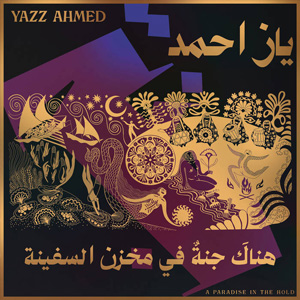
A Paradise In The Hold is trumpet player Yazz Ahmed’s fourth studio album.
Born in Bahtain, trumpeter Yazz Ahmed (b. 1983) has emerged over the past decade as one of the most original voices in British jazz, combining Arabic influences, electronic tones, and the improvisational freedom of jazz. Her previous works, La Saboteuse (2017) and Polyhymnia (2019), have established her as a trailblazer in the field of modern ethno-fusion – an artist who is capable of both challenging and captivating her audience. A Paradise In The Hold is Ahmed’s fourth studio album, continuing her expanding vision toward ever richer textures and cultural layers.
Ahmed describes the album as follows: “The music was composed for my long-standing seven-piece band Hafla, which was featured on my second album, La Saboteuse. The band features bass clarinet, vibraphone, Fender Rhodes/piano, bass guitar, Arabic percussion instruments, and drums, and the ensemble is reminiscent of the classic jazz fusion palette of the 1970s. For the first time, I specifically composed songs. Both wordless and in Arabic and English.” This description is apt; the album truly exudes the warmth of 1970s fusion, but at the same time, its sound has been carefully modernized, bringing to mind Arooj Aftab’s restrained and hypnotic ethno-pop fusion.
The delightful dialogue between the electric piano and flugelhorn in the title track, “A Paradise In The Hold,” forms the heart of the album: it is both contemplative and moving, like the sea shimmering in the sun. Some of the slower songs, however, are a bit dull, and Ahmed is at her best this time around in the faster-paced songs such as ”Her Light,” where fierce polyrhythms drive the song forward and create exceptional intensity. I would have liked to hear more of this on the album. In ”Mermaid’s Tears,” I even hear hints of Canterbury. In particular, Randolph Matthews’ soft baritone voice and uniquely rhythmic phrasing seem to echo the warmth and ironic lightness of that appealing genre.
At 70 minutes, A Paradise In The Hold is hopelessly overlong and could have done with some editing, but it still contains enough insights and compositional boldness to keep you hooked. Although not all the pieces quite fall into place, Ahmed’s vision and the chemistry between the musicians make the album a consistently enjoyable listening experience. A Paradise In The Hold reinforces her position as a key jazz innovator of her generation.
Best tracks: ”A Paradise In The Hold”, ”Her Light”, ”Mermaid’s Tears”
23. Eclectic Maybe Band : Cosmic Light Clusters

Cosmic Light Clusters is Eclectic Maybe Band’s fifth studio album.
Eclectic Maybe Band is a project founded in 2016 by Belgian bassist Guy Segers, known from Univers Zero. As the name suggests, this is not a band in the traditional sense, but rather a multinational group of musicians assembled by Segers that varies from album to album, with certain regular members: Michel Delville (guitar), Pierre Bernard (flute), Jean-Pierre Soarez (trumpet), and Sigrid Vandenbogaerden (cello). Cosmic Light Clusters Segers has managed to assemble an exceptionally talented group of musicians, with no fewer than 29 players performing on more typical rock instruments as well as various classical instruments such as wind and string instruments. The sound is electro-acoustic, with acoustic instruments playing the leading role, while Segers’ virtual instruments and samples occasionally bring in strong electronic tones.
As can be deduced from Segers’ background in Univers Zero, Cosmic Light Clusters also offers quite dark and complex avant-prog. However, instead of Univers Zero, the music is often more reminiscent of Henry Cow or Art Zoyd. Classical tones are also very strong. The influences seem to come from early 20th-century composers (Bartók/Stravinsky), but also from more modern art music in the style of Ligeti and Penderecki, which is particularly evident in the way the music uses dense clusters of notes to create atonal background textures and harmonies. These clusters often create a rather cosmic atmosphere, which was probably the goal of Segers, who is passionate about astronomy.
The album is a mix of composed and improvised music. Of the ten tracks on the 68-minute album, four are collective improvisations and the rest are compositions by Segers. Segers and his musicians succeed in both areas. The improvisations are in some ways even more successful, as they convey a genuine joy of playing. The execution of the composed material is sometimes a little stiff, lacking energy and roughness (which is not helped by the cheap and somewhat sterile-sounding production), and the poetry recitation in the track ”Hypnopédie” does not particularly inspire this listener, at least. On the other hand, Cathryn Robson’s guest vocals on the otherwise instrumental track ”B2 Or Not 2B / Astrum Argentinum” are welcome and successful. In keeping with avant-prog traditions, the association with Dagmar Krause is strong.
Despite its shortcomings, Cosmic Light Clusters is fascinating and challenging music that should not be missed if you are interested in modern chamber music spiced with rock elements.
Best tracks:”Cratère”, ”B2 Or Not 2B / Astrum Argentinum”
24. Fred Frith: Fred Frith And The Gravity Band

In 1980, guitarist Fred Frith, known from Henry Cow, released his second solo album, Gravity. The album became a long-time favorite among Frith’s fans. And no wonder, because it is a truly exhilarating album. The playful compositions were full of complex rhythms and constant changes in time signature. It often drew inspiration from traditional Balkan dance music. The playful compositions were full of complex rhythms, constant tempo changes, and intricate harmonies, but also featured truly catchy and beautiful melodies. Frith used the Swedish band Samla Mammas Manna and the American band The Muffins as backing bands, so everything was played with more than sufficient virtuosity. As far as I know, the music from Gravity was not performed live after the album’s release. Not until more than 30 years later.
Frith is not a musician who leans toward nostalgia, quite the contrary, but somehow clarinetist Aaron Novak and keyboardist Dominique Leone managed to persuade the avant-garde legend to return to his old classics. Novak and Leone assembled their own bands to back Frith, forming the 10-piece The Gravity Band. Gravity was performed live for the first time in 2012, followed by a few occasional gigs, and the project culminated in festival appearances in the Netherlands and Germany in 2014. These gigs were compiled into the album Fred Frith And The Gravity Band, which was finally released by Klang Galeria in 2025.
Gravity is played in its entirety, followed by Massacre’s ”Killing Time” and a song called ”Not Quite Tom,” the origin of which I am unsure. The ten-piece band, consisting of relatively young musicians (two guitars, a drummer, a violinist, a saxophonist, a keyboardist, a bassist, and a percussionist), plays the material with a relaxed but confident touch. They probably haven’t rehearsed much, and at least some of the band are probably playing from sheet music (Frith had carefully notated the original compositions). The arrangements do not stray too far from the original, although the slightly different instrumentation brings a new spirit to the music. Here and there, the songs are stretched out a little with extra solos and improvisation. The original material was played with razor-sharp precision, but now the approach is a little looser and perhaps a touch more rocking.
One might have expected a radical reinterpretation from Frith, but instead Fred Frith And The Gravity Band offer a warm and clearly enthusiastic live version of the beloved album. A complete reinvention would certainly have been interesting, but such fine music deserved to be performed live as it is – even if it is decades late. This recording does not surpass the original, but it still offers a pleasant and atmospherically different perspective on Gravity, and therefore deserves to be heard alongside the classic.
Best tracks: ”The Boy Beats The Rams”, ”Spring Any Day Now”, ”Don’t Cry For Me”, ”The Hands Of The Juggler”, ”Slap Dance”, ”A Career In Real Estate”
25. Radiohead : Hail To The Thief (Live Recordings 2003-2009)

Radiohead’s sixth studio album, Hail To The Thief, released in 2003, was a huge disappointment for me. Its predecessors, Kid A and its sister album Amnesiac, were the albums that made me a Radiohead fan for good. After those bold and experimental albums, Hail To The Thief’s return to more straightforward rock felt like a dreary shift. The worst part, however, was the album’s plastic and squashed-sounding production: the album’s flat, compressed soundscape did not really invite you to immerse yourself in the music.
Over the years, I have returned to Hail To The Thief from time to time, and my general feeling has been, ”Well, it wasn’t as bad as I remembered.” Nevertheless, the album has mostly been gathering dust on my shelf, and I’ve preferred to listen to some of the really good Radiohead albums.
Now, somewhat surprisingly, more than 20 years after the release of the original Hail To The Thief, Radiohead has released a live album that brings together live performances of songs from that album over a period of six years. With the exception of two songs, the album includes performances of all the songs on the album. This makes one wonder whether the band itself was dissatisfied with the original studio album and therefore wanted to release an alternative version. Perhaps. On the other hand, the fact that Radiohead has played so much of the album’s material live shows that even if the album itself did not completely satisfy its creators, the raw material was still appealing enough to be performed alongside their old classics.
And indeed: freed from the dreariness of the studio album’s sound, the music on Hail To The Thief comes alive in a whole new way. Now the material sounds the way it always should have – a return to the band’s rock roots, but reinforced by the experimentation of recent years and vastly improved playing skills.
Credit for Radiohead’s success is usually given to vocalist Thom Yorke – and nowadays, to a delightful extent, also to multi-instrumentalist Jonny Greenwood – but Hail To The Thief (Live Recordings 2003–2009) shows how talented bassist Colin Greenwood, drummer Philip Selway, and guitarist Ed O’Brien are, and how effectively the quintet plays together. Colin Greenwood’s bass lines in particular make an impression on many occasions, as they come across quite differently in live performances than in the studio versions. Simply put: this band rocks hard!
The highlights include ”2+2=5,” which grows from the rumbling of the drum machine at the beginning into an intense rock explosion, and ”Sit Down. Stand Up,” which features Selway’s frantic drumming and glitch electronics seamlessly intertwined with the manic and mantra-like ”the raindrops, the raindrops,” in which Selway’s frantic drumming and glitchy electronics come together seamlessly, and ”Myxomatosis,” which rides on a massive, buzzing bass riff and hits you right in the throat. The more melodic side of the material (which is disrupted by discordant, screeching guitars) is represented by ”Where I End and You Begin,” which is also impressive, not least thanks to Greenwood’s excellent bass line.
In some places, the audience’s voices are clearly audible, most notably in ”There, There” where the audience sings along loudly. Some listeners may find this distracting, but I think it only emphasizes the live energy of the recording. Although I still don’t fully understand why an audience that has paid for an expensive concert ticket would rather hear their own voices than the band…
In my opinion, the material on Hail To The Thief still doesn’t rise to the level of Radiohead’s best albums, but Hail To The Thief (Live Recordings 2003–2009) brings it to life in a whole new way. Paradoxically, this live album raises the value of the original studio album in my mind, but in practice it probably means that I will listen to it less often – and instead put on this excellent live album.
Best tracks: ”2+2=5”, ”Sit Down. Stand Up”, ”Where I End and You Begin”, ”Myxomatosis”
Author: JANNE YLIRUUSI
You can find other parts of the Year by Year series here.
 Pienemmät Purot
Jätä kommentti