
The author’s picks for the best albums of 1973, ranked 11-20.
In the Year by Year series, I’ll go through my favourite albums from 1969 to the present day.
- Yes: Tales From Topographic Oceans (UK) *****
- King Crimson: Larks’ Tongues In Aspic (UK) *****
- Henry Cow: Leg End (UK) *****
- Magma: Mekanïk Destruktïw Kommandöh (FR) *****
- Mike Oldfield: Tubular Bells (UK) *****
- Emerson, Lake & Palmer: Brain Salad Surgery (UK) *****
- Pink Floyd: The Dark Side Of The Moon (UK) *****
- Herbie Hancock: Sextant (US) *****
- Area: Arbeit macht frei (IT) *****
- Can: Future Days (DE) *****
1. Yes: Tales From Topographic Oceans

Tales From Topographic Oceans is Yes’ sixth studio album.
With 1972’s Close To The Edge, Yes had climbed to the highest peak of progressive rock, but of course it wasn’t enough for our heroes. Jon Anderson’s and Steve Howe’s ambition levels reached even higher, and the duo led the somewhat reluctant rest of the band towards music even more epic than Close To The Edge.
”Close To The Edge” was one song that lasted half the length of the entire album. Tales From The Topographic Oceans would contain four tracks of similar length (Steve Howe enthused to Jon Anderson ”Let’s do four Close To The Edge’s!”). Topographic Oceans was thus released as a double album with only one track on each half of the album…
2. King Crimson: Larks’ Tongues On Aspic
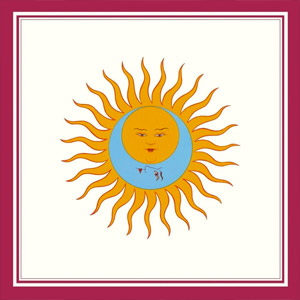
Larks’ Tongues in Aspic is King Crimson’s fifth studio album and the beginning of a new era for the band.
After the superb Islands (1971), it became clear to Robert Fripp that his ambitions differed from those of the band he had assembled around him. While Fripp was very serious about developing the band’s music in an increasingly challenging direction, the rest of the band was more interested in having fun and playing bluesy jams. Fripp’s solution to the problem was to kick the rest of the band out and start again with a new crew.
Fripp was able to put together a real dream team. From Yes, young virtuoso Bill Bruford stepped in on drums, and as his bassist/vocalist, Fripp’s childhood friend and former Family member John Wetton. The band was rounded out by drummer/percussionist Jamie Muir, who was picked up from the free jazz scene, and the still relatively inexperienced violinist David Cross…
3. Henry Cow: Leg End
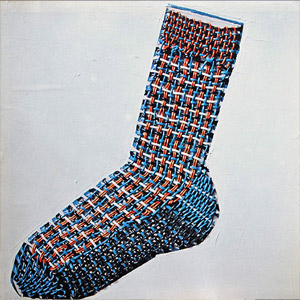
Leg End is Henry Cow’s first studio album.
Henry Cow was formed in 1969 by two Cambridge University students, guitarist/violinist Fred Frith and keyboardist/percussionist Tim Hodgkinson. In the early years, the band’s line-up, which was still heavily blues-orientated, was a tightly knit one but after many twists and turns, bassist John Greaves and drummer Chris Cutler joined the band to form the core quartet. In 1972 the band expanded into a quintet with the addition of Geoff Leigh on wind instruments. The line-up for the first album was finally complete.
Chris Cutler has told us that the band practised very rigorously for a few years, 5-6 days a week from 9am to 8pm. Above all, Henry Cow was always about challenging and developing themselves. The band made a point of writing harder songs than they could play. And then learning to play them…
4. Magma: Mekanïk Destruktïw Kommandöh
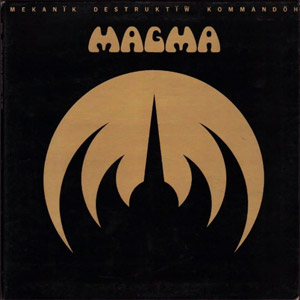
Mekanïk Destruktïw Kommandöh is the third studio album by Magma, founded in 1969.
MDK is the album that finally gave Magma its own style. Magma’s first two albums were also unique releases, but looking back, they could be defined as ” only” jazz-rock. MDK, on the other hand, is impossible to fit into that, or indeed any other previously existing category. With MDK, the eccentric visionary, drummer Christian Vander, who for the first time composed all the music alone, created a whole new genre with his band. Later on, this style even got its own name and this zeuhl music (zeuhl = heavenly music) has numerous torchbearers all over the world, from Finland to Japan…
5. Mike Oldfield: Tubular Bells
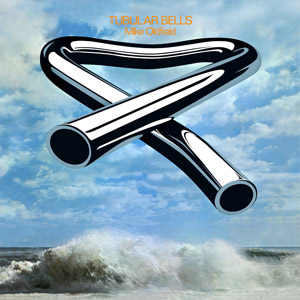
Tubular Bells is multi-instrumentalist Mike Oldfield’s first solo album.
Comprising two long instrumental pieces by Mike Oldfield, a one-man band of just 19-year-olds, Tubular Bells is not only one of the greatest debut albums of all time, but also one of progressive rock’s greatest success stories.
Oldfield’s career as a professional musician began when he was just 15 years old. Released in 1968 with his five years older sister Sally Oldfield under the name The Sallyangie, Children Of The Sun is not a folk album of great quality, but the young Oldfield’s Bert Jansch and John Renbourn-influenced acoustic guitar playing was already promising…
6. Emerson, Lake & Palmer: Brain Salad Surgery
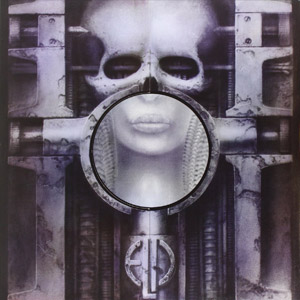
Brain Salad Surgery is the fourth studio album by Emerson Lake & Palmer, formed in 1970.
After the Trilogy tour, ELP was feeling strong and the trio was flushed with money The band set up their own record label, Manticore (which released records by Italian prog bands) and bought an old cinema to convert into a rehearsal space. In the same place Yes also practised as a tenant for their Tales From Topographic Oceans sessions that same year.
I don’t know what Yes was like as a tenant otherwise, but I think the band caused trouble for their landlords by stealing their recording engineer Eddie Offord. With Offord, who had recorded previous ELP albums, busy, not only with Yes studio albums but also with the live sound he had taken control of, ELP had to find a new engineer…
7. Pink Floyd: The Dark Side Of The Moon

The Dark Side Of The Moon on Pink Floydin kahdeksas The Dark Side Of The Moon is Pink Floyd’s eighth studio album.
Syd Barrett’s departure from the band in 1968 put Pink Floyd somewhat adrift for several years. The post-Barrett era is the band’s most experimental and left behind a lot of excellent music, but no fully coherent albums. With The Dark Side Of The Moon, bassist Roger Waters takes a tighter grip on the band than before, ushering in Pink Floyd’s strongest era artistically and commercially. However, the band is still a very equal group and guitarist David Gilmour and especially keyboardist Rick Wright (1944-2008) are able to make significant contributions to the compositions on the album…
8. Herbie Hancock: Sextant
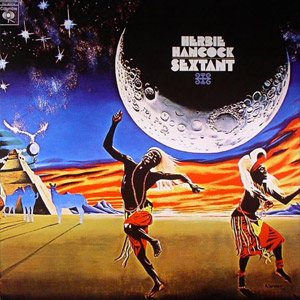
Sextant is the 12th studio album by keyboardist Herbie Hancock (born 1940), who played in Miles Davis’s band from 1963 to 1968 (and occasionally thereafter).
Sextant is the last album he made with his band Mwandishi, which started in 1971. Previous Mwandishi albums had already flirted with synthesizers, but on Sextant, Hancock and his band jump wholeheartedly into electronic music. The result is Hancock’s most experimental album and a perfect combination of jazz and electronic music.
Hancock plays a wide range of synthesizers together with Patrick Gleeson (who introduced synthesizers to Hancock and taught him how to use them), and they conjure up truly impressive sounds. The album is full of fascinating bubbles and whirrs, and the best thing is that even the strangest sounds are always used to serve the music itself and do not feel detached or like self-serving gimmicks. No other jazz musicians had achieved anything similar with synthesizers before, and I’m not at all sure that anyone has since.
However, the music never becomes too Tangerine Dream or Kraftwerk-like, as this is still a funky jazz album, and in addition to creative keyboard sounds, the album features virtuoso individual performances from the entire band. In addition to keyboards, Sextant features an impressive array of wind instruments played by no fewer than three different musicians. The band has a total of eight members. It is precisely this combination of futuristic synthetic sounds and traditional tones that gives Sextant its magical uniqueness. I don’t know of any other album quite like it.
The album contains only three long (9-19 minute) tracks, of which my personal favorite is the 9-minute opening track, ”Rain Dance,” which begins with mystical beeps and buzzes. True to its name, the song conjures up an image of dancing raindrops.
Sextant is a fascinating combination of electronic avant-garde, jazz, and Afro-funk. 1973 was a good year for Herbie Hancock. Following Sextant’s artistic success, he managed to cash in on his funk epic Head Hunters seven months later that same year.
Best tracks: ”Rain Dance”, ”Hornets”
9. Area: Arbeit macht frei

Arbeit macht frei is the debut album by Area, a band formed in Milan in 1972.
The entire six-piece band (with Patrick Djivas, better known from PFM, on bass) plays extremely skillfully, but the undisputed star of the album is Demetrio Stratos, who was born and raised in Egypt and sings with Tarzan-like intensity. And even though he sometimes literally shouts like the king of the jungle, that doesn’t mean there’s anything uncontrolled about his performance. On the contrary, Stratos is a virtuoso singer whose use of voice is colorful, original, and extremely skillful. Stratos, who died at the age of only 34, was able to produce multiple sounds at once. Stratos’s unique vocal abilities have even been studied at the university level.
The album begins with a woman passionately reciting a poem in Arabic, the meaning of which unfortunately remains a mystery to me, but there is something very enchanting about this spoken intro. This is followed by Demetrio Stratos’s magical singing voice and a North African-sounding saxophone playing a fast, complex riff. ”Luglio, agosto, settembre (Nero)” is a magnificent start to a magnificent album. The song, played at a brisk tempo, is a good example of the style of the album as a whole. The song alternates between tightly played virtuoso jazz-rock passages and charming atonal freak-outs.
In addition to Stratos’s voice, Eddie Busnellon’s often violent and wild saxophone playing also plays a significant role on the album, reminiscent of Soft Machine’s horn player Elton Dean. Soft Machine is probably an important influence on Area on a more general level as well. In the more jazz-rock-oriented tracks on the album, such as ”240 chilometri da Smirne,” I also hear the influence of Keith Tippett’s band.
In addition to jazz, there are also influences from the avant-garde, and the music is not far removed from Henry Cow’s album Leg End, released in the same year. Of course, unlike the almost entirely instrumental Leg End, Area features the human voice in a very central role, thanks to Stratos’ virtuoso and at times extreme vocal improvisations. Henry Cow and Area also shared a political orientation: both leaned strongly to the left, and Area’s Arbeit macht frei is apparently a kind of communist manifesto for the band.
Arbeit macht frei is a truly unique combination of avant-prog, jazz rock, and North African ethnic flavors. In all its frenzy, the album is a breathtaking listening experience, at times almost too breathtaking. Arbeit macht frei is probably Area’s strongest studio album, although Crac!, released two years later, gives it a run for its money.
Best tracks: ”Luglio, agosto, settembre (Nero)”, ”Arbeit macht frei”, ”240 chilometri da Smirne”
10. Can: Future Days

Future Days is the fifth studio album by German band Can.
In my opinion, Future Days is perhaps Can’s best album. It’s a relaxed and liberated album. The slightly self-serving experimentalism that occasionally plagued earlier albums is conspicuous by its absence. Instead, the band’s hypnotic and tight groove is still there and once again magical to listen to. Bassist Holger Czukay and drummer Jaki Liebezeit prove on this album, if ever they needed to, that they are one of the greatest rhythm sections of all time!
Future Day consists of three long (8-20 min) tracks and one compact three-minute track. That short ”Moonshake” was Can’s way of making a small concession to the commercial market. Not that there’s anything shameful about ”Moonshake.” It’s a really great three-minute summary of the Can sound. The track was also released as a single, but as far as I know, it didn’t really make much of an impression on the charts.
There is something very safe and pleasant about the hypnotically drifting title track, without the music sounding bland or uninspired. The same feeling applies more or less to the entire album. In contrast, the album also features more intense tracks, of which the fast-paced ”Spray” is a good example.
The album concludes with the 20-minute ”Bel Air,” which begins with an ambient sound reminiscent of Robert Fripp and Brian Eno’s (No Pussyfooting) album, but eventually grows into something much grander, ultimately not far removed from symphonic progressive rock.
The role of the band’s unique vocalist, Damo Suzuki, on Future Days is smaller than before. In keeping with the style of the album, he sings more gently than before and is often buried quite deeply in the mix among the other instruments. This works well for the album as a whole, but on the other hand, it would have been nice to hear the unique Suzuki in a slightly rougher mood. Future Days was Suzuki’s last album with Can.
Future Days may not contain Can’s best individual songs, but as a whole it is the band’s strongest and most consistent album.
Best tracks: “Future Days”, ”Spray”
Author: JANNE YLIRUUSI
Other parts of the Year by Year series can be found here.
- Levyarvio: King Crimson – The ConstruKction Of Light (2000)
- Review: Camel – Moonmadness (1976)
- Review: Gong – Gazeuse! (1976)
- Review: Mike Johnson – The Gardens Of Loss (2026)
- Levyarvio: Mike Johnson – The Gardens Of Loss (2026)
- Levyarvio: Led Zeppelin – Presence (1976)
- Vuosi vuodelta : Parhaat levyt 2000 – Sijat 11-20
- Review: Univers Zero – Ceux Du Dehors (1981)
- Levyarvio: Steve Walsh – Glossolalia (2000)
 Pienemmät Purot
Jätä kommentti