
The author’s picks for the best albums of 1972.
In the Year by Year series, I’ll go through my favourite albums from 1969 to the present day.
- Yes: Close to the Edge (UK) *****
- Genesis: Foxtrot (UK) *****
- Jethro Tull: Thick as a Brick (UK) *****
- Gentle Giant: Octopus (UK) *****
- Soft Machine: Fifth (UK) *****
- Emerson, Lake & Palmer: Trilogy (UK) *****
- Il Balletto di Bronzo: Ys (IT) ****½
- Can: Ege Bamyasi (DE) ****½
- Caravan: Waterloo Lily (UK) ****½
- Premiata Forneria Marconi: Per un amico (IT) ****½
1. Yes: Close To The Edge (1972)

Close To The Edge features the so-called ”Classical line-up” of Yes that was formed on the previous album Fragile; Jon Anderson (vocals), Chris Squire (bass), Bill Bruford (drums), Steve Howe (guitar) and Rick Wakeman (keyboards).
Fragile was a big leap from its predecessor, The Yes Album, but Close To The Edge represents an even bigger step forward musically. After a successful Fragile tour, Yes was feeling energised and, finding that the band’s long songs (by then 8-11 minutes long) were being well received at gigs, the quintet decided to try something even more ambitious. Close To The Edge contains only three long songs. The A-side of the vinyl is filled with a 19-minute title epic and the B-side has two tracks of around ten minutes. Jon Anderson has compared making long songs to conquering mountains, and with Close To The Edge Yes has indeed conquered the biggest of them all…
2. Genesis: Foxtrot (1972)

Genesis’ fourth studio album, Foxtrot, mostly follows the general style of the band’s previous album Nursery Cryme. Foxtrot continues to hone the band’s very distinctive vision of symphonic prog, combining pastoral moments of beauty with accomplished ensemble playing and slightly odd, often humorous, details.
The album’s opening ”Watcher Of The Skies” starts with an iconic Mellotron intro (the contraption was bought from King Crimson, who still had two of the pieces left after the sale) and then kicks off in earnest with rhythm section Mike Rutherford and Phil Collins chiming in with their rather intricate playing (the tricky arrangement was inspired by a Yes show the band saw, according to Collins). Collins has always been Genesis’ most skilled instrumentalist, but Rutherford really shines on Foxtrot too. His bass playing throughout the album is really tasty sounding and most importantly he and Collins play fabulously together…
3. Jethro Tull: Thick As A Brick

Jethro Tull’s frontman Ian Anderson was annoyed by the band’s previous album being ”labelled” as a concept album by the music press because he felt it was just a collection of separate songs. Incensed or at least inspired by this, Ian Anderson decided to give music critics a real concept album.
Later Ian Anderson has also tried to claim that TAAB is a parody of the concept albums of prog bands, but that’s a bit hard to believe, first of all because similar massive concept albums had hardly been made before TAAB to the extent that parody would have made much sense.
Be that as it may, in December 1971, Jethro Tull returned to the studio with Ian Anderson’s rather unfinished song sketches. The original intention was to make a bunch of ‘normal’ length songs, but in the end, the band decided to link the song ideas together, resulting in a massive work lasting over forty minutes (which, due to the limitations of vinyl, has been split into two parts) built around a controversial epic poem by child prodigy Gerald Bostock…
4. Gentle Giant: Octopus

Octopus is Gentle Giant’s most balanced and successful album. With this album, it feels like the intricate building blocks of the band finally fell into place seamlessly. Much of the credit must go to the band’s new drummer John Weathers, whose playing seems to be the glue that made the final fusion happen. John Weathers is a rocking drummer and he plays the complex songs as straightforwardly as possible, which, perhaps somewhat paradoxically, was just the right thing to do. With Weathers, Gentle Giant sound as sophisticated as before, but there’s a new muscularity to the sound and the band sound convincing at last, even on the rocking songs on the album, a good example being Octopus’ ”A Cry For Everyone”…
5. Soft Machine: Fifth

Soft Machine’s fifth studio album is a fairly natural continuation of its predecessor, Fourth (1971), with its jazzy sound. However, Fifth is a slightly harsher and more violent-sounding album than its predecessor, and whereas Fourth was very much approaching ‘real’ jazz, Fifth veers a little more towards jazz rock in all its aggression.
The album is full of wonderful moments, the first of which comes right at the beginning with ‘All White’, which starts with an ominous, serpentine saxophone and a rumbling organ drone transforms into a truly spectacular jazz celebration with electric piano and Dean (who is on fire throughout the album!) energetically blowing his horns. The rhythmic work of Hugh Hopper (1945-2009) and new drummer Phil Howard in the background is both solid and somehow airy.
The aforementioned Howard plays drums only on the A-side of the album, while on the B-side, John Marshall (1941-2023), who was poached from Ian Carr’s jazz rock band Nucleus, takes over and becomes Soft Machine’s longest-serving drummer. John Marshall was certainly more than capable of taking over from Howard, and his slightly heavier but still deliciously jazzy playing is wonderful to hear. Marshall even gets to play a short, less than two-minute drum solo on the track ‘LBO’. Marshall’s furious solo is one of the few interesting drum solos to make it onto a studio album. Partly, of course, because it is kept short.
The second highlight of Fifthin is the magnificent, haunting and manic organ solo in “Dropissa”, in which Mike Ratledge (1943–2025) seems to channel saxophone legend John Coltrane more strongly than ever before. Ratledge’s keyboard playing has always had a Coltrane influence, and more generally, influences from the saxophone, but never before so clearly. What an incredible performance from Ratledge! The rest of the band grooves wildly in the background like a five-legged, horny moose.
The third delicious detail I picked up on the album is the bowed bass playing by guest musician Roy Babbington on the longest track, the eight-minute “As If”. Babbington’s exquisite double bass playing combined with Hopper’s electric bass creates a unique atmosphere and leaves you wishing that the duo had played together more (Hopper and Babbington can also be heard together on Fourth). The virtuoso Babbington returned to Soft Machine as an official member on the album Seven (1973) after Hopper grew tired of the band and left to pursue a solo career.
Fifth generally seems to receive very little praise, which is surprising because, in my opinion, it is not only one of Soft Machine’s absolute best albums, but also one of the greatest jazz-rock albums of all time. Fifth is Soft Machine’s last masterpiece. After this, the band slowly slid towards fusion jazz mediocrity.
Best tracks: ”All White”, “As if”, “Drop”
6. Emerson, Lake & Palmer: Trilogy
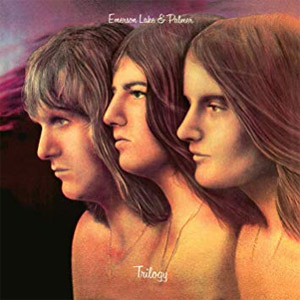
Trilogy is Emerson, Lake & Palmer’s third studio album and follows the previous year’s live album Pictures At An Exhibition, which contained only new material (partly based on compositions by Modest Mussorgsky). ELP’s career up to that point had been a success, both artistically and commercially, and Trilogy did not cause a dip in the band’s upward trajectory.
Trilogy is a slightly more serene and romantic (I’m referring mainly to the classical music era) album than its predecessors. The album does not contain quite as many high peaks as the previous albums, but on the other hand, in all its evenness, Trilogy also avoids the real ups and downs that the band had occasionally fallen into in the past…
7. Il Balletto Di Bronzo: Ys

Il Balletto Di Bronzo’s debut album Sirio 2222 in 1970 was a relatively insignificant piece of psychedelic rock, but with Ys the band throws themselves into progressive rock.
Ys is a concept album about the mythical city of the same name that sank into the sea off the coast of Brittany and was said to be the most beautiful city in the world. Well my Italian skills are pretty much non-existent so I don’t know first hand how well the band uses the legend in their lyrics, but apparently at least loosely the lyrics of all the songs deal with the subject.
The music of Ys is characterised by a huge intensity. The band rolls out their fiercely energetic music at a pace that feels like it’s getting out of control. The Ys style could lazily be defined as ”King Crimson meets ELP”. Despite the above comparison, the band’s sound of heavy guitars and crackling organ is highly original and, especially in Italian prog, unmatched in intensity…
8. Can: Ege Bamyasi

Ege Bamyasi is the fourth studio album by krautrock band Can.
After Tago Mago in 1971, Can released a single called ‘Spoon,’ which became a surprise hit when it was used as the theme song for the German TV series Das Messer. ‘Spoon’ sold 300,000 copies in Germany alone. With the money from the hit, Can built their own studio called Inner Space, where the band members also lived communally.
The surprising success did not dull Can’s edge or make the band calculate their next move, but Ege Bamyasi is not quite challenging and avant-garde as its predecessor, the double album Tago Mago. The compact 39-minute Ege Bamyasi is a much more accessible album.
Although Ege Bamyasi is a more accessible album than Tago Mago, it is also harder-hitting than its predecessor and, in places, really intense listening. The ten-minute opening track, ‘Pinch’, immediately dispels any preconceptions with its relentless rolling and pounding drum fills.
On the other hand, “Sing Swan Song”, which follows “Pinch” and begins with the sound of water dripping, is unusually sensitive and serene for a Can song. The song could almost be called a ballad. However, the soundscape Can conjures up in this song is so unique that it rises high above the realm of basic ballads.
The funky ‘Vitamin C’ is probably the highlight of the album. The song features a stunningly tight drum beat by Jaki Liebezeit, a thick bass groove by Holger Czukay and Damo Suzuki’s fiercely sung chorus, ‘Hey you, you’re losing, you’re losing, you’re losing, you’re losing your vitamin C’. is so catchy that it’s a miracle the song didn’t become a hit like ‘Spoon’. Well, it didn’t get a boost from a television series. However, the following year, the song was featured in an episode of the Tatort series directed by Samuel Fuller. By Can’s standards, ‘Vitamin C’ may well be the band’s most conventional and mainstream song. But it’s a fantastic one!
Can’s view of pop music then moves on to the most experimental track on the album. The ten-minute ‘Soup’ features similar vocal exuberance to some of Magma’s songs. Damo Suzuki effectively mixes singing and pure screaming. The song’s avant-garde buzzing and clanging are similar to those found in Tago Mago’s long ‘Aumgn’, but it works better due to its more compact length.
The album ends with the top 10 hit single “Spoon”, which made the creation of Ege Bamyas possible in the first place. ‘Spoon’ represents a kind of proto-techno style and is a truly addictive song that progresses steadily, accompanied by a crisp early drum machine, over which the band once again builds a delicious groove. Unfortunately, the song ends with a somewhat clumsy fade-out and would have deserved a more effective ending.
Ege Bamyasi is a powerful album that strikes just the right balance between experimentalism and addictive motoristic grooves. It is one of Can’s best albums and an absolute krautrock classic.
Best tracks “Pinch”, ”Sing Swan Song”, “Vitamin C”
9. Caravan: Waterloo Lily

Waterloo Lily is Caravan’s fourth studio album and the first without keyboardist Dave Sinclair. Dave Sinclair joined Robert Wyatt’s Matching Mole and Caravan ended up recruiting Steve Miller, who had previously played in the jazz-rock band Delivery, as their new keyboard player.
Where Miller’s predecessor Dave Sinclair favoured the organ, Miller’s main instrument was a Wurlitzer electric piano which alone changed the overall sound of Caravan greatly. Especially when combined with the band’s clear move towards jazz-rock.
Miller also brought along a couple of guests from Delivery who were both more or less familiar with the jazz world…
10. Premiata Forneria Marconi: Per un amico

Per un amico (‘For a Friend’) is the second studio album by Premiata Forneria Marconin (better known as PFM), formed in Milan in 1970. It was the second album released by the band in the same calendar year.
PFM achieved great popularity in their home country and is also by far the most successful Italian prog band internationally. PFM is also, in a way, the archetype of Italian prog rock bands, to which all other bands in the country are easily compared. Personally, I don’t consider PFM to be among the very best Italian prog rock bands, but the band did manage to produce a few excellent albums.
Although only ten months had passed since the release of their previous album, Storia di un minuto, the rapid pace did not affect the quality of the band’s music when Per un amico was released. On the contrary, Per un amico is a more polished and refined album than its predecessor in every way. The style of the album is still colourful, symphonic and energetic, but the songs are more carefully composed, the playing is stronger and the production is more polished. The influences of British bands are no longer as clear as on the debut album, although the ghost of Gentle Giant is still often strongly present.
The album begins impressively with the seven-minute opening track ‘Appena un po’, which is PFM at their finest. The song has plenty of medieval music vibes, and combined with intricate rock parts, it is at times strongly reminiscent of Gentle Giant. The song makes sympathetic use of the recorder, the most un-rock instrument there is.
The second highlight of the album is the next track, the instrumental ‘Generale’, which rocks a little harder and, with its fast synthesizer parts and virtuoso piano runs, is slightly reminiscent of ELP. The latter half of the track is more acoustic, however, and once again brings to mind Gentle Giant with their violins and wind instruments.
Per un amico is a slightly front-loaded album, with the two best tracks opening the record, but the remaining three tracks are by no means bad. The pastoral and surprisingly subdued title track in particular is a beautiful composition, to which Mauro Pagan’s biting violin adds a welcome edge. The light and airy “Il Banchetto” is a very promising song until it eventually falls apart a little unnecessarily with some synthesizer antics. Silly sounds are fun to try out in the studio, but they don’t belong on an album. The final track, ‘Geranio’, returns to the pastoral mood that initially brings to mind Genesis at their quietest, but the song quickly grows more rock-oriented and includes a few impressive style changes that don’t feel too random, even though they are quite abrupt.
Unlike many Italian prog albums, Per un amico also works well in terms of studio technique, and the album’s sound is not far behind that of its British counterparts from the same period.
Per un amico is probably Premiata Forneria Marconi’s most beloved album, and rightly so, as it is the band’s most consistent work.
Best tracks: ”Appena un po” ja ”Generale”
Author: JANNE YLIRUUSI
More to read about the best records of 1972: #11-20 & #21-30
You can find other entries in the Year by Year series here.
 Pienemmät Purot
Jätä kommentti