The author’s picks for the best albums of 1972, ranked 21-30.
In the Year by Year series, I’ll go through my favourite albums from 1969 to the present day.
- Khan: Space Shanty (UK) ****
- Moving Gelatine Plates: The World of Genius Hans (FR) ****
- Le Orme: Uomo di pezza (IT) ****
- Matching Mole: s/t ****
- Premiata Forneria Marconi: Storia di un minuto (IT) ****
- Weather Report: I Sing the Body Electric (US) ****
- Haikara: s/t (FI) ****
- Frank Zappa : Waka/Jawaka (US) ****
- Strawbs : Grave New World (UK) ****
- Pink Floyd: Obscured By Clouds (UK) ****
21. Khan: Space Shanty

Space Shanty is Khan’s first studio album.
Khan was formed in London in 1971. The band’s founder and driving force was Steve Hillage (born 1951), who was only in his twenties at the time but already an experienced guitarist and composer. He had played in bands such as Uriel and Arzachel alongside organist Dave Stewart. These projects were typical of the Canterbury scene, mixing psychedelic pop, jazzy improvisation and British weirdness.
Hillage dropped out of university in April 1971 and formed a new band with Nick Greenwood (bass guitar), Dick Henningham (keyboards) and Pip Pyle (drums). This was Khan’s first line-up. Thanks to his Canterbury connections, Hillage managed to secure a record deal for the band with Deram fairly quickly. So quickly, in fact, that the line-up changed before the band even made it to the studio. First to leave was Pyle, who was replaced by Eric Peachey, and soon Henningham also left. At this point, Dave Stewart, who was also a member of Egg at the time, was called in to help out.
The Space Shanty album contains long (5-9 min.) compositions, many of which have a sci-fi-inspired space theme, which is fitting for an album whose name roughly means “space sailor’s song”. Most of the music was composed by Hillage. Hillage’s compositions are relatively complex, containing a healthy dose of irregular time signatures, strange chord progressions and a disregard for normal song structures.
Although the compositions are deceptively intricate, they also have moments of hard rock energy. This rock attitude is probably a legacy of Hillage’s admiration for Jimi Hendrix (Hendrix, along with John Coltrane, was the main influence on Hillage, who started playing guitar at the age of nine). Hillage’s unique guitar style is almost fully formed on Space Shanty, which features plenty of his fluid, mercurial solos. Space Shanty is more guitar-oriented than is typical for a Canterbury album. Stewart does a good job on the keyboards here and there throughout the album. Greenwood and Peachy, on the other hand, form a competent, if not particularly memorable, rhythm section. Some of Greenwood’s bass lines are pleasantly melodic, though. He was by no means a basic bass player.
The weakness of the album is the vocals. Hillage shares vocal duties with Greenwood, and neither is particularly interesting as a singer at this stage (Hillage got better!). The vocal melodies are also a bit generic at times and, at their worst, downright annoying in their holler-like style, which isactually kind of appropriate for songs which are meant to be space-age shanties.
Space Shanty, released in June 1972, sold poorly. Hillage was interested in continuing the band with a slightly revamped line-up and composed a lot of new music for the next album. However, Deram deemed the new material uncommercial. Hillage’s enthusiasm for the project waned, leading to the break-up of Khan. The band members went their separate ways. Stewart formed Hatfield And The North, while Greenwood and Peachy left the music business altogether. Hillage himself first joined Kevin Ayers’s live band, then Gong, and a few years later began his solo career with the excellent album Fish Rising, which at times echoes the sound of Khan.
Today, Space Shanty enjoys a healthy cult following, with many even ranking it among the greatest Canterbury classics. I wouldn’t go that far myself, but it’s still a really great album and a mature display of skill from Hillage, who was only 21 when it was released.
Best tracks: ”Space Shanty”, ”Stargazers”, ”Hollow Stone”
22. Moving Gelatine Plates: The World of Genius Hans
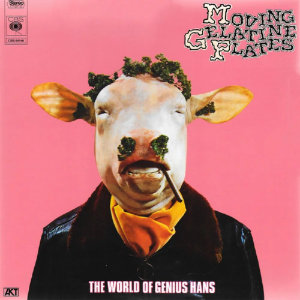
The World of Genius Hans is the second studio album by French band Moving Gelatine Plates, founded in 1968 by guitarist Gérard Bertram and bassist Didier Thibault.
The World of Genius Hans has one of the most striking covers in rock history. The cover features a pig (or is it a cow?) dressed in a pilot’s jacket, smoking a cigar, with parsley in its nostrils and ears. The unusual cover aptly reflects the intriguing nature of this album.
The World of Genius Hans’s jazzy avant-garde sound is somewhat reminiscent of early Soft Machine, Supersister and Frank Zappa, but the end result is entirely unique. The music of The World of Genius Hans is quite complex in places, but it is made accessible by a certain humour and warmth typical of the Canterbury scene, yet difficult to describe.
The best track on the album is the 14-minute title track, which features excellent thematic development and even hints of symphonic prog at times. However, the band remembers to add irregularly regular twists and turns and silliness to the mix, so that it doesn’t get confused with, say, Yes or Genesis.
The weakness of the album is bassist Didier Thibault’s vocals, which are not particularly impressive. Thibault’s voice is high-pitched and thin. Fortunately, the vocals play a relatively minor role on the album, and a pleasing variety of wind instruments, such as the bassoon, trombone and saxophones, are given more space.
The World of Genius is not a complete success, but it is highly recommended for listeners who are interested in a slightly more avant-garde take on Canterbury prog.
Best tracks: ”The World of Genius Hans”
****
23. Le Orme: Uomo di pezza
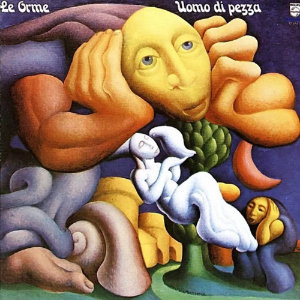
Uomo di pezza is Le Orme’s third studio album.
Le Orme is one of the oldest Italian prog bands, founded in 1966. However, Le Orme did not release their first album, which was mainly psychedelic pop, until 1969. The band’s first real prog album was Collage in 1971. On Uomo di pezza, the band added more twists and turns to their music, and classical music influences are more prominent than ever before.
Le Orme is one of the three most famous Italian prog bands (the other two being PFM and Banco del Mutuo Soccorso), but it is not representative of typical Italian prog. Firstly, Le Orme differs from most Italian bands in this genre in that it has a smaller line-up than usual. Most Italian prog bands were quintets, but Le Orme was a trio consisting of bass, drums and keyboards. Vocalist/bassist Aldo Tagliapietra only occasionally adds guitar to the band. At times, Le Orme sounds like an Italian counterpart to Emerson Lake & Palmer, with keyboards playing a prominent role and the music containing strong influences from classical music. Taglipietra’s vocals are also not quite as dramatically inflated in style as many other Italian singers. He nevertheless imbues his beautiful, rather high voice with emotion, which is slightly reminiscent of Jon Anderson.
Lasting only half an hour, Uomo di pezza (‘rag doll’) contains seven short tracks, the longest of which is only seven minutes long, which is relatively modest by prog standards. Due to their short length, the songs have a fairly traditional structure. Even at this stage, Le Orme’s music was still basically pop rock reinforced with prog elements. The songs are melodic and feature some pretty impressive keyboard parts by Tony Pagliuca, who had clearly listened to Keith Emerson. In a few more rhythmic songs, such as the fast-paced closing track ‘Alienazione’, the band clearly bows to ELP’s ‘Tarkus’ (1971).
Uomo di pezza is a well-balanced album, but it still lacks the truly brilliant moments that Le Orme would offer on their next two albums.
Best tracks: ”La porta chiusa”. ”Alienazione”
24. Matching Mole: s/t
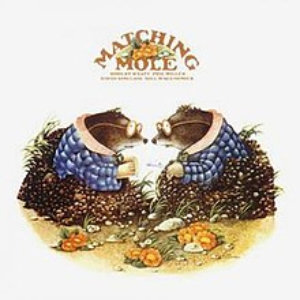
Drummer/singer Robert Wyatt founded Matching Mole after leaving Soft Machine on bad terms in 1971. Wyatt was frustrated with Soft Machine’s music, which he felt had become too complex, with the vocals taking a back seat. Matching Mole was intended to be his vehicle for writing and performing songs. However, the plan did not really come to fruition because most of the music on the album ended up being instrumental and quite experimental.
Wyatt recruited a talented but relatively green group of musicians for his new band. The most experienced member was Dave Sinclair, who had recently left Caravan. The guitarist chosen was Phil Miller, who had played jazz rock with Delivery (and would become a prominent figure in the Canterbury scene in the following years), and the bassist was Bill MacCormick, who had played with Phil Manzanera in Quiet Sun.
Although Matching Mole was supposed to be Wyatt’s platform for songwriting, somewhat paradoxically, perhaps the simplest and most successful song on the album is the beautiful and sensitive ‘O Caroline,’ composed by keyboardist David Sinclair. Wyatt wrote the melancholic, sad, but also typically humorous lyrics about his girlfriend Caroline Coon, from whom he had just broken up. Wyatt sings it with a wounded and almost broken voice. Technically, the song is perhaps a little shaky and not very sophisticated, but there is something very moving about it.
Wyatt can’t resist playing with words in the second song on the album, ‘Signed Curtain,’ which is otherwise quite melodic. He sings, breaking the fourth wall;
”And this is the chorus
Or perhaps it’s a bridge
Or just another part of the song that I’m singing”
In the end, the album did not turn out to be nearly as conventional as Wyatt had originally intended. Instead, much of it consists of quite experimental instrumental music that combines jazz rock with Canterbury-style whimsical improvisation. Many of the songs would have fit quite well on Soft Machine’s first few albums, even though they are not quite as complex as that material.
One of the highlights of the album is Phil Miller’s nine-minute instrumental ‘Part Of The Dance’, which jumps in different directions and allows the whole band to stretch their musical muscles. Wyatt’s frantic drumming is particularly impressive on this track.
Matching Mole’s debut is characterised by a certain spontaneous and energetic carelessness. Some of the songs are quite shapeless and vague. The album is far from the carefully crafted perfectionist monuments of progressive rock, which is a significant part of its unique charm.
None of the band members seemed entirely satisfied with Matching Mole’s debut. Everything was also somewhat disorganised, as Wyatt was not a natural leader. Dave Sinclair, in particular, became frustrated with the band’s chaotic operations and was also disappointed with the ‘freeform’ nature of the music, eventually going his own way. Sinclair was replaced by another Dave, Dave MacRae, who had already appeared on the debut album. By the end of 1972, the band was already recording their second album.
Best tracks: ”O Caroline”, ”Signed Curtain”, ”Part Of The Dance”
25. Premiata Forneria Marconi: Storia di un minuto
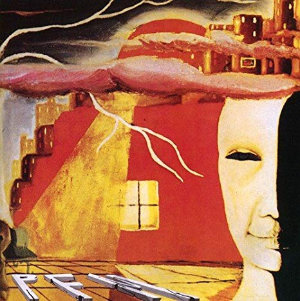
Storia di un minuto is the first studio album by Italian band Premiata Forneria Marconin, also known as PFM.
PFM achieved great popularity in their home country and is also by far the most successful Italian progressive rock band internationally.
Italian bands followed British bands in the progressive style with a few years’ delay. The influence of British bands is often quite clear in the music of Italian bands, and PFM’s debut is no exception. The PFM guys have clearly listened closely to the albums of Genesis, ELP and Gentle Giant in particular. However, their influences form a reasonably unique whole.
PFM is, in a way, the archetypal representative of Italian symphonic prog. Like the average Italian prog band, PFM’s music is energetic, downright explosive and often very romantic. Pastoral moments give way to fast-paced sections in the blink of an eye. The transitions are not always particularly smooth or logical, but that doesn’t hold the Italians back. The main thing is that the vibe is strong.
A good example of PFM’s lively, erratic style is provided by the first track on this debut album (which begins with a minute-long intro called ‘Introduzione’), ‘Impressioni di settembre’. It showcases the best and worst of PFM’s style in all its glory. The song features lively dynamic shifts between calm acoustic sections and energetic synth riffs, world-embracing melodies and very strong emotions. PFM has admitted that the song owes a debt to ELP’s hit ‘Lucky Man’ (1970). ‘Settembre’ is by no means a direct copy, but the style of the first half of the song in particular is quite similar. Like ‘Lucky Man’, ‘Settembre’ begins as an acoustic male-voiced folk ballad, which is then accompanied by a beautifully sounding Moog synthesiser. Overall, however, PFM’s song is considerably more energetic and complex than its predecessor. ‘Impressioni di settembre’ became one of the band’s most popular songs and a kind of trademark. The band still performs it live today and has even made alternative versions of it.
The third track, ‘È festa’, continues in the same vein and, as its name suggests, is indeed an energetic and joyful celebration of progressive rock. In this song, too, PFM jumps carefree from heavy rock to short, light flute riffs. It doesn’t quite hold together, but there are some really great moments in the song.
Beginning with a medieval-sounding melody, ‘Dove… quando… (parte I)’ is a beautiful song, and PFM manages to restrain themselves throughout, without resorting to unnecessary gimmicks. The second part of the song is more relaxed and features a magnificent piano solo by Flavio Premoli.
The weakest track on the album is the closing number, ‘Grazie Davvero,’ which is a truly incoherent piece, featuring a symphony orchestra thrown in here and there in a rather vague manner.
Storia di un minuto is an edgy and effective debut, even if some of the songs are a little too erratic. However, the album was a huge hit in Italy, reaching number one in the album charts. This was an achievement that no domestic prog band had ever managed before.
Best tracks: ”Impressioni di settembre” ja ”È festa”
26. Weather Report: I Sing The Body Electric
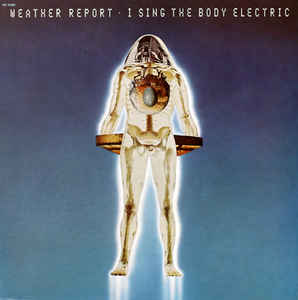
I Sing The Body Electric is the second studio album by American jazz-rock band Weather Report.
The core line-up of the band remains the same, with keyboardist Joe Zawinul, saxophonist Wayne Shorter and bassist Mirloslav Vitous, but Eric Gravatt has replaced Alphonse Mouzon on drums, and percussionist Dom Um Romão also provides support on a few tracks.
Like Weather Report’s debut album from the previous year, the music on I Sing The Body Electric is very abstract and ethereal, and definitely not typical fusion jazz. It would be more accurate to describe it as electronic avant-garde jazz. The overall mood is slightly darker and sharper than before. This is partly due to drummer Gravatti, who seems to make extensive use of different cymbals and produces a very metallic, clanging sound.
The second half of the album consists of three live tracks, and it may well be that the live section is the stronger half of the album. At least the vibe is a touch more punchy and energetic than the studio tracks.
Highlights of the album include the intense, ten-minute collective live improvisation ‘Medley: Vertical Invader / T.H. / Dr. Honoris Causa’ and Wayne Shorter’s composition ‘The Moors’. Guitar virtuoso Ralph Towner guests on ‘The Moors,’ playing a lively 12-string acoustic guitar. After Towner’s acoustic solo intro, the song turns into a very interesting rhythmic chaos.
I Sing The Body Electric still feels like an album where Weather Report is eagerly searching for its own style, perhaps a little unsure of where it wants its music to go. This gives the album a certain vagueness and haziness, but also a feeling that anything is possible. And in short, magical flashes here and there throughout the album, everything really is possible. And while the band kind of found their own style on their subsequent albums, and their accuracy improved on average, I don’t think the music on those albums quite matched the finest moments of the first two albums.
Best tracks: ”Unknown Soldier”, ”The Moors” ”Medley: Vertical Invader / T.H. / Dr. Honoris Causa”
27. Haikara : s/t

Founded in Finland in 1971, the prog band Haikara’s eponymous debut album is an interesting work full of sombre seriousness. However, the first track, ‘Köyhän pojan kerjäys’ (The Beggar Boy), with its amusing humppa (Finnish oldschool dance music) sections, may give a slightly misleading first impression of the album. The next track, ‘Luoja kutsuu’ (God is calling), with its almost comical serious anti-religious attitude, gives a more accurate picture of the album’s tone.
Led by multi-instrumentalist Vesa Lattunen, Haikara’s progressive sound has a pleasant orchestral feel, and the band makes effective use of wind instruments. In addition to Harri Pystysen’s saxophone and flute, the album features a small horn section, which is a nice addition.
The album Haikara is not a collection of remarkable virtuoso solo performances; rather, the band’s strength lies in its skilful and versatile arrangements. However, none of the tracks on the album are particularly standout, and almost all of them would have benefited from being shortened slightly. Three of the five tracks are ten minutes long, and none of them feel entirely justified. Now, among the many wonderful sections, there is too much unnecessary filler. The songs could also have used a little more energy. As it is, the mood too often remains a little sluggish.
Haikara’s debut is delightfully original Finnish prog that is difficult to directly associate with any particular influences. Haikara’s debut reminds me most of the first two albums by British band Gnidrolog, but that band has been so marginal in terms of popularity that I doubt Lattunen and his companions are even aware of them. In the last track, ‘Manala’, I think I can hear the influence of Van Der Graaf Generator.
Unfortunately, Haikara’s artistic heyday was very short-lived. Geafar, released in 1974, was still a pretty good album, but Iso lintu, released in 1975, which took a more straightforward direction, is one of the worst failures I have ever heard from a prog band.
Best tracks: ”Luoja kutsuu” ja Yksi maa – yksi kansa”
28. Frank Zappa: Waka/Jawaka

Waka/Jawaka is Frank Zappa’s fourth album released solely under his own name.
The album kicks off with the 17-minute instrumental ‘Big Swifty’. Composed for a large (partly virtual) ensemble, the piece sounds surprisingly smooth and is quite easy to listen to, even though the music itself is complex. ‘Big Swifty’ combines Zappa’s love of modern art music (Stravinsky, Varèse) with jazz-rock influences, wrapped in a big band-style, expanded sound. The sound is partly constructed using rich and skilful overdubs. As is typical for Zappa, there are plenty of time signature changes, and the long trumpet solos by Sal Marquez show influences from Miles Davis. ‘Big Swifty’ is a great start to the album and one of Zappa’s best compositions.
Unfortunately, the mood on side B is deflated. It begins with two short and insignificant tracks, ‘Your Mouth’ and ‘It Just Might Be a One-Shot Deal’. ‘Your Mouth’ is straightforward blues rock, and unfortunately at this point – on an album that had remained delightfully instrumental up to this point – the mood is broken by lyrics typical of Zappa, containing misogynistic undertones. ‘It Just Might Be a One-Shot Deal’ is a slightly more interesting track. The four-minute track features several vocalists and draws stylistically from both psychedelic rock and country, even including a surprising pedal steel solo. The latter half features a delightfully intricate section where the soundscape breaks down into something more abstract and the rhythms become more complex.
The final track, the 11-minute title track ‘Waka/Jawaka’, returns to the instrumental mood of the A-side. ‘Waka/Jawaka’ is not quite as layered or harmonically diverse as ‘Big Swifty’, although it still flirts with the big band sound. The music is less complex, with the groove and long solos – from the wind instruments, keyboards and guitar – taking centre stage. The long, howling and partly atonal Minimoog solo by Don Preston in the first half is particularly delicious. Unfortunately, the ending of the song is weak – ‘Waka/Jawaka’ seems to just fade away into thin air.
The longer tracks have a relaxed feel and even a hint of warmth, which is often missing from Zappa’s complex music. Unfortunately, the two shorter tracks don’t really grab me, which makes the album feel a bit disjointed.
Released in July 1972, Waka/Jawaka received a spiritual sequel just four months later in the form of The Grand Wazoo, which continued the big band fusion style on an even grander scale.
Best tracks: ”Big Swifty”, ”Waka/Jawaka”
29. Strawbs : Grave New World

Grave New World is the fourth studio album by Strawbs.
Founded in England in 1964 and led by guitarist/vocalist David Cousins, Strawbs is one of those bands that did not remain trapped within musical boundaries, but constantly changed direction, exploring the areas between folk rock and progressive rock. Grave New World continues the journey towards a more progressive expression that began with the band’s 1971 album From The Witchwood, without abandoning their folk roots.
Grave New World was released in the midst of a line-up change, as keyboardist Rick Wakeman had left Strawbs and joined Yes. However, Wakeman’s absence did not prevent the band from moving towards a more progressive style, and new keyboardist Blue Weaver was entrusted with creating dramatic, mellotron-spiced soundscapes for the album.
The most notable feature of the album is its musical diversity. It ranges from folk to progressive rock, and at certain moments its influences even extend to psychedelic music and gospel tones. “Benedictus” and “Is It Today, Lord?” bring out elements of church music, complementing the album’s diverse atmosphere perfectly.
As you might guess from the darkly punning title Grave New World, the music is not particularly cheerful. This is especially evident in the gloomy and angry ‘New World,’ which features passionate vocals from Cousins and excellent Mellotron accompaniment from Weaver. The dramatic “Tomorrow” continues in the same vein, with scathing lyrics that seem to criticise Wakeman for his deceitfulness.
However, Grave New World is not all angst; for example, the single ‘Heavy Disguisea’, accompanied by a small wind orchestra, is a fun and light-hearted song. On the other hand, the weaker moments of the album are those where there is too much light-heartedness. The revue-like ‘Ah Me, Ah My’ sounds like one of The Beatles’ most embarrassing attempts at humour and lacks the depth of the other songs on the album. More negative Beatles influences can be found in ‘Is It Today, Lord?’, where the sitar and tabla take on unnecessary central roles, creating superficial Indian vibes that stand out too much from the overall feel of the album.
With a few exceptions, Grave New World is a strong and original take on progressive folk. Perhaps even Strawbs’ best album.
Best tracks: ”Heavy Disguise”, ”New World”, ”The Flower And The Young Man”, ”Tomorrow”
30. Pink Floyd : Obscured By Clouds

Obscured By Clouds is the seventh studio album by Pink Floyd.
Pink Floyd had already begun working on their legendary album The Dark Side Of The Moon when they were asked to compose the music for Barbet Schroeder’s film La Vallée. Floyd had already made two soundtracks at this point, so the soundtrack for La Vallée, which was titled Obscured By Clouds, was effortlessly created in a couple of weeks at the Château d’Hérouville studio in France. In other words, it was completed very quickly by Pink Floyd’s standards.
I saw La Vallée a long time ago, but at this point I no longer have any impression of how well or poorly Floyd’s music works in the film, or even how big a role it plays. However, Obscured By Clouds does not offer anything particularly typical of film music, as only four of the ten short tracks are instrumental. Most of the material is somewhat bland but atmospheric hippie rock with a strong influence from West Coast country rock.
Three tracks on the album stand out above the rest. The most notable of these is ‘Free Four’, composed, written and sung by Roger Waters. Musically, the song is very straightforward, slightly folky rock. The tone of the music is downright cheerful, which creates a fascinating contrast to the song’s very dark lyrics. The music is playful and light-hearted, but Waters’ lyrics are full of death, alienation and existential angst. Waters writes sarcastically about life and death, especially the death of his father in the war. This became a recurring theme in his later albums. ‘Free Four’ aptly sums up many of the issues that Waters continued to explore throughout his career.
The memories of a man in his old age
Are the deeds of a man in his prime
You shuffle in the gloom of the sick room
And talk to yourself as you die
David Gilmour’s own ‘Childhood’s End’ is another highlight. ‘Childhood’s End’ is Gilmour’s work from start to finish, including the lyrics, and offers a slightly more typical Floyd sound than the other songs on the album. With its rough electric guitar riff, Richard Wright’s Hammond organ here and there, and a nice rhythmic beat, it also features a pleasantly rough and relaxed guitar solo that is not as polished as Gilmour’s many more famous solos.
The third highlight is the title track that kicks off the album. ‘Obscured By Clouds’ is a stylish, simple instrumental with an intriguing mechanical beat punctuated by Gilmour’s piercing electric guitar. The steady rhythm track sounds almost like a drum machine, but it’s apparently just Nick Mason at his most minimalist. The song, which sounds a bit like krautrock, was influential, as Tangerine Dream used a very similar sound on their own soundtrack albums in the early 1980s (e.g. Thief).
Obscured By Clouds is a side project by Floyd, but it speaks volumes about his creative genius that it is still very enjoyable to listen to today, even though it was originally created as incidental music for a film.
Best tracks: ”Obscured By Clouds”, ”Childhood’s End”, ”Free Four”
Author: JANNE YLIRUUSI
You can find other parts of the Year by Year series here.
 Pienemmät Purot
Minus several million points for not including Exile on Main St.
TykkääTykkää
To sat there’s no accounting for taste is an understatement in response to this list. It’s more accurate to say there’s no accounting for a near total lack of taste. Off the top of my head the following albums all are far better than the vast majority of those in this list: Rolling Stones-Exile on Main Street; Elton John-Honky Chateau; Eagles; Chicago V; Badfinger-Straight Up; Alice Cooper-School’s Out; Neil Young-Harvest; Jim Croce-You Don’t Mess Around with Jim; The Carpenters-A Song for You; The Raspberries; Curtis Mayfield-Superfly;
TykkääTykkää
You are a funny guy.
TykkääTykkää
Steely Dan’s debut can’t buy a thrill
TykkääTykkää