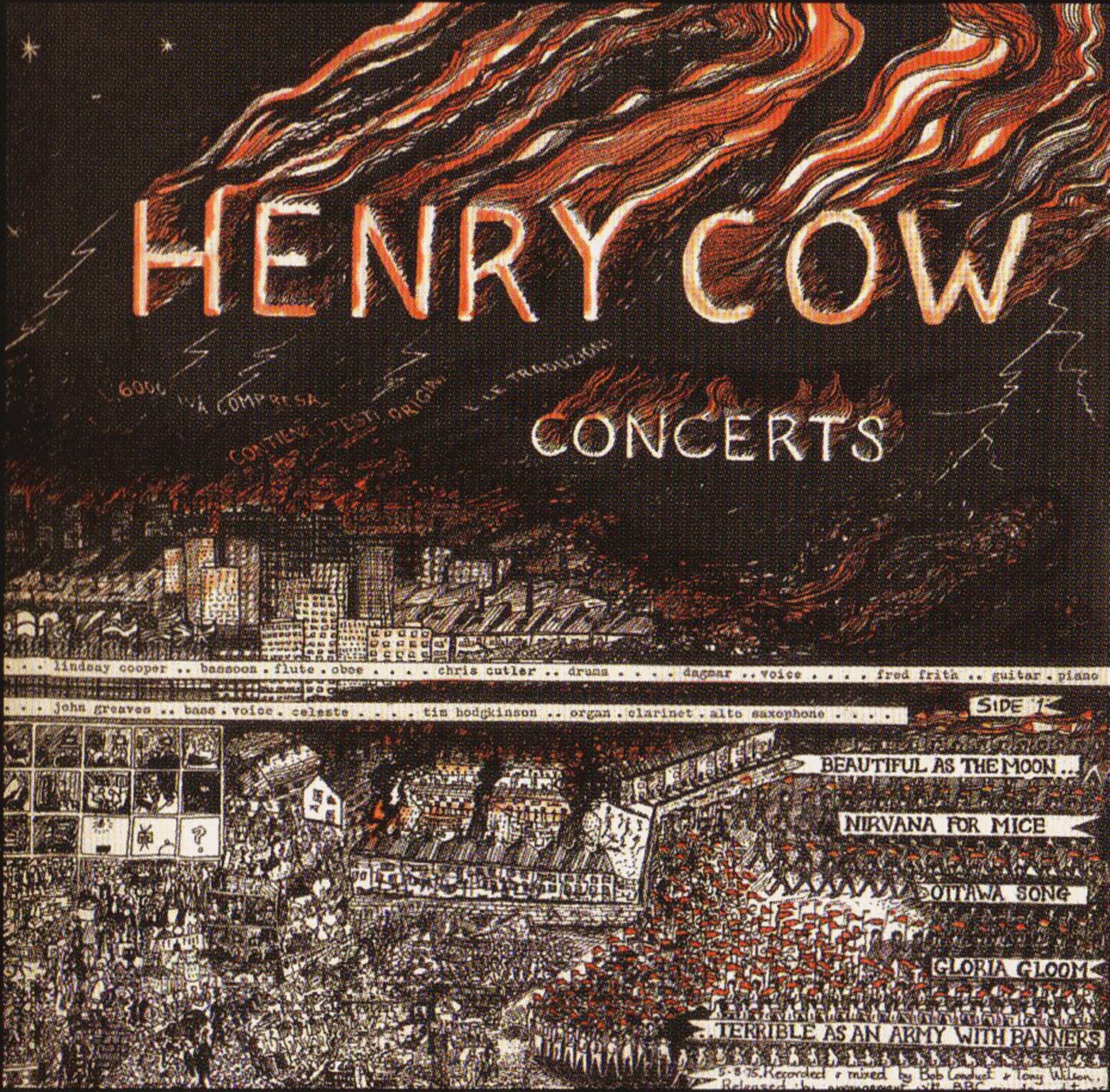
Concerts is the first live album by Henry Cow, an avant-prog band founded in 1968.
After the release of In Praise Of Learning (1975)it quickly became clear that the merger between Henry Cow and Slapp Happy had come to an end. Anthony Moore left the band, and Peter Blegvad was dismissed shortly thereafter.
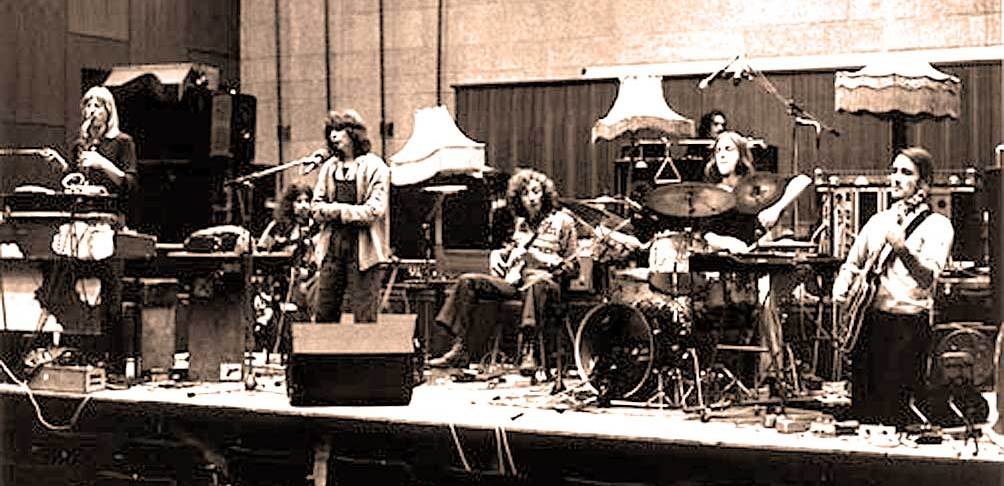
The remaining members—Fred Frith (guitar, violin, percussion), Tim Hodgkinson (keyboards, clarinet), John Greaves (bass, piano), Chris Cutler (drums), Lindsay Cooper (bassoon, oboe), and Dagmar Krause (vocals)—decided to focus their energy on live performances. What followed was an intense year-and-a-half-long tour during which the band was on the road almost constantly, living modestly—almost starving—usually staying in their trusty tour bus and cooking their own meals by the side of the road. They played gigs wherever they were offered, which meant that at times the band would zip around in their bus, say, from France to Norway and from there straight back to Portugal. The band thus lived under extremely challenging conditions. Fans had to wait a full three years for the next studio album, due in part to the grueling tour schedule, label issues, and artistic disagreements.
The idea for the band’s first live album came from the Norwegian Frode Holm. Holm was in the process of founding a new small record label, Compendum, and wanted to release a Henry Cow live album.
Henry Cow saw this as an opportunity to distance themselves from their record label, Virgin, with which the band had become frustrated for many different reasons. Henry Cow and Holm struck a deal with Virgin whereby Compendium would release Concerts in the Nordic countries, while Virgin’s budget label, Caroline, retained the rights for England. Henry Cow was given free rein over the album’s content and production. The band handled all aspects of the album themselves, such as mastering, cover art, overseeing the pressing, and so on. And they realized how easy it all was. What, in fact, is the point of record labels?
Henry Cow had gotten a taste of freedom and would never give it up again. This realization sowed the seeds for the Rock In Opposition movement, which the band later founded and which many significant avant-prog bands joined (including Univers Zero, Stormy Six, Art Zoyd, and Samla Mammas Manna).
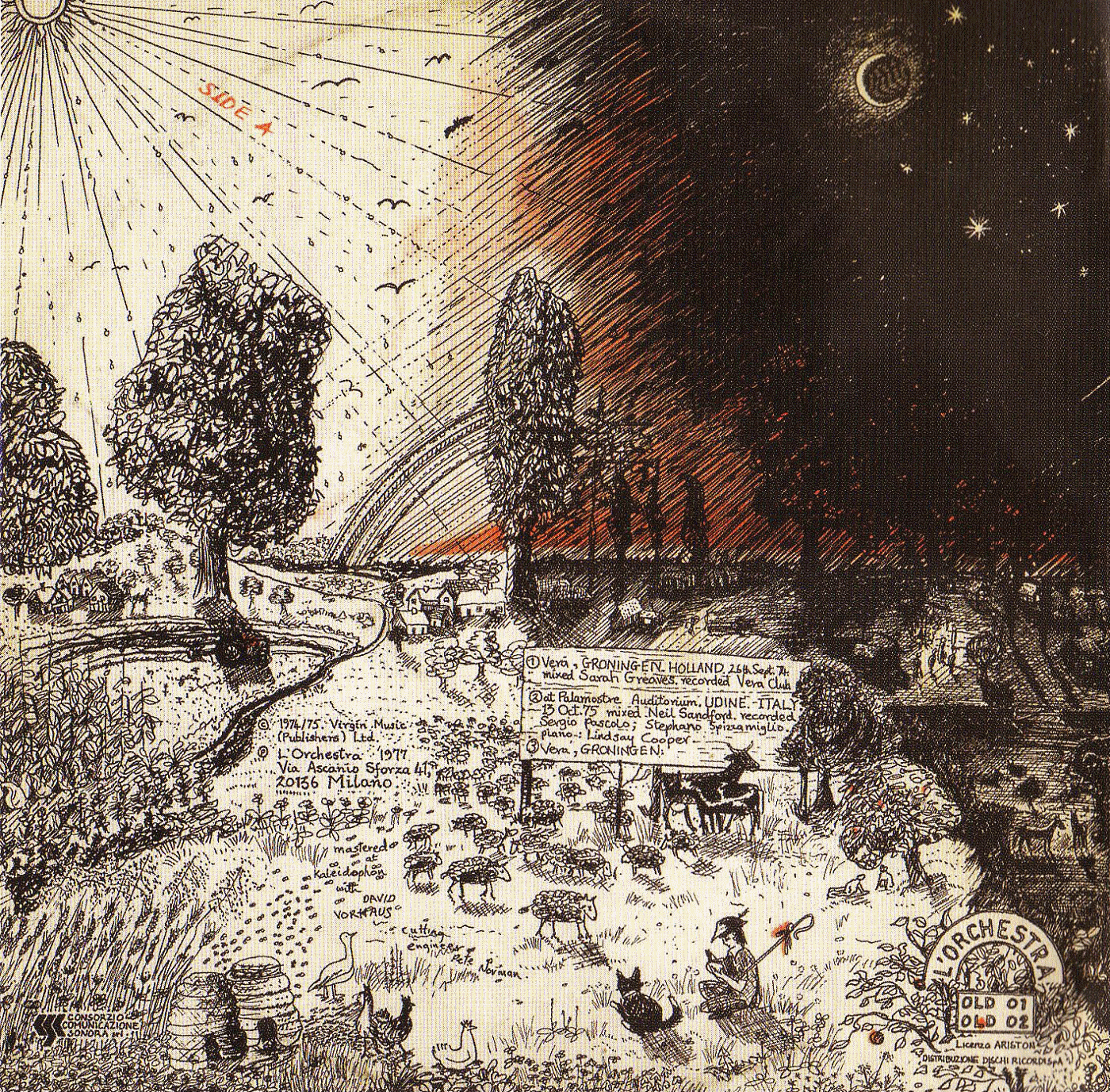
Concerts was originally released as a double vinyl album. The first disc focuses on the band’s original compositions and cover songs, while the second disc features free improvisations. The material on Concerts was recorded at various concerts between 1973 and 1975. As a result, the sound quality varies considerably depending on the original source of the material.
The first album opens with a 22-minute medley recorded in September 1975 on John Peel’s radio show, in which Henry Cow seamlessly blends four songs together. This was typical of Henry Cow. The band played all their songs live almost without exception in one go, without breaks. This was because the band saw it as an interesting challenge to compose new interludes to connect the songs or to do so through improvisation. On the other hand, Henry Cow also found audience applause embarrassing and part of a bourgeois celebrity culture, and did not want to interrupt the flow of the music for the sake of such triviality.
The John Peel session was recorded exceptionally well, and the whole band is in top form. Compared to the original studio versions, these live versions have a newfound sense of ease and flow that makes the music more accessible than before. This section of Concerts is probably the part of Henry Cow’s entire discography that would be the easiest place to start if you’re new to the band. The section is also a treat for Dagmar Krause fans, as she plays a central role for nearly the entire 22 minutes. Frith’s composition “Beautiful as the Moon – Terrible as an Army with Banners” forms the backbone of the whole. “Beautiful As The Moon” has been split into two parts, and skillfully woven into it are the rhythmic minefield “Nirvana As Mice” from the debut album, the previously unreleased “Ottawa Song,” and a cover version of Matching Mole’s song “Gloria Gloom.” The version of “Gloria Gloom” is truly excellent, and with Dagmar Krause on vocals and a new arrangement by Henry Cow, it sounds almost like a brand-new song. And I would argue that this version easily surpasses the original.
On the B-side of the first vinyl, we first hear a couple of tracks performed with Canterbury legend Robert Wyatt. Wyatt was something of a demigod to Henry Cow, and Wyatt was also a huge fan of Henry Cow’s music (in addition to their musical tastes, Wyatt and Henry Cow were also united by their belief in communism). First up is John Greaves’ composition “Bad Alchemy” (from the album Desperate Straights, 1974), performed as a duet by Wyatt and Krause. From there, we move on to a highly energetic rendition of Wyatt’s song “Little Red Riding Hood Hits the Road” (from the album Rock Bottom, 1974). A truly powerful performance in which Greaves’s bass playing, in particular, makes a strong impression. Unfortunately, the sound quality on these two tracks is significantly poorer than in the John Peel segment.
The B-side of the first vinyl ends with a rambling version of Frith’s complex epic “Ruins” (from the album Unrest, 1974), recorded in Italy in 1975. Originally a 12-minute track, it stretches to a full 16 minutes thanks to the improvised section woven into it. Around the nine-minute mark, Frith plays a truly wild and magnificently erratic guitar solo.
Concerts’ first album is, at least in part, the most accessible of Henry Cow’s works. The second album is a completely different story. It consists entirely of free improvisations, and especially the 29-minute “Oslo” on Side A (which, as the name suggests, was recorded in Oslo in 1975) represents Henry Cow at its most abstract. “Oslo” is as far removed from typical two-chord rock improvisations (i.e., jamming) as possible, with Henry Cow actively avoiding any kind of rhythmic repetition or clear melody. Henry Cow’s five instrumentalists conjure up a cavalcade of strange sounds from their instruments that are often difficult to associate with any specific instrument. Vocalist Krause occasionally erupts into violent, primal-sounding screams and shrieks. Some of Krause’s screams are truly demonic to hear!
“Oslo” is at times fascinating and at times frustrating to listen to. At times, the music is truly captivating in its strangeness, while at other times it seems to fizzle out into mere aimless wandering. But that is both the charm and the curse of free improvisation and taking risks. When it works, it’s downright magical, but the possibility of failure is always present. Henry Cow’s entire 1976 tour of the Nordic countries was apparently based solely on free improvisation, and the band didn’t play any material familiar from their studio albums at all. John Greaves has indeed remarked with a twinkle in his eye that the tour was commercial suicide and that, as a result, the band permanently lost the entire Nordic market. Henry Cow also visited my home country, Finland, on that tour. As a bit of trivia, it’s worth noting that the band’s fee for the Helsinki show at the time was 650 pounds.
Side B features another half hour of improvisations in the form of three tracks. These are slightly more accessible and a touch rockier than “Oslo,” but even these tracks require a special interest and some getting used to free improvisation to be truly enjoyable to listen to.
Read also:
- Levyarvio: Black Sabbath – Master Of Reality (1971)
- Review: Henry Cow – Concerts (1976)
- Levyarvio: Spock’s Beard – V (2000)
- Review: Cos – Viva Boma (1976)
- Levyarvio: King Crimson – The ConstruKction Of Light (2000)
- Review: Camel – Moonmadness (1976)
- Review: Gong – Gazeuse! (1976)
- Review: Mike Johnson – The Gardens Of Loss (2026)
- Levyarvio: Mike Johnson – The Gardens Of Loss (2026)
Concerts CD release includes four bonus tracks taken from the album Greasy Truckers Live at Dingwalls Dance Hall, which was originally recorded in 1973 and released in 1974. That somewhat peculiar release was recorded at an event featuring Camel, Gong, Global Village Trucking Company, and Henry Cow. Except that Henry Cow never actually made it on stage because the concert arrangements fell apart so badly that Henry Cow didn’t have time to perform. Henry Cow’s portion was ultimately recorded at Manor Studios, where the band improvised 21 minutes of music live. At this point, Lindsay Cooper and Dagmar Krause had not yet joined the band, and the wind instruments are played by Geoff Leigh, who is also familiar from the Legend album. The percussion-driven, atonal racket of “Off the Map” is a particular highlight of the Greasy Truckers section. And since the material was recorded at Tom Newman’s studio, the sound quality in this set is top-notch.
Concerts isn’t Henry Cow’s best album, but it’s a quite impressive overview of the band’s various facets. One could even recommend this album as a newcomer’s first Henry Cow release. The first disc is a convenient way to get acquainted with the band’s complex composed material in its most accessible form, while the second disc allows you to gradually acclimate to the band’s uncompromising free improvisations. A few excellent cover versions and a guest appearance by Robert Wyatt add some extra spice.
Shortly after Concerts, John Greaves left Henry Cow and began working with Peter Blegvad on his own masterpiece, Kew. Rhone. (1977). A classically trained cellist, Georgie Born, was recruited to replace Greaves on bass. As a result, half of Henry Cow’s lineup was female, which was highly unusual for a rock band in the 1970s.
Author: JANNE YLIRUUSI
Read also: Review: Henry Cow – Western Culture (1979)
Tracks:
CD 1
1. ”Beautiful as the Moon – Terrible as an Army with Banners” 5:41
2. ”Nirvana for Mice” 5:30
3. ”Ottawa Song” 4:16
4. ”Gloria Gloom” 4:14
5. ”Beautiful as the Moon (Reprise)” 3:11
6. ”Bad Alchemy” 2:55
7. ”Little Red Riding Hood Hits the Road” 5:50
8. ”Ruins” 16:29
9. ”Groningen” 8:54
10. ”Groningen Again” 7:27
CD 2
1. ”Oslo” 29:00
”Part 1”
”Part 2”
”Part 3”
”Part 4”
”Part 5”
”Part 6”
”Part 7”
”Part 8”
9. ”Off the Map”
10. ”Café Royal” 3:20
11. ”Keeping Warm in Winter” 1:00
12. ”Sweet Heart of Mine” 8:58
13. ”Udine” 9:39
Musicians:
Lindsay Cooper: bassoon, flute, oboe, recorder, piano Chris Cutler: drums, piano Dagmar Krause: vocals, piano Fred Frith: guitar, piano, violin, xylophone John Greaves: bass, vocals, celesta, piano Tim Hodgkinson: organ, clarinet, alto saxophone, piano Geoff Leigh: tenor and soprano saxophone, recorder, flute, clarinet Robert Wyatt: vocals (”Bad Alchemy” and ”Little Red Riding Hood Hits the Road”)
Producer: Henry Cow
Label: Compendium, Caroline
 Pienemmät Purot
Jätä kommentti