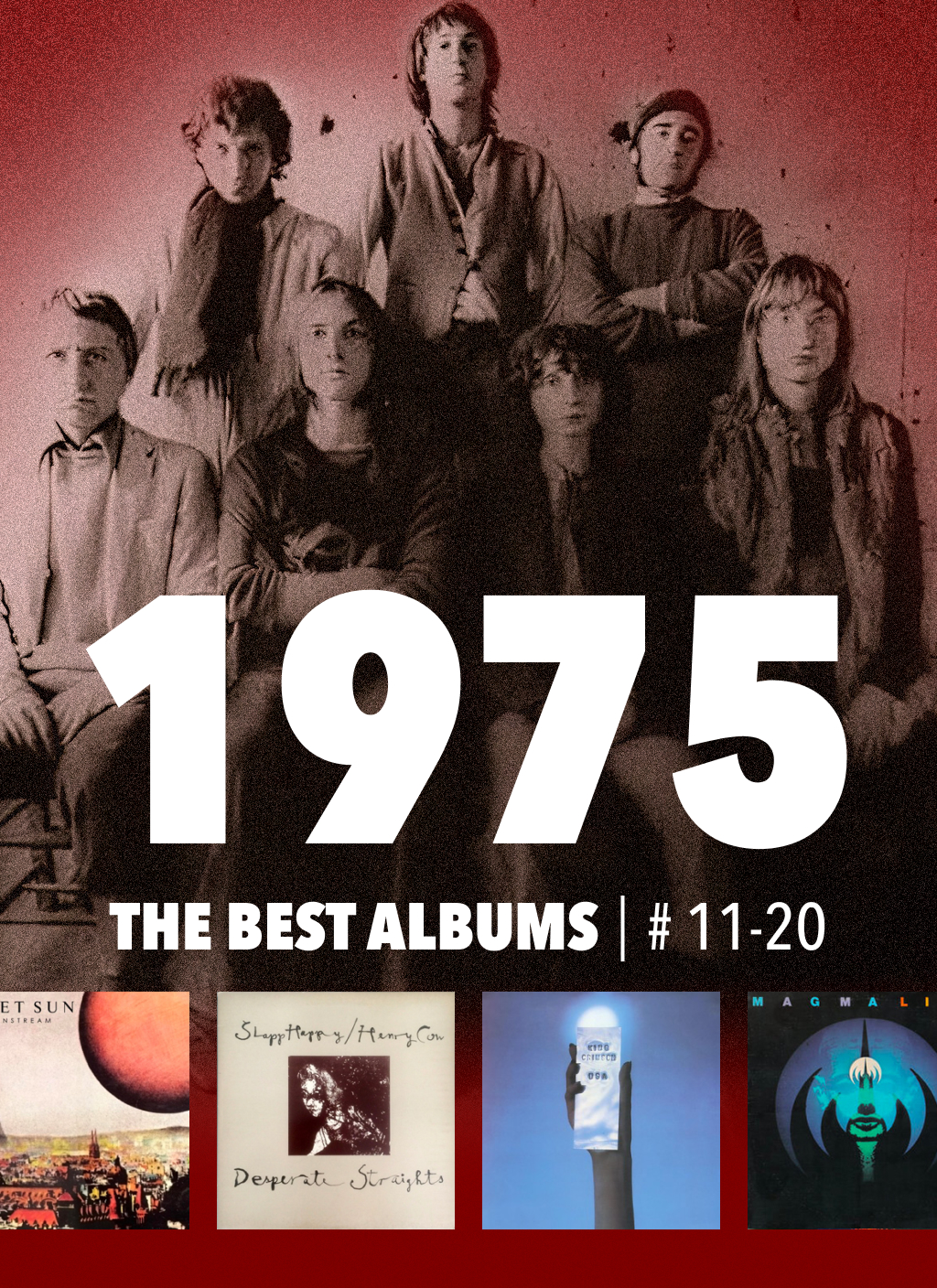
The author’s picks for the best albums of 1975, ranked 11-20.
In the Year by Year series, I’ll go through my favourite albums from 1969 to the present day.
11. Slapp Happy / Henry Cow: Desperate Straights (UK) ****½
12. King Crimson: USA (UK)****½
13. Quiet Sun: Mainstream (UK)****½
14. Magma : Live Hhaï (FR)****½
15. Steve Hillage: Fish Rising (UK)****½
16. Mannheim Steamroller: Fresh Aire I (US) ****½
17. Peter Hammill: Nadir’s Big Chance (UK)****
18. Neu!: Neu! ’75 (DE)****
19. Gilgamesh: s/t (UK)****
20. Arti + Mestieri: Giro di valzer per domani (IT) ****
11. Slapp Happy / Henry Cow: Desperate Straights
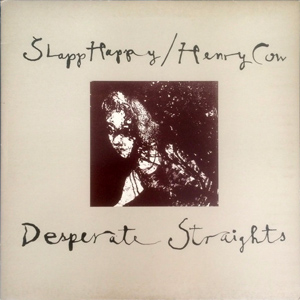
Desperate Straights is Slapp Happy’s third studio album and the first one the band made together with avant-prog band Henry Cow.
Slapp Happy was founded in Hamburg in 1972 by a trio from three different countries. The band was started by Anthony Moore, an English composer who had made a few avant-garde albums, who invited the American guitarist Peter Blegvad (Moore and Blegvad had played in bands together as schoolboys in England), who had been living in England for a long time, to join him in Hamburg. The idea was to make a few pop songs as a joke and make some money at the same time. Because it’s easy to make pop, isn’t it?
The pair started the project with krautrock band Faust as their backing band, but things didn’t seem to take off until the duo realised to ask Moore’s German girlfriend (and future wife), Dagmar Krause, who had mainly sung in folk bands before, to join as vocalist. At this point, the project became a real band and a more ambitious venture…
12. King Crimson: USA

USA is the second live album by King Crimson, founded in 1969.
King Crimson’s first live album, Earthbound, was released somewhat hastily and was of rather rough quality, but USA is a completely different story.
The lineup on the album includes the amazing quartet that made the albums Larks’ Tongues In Aspic (1973) and Starless And Bible Black (1974): Robert Fripp (guitar, Mellotron), John Wetton (vocals, bass), David Cross (violin, Mellotron, electric piano), and Bill Bruford (drums).
USA contains almost exclusively songs from the aforementioned albums. The only exceptions are an explosive version of ”21st Century Schizoid Man,” the then-unreleased epic ”Starless,” and a seven-minute improvisation titled ”Ashbury Park.” With the exception of one song, the album was recorded in Asbury Park, New Jersey, on June 28.
However, the completely unedited live album USA is not, as Eddie Jobson, who played with Curved Air and Roxy Music, was invited to play a few new violin parts on the album to replace some of Cross’s original parts.
The highlight of the album is a free improvisation called ”Asbury Park.” ”Asbury Park” represents the metal funk side of King Crimson’s improvisations. The whole band is on fire in this song, but Wetton’s playing is particularly beastly. Wetton’s bass sound in the 70s was not known for being shy, but in ”Asbury Park” his bass really growls with a huge punch. Bruford also shines on the track, and even though the rhythm section seems to carry the song, Fripp and Cross are by no means mere extras. Fripp used to call the rhythm section formed by Wetton and Bruford a ”flying brick wall” because of its driving style, and when listening to ”Asbury Park,” it’s easy to understand why, but on the other hand, the whole quartet’s playing also sounds very seamless. This lineup was absolutely thunderous live!
”Asbury Park” is definitely one of Crimson’s best improvisations of the 70s, if not the best. USA is worth buying for that song alone. Not that there’s anything wrong with the other interpretations on the album. For example, the version of ”Starless” without the saxophones that play such a significant role in the studio version is very interesting and works well thanks to the more energetic and rumbling playing.
King Crimson is a band that has often been at its best live. I believe that a true Crimson fan needs to have at least one live album from each of the band’s lineups in their collection. And from the Wetton/Bruford era, the best choice is definitely this one, USA.
Best tracks: ”Exiles”, ”Ashbury Park”, ”Starless”
(Note: This review is based on the 2002 ”30th Anniversary” CD release, which includes bonus tracks ”Starless” and ”Fracture,” originally left off the album due to lack of space.)
13. Quiet Sun: Mainstream

Mainstream is Quiet Sun’s first and only studio album.
Quiet Sun was founded in 1970 by guitarist Phil Manzanera, bassist Bill MacCormick, keyboardist Dave Jarrett, and drummer Charles Hayward. The band played guitar-driven instrumental Canterbury prog rock influenced by Soft Machine, but did not achieve much success beyond occasional gigs. The band’s demo tapes were rejected by several record companies they approached.
When gigs were few and far between, the band had to consider hanging up their gloves. The final nail in the band’s coffin was Manzanera’s joining Roxy Music in 1972, which quickly achieved great popularity. Quiet Sun was put on hold and MacCormic joined Robert Wyatt’s Matching Mole, Hayward played in Mal Dean’s Amazing Band, Dolphin Logic, and Jarrett left his career as a professional musician and became a math teacher…
14. Magma : Live/Hhaï

Originally released as a double vinyl, Live/Hhaï (also known as Magma Live) is Magma’s first live album. The tracks on the album were recorded in Paris in the summer of 1975.
The eight-piece Magma serves up muscular and slightly polished versions of material mainly from its last few albums on Live/Hhaï. In addition to the drummer (Christian Vander, naturally!) and bassist, the lineup includes two vocalists, two keyboardists, and, for the first time in Magma’s history, a violinist (Didier Lockwood).
With the Mahavishnu Orchestra, violinists had begun to appear more frequently in prog bands, but especially in jazz-rock bands, and Magma also bows slightly toward jazz-rock on Live/Hhaï, taking a step back toward its roots, in a manner of speaking. The tight, pseudo-minimalist, almost militaristic marching style had become the band’s trademark on Magma’s last two albums, Mëkanïk Dëstruktïẁ Kömmandöhi(1973) and Köhntarkösz (1974), but on Live/Hhaï, the band relaxes a little and gets inspired to play an exceptionally large number of long, fast-paced solos. Of course, the familiar zeuhl stomping can still be heard on the album!
A significant part of Live/Hhaïsta is taken up by two long tracks from the band’s most recent albums.
Magma’s most magnificent composition, ”Köhntarkösz,” is heard in its entirety, a 31-minute version. ”Mëkanïk Dëstruktïẁ Kömmandöh,” on the other hand, has been shortened to 18 minutes. Due to some vague record company issues, the songs have been renamed ”Köhntark” and ”Mëkanïk Zain.”
“Köhntark” is fairly faithful to the original version and works wonderfully as a slightly heavier live version. At the 23-minute mark, Bernard Paganotti’s devilishly sounding, lush bass riff, over which Lockwood plays a melodic violin solo, is a magnificent and clear departure from the original version.
The ”MDK” version suffers from being a little too laid-back and loses some of the otherworldly strangeness of the original version by indulging in excessive jazz-rock solos. BassistPaganotti and violinist Lockwood, among others, get their own long solos in the song. “Mëkanïk Zain” has many great moments, but as a whole it doesn’t quite convince or do full justice to the original magical composition. Christian Vander’s drumming is truly fierce in this song, and for once it comes across very clearly. On Magma’s studio albums, the drums are often mixed too far back and the sound tends to be rather muddy anyway.
Alongside “Köhntark,” the most essential offering on the album is the completely new song “Hhaï,” which begins with Christian Vander’s truly majestic vocals until he jumps on the drums and leads the band into a magical zeuhl-meets-jazz-rock jam. The song, which is just over eight minutes long, is one of Magma’s finest ”short” compositions. The other new song, the hypnotically swaying and rocking ”Lïhns,” is also a magnificent piece. However, the hypnotic quality is interrupted quite intensely by the vocals that preach over the music.
Magma’s first album, ”Kobaia,” also features a powerful version of the song ”Kobah,” which successfully updates the original to a more zeuhl-like style. However, the song fades out annoyingly in the middle, leaving the listener wanting more. Could the tape have run out in the middle of the live recording?
All in all, Live/Hhaï is an excellent live album, and even though it may not present Magma at its most typical, its overall quality in terms of both performance and sound is so high that it definitely ranks among Magma’s best live albums.
Best tracks ”Köhntark”, ”Hhaï”, “Kobah”, ”Lïhns”
Read also
- Review: Camel – Moonmadness (1976)
- Review: Gong – Gazeuse! (1976)
- Review: Mike Johnson – The Gardens Of Loss (2026)
- Levyarvio: Mike Johnson – The Gardens Of Loss (2026)
- Levyarvio: Led Zeppelin – Presence (1976)
- Vuosi vuodelta : Parhaat levyt 2000 – Sijat 11-20
- Review: Univers Zero – Ceux Du Dehors (1981)
- Levyarvio: Steve Walsh – Glossolalia (2000)
- Year by Year : Best Albums of 1976 – 21-29
15. Steve Hillage: Fish Rising

Fish Rising is the first solo album by Gong guitarist Steve Hillage.
Fish Rising was recorded in the aftermath of Gong’s You album, while there was a power struggle within the band not only over musical style but also over leadership. Hillage had little time or care to get involved in this battle as he was busy working on a solo album.
Fish Rising can be seen as a natural extension of Hillage’s earlier own band Khan, who made their first, and only, album Space Shanty in 1972. However, Fish Rising easily outshines Space Shanty on every level.
Of course, a major relative of Fish Rising’s music at this stage is Gong’s latest album You (1974), in which Hillage had played an important role. However, Fish Rising is not a one-to-one sequel to You...
16. Mannheim Steamroller: Fresh Aire I

Fresh Aire I is the first album by Mannheim Steamroller, an American band formed in 1974.
The story of Mannheim Steamroller founder Chip Davis (b.1947) is probably one of the strangest in popular music history. Davis began playing the piano at the age of four and graduated from the University of Michigan’s music department, specialising in bassoon and percussion.
Early in his musical career, the classically trained Davis made a living composing music for commercials. Eventually, the jingles Davis composed for the Metz Bakery became so popular that he created a single based on them, featuring the fictional truck driver C. W. McCall, who appeared in the bakery’s advertisements. The song ”Convoy”, sung by McCall (actually country singer William Dale Fries Jr), became a huge hit in America in 1976…
17. Peter Hammill: Nadir’s Big Chance

Nadir’s Big Chance is the fifth solo album by Van der Graaf Generator vocalist Peter Hammill.
Hammill’s two previous albums, The Silent Corner and the Empty Stage and In Camera, had taken his music in an increasingly experimental direction, with the latter even venturing into avant-garde territory in places. Nadir’s Big Chance is a step away from those moods.
Nadir’s Big Chance Peter Hammill brings his alter ego Rikki Nadir into the spotlight, who is supposed to be some kind of archetype of a straightforward rocker. The concept of the album is to present Hammill’s view of pop rock. And we’re talking about some seriously hard rocking rock. The idea is that the songs are not performed by Hammill, but by ”16-year-old pop idol” Rikki Nadir. This is similar to the alter ego games that David Bowie played throughout his career.
However, Hammill did not venture into completely unknown territory with this album, as Van der Graaf Generator’s Hugh Banton (bass guitar, keyboards), Guy Evans (drums), and David Jackson (saxophone) served as an effective backing band throughout the album, even in this simpler musical context. Jackson’s wind instruments in particular play an important role, even though they sound more subdued than on VdGG’s albums on average. Hammill’s charismatic vocals are naturally in the spotlight, and he gets to use the many facets of his impressive voice effectively on this album as well. From aggressive growls to a pleasantly sounding, slightly soulful baritone.
Nadir’s Big Chance has even been called Hammill’s punk album, which I think is quite an exaggeration. There are only a few songs on the album (the title track, at least) that could in any way be described as punk. Alongside a couple of proto-punk tracks, the album also features soul influences and a few really great pop songs, and even a ballad or two.
My favorites from the album are the beautifully rolling ”Open Your Eyes,” with David Jackson’s saxophone playing energetically, and the fatally beautiful ”Shingle Song,” with its bittersweet atmosphere that is somehow heartbreaking. In a perfect world, both of these songs would have been hits. Nadir’s Big Chance is one of those albums where the B-side is stronger than the A-side, so if the first few songs on the album don’t convince you, I still recommend persevering to the end!
Nadir’s Big Chance shows that Hammill was also capable of working naturally with more straightforward rock, and if he had continued along these lines for several more albums, it is quite possible that he could have made a significant commercial breakthrough. Typically for Hammill, however, he changed direction again on his next album, Over (1977). And that’s a good thing.
Best tracks: ”Open Your Eyes”, ”Nobody’s Business”, ”Shingle Song”, ”Airport”, ”Two Or Three Spectres”
18. Neu! ’75
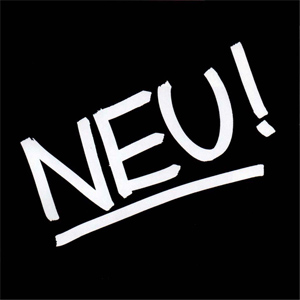
Neu! ’75 is the third studio album by German band Neu!, founded in 1971.
Neu! ’75 is probably the finest creation by the Düsseldorf duo of drummer Klaus Dinger and guitarist Michael Rother. The album offers fascinating Krautrock jams and crisp minimalism, spiced up with occasional punk vocals. In my opinion, this is the band’s only perfect album.
The moods vary beautifully, from the motoristic rhythm of ”Isis” to the languid ambient of ”Leb’ Wohl” (Nine Inch Nails’ Ghosts I-V albums owe a lot to this song) and finally to the rough proto-punk of ”Heron.”
”Isi” is somewhat reminiscent of Can, but as a song it is clearer, more controlled, and perhaps also simpler than the corresponding songs of his compatriots. In ”Hero,” Dinger growls indistinct vocals like any punk rocker, and surprisingly, this departure works quite well in combination with the slightly more intense Neu! sound. However, extreme vocal performances are not unheard of in krautrock. They have been provided by the vocalists of Faust and Can, among others.
The album is crowned by a magnificent ”dry” and crisp soundscape that does justice to the simple yet hypnotic music at its best.
Neu! 75 is not only the band’s best album, but also one of the finest krautrock albums of all time. The album has inspired numerous artists from many different genres. The most famous fan is probably David Bowie, who, shortly after Neu! 75 was released, asked guitarist Rother to work with him on an album that was intended to take Bowie in a completely new direction. Rother declined the honor. We will never know what Low would have sounded like with Rother, but it is clear that Neu!’s influence on that album is enormous, even though the guitarist did not agree to participate.
Unfortunately, Rother and Dinger were no longer on good terms even at the time of Neu! 75, and further collaboration became impossible. The duo did not reunite until 1986 to work on a new album. The sessions did not go well, and the project was abandoned. The material from the sessions was eventually released without Rother’s approval in 1995. That vague album doesn’t really do justice to Neu!’s legacy, but on the other hand, the band’s reputation as a krautrock innovator is more than secure thanks to their first three albums.
Best tracks: “Isi”, “Hero”
19. Gilgamesh: s/t

Gilgamesh is the debut album by the British band of the same name, founded in 1972 by keyboardist Alan Gowenand drummer Mike Travis, who play Canterbury-style progressive rock.
Gowen had played jazz-rock with Jamie Muir in the band Sunship, and Mike Travis had already established himself to some extent on the London jazz scene.
It took years before the lineup of the band led by Gowen stabilized. Before the debut album, the band had been joined by such Canterbury luminaries as Richard Sinclair, Mont Campbell, and Dave Stewart. On this debut album, Gowen and Travis are joined by guitarist Phil Lee and Jeff Clyne on bass and double bass…
Read the whole review here
30. Arti + Mestieri: Giro di valzer per domani
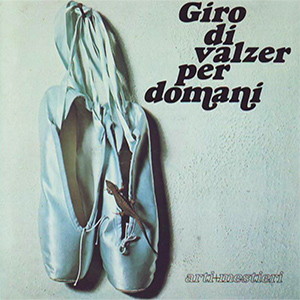
Giro di valzer per domani is the second studio album by Italian band Arti + Mestieri.
Arti + Mestieri seems to be moving even more clearly in the direction of jazz rock on this second album. Of course, the band still has one foot in progressive rock, but the jazz rock-style instrumental interplay seems to be given more space than before. However, this is not at the expense of the songs themselves, as the mostly instrumental compositions on Giro di valzer per doman hold together well and also contain impressive melodic and even quite catchy sections. The 15 short (1-5 min) songs on the album are perhaps a little too similar to each other and difficult to distinguish from one another.
The band’s violinist, Giovanni Vigliar, gets a little more space on this album than on its predecessor, and his playing sounds great. Once again, however, drummer Furio Chirico stands out above the other instrumentalists, pounding away at his kit with insane energy throughout the album. Chirico’s intense drumming brings to mind Billy Cobham, except that I think I like Chirico’s work even more!
Giro di valzer per domani is an excellent cocktail of jazz-rock and prog. Arti + Mestieri made a few more albums after this one, but the general consensus seems to be that the quality dropped significantly. I haven’t had a chance to listen to the later albums yet. However, Arti + Mestieri’s first two albums are among the best, if not the very best, of Italian progressive rock.
Best tracks: ”Mirafiori”, ”Aria pesante”
Author: JANNE YLIRUUSI
You can find other parts of the Year by Year series here.
 Pienemmät Purot
Jätä kommentti