
The author’s picks for the best albums of 2025, ranked 1-10.
In the Year by Year series, I’ll go through my favourite albums from 1969 to the present day.
- The Mars Volta: Lucro sucio; Los ojos del vacio (US) ****½
- Jack O’ The Clock: Portraits (US) ****½
- Steve Reich: Jacob’s Ladder/Traveler’s Prayer (US) ****½
- Anna von Hausswolff: Iconoclasts (SE) ****½
- Mary Halvorson: About Ghosts (US) ****½
- Stephan Thelen: Worlds In Collision (CH) ****½
- Jonny Greenwood: One Battle After Another (UK) ****½
- Beat: Neon Heat Disease – Live In Los Angeles (US) ****½
- KoMaRa: II (Int.) ****
- Echolyn : TimeSilentRadio ii (US) ****
See the best albums of 2024 here.
1. The Mars Volta : Lucro sucio; Los ojos del vacio

Lucro sucio; Los ojos del vacio is The Mars Volta’s ninth studio album.
The Mars Volta is a band that was born out of a desire to break boundaries. When guitarist Omar Rodríguez-López and vocalist Cedric Bixler-Zavala left the post-hardcore band At the Drive-In after its third album, they wanted to make music where the length, structure, and expressive boldness of the songs would not be an obstacle but a starting point. Strong Latin influences joined jazz, psychedelic rock, and progressive rock, and all this was made possible by The Mars Volta, founded in 2001.
The band’s debut EP, Tremulant, was already a promising calling card, but the real breakthrough came with their debut album, De-Loused in the Comatorium…
2. Jack O’ The Clock: Portraits
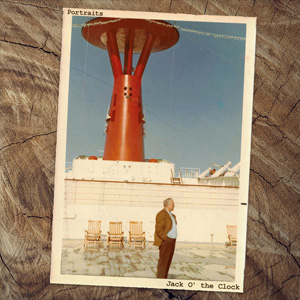
Portraits is Jack O’ The Clock’s 10th studio album.
Formed in 2007, American band Jack O’ The Clock’s music balances from album to album somewhere between complex avant-prog and folk-rock. From record to record, it varies which style comes out on top. The previous album The Warm, Dark Circus focused mainly on very intricate prog and now it’s the turn of folk.
Progressive rock is largely left aside on Portraits and the semi-acoustic album highlights the side of the band that draws inspiration from the folk ballads of Appalachia. On the other hand, the art music background of the band’s creative engine Damon Waitkus shines through here and there, and Jack O’ The Clock’s take on folk is not the most straightforward on this album either…
3. Steve Reich: Jacob’s Ladder/Traveler’s Prayer
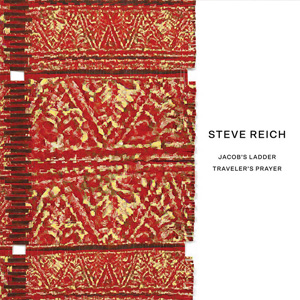
Jacob’s Ladder/Traveler’s Prayer brings together, at the time of writing, two of Steve Reich’s most recent compositions.
Jacob’s Ladder / Traveler’s Prayer includes two late works by the composer, both of which deal with spirituality and the theme of travel. Both literally and figuratively. The works were composed between 2020 and 2023 and represent Reich’s mature, minimalist style, combining clear formal language and recitation of text with subtle nuances.
The multi-part Jacob’s Ladder is based on the well-known vision in the Book of Genesis of angels ascending to heaven on a ladder. Reich constructs a musical structure from this text, in which instrumental and vocal sections alternate and flow into one another. The music is light, at times even playful, but at the same time tense and full of Reich’s characteristic glides and modular structures, which lend the vision an otherworldly glow. The work is performed by the New York Philharmonic together with Synergy Vocals, conducted by Jaap van Zweden, and the ensemble brings a rich and controlled sound to the composition.
Traveler’s Prayer, on the other hand, is considerably quieter and more introverted in tone. It is a 16-minute, almost entirely rhythmless vocal work that uses excerpts from the Torah and the Psalms to create a meditative prayer atmosphere. Reich abandons his usual pulsating rhythms here, giving the work a particularly calming, even static quality. In this sense, the work is at times reminiscent of Reich’s composition ”Proverb” (1995). The work is performed by the Colin Currie Group together with Synergy Vocals, conducted by Colin Currie, and was recorded in Tokyo. The ensemble’s precise and breathing interpretation emphasizes the inner silence and reverence of the composition.
Together, the two works form an impressive whole that resonates on a spiritual level but also appeals aesthetically with its austerity and clarity.
Profound and devotional, Jacob’s Ladder / Traveler’s Prayer is one of the highlights of Reich’s later work and one of the master composer’s strongest albums overall.
Originally, Jacob’s Ladder/Traveler’s Prayer was released in early 2025 as part of the 27-disc box set ”Steve Reich Collected Works,” but it has since been released as a separate CD and in digital formats.
4. Anna von Hausswolff : Iconoclasts
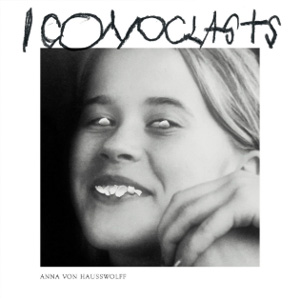
Iconoclasts is Anna von Hausswolff’s sixth studio album.
Swedish organist/vocalist Anna von Hausswolff’s (b. 1986) sixth album, Iconoclasts, picks up where she left off on her definitive breakthrough album, Dead Magic – but not by repeating herself, rather by dismantling and reassembling. If Dead Magic was a slowly rising, dark mass built on church organs and demonic vocals, Iconoclasts opens the windows much wider: it is more open, more diverse and, in places, surprisingly light, at times even leaning towards pop, while retaining von Hausswolff’s recognizable sense of menace and intensity.
On the producer’s side, Randall Dunn has been replaced by long-time collaborator Filip Leyman, and the change is noticeable. The massive roar of the church organ does not overwhelm everything, but synthesizers and Otis Sandsjö’s saxophone and clarinet paint the music with shades of jazz and avant-garde. Von Hausswolff’s vocals are also more restrained than before, although the familiar demonic outbursts still emerge at just the right moments. The music is no longer built up to the epic climaxes of Dead Magic, and intensity is not measured solely by volume. The compositions have a new sophistication and versatility.
The best moments on the album are spectacular. The fateful ”Facing Atlas” relentlessly brings von Hausswolff’s voice to the forefront, while the frantically rushing, jazz-infused ”Struggle With The Beast” is a restless avant-garde odyssey of psychosis, and ”Stardust,” built on a hypnotic bass pattern, sounds almost like a pipe organ disco from an alternate reality. The more than 11-minute-long ”The Iconoclast” brings the different sides of the album together into a pagan ritual, in which tribal rhythms, neoclassical strings, and von Hausswolff’s manic vocals alternate impressively – the pulsating synthesizer section at the end, accompanied by Sandsjö’s comforting saxophone, is downright intoxicating.
However, not everything hits the mark. The beautifully Celtic-sounding ”The Whole Woman” flattens out when guest artist Iggy Pop joins in for a duet: the proto-punk godfather sounds more like an Irish leprechaun trying to croon in the spirit of Frank Sinatra, pulling the listener out of the otherwise strong atmosphere of the album. In addition, the album is a tad too long – 73 minutes would have benefited from tighter curation and leaving a few lesser tracks out, which I believe would have easily shaved off about 15 minutes.
Despite these few weaknesses, Iconoclasts is one of Anna von Hausswolff’s strongest albums and yet another demonstration of her uniqueness as an artist whose music defies any precise definition.
Best tracks: ”Facing Atlas”, ”The Iconoclast”, ”Stardust”, ”Struggle With The Beast”, ”Unconditional Love”
Read also:
- Review: Brian Eno + David Byrne – My Life in the Bush of Ghosts (1981)
- Levyarvio: Gong – Zero To Infinity (2000)
- Review: Michael Oldfield – Heaven’s Open (1991)
- Review: Talk Talk – The Colour Of Spring (1986)
- Levyarvio: Jeff Wayne – Jeff Wayne’s Musical Version Of The War Of The Worlds (1978)
- Review: Gong – Shamal (1976)
- Review: Genesis – A Trick Of The Tail (1976)
- Review: Rush – Moving Pictures (1981)
- Review: Pavlov’s Dog – At The Sound Of The Bell (1976)
5. Mary Halvorson : About Ghosts
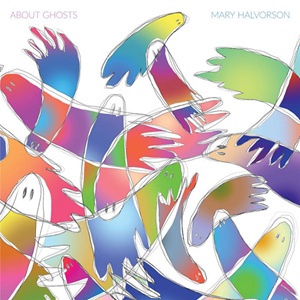
About Ghosts is Mary Halvorson’s 14th studio album.
About Ghosts is yet another example of how effortlessly American guitarist-composer Halvorson is able to make complex music sound light and breathable. The album is a natural continuation of Amaryllis (2022) and Cloudward (2024). Structurally, Halvorson continues to combine familiar themes, harmonic layers, and improvisation, but in About Ghosts, he seems to be striving for a denser sound. The compositions offer multi-layered orchestration and contrapuntal layers in which different voices no longer run parallel but intersect and collide. Every little sound seems to have a purpose. At the same time, spontaneity is not lost—this is ensured by the space left for improvisation. The improvisations seem to be even more naturally woven into the compositions than before: they are not separate interludes but threads of the fabric itself. On the other hand, the compositions perhaps lack the most ingenious hooks of Amaryllis.
The band playing on the album is an expanded version of the Amaryllis quintet. As usual, the band includes Patricia Brennan (vibraphone), Nick Dunston (bass), Tomas Fujiwara (drums), Jacob Garchik (trumpet), and Adam O’Farrill (trumpet), but now the lineup is complemented by saxophonists Immanuel Wilkins and Brian Settles. The combination of two saxophones, trumpet, and trombone creates a very rich harmonic surface, where the voices move independently but in unison – just as Carla Bley (1936–2023) knew how to do in her day. Bley was a master at getting a small wind ensemble to sound like an orchestra without excessive mass. Halvorson does the same on About Ghosts, and her way of balancing the humorous and the serious is reminiscent of Bley’s work from the 1970s.
There are stark contrasts between the tracks. “Full of Neon” stands out as the highlight of the album: its swaying rhythm and vibrant sound combine Halvorson’s compositional precision and spontaneous energy in a way that encapsulates the spirit of the entire album. Adam O’Farrill’s impressive trumpet playing leads the song to its climax and gives the music an almost song-like, bright tone that lingers in the mind for a long time. The playful ”Carved From” brings Halvorson’s uniquely quirky guitar playing to the forefront and builds surprising tension with small, fast-paced motifs that repeat and break like a prism in the light. The melancholic ”Eventidal,” on the other hand, is a quiet and airy piece in which the dialogue between Halvorson and vibraphonist Brennan brings to mind the shadows of late cool jazz. These light moments make the heavier ensemble sections all the more impressive: when the whole band comes back together, the sound of the album is like breathing, expanding and contracting naturally.
In addition to Bley, the wind arrangements contain gentle references to Duke Ellington (1899–1974) and the sophisticated balance of 1950s cool jazz. In this sense, About Ghosts is perhaps the most “romantic” album of Halvorson’s career, even though the romance manifests itself only in momentary harmonious openings – like flashes. Nevertheless, the pulsating power of avant-garde jazz beats in the background, making the music lively and multi-layered. Gentle, playful but angular – perhaps that best describes the tone of this album.
Overall, About Ghosts, produced by guitarist John Dieterich, known from the band Deerhoof, feels like a distillation of everything Halvorson has done so far. It is both a continuation and a summary: the balance between the composer, the band, and the producer is exceptionally perfect. About Ghosts is yet another triumph for Halvorson, prompting us to wonder whether it is possible to go any further in this genre – or whether it is time to change direction. The prolific Halvorson will probably give us the answer very soon.
Best tracks: “Full of Neon”, “Carved From”, “Absinthian”, “About Ghosts”
6. Stephan Thelen : Worlds In Collision
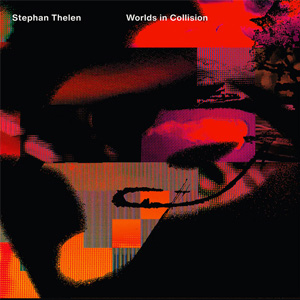
The music of Swiss composer Stephan Thelen—whether performed by his bands Sonar and Fractal Sextet or on his solo albums—usually moves in a tightly polyrhythmic world that could have been born of a fever dream shared by Steve Reich and Robert Fripp. In recent years, Thelen’s music has also taken on a hypnotic spacerock vibe, and despite their complexity, the rhythms are clearly more groovy than before.
My first impression of Worlds In Collision was: wow, this is downright danceable music. For a moment, I thought that the rhythms had been greatly simplified, but upon closer listening, I realized that Thelen’s familiar irregular time signatures were still roaring away. In fact, only the title track of the album is in 4/4 time, which is very unusual for Thelen. However, even this is broken up by a 5/4 polyrhythm. Year after year, Thelen seems to become more skilled at “softening” structures like this. The music grooves even more than before.
The more danceable approach can also be explained by the influence of Worlds In Collision. Brian Eno and David Byrne’s joint album My Life In The Bush Of Ghosts has always been an important record for Thelen, but now he returned to that groundbreaking album once again, and it became the main source of inspiration for Worlds In Collision.
The album features familiar names from Thelen’s previous releases. In particular, American avant-garde guitarist David Torn and powerful Israeli drummer Yogev Gabay are already part of the regular lineup. Perhaps the most important collaborator on Worlds In Collision, however, is Italian Fabio Anile, who inspired Thelen to return to My Life In The Bush Of Ghosts. Anile takes on a kind of Eno’s role on the album: he is responsible for numerous speech samples, which are skillfully woven into the rhythm of the music, as well as many of the album’s exotic, disruptive electronic effects. They give the music an otherworldly and extremely modern feel at the same time.
The six-minute opening track effectively sets the overall mood of the album. ”Palermo” provides the soloists with a fertile and rich rhythmic beat, over which a sampled duduk briefly transports the listener to North Africa. Then a heavily effected, crackling electric guitar brings the music back to the present. At times, the soundscape is punctuated by fragmented speech samples and glitchy synthesizers, interspersed with thick electric guitar riffs. At its peak, Torn’s sharply snarling electric guitar punches holes in the song’s hypnotic 11/4 rhythm, which Gabay occasionally disrupts with fascinatingly abrupt accents. The rhythm of ”Palermo” is downright addictive: it effectively carries the music forward, even though it is at times very jerky. There is more of the same on the album, especially in the song ”Bullet Train,” which, as its name suggests, rushes forward with delightful determination. Gabay’s drumming is also great to hear in that song.
A slight minus must be given for the fact that the tracks on the album are a little too similar to each other, which causes a repetitive effect towards the end. Despite this, Worlds In Collision is one of the brightest gems in the extensive discography of the prolific Thelen.
Although Thelen drew inspiration for Worlds In Collision from the more than forty-year-old My Life In The Bush Of Ghosts, the end result is anything but a dusty rehash of history. On the contrary, Thelen proves once again that he is at the forefront of modern progressive rock with this futuristic-sounding, intense music that would easily fit as the soundtrack to a turbocharged cyberpunk thriller.
Best tracks: “Palermo”, “Bullet Train”, ”Kosmonaut”
7. Jonny Greenwood : One Battle After Another
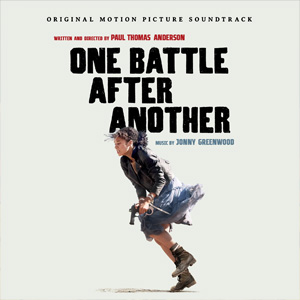
Jonny Greenwood, known from Radiohead and The Smile, has been director Paul Thomas Anderson’s go-to composer since There Will Be Blood came out in 2007. One Battle After Another is their fifth full-length collaboration.
I remember admiring the wonderful film One Battle After Another and thinking how chameleon-like director Paul Thomas Anderson had become. It wasn’t really reminiscent of any of the maestro’s previous films, but it still felt very much like his work and no one else’s. But what made it a Paul Thomas Anderson film? In reality, it was of course a combination of many small things, but the clearest trademark was Jonny Greenwood’s music. Greenwood’s constantly curious, avant-garde music, which reaches out in different directions, reinforces Anderson’s own quirks, which also tend to stray far from the Hollywood mainstream.
Greenwood has become such a key collaborator for Anderson that the composition process began based on the script, which is atypical in Hollywood. Apparently, Greenwood’s music was used to create atmosphere during filming, unlike the normal process where the composer typically begins working on the music only when the film is in the editing stage. And what kind of atmosphere does Greenwood’s music create!
Atmospherically, One Battle After Another is contradictory and multi-layered: it moves between constant tension, discomfort, and controlled chaos. Greenwood’s music gives the viewer no peace—it vibrates, pulsates, and searches for form, just like the characters in the film. Yet in the midst of it all, there are moments when the surface tension breaks and something surprisingly human emerges: cautious warmth, longing, vulnerability. Greenwood’s piano can be both pounding and comforting, and his string arrangements are capable of expressing both menace and compassion at the same time.
In typical Greenwood fashion, the music combines several styles: classical orchestral technique, modern minimalism, avant-garde dissonance, synthetic textures, and even pop aesthetics at times. “Trust Device” pulsates smoothly like a distorted art pop song (Radiohead potential!), ”Baby Charlene” flirts with bossa nova and lounge jazz, while ”River Of Hills,” which played in the background of a spectacular chase scene, relies intensely on pounding rhythms, insistent strings, and dissonance that creates an uncomfortable atmosphere. In places, the London Contemporary Orchestra strings swell into bursts reminiscent of more typical film music, while elsewhere the music shrinks into a few uncomfortable tones. There is even a beautifully performed poetic etude, “Guitar For Willa,” played on a classical guitar. The scale is therefore enormous. And Greenwood performs everything with apparent ease. One Battle After Another combines chamber music sophistication, avant-garde 20th-century tradition, and occasional references to popular music. It echoes the influences of Krzysztof Penderecki (especially in the amusingly named song ”Like Tom Fkn Cruise”!) and Olivier Messiaen as well as the melodic intuition of Ennio Morricone.
One Battle After Another is an excellent addition to Greenwood’s already impressive film music career. It is a bold work that does not seek to please but to challenge. Greenwood’s score perfectly supports and even elevates Anderson’s film, and although it is a fragmented experience when listened to at home, in this case it is only a plus for the open-minded listener.
Best tracks: “Baby Charlene”, “Perfidia Beverly Hills”, “Guitar For Willa”, “Trust Device”, “River Of Hills”
8. Beat: Neon Heat Disease – Live In Los Angeles

Neon Heat Disease – Live In Los Angeles is Beat’s first live album – and a tribute to King Crimson’s music from the 1980s.
In the early 1980s, King Crimson made three studio albums with Robert Fripp, Bill Bruford, Tony Levin, and Adrian Belew. The trilogy Discipline (1981), Beat (1982), and Three Of A Perfect Pair (1984) marked a complete stylistic reinvention for the band. Drawing on minimalism, gamelan, prog, and new wave, the trio of albums crystallized everything into controlled chaos, where virtuoso precision and polymetric intensity intertwined in a way that no one else had even attempted…
9. KoMaRa: II
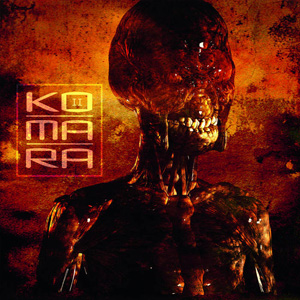
One of the most delightful surprises of 2015 was the untitled debut album by KoMaRa, a trio led by Slovakian-born guitarist David Kollar. KoMaRa’s hard-hitting debut sounded like 2000s King Crimson playing avant-garde jazz produced by Trent Reznor. Alongside Kollar in this industrial prog jazz band were American drummer Pat Mastelotto, familiar from the aforementioned Crimson, and Italian trumpeter Paolo Raineri.
This multinational and multi-talented trio seemed destined to remain a one-hit wonder, but fortunately that was not the case. Ten years later, KoMaRa is back.
The trio’s first album was really intense and aggressive music. The first track on the second album, ”Gerund,” immediately hints that things have changed. Kollar gently strums the acoustic guitar, Raineri plays melancholic, long notes on his trumpet, and Mastelotto mostly stays out of the way of the duo. Eventually, however, the acoustic guitar ostinato breaks off and is replaced by a richly sounding bass guitar (Kollar also plays the bass on the album) and an atonal electric guitar wailing in the distance. Mastelotto’s drums also join in. At the very end, the acoustic guitar returns and Raineri’s trumpet has the last word.
The revamped KoMaRa sounds more airy than before, and the space is now used to exemplary effect. The music breathes. If the band’s debut album was like a bulldozer that flattened everything in its path, KoMaRa II is an agile electric sports car that glides effortlessly along a winding mountain road. There is no shortage of power and twists and turns this time around, even though the most devastating force has been stripped away. However, the old KoMaRa sound has not been completely forgotten. For example, ”Relocating Children,” which rolls forward on a sequenced bass ostinato, is a hard-hitting track that is sure to satisfy fans of the first album. As on the debut, a few songs on this album are colored with spoken sections. With varying degrees of success.
The overall impression of KoMaRa II is that the music is like a heavier and more violent version of ECM jazz.
Tool guitarist Adam Jones created the monstrous character on the cover of the first KoMaRa album. That cover fit well with KoMaRa’s brutal debut album, but now that Jones has taken his creature in an increasingly vulgar direction, it must be said that this ugly cover art does not reflect the music on the second album in any way.
The calmer KoMaRa II certainly doesn’t make as big an impact on first listen as their explosive debut, but the band’s new, more peaceful take on modern progressive music is so coherent that I, at least, hope we won’t have to wait ten years for the trio’s next statement.
Best tracks: ”Gerund”, ”Relocating Children”, ”Gray Apples Fall”, ”Burning Man”, ”Komarantino”
10. Echolyn : TimeSilentRadio ii
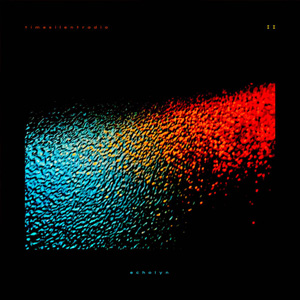
TimeSilentRadio ii is Echolyn’s 10th studio album.
Founded in 1989, American prog band Echolyn has released albums at a relatively steady pace, but after I Heard You Listening came out in 2015, there was a ten-year hiatus. In early 2025, however, Echolyn fans’ long wait was rewarded with two albums, TimeSilentRadio ii and TimeSilentRadio vii.
Both albums, produced with the help of crowdfunding, were recorded between 2018 and 2024 and released on the same day. It is somewhat questionable whether they should be treated as a single, two-disc entity or as two separate albums. I have opted for the latter, as they are sold as separate releases and, in my opinion, the band’s statements have also pointed to this. The names of the albums not only indicate the number of tracks, but also contain a music-theoretical reference to major second chords (ii) and minor seventh chords (vii).
The independence of the two albums is also emphasized by the fact that they are quite different in structure. TimeSilentRadio vii contains seven 4–8-minute tracks that could be described as art rock in the spirit of The Beatles, lightly spiced with prog. The music is very pleasant, but Echolyn has ventured into this territory before, often with more interesting results.
TimeSilentRadio ii, on the other hand, consists of two massive compositions. The first, ”Time Has No Place,” lasts nearly 17 minutes, and the second, ”Water In Our Hands,” stretches to 29 minutes. Echolyn has, of course, had previous experience with similar scales (the 2002 album Mei contains only one 49-minute piece), but the end result is so successful that this time the major second chord win out over the minor seventh chord.
Both compositions on TimeSilentRadio ii are successful, but the nearly half-hour-long ”Water In Our Hands” is particularly impressive.
Echolyn’s classically trained keyboardist Chris Buzby has said that ”Water In Our Hands” is loosely structured around the principles of sonata form, and the comparison seems apt. The nearly half-hour arc unfolds in stages resembling an introduction, development, and recapitulation, with themes returning in modified form and in a new light. At the same time, the work can also be seen as a continuous musical journey that constantly changes form, without the fixed repetitions typical of popular music. The composition has a wide range of tones, and within its long dramaturgical arc, the work offers some of the finest moments of Echolyn’s career, moments in which the band’s melodic and harmonic thinking is refined to an almost astonishing degree. Some of the passages are so magnificent that one wishes they would never end, and this is one of the few drawbacks of through-composed music, as the most impressive passages may not be heard again. ”Water In Our Hands” is somewhat uneven, as it also includes passages that are not as effective. Nevertheless, as a whole, the work convincingly fits into the continuum in which Echolyn ambitiously strives to stretch the boundaries of rock toward something greater and more compositional.
Despite the massive scale of the songs, Echolyn does not succumb to excessive gimmicks or stretch out the compositions with long solo sections. All sections serve the form and arc of the work itself.
TimeSilentRadio ii is crowned not only by the band’s stylishly restrained and composition-serving performances (keyboardist Buzby, guitarist and vocalist Brett Kull, and bassist and vocalist Ray Weston are now joined by new drummer Jordan Perlson), but also by the polished production, which is rounded off by a controlled and balanced mix. The mixing was done by Glenn Rosenstein, who worked with Echolyn as a producer on the album As The World (1995).
Echolyn’s music has received far too little attention over the decades. That’s why the band deserves special credit for continuing to invest in their music at the level of ambition required by an album like TimeSilentRadio ii. Whether you like the album or not, it is clear that nothing in its music is half-hearted or done with the back of the hand.
Best track: ”Water In Our Hands”
Author: JANNE YLIRUUSI
You can find other parts of the Year by Year series here.
 Pienemmät Purot
Jätä kommentti