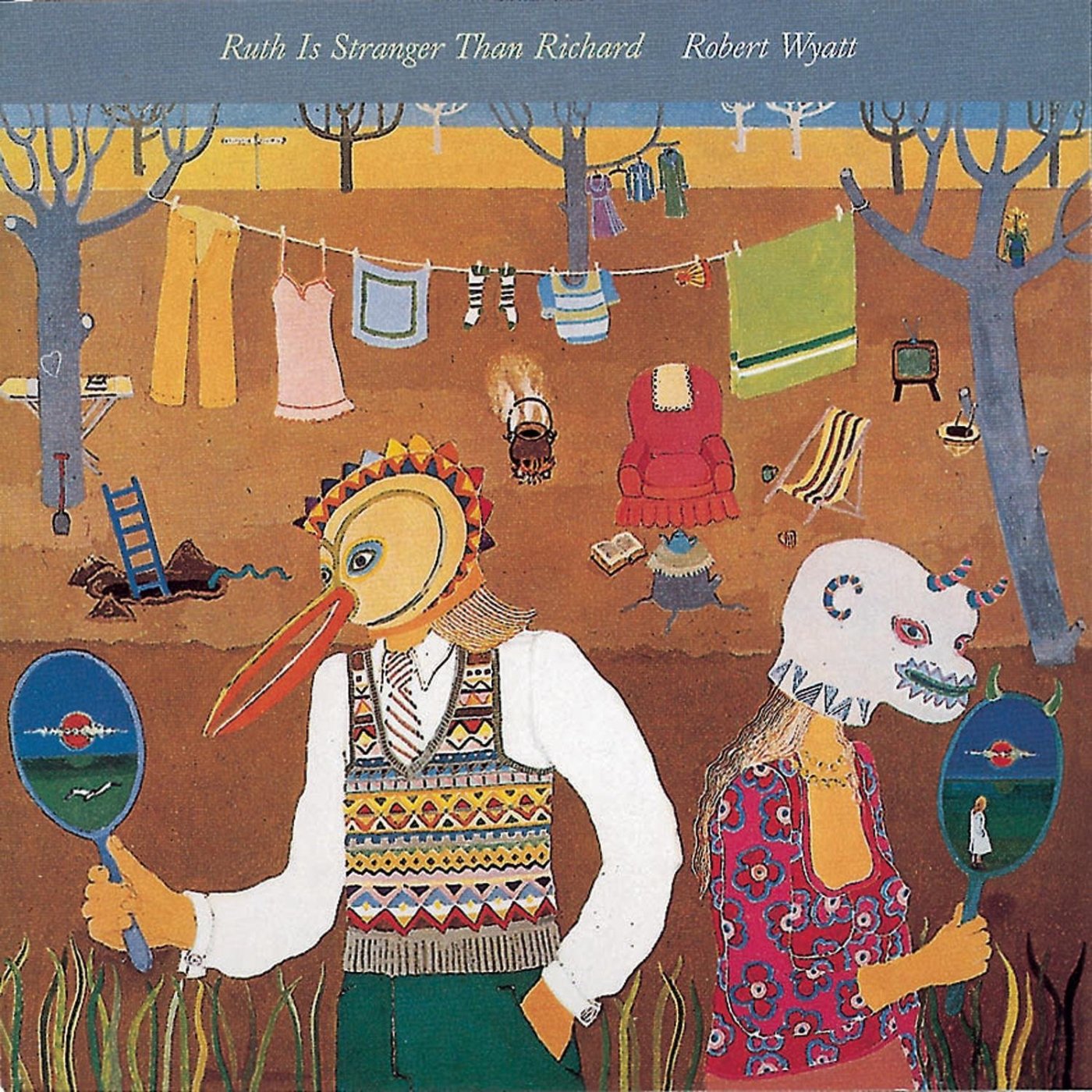
Ruth Is Stranger Than Richard is the third solo album by Robert Wyatt, founder of Soft Machine and Matching Mole.
Robert Wyatt had been a prominent and respected figure in the progressive music scene since the late 1960s, but by 1974, after being paralyzed from the waist down in an accident and then returning triumphantly with the masterful album Rock Bottom, he had become something of a semi-legend, with bands such as Henry Cow and Piccio Dal Pozzio even dedicating albums to him.
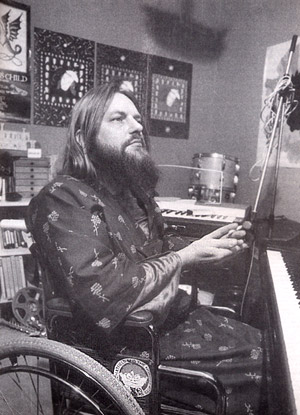
After the acclaimed Rock Bottom, Wyatt felt apprehensive about his next move. Wyatt dreaded repeating himself above all else, and at the same time, he also had some kind of block when it came to composing. In the end, Wyatt did not compose a single new song for Ruth Is Stranger Than Richard. However, he wrote all the lyrics for the album.
”Solar Flares” is the only song credited to Wyatt (and it’s a great one), but even that was composed a couple of years earlier. The compositions on the album are mainly by Wyatt’s friends and old colleagues. ”Soup Song,” composed by Brian Hopper for the very first Canterbury band, Wilde Flowers, is a jazzy romp that would have fit well with Hatfield And The North. Trumpeter Mongezi Fezan’s ”Sonia” is a more angular jazz tune, and guitarist Fred Frith’s (Henry Cow) four-part ”Muddy Mouse/Muddy Mouth” is a strange and minimalist art song. There are also three covers: jazz bassist Charlie Haden’s ”Song For Che,” which has been arranged into solemn funeral jazz on the album, and art music composer Jacques Offenbach’s experimental ”5 Black Notes and 1 White Note.”
The highlight of the entire album is the eight-minute composition ”Team Spirit” by Roxy Music guitarist Phil Manzanera and Matching Mole bassist Bill McCormick, which is the third cover song on the album. ”Team Spirit” is a new version of the song ”Frontera,” originally written for Manzanera’s first solo album, Diamond Head (which was released just a month before Ruth). In the original version, Wyatt sang lyrics he had written himself in ”faux Spanish,” but for ”Team Spirit” he wrote new, gloomy lyrics in English. Musically, ”Team Spirit” differs so much from the original that, to be honest, I wouldn’t necessarily have noticed the connection if people wiser than myself hadn’t pointed it out to me. This song, with its proper jazz scat singing, is perhaps the one on the album that most resembles the songs on Rock Bottom, even though it leans more toward jazz.
Although Wyatt’s contribution as a composer on the album was small, every track on the album sounds distinctly like Wyatt, regardless of their origin. This is ensured not only by the unique arrangements, but also by Wyatt’s even more unique, high-pitched vocals. A good example of Wyatt’s style is ”Muddy Mouth,” accompanied by Frith alone on the piano, in which Wyatt literally plays his mouth like a frog (a muddy mouth?) for the first couple of minutes of the song. The result is somewhat like the wah-wah effect produced by a trumpet with a harmonica mute.
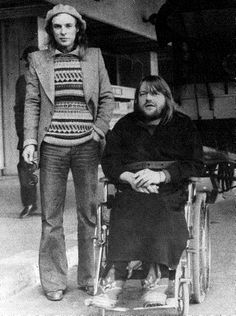
Alongside ”Team Spirit,” there is a surprising amount of jazz on the album, and apparently the jazz musicians on the album, such as saxophonists Gary Windo and Nisar Ahmad Khan, took over the sessions to such an extent that Wyatt sometimes wondered whose album they were actually making. Wyatt didn’t really want to make a jazz album (he seems to have always had a conflicted relationship with jazz) and fought against these impulses alongside Brian Eno, who got the amusing credit ”direct inject anti-jazz ray gun” on the album cover. In addition to fighting against jazz, Eno also played a little guitar and synthesizer on the album.
Personally, I don’t mind the jazz on the album. On the contrary, it’s great that there’s so much of it. All in all, however, the album, shaped by many different influences, is so eclectic that it’s very difficult to pin down what genre Ruth Is Stranger Than Richard ultimately belongs to. My best guess is: somewhere between art rock and avant-garde jazz. This diversity is, in a way, also the album’s strength, but at the same time it makes the album quite difficult to grasp.
Read also
- Levyarvio: King Crimson – The ConstruKction Of Light (2000)
- Review: Camel – Moonmadness (1976)
- Review: Gong – Gazeuse! (1976)
- Review: Mike Johnson – The Gardens Of Loss (2026)
- Levyarvio: Mike Johnson – The Gardens Of Loss (2026)
- Levyarvio: Led Zeppelin – Presence (1976)
- Vuosi vuodelta : Parhaat levyt 2000 – Sijat 11-20
- Review: Univers Zero – Ceux Du Dehors (1981)
- Levyarvio: Steve Walsh – Glossolalia (2000)
Ruth Is Stranger Than Richard is not quite as good as Rock Bottom (but then, few albums are!), but it is still a fine and original album. It’s a shame that Wyatt didn’t continue making music steadily after Ruth Is Stranger Than Richard, but instead returned to recording under his own name only in the early 1980s, and even then only in the form of individual songs. Part of the reason for Wyatt’s decision was his record deal with Virgin Records, which he felt was so unfair that, in his opinion, it would only lead to increasing debt to Virgin in the long run. For the same reasons, Henry Cow broke away from Virgin around the same time and began to operate independently.
We had to wait until 1985 for Wyatt’s next full-length album, Old Rottenhat. Before that, however, he participated as a guest on many interesting albums and projects, singing on Henry Cow’s tours and on albums by Michael Mantler and Phil Manzanera, among others.
Best tracks: ”Solar Flares”, ”Team Spirit”, ”Soup Song”
Author: JANNE YLIRUUSI
Tracks:
Side Richard (Side A)
”Muddy Mouse (a)” (Fred Frith, Robert Wyatt) – 0:49
”Solar Flares” (Robert Wyatt) – 5:36
”Muddy Mouse (b)” (Fred Frith, Robert Wyatt) – 0:50
”Black Notes and 1 White Note” (Jacques Offenbach arr. Robert Wyatt) – 5:00
”Muddy Mouse (c)” joka johtaa kappaleeseen ”Muddy Mouth” (Fred Frith, Robert Wyatt) – 6:15
Side Ruth (Side B)
”Soup Song” (Brian Hopper, Robert Wyatt) – 4:03
”Sonia” (Mongezi Feza) – 4:18
”Team Spirit” (Bill MacCormick, Phil Manzanera, Robert Wyatt) – 8:33
”Song for Che” (Charlie Haden) – 3:42
Musicians
Robert Wyatt: vocals, piano, electric piano, organ, drums Brian Eno: guitar, synthesizer, direct inject anti-jazz ray gun Gary Windo: bass clarinet (Ri2, Ru2), tenor saxophone, alto saxophone Nisar Ahmad ”George” Khan: tenor saxophone, baritone saxophone Mongezi Feza: trumpet Fred Frith: piano Bill MacCormick: bass John Greaves: bass Laurie Allan: drums
Producer: Robert Wyatt, Nick Mason (track ”Sonya” only)
Label: Virgin
 Pienemmät Purot
Jätä kommentti