
The author’s picks for the best albums of 1974, ranked 21-30.
In the Year by Year series, I’ll go through my favourite albums from 1969 to the present day.
21. Gentle Giant: The Power And The Glory (UK) ****
22. Samla Mammas Manna: Klossa knapitatet (SE) ****
23. Pekka Pohjola: Harakka Bialoipokku (FI) ****
24. Stan Getz: Captain Marvel (US) ****
25. Le Orme: Contrappunti (IT) ****
26. Quella Vecchia Locanda: Il tempo della gioia (IT) ****
27. Roxy Music: Country Life (UK) ****
28. Terje Rypdal : Whenever I Seem To Be Far Away (NO) ****
29. Ange: Au-delà du délire (FR) ****
30. Brian Eno: Here Come the Warm Jets (UK) ****
#1-10
#11-20
#31-42
21. Gentle Giant: The Power And The Glory
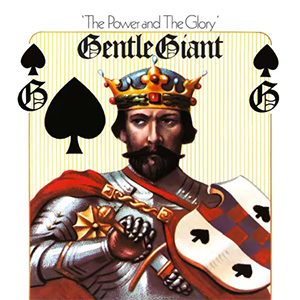
The Power And The Glory is the sixth studio album by Gentle Giant, formed in 1970. The band essentially produced six albums during their first 48 months of existence. And all this, of course, while touring extensively. Quite an accomplishment! Although not unheard of in the early 70s, when rock bands worked at a slightly different pace than they do today.
The Power And The Glory is a clear improvement on the previous year’s rather cold In A Glass House. The mood is more relaxed and somehow livelier, and the sound in particular has improved significantly. In terms of arrangements, The Power And The Glory continues the more minimalist line of In A Glass House, staying mostly within the framework of normal rock instrumentation. Violins, cellos, and wind instruments are heard only occasionally. Kerry Minnear’s swinging and generally soft electric piano playing takes on a central role. Perhaps this is due to the influence of jazz rock, which was on the rise at the time?
The Power And The Glory is Gentle Giant’s second concept album. The theme of the album deals with power, especially political power, and how it always seems to corrupt its users, regardless of how good their intentions were originally. The album was released just after the Watergate scandal broke, which led many to associate the album with Richard Nixon, but Gentle Giant’s intention was to talk about politics in more general terms.
The Power And The Glory is a balanced musical whole that offers successful versions of different aspects of Gentle Giant. The album opener, ”Proclamation,” is a captivating, yet Gentle Giant-esque, jerky rhythmic, yet smoothly rolling prog anthem. ”Aspirations” is a beautiful and understated ballad, vaguely reminiscent of medieval music, while ”Cogs In Cogs,” with its labyrinthine counterpoints and clashing irregular time signatures, brilliantly represents Gentle Giant’s hyper-complex side.
However, not all of the songs on the album are entirely successful. ”No God’s A Man” is a rather tiresome song, and Derek Shulman’s vocals sound irritating and strained. Shulman’s screaming vocals on ”The Face” are also grating on the nerves. Instrumentally energetic, ”The Face” is nevertheless quite interesting, and Ray Shulman gets to show off his violin with a wonderfully rusty sound, to which guitarist Gary Green responds equally impressively with his own solo reminiscent of John McLaughlin. All in all, the B-side of the album doesn’t quite reach the level of the first half.
The Power And The Glory is a liberated and lively sounding album following the stiff In A Glass House. It doesn’t quite reach the level of Gentle Giant’s best, but it’s still above average.
Best tracks ”Proclamation”, ”Aspirations”, ”Cogs In Cogs”, ”Playing The Game”
22. Samla Mammas Manna: Klossa knapitatet

Klossa Knapitatet is the third studio album by Swedish band Samla Mammas Mannas, formed in 1969.
Samla Mammas Manna’s third album is somewhat improved compared to their previous albums. The compositions are more complex than before and the band’s sound is sharper. On the album Klossa Knapitatet, Samla Mammas Manna positions itself even more clearly as part of the complex subgenre of progressive rock known as avant-prog.
Klossa Knapitatet can easily be seen as a kind of Nordic sister version of Henry Cow’s 1973 album Leg End. Of course, Samla Mammas Mannas has its own much more playful and humorous style. And there are still plenty of influences from Swedish folk music. All in all, Klossa Knapitatet’s technically skilled music is also very joyful and cheerful.
Klossa Knapitatet plays instrumental music, although there are some rather strange wordless vocals to be heard among the music. There is also some yodeling. The four-piece band (with accordionist Brynn Settels guesting on one track) plays with extreme skill. Particularly impressive are the electric piano riffs of the band’s leader, Lars Hollmer (Hollmer also plays the accordion, which later became his main instrument), but guitarist Coste Apetrea also does a good job, sometimes playing quickly and accurately with a clean sound, and sometimes really shredding and rattling his guitar with full distortion. As a counterbalance to the electric sound, the album also features plenty of acoustic piano, acoustic guitar, and the aforementioned accordion. A few of the shorter songs in between are even completely acoustic in their instrumentation.
The pace is fast in almost all of the songs. Breathlessly fast. Perhaps the album as a whole would have benefited from a few more calm moments.
Klossa Knapitatet is a good example of how cheerful and joyful music can also be intense, energetic, and uncompromising. Few albums are as well suited to the somewhat clichéd description of ”musical fireworks” as Klossa Knapitatet. And few prog albums sound as Swedish as this one. Heja Sverige!
Best tracks: “Liten dialektik”, ”Långt ned i ett kaninhål”, ”Musmjölkningsmaskinen”, ”Ramlösa kvällar”
23. Pekka Pohjola: Harakka Bialoipokku
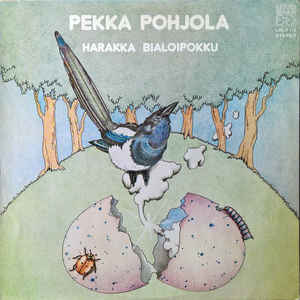
Harakka Bialoipokku is Pekka Pohjola’s second solo album.
Pekka Pohjola (1952-2008) left Wigwam in the summer of 1974 following Jukka Gustavson. Pohjola realised that after Gustavson’s departure Wigwam would become very much Jim Pembroke’ s band. This in turn would mean that the music would become simpler and more song-oriented. This didn’t interest Pohjola so it was time to launch a solo career for real after almost four years in Wigwam.
For a while, however, it seemed that a collaboration with Frank Zappa was on the cards before the next solo album. Zappa had been interested in Pohjola’s bass skills a year earlier when the bass ace had jammed with Zappa’s band at a gig in Helsinki…
24. Stan Getz: Captain Marvel

On the album Captain Marvel, saxophonist Stan Getz (1927-1991), who had already recorded dozens of albums as a band leader, joined forces with the Return To Forever ensemble led by keyboardist Chick Corea.
The 1962 album Jazz Samba made Getz almost a pop star, and he got stuck making bossa nova albums for years while jazz was changing fast, pushed forward by Miles Davis, John Coltrane, Ornette Coleman, and other innovators.
By the early 1970s, Getz was, if not quite a has-been, then at least a lower-middle-tier player who had fallen far from the forefront of jazz. Despite his substance abuse problems, however, Getz’s playing skills were still intact, as can be heard on this album, where Getz wisely teamed up with young talents…
25. Le Orme: Contrappunti
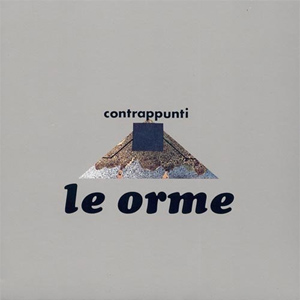
Contrappunti is the fifth studio album by Le Orme, a band formed in Italy in 1966.
The album begins with Tony Pagliuga’s dark and powerful organ intro, followed by bassist Aldo Taglipietra and drummer Michi Dei Rossi joining in, and the trio playing an intense, rhythmic six-minute instrumental title track that is strongly reminiscent of Emerson Lake & Palmer. ”Contrapuntti” is an exciting and pulse-raising start to the album, although the return of ELP influences is somewhat surprising, as they had largely been eliminated from the band’s sound on their previous album, the masterful Felona e Sorona (1973).
Le Orme has often been described as ”the Italian ELP.” That’s a bit of an exaggeration, but on Contrappunti claim is perhaps closest to the mark.
Contrappunti is slightly more instrumental than many other Le Orme albums, and bassist/vocalist Taglipietra only gets to sing on a few tracks, such as the fairly acoustic ballad ”Frutto acerbossa,” which, in terms of the album’s dynamics, could maliciously be claimed to be the equivalent of ELP’s ”Lucky Man.” However, in terms of composition, this is not a case of plagiarism. And that is precisely what saves Contrappunti: even though ELP’s influence is strong in the band’s DNA, at no point does it succumb to outright copying in the same way as, for example, the German band Triumvirat. The Italian band’s extreme emotionality alone sets it apart from its role model.
Taglipietra’s most impressive vocal performance on the album can be heard in the beautiful song ”La fabbricante d’angeli,” which perfectly suits his melancholic singing voice. The song balances interestingly between a melancholic and almost jubilant mood, and Dei Rossi’s passionate drumming drives the song forward impressively.
Contrappuntin ends impressively with the 9-minute mini-epic ”Maggio,” which is probably one of Le Orme’s most complex songs. Particularly appealing is the majestic section with its clanging tubular bells that can be heard a couple of minutes into the song. There is also something fundamentally Le Orme-esque about the synthesizer melody in ”Maggio,” and it feels like the band returned to very similar themes too often in the future. On this album, however, it still feels fresh.
Contrappuntti does not quite reach the level of originality of Felona e Sorona, but it is nevertheless a very strong album by Le Orme.
Best tracks: ”Contrappunti”, ”Allante”, ”La fabbricante d’angeli”, ”Maggio”
26. Quella Vecchia Locanda: Il tempo della gioia
l tempo della gioia is the second and final studio album by Quella Vecchia Locanda (”old tavern”), a band formed in Rome in 1970.
Quella Vecchia Locanda approaches progressive rock from even more of a classical music perspective than average. The members of Quella Vecchia Locanda clearly have a firm grasp of classical music from the Romantic era, and they are not afraid to utilize what they have learned in their own music. This impression is emphasized by the band’s semi-acoustic sound and the prominent role of the flute and violin in their music. Il tempo della gioialla has a very chamber music-like sound, spiced up only occasionally with rock.
Whereas the band’s debut album at times sounded too much like a pastiche of Vivaldi and other old masters, Il tempo della gioia has more of its own voice and seems to weave influences more naturally into its own music. The tiresome violinist Donald Lax from the first album has been replaced on this album by the more subtle violinist Claudio Filicella. This changes the overall sound in a more pleasant direction. Il tempo della gioia is considerably more beautiful and peaceful than the debut album. The compositions are also more thoughtful and subtle than before. However, the familiar Italian drama can still be found, especially in the vocal performances. There is no unnecessary exaggeration, and vocalist Giorgio Giorgi sings skillfully, though perhaps not in a particularly memorable way.
Il tempo della gioia is one of the lesser-known gems of Italian prog rock, which has been unjustly overshadowed by the more famous albums of PFM and Banco, but is definitely worth checking out for all fans of symphonic prog.
Best tracks: ”A forma di…”, ”Il tempo della gioia”, ”È accaduto una notte”
27. Roxy Music: Country Life
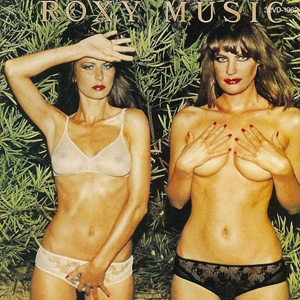
Country Life is the fourth studio album by Roxy Music, founded in 1970.
Country Life is an impressive follow-up from the same line-up that made Roxy Music’s previous album, the masterful Stranded (1973). Stylistically, Country Life continues along the lines of its predecessor, but is more uneven in quality and more musically straightforward.
The album opens with the furiously intense, roaring epic rock track ”The Thrill Of It All”. Packed full of small details in the arrangement, the song thunders onwards, propelled by Johnny Gustafson’s magnificent bassline, like a truck without brakes. ”The Thrill Of It All” is, as its name suggests, a thrilling and exciting listen…
28. Terje Rypdal : Whenever I Seem To Be Far Away

Whenever I Seem To Be Far Away is Terje Rypdal’s fourth studio album.
Norwegian guitarist/composer Terje Rypdal’s Whenever I Seem To Be Far Away (1974) is one of those early ECM releases where the label’s spacious sound and the ambition of an individual musician came together fruitfully. Rypdal had already made a name for himself in Norwegian rock and jazz, as well as on ECM’s What Comes After, released earlier that year, but on this album he outlined a broader artistic vision for the first time. The program, consisting of three compositions, is stylistically diverse, but it is precisely this diversity that makes it an interesting milestone in his career.
The opening track, ”Silver Bird is Heading for the Sun,” is a long (14 min.) and hypnotic, even slightly psychedelic journey, in which Rypdal’s guitar alternately soars and rages wildly over slowly changing textures. His guitar sometimes sounds bright and melancholic, but at other times it rocks quite fiercely. Odd Ulleberg’s French horn adds melancholic tones to the music at times.
”The Hunt” is the most dynamic track on the album: it has the angular energy of fusion, but Rypdal approaches the subject with Nordic restraint. Comparisons to John McLaughlin and Mahavishnu Orchestra are understandable, but Rypdal’s expression turns inward, toward deliberate gestures rather than explosive virtuoso outbursts. Ulleberg’s strong, nostalgic intro melody on the French horn also brings its own unique atmosphere. Pete Knutsen’s quietly sighing mellotron adds a light symphonic undertone.
The album culminates in the title track, ”Whenever I Seem To Be Far Away,” in which Rypdal’s guitar is accompanied by the Südfunk Symphony Orchestra. The band heard earlier on the album is absent here. Alongside the orchestra, the soloists are Rypdal’s electric guitar, Christian Hedrich’s viola, and Helmut Geiger’s violin. However, the main focus is definitely on Rypdal’s melancholic guitar. The piece is over 17 minutes long, a broad and cinematic attempt to combine electric guitar with a symphonic context. The result is a dramatic and wistful symphonic tone poem. Perhaps not a completely controlled experiment; the orchestration and guitar still need to find their form, but it is a bold opening that paves the way for Rypdal’s later orchestral compositions.
Whenever I Seem To Be Far Away is not the most natural whole due to its styles reaching in different directions, but that is partly why it is such a fascinating album. It does not settle for easy fusion cliches, nor is it yet mature orchestral music, but rather an intermediate stage in which Rypdal is searching for his own voice. The album is an important document of both the early steps of the ECM aesthetic and Rypdal’s journey toward his own recognizable role as a composer.
Best tracks: ”Silverbird Is Heading For The Sun”, ”The Hunt”
29. Ange: Au-delà du délire

Au-delà du délire is the third studio album by French band Ange.
Whereas French prog bands often move in quite jazzy directions, Ange, founded in 1969 by two brothers, singer Christian Décamps and keyboardist Francis Décamps, is more clearly part of the symphonic prog school. Ange’s music (even though I don’t know French) always seems to have a strong narrative touch, and apparently the band’s lyrics are very poetic.
Au-delà du délire is a concept album about the peculiar adventures of a farmer born in the 14th century through time and the universe.
Often, the vocals and lyrics seem to dominate Ange’s music too much, but on Au-delà du délire, the band achieves a fine balance between music and storytelling. Décamps’ singing voice is somewhat sheep-like but very impressive, and he is definitely the star of the album, even though Au-delà du délire is more musical than usual. Décamps sings with great emotion, but his voice also carries a delightful raw rage, and his delivery is not as saccharine or false as, for example, some of the ”great interpreters of emotion” in Italian prog.
Christian Décamps’ unique, rough and at times slightly carnival-like keyboard sounds dominate most of the music, but guitarist Jean Michel Brézova also gets to play a few really impressive and fun-sounding solos, the finest of which can be heard in the nine-minute title track that closes the album. Technically, Ange is not a particularly skilled band, but they still manage to create impressive drama with their music. Ange’s weapons are a bunch of great melodies, an original sound, and enough contrasts, which the band creates by successfully colliding soft sections with harder riffs.
Ange’s rough symphonic prog combines in an interesting way the symphonic storytelling reminiscent of Genesis and the very French, slightly bohemian Jacques Brel -inspired poetry. And all of this works best on the album Au-delà du délire.
Best tracks: ”Exode”, ”Fils de Lumiere”, ”Au-delà du délire”
30. Brian Eno: Here Come The Warm Jets

Here Come The Warm Jets is the first solo album by Brian Eno, the ”non-musician” who rose to prominence with Roxy Music. The album title is a reference to pornography, which Eno is so fond of.
The album is the first on which Eno takes on lead vocals, and he does a good job despite music critic Chrissie Hynde (later lead singer of The Pretenders) describing Eno’s voice as ”not unlike the shriek of a hare that’s just caught an air-gun pellet up the ass.” That’s quite descriptive, and I don’t actually think Hynde meant her statement to be entirely negative. Eno’s lyrics are Dadaist gibberish, strange, disjointed phrases that listeners can associate with whatever meanings they want. Or not, but as part of the music, they work perfectly.
Eno himself plays synthesizers and some guitar parts on the album. Eno is assisted on the album by Roxy Music guitarist Phil Manzanera, wind player Andy Mackay, and drummer Paul Thompson on a few tracks. King Crimson bassist and future Roxy Music member John Wetton plays bass on a couple of tracks, and guitar ace Chris Spedding on two tracks. However, the most notable individual musician on the album is Robert Fripp, who plays on three tracks and with whom Eno had already begun a fruitful collaboration the previous year with the proto-ambient album (No Pussyfooting).
Robert Fripp’s fiery, nearly two-minute-long guitar solo in ”Baby’s On Fire” (which is indeed about a burning baby…) is the single highlight of the album. A truly dizzying performance and one of Fripp’s finest guitar solos ever. And let’s be honest: one of the finest guitar solos ever! Of course, the insistent, tapping song, in which Eno sings in an arrogantly whiny voice, is interesting in its own right, but it’s impossible to imagine it without Fripp’s solo. Fripp received songwriting credit for the album’s track ”Blank Frank.”
Another particularly impressive track on the album is “Dead Finks Don’t Talk,” which is propelled forward by march-like drumming. This wonderfully effective pop song is reminiscent of Kevin Ayers’ music at times and features Eno’s most convincing vocals in the traditional sense (between the spoken parts and other strange vocalizations). A truly delightful song.
Somewhere between protopunk and compact prog, Here Come The Warm Jets is mainly raucous and simple rock, embellished by Eno’s unique production style and even more unique vocals. However, the ambient fragment of the distinctive ballad ”On Some Faraway Beach” already foreshadows the ethereal, otherworldly moods of the masterful Another Green World album, which would be released a few years later.
Best track: ”Baby’s On Fire”, ”Driving Me Backwards”, ”On Some Faraway Beach”, ”Dead Finks Don’t Talk”
Author: JANNE YLIRUUSI
You can find other parts of the Year by Year series here.
 Pienemmät Purot
Jätä kommentti