
The author’s picks for the best albums of 1974, ranked 31-42.
In the Year by Year series, I’ll go through my favourite albums from 1969 to the present day.
31. Caravan: Caravan & The New Symphonia (UK) ****
32. Egg: The Civil Surface (UK) ****
33. Il Volo: s/t (IT) ****
34. Weather Report: Mysterious Traveller (US) ****
35. Arti & Mestieri: Tilt (Immagini per un orecchio) (IT) ****
36. Cluster: Zuckerzeit (DE) ****
37. Tasavallan Presidentti : Milky Way Moses (FI) ****
38. Premiata Forneria Marconi: L’isola di niente (IT) ****
39. Terje Rypdal : What Comes After (NO) ****
40. The Gary Burton Quintet With Eberhard Weber: Ring (US) ****
41. Cos: Postaeolian Train Robbery (BE) ****
42. Area : Caution Radiation Area (IT) ****
#1-10
#11-20
#21-30
31. Caravan: Caravan & The New Symphonia

Caravan & The New Symphonia is the first live album by Caravan, which was formed in Canterbury in 1968.
Caravan & The New Symphonia is not just any hastily assembled live release intended to cash in on the band’s popularity. Inspired by the orchestrations on their previous album, For Girls Who Grow Plump In The Night (1973), Caravan decided to also perform live with a symphony orchestra. The band’s dream came true with a 50-piece orchestra and choir at the Theatre Royal, Drury Lane in October 1973.
The orchestra was conducted by Martyn Ford who had also handled the orchestrations for For Girls…
32. Egg: The Civil Surface
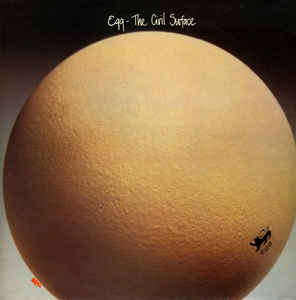
The Civil Surface is the third studio album by British band The Egg, formed in 1968.
The trio consisting of Dave Stewart (keyboards), Mont Campbell (bass/vocals), and Clive Brooks (drums) is one of the pioneering bands of progressive rock, whose first two albums, Egg (1970) and The Polite Force (1971), contributed to the genre reaching new levels of complexity. Classical music influences and shifting time signatures were an essential part of the band’s style.
However, Egg’s challenging and somewhat strange albums were not successful, and the band was dropped by their record label in 1972 and decided to disband shortly thereafter…
33. Il Volo: s/t

Il Volo is the debut album by the Italian band of the same name, which was formed in 1974, was only active for two years, and released two albums.
Il Volo was a kind of Italian prog ”supergroup,” as all of the band members had previously played in bands that had already achieved some degree of fame. Perhaps the best known of these is Il Volo guitarist Alberto Radius and keyboardist Gabriele Lorenz’s previous band, Formula Tre.
The opening track, ”Come una zanzara,” is stunningly powerful! The contrast between the high-pitched electric piano and the low, satisfying growl of the bass is magnificent to hear. The album isn’t bad overall, but unfortunately the rest of the album never quite reaches the level of the opening track. The Il Volo album is more groovy than your average Italian prog album, and it’s a natural combination of the symphonic qualities typical of Italian prog and jazz rock.
Il Volo’s music is melodic and relatively simple, and its arrangements are not as ornate as is typical of Italian prog. However, this mainly works to the album’s advantage. Among the instrumentalists, the aforementioned keyboardist Gabriele Lorenzi and Roberto Callero, who plays a warm-sounding bass that is mixed aggressively to the forefront, stand out in particular. The other band members also do a good job, and drummer Gianni Dall’Aglio gets to shine on the album’s final playful track, ”Sinfonia delle scarpe da tennis,” which he plays almost entirely on tom-toms. The band’s two guitarists handle the vocals, and the result is quite pleasant to the ear, albeit a little impersonal.
Il Volon’s debut album is a little-known gem that anyone interested in Italian prog should definitely check out. It offers a slightly more compact and simpler, but no less valuable, view of Italian prog than the big names in the genre.
Il Volo’s second album, released in 1975, Essere o non essere? Essere, essere, essere!, is roughly similar in quality and style to their debut album, although unlike their debut, it is almost entirely instrumental.
Best tracks: ”Come una zanzara”, ”Il calore umano”, ”La canzone del nostro tempo”, ”Sinfonia delle scarpe da tennis”
34. Weather Report: Mysterious Traveller

Mysterious Traveller is the fourth studio album by the jazz-rock band Weather Report, founded in 1970.
Mysterious Traveller marked a period of dramatic change for Weather Report. Keyboardist Joe Zawinul and saxophonist Wayne Shorter were no longer getting along with the third founding member, bassist/composer Miroslav Vitous. Vitous was asked to leave and was replaced by Alphonso Johnson. Whereas Vitous had played almost exclusively acoustic bass, Johnson focused specifically on electric bass. Vitous can be heard on Mysterious Traveller in only one short track.
Mysterious Traveller takes the band’s sound in a more muscular and, in a way, slightly more conventional jazz-rock direction. The music is no longer quite as ethereal, abstract, and experimental as on the band’s previous albums. It may be that the success of the Mahavishnu Orchestra influenced Weather Report’s direction, but they were by no means swimming into the mainstream with Mysterious Traveller.
The sound is reinforced not only by Johnson’s electric bass but also by synthesizers, which play a much more central role than before. Zawinul uses synthesizers naturally and creatively to support the electric piano and conjures up some very interesting sounds from the instruments. One example is the very sharp synthesizer sound in ”American Tango.” Shorter’s saxophones are somewhat overshadowed by Zawinul’s synthesizers in several songs. On the other hand, Mysterious Traveller is not really an album of individual performances, but rather a tightly knit ensemble that effectively realizes Zawinul’s famous thesis: ”We always solo, we never solo.”
Some of the tracks on Mysterious Traveller feature two drummers and a percussionist, so it’s no surprise that rhythms play a major role on the album. This is, of course, a natural continuation of Miles Davis’s Bitches Brew (1969), on which Zawinul played a significant role. There is also more of a Latin funk vibe than before, although fortunately the band does not dive into that cliché completely.
The later Weather Report albums, featuring Jaco Pastorius and flirting with the mainstream, have their passionate fans, but for me, Mysterious Traveller represents the end of the band’s best period, after which, unfortunately, the only direction was inevitably downhill.
Best tracks: ”Nubian Sundance”, ”Cucumber Slumber”
35. Arti & Mestieri: Tilt (Immagini per un orecchio)

Tilt (Immagini per un orecchio) is the debut album by Arti & Mestieri, formed in 1974.
Arti & Mestieri represents the jazz-rockier side of Italoprog. Stylistically, the six-piece Arti & Mestieri is not light years away from the Mahavishnu Orchestra, although the role of the electric guitar is not nearly as prominent in Arti & Mestieri’s music, with more solo space given to the saxophone and especially the violin. And whereas Mahavishnu Orchestra was completely instrumental on its first albums, Arti & Mestieri also makes effective use of vocals (provided by violinist Giovanni Vigliar). However, a certain raw energy and virtuoso playing unite Arti & Mestieri and Mahavishnu Orchestra. On the other hand, Tilt also offers some very Italian-sounding romantic melodies that one could not imagine hearing from John McLaughlin’s band.
All six members of Arti & Mestier are skilled musicians, but the most impressive of them is drummer Furio Chirico, whose hyperactive and intense drumming borders on overplaying, but stays just on the right side of the line and gives the band a significant boost of energy.
Arti & Mestieri made another brilliant album in 1975 called Giro di valzer per domani, but after that the band’s quality declined. Their 2015 comeback album Universi Paralleli has also received praise, but I haven’t had a chance to hear it myself yet.
Best tracks: ”Gravità 9,81”, ”Articolazion”
36. Cluster: Zuckerzeit

Zuckerzeit is the third studio album by Cluster, founded in 1971.
The krautrock duo founded by Hans-Joachim Roedelius and Dieter Moebius took their music in a completely new direction with Zuckerzeit. The duo moved to the countryside in Forst and acquired a bunch of cheap synthesizers and drum machines, which they used to build an album in their own relatively primitive studio, in a peaceful atmosphere and good spirits. The album was given the slightly saccharine title Zuckerzeit (“Sugar Time”), which aptly describes its mood. Zuckerzeit’s music is an interesting combination of a certain futuristic pop sensibility and a slightly rustic, experimental lo-fi aesthetic.
Whereas Cluster’s previous albums had been long and abstract krautrock jams, the songs on Zuckerzeit are compact (ranging from two to six minutes in length), more controlled in structure, and even contain clear melodies. With the addition of drum machines, rhythms play a significant role in Cluster’s music for the first time, bringing a certain pop sensibility to Zuckerzeit, even though all the songs are instrumental.
It is interesting to note that Roedelius and Moebius composed the tracks on the album separately and recorded them alone, without interfering with each other’s tracks. Zuckerzeit can therefore be thought of as two solo EPs joined together. In practice, however, the songs form a surprisingly coherent and natural whole. And at least for me, it is difficult to distinguish which song was composed by whom without the credits in the album booklet. Moebius’s songs are, on average, perhaps a little more experimental and emotionally raw, while Roedilius’s compositions are softer and gentler. But even this rule does not apply to every single song.
There is something very appealing and addictive about Zuckerzeit’s gently chugging krautrock miniatures. They are positive, downright exhilarating, sonic treats. In its day, Zuckerzeit must have sounded very futuristic, and it has undoubtedly inspired many other artists, including Kraftwerk and Brian Eno. Eno’s excellent album Another Green World (1975) in particular shows clear influences from this Cluster album. Eno’s interest in Cluster’s music is also evidenced by the fact that a few years later he made two albums with Roedelius and Moebius.
Zuckerzeit is one of the finest krautrock albums of all time and a prime example of its lighter, more pop-oriented branch.
Best tracks: ”Hollywood”, ”Rote Riki”, ”Caramba”, ”Fotschi Tong”
37. Tasavallan Presidentti : Milky Way Moses
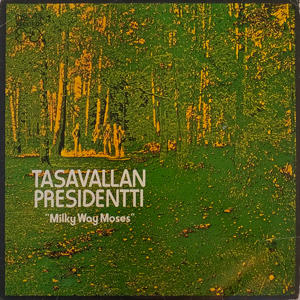
Milky Way Moses is the fourth studio album by Tasavallan Presidentti, founded in 1969 by guitarist Jukka Tolonen and drummer Vesa Aaltonen.
Pressa’s third album, Lambert Land, released in 1972, is one of the most highly regarded Finnish prog albums, and it certainly contains some excellent music, but for me, the album is largely ruined by Eero Raittinen’s (1944–2025) awful vocals. Raittinen also sings on Milky Way Moses, but for some reason it works much better this time around. Of course, you can learn a lot in a couple of years. Apparently, the music on Lambert Land was written in keys that were too high for Raittinen, and now that problem no longer existed.
The band also underwent one lineup change on their journey from Lambert Land to Milky Way Moses. Bassist and founding member Måns Groundstroem has been replaced by Heikki Virtanen. However, this change does not harm the band in any way; on the contrary, Virtanen plays really well throughout the album. And apparently the rest of the band agreed, as Virtanen’s bass is mixed quite prominently on the album.
The album starts off with a smooth, funky rocking title track, but things really get interesting on the second track, the 14-minute ”Caught From The Air,” which is a new interpretation of a composition by saxophonist Eero Koivistoinen, originally recorded under the title ”Lennosta kii!” on his own album Valtakunta (1968). Pressa’s arrangement immediately takes off on a tasty jazz-rock path, spiced up with a fast-paced electric piano riff. After a striking intro, the song bounces around very satisfyingly, and Pekka Pöyry gets to solo exuberantly on his saxophone. In fact, Pöyry is the solo star of the entire album, with guitar hero Jukka Tolonen surprisingly taking a back seat on several tracks.
Unfortunately, even a song as great as ”Caught From The Air” feels a little stretched out. Overly stretched songs are Milky Way Moses’ biggest problem. Even the 14-minute “How To Start A Day,” which begins interestingly with Raittinen’s whispered vocals and successfully builds tension, is ultimately several minutes too long. Despite some slight stretching, Milky Way Moses’ material is mostly high quality.
For some reason, Milky Way Moses was not very well received when it was released, and the crowds at gigs began to dwindle, so the album remained Pressa’s last before their 2006 comeback album, Six Complete. This is a shame, because I think Milky Way Moses is the band’s best album and belongs, if not among the elite of Finnish progressive rock, then at least among the top quarter.
Best tracks: “Milky Way Moses”, “Caught From The Air”
38. Premiata Forneria Marconi: L’isola di niente
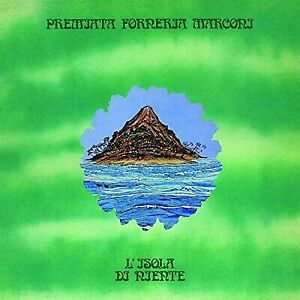
L’isola di niente is the third studio album by Premiata Forneria Marconi, formed in Milan in 1970.
L’isola di niente begins with a ten-minute title track, ”L’isola di niente”, which starts off impressively with a couple of minutes of Ligeti-influenced choir singing, before continuing with more typical PFM prog rock. Although the intro to the title track promises new developments, the album is, for better or worse, very similar to the band’s previous albums. L’isola di niente offers dramatic and intricate symphonic prog that is always entertaining, but on the other hand, the band’s melodic sense has not been at its most sensitive, and the most brilliant insights are missing.
Except for the excellent title track, the songs on L’isola di nienten are not on par with their predecessors, and it feels like there is a little more aimless fussing and messing around in the music than before. Twists and turns for the sake of twists and turns. The noisy impression is also emphasized by the rather boomy and muffled mixing. The songs lack airiness and delicate moments. Fortunately, the slightly calmer ”Dolcissima Maria” offers that side, but even that song’s pastoral side doesn’t really get to blossom properly due to the overly heavy-handed drums.
As a new element, the song ”Is My Face on Straight” does feature vocals sung in English, but this change cannot be considered particularly positive. The vocal performance is not particularly exciting, and it would have been smarter to stick with Italian, but I guess the international market was too tempting. On their next album, Chocolate Kings (1975), the band switched entirely to English, which was a big mistake.
Although L’isola di niente treads familiar ground, it is nonetheless a fitting conclusion to Premiata Forneria Marconi’s original golden age.
Best tracks: ”L’isola di niente”, ”Via Lumière”
39. Terje Rypdal : What Comes After

What Comes After is Terje Rypdal’s third studio album.
What Comes After is one of those albums where Nordic jazz finds its own unique voice. Rypdal had already experimented with orchestral tones and the expressiveness of the electric guitar, but on this album he seems to settle into a landscape that is both deeply personal and characteristic of the ECM aesthetic (this is Rypdal’s second recording for ECM): spacious, quiet, and at the same time weighty. At times even oppressive.
The opening track, ”Bend It,” is an excellent example of this. Its floating structure and minimalist harmony are reminiscent of Miles Davis’ groundbreaking In a Silent Way, especially John McLaughlin’s guitar playing and the meditative repetition of the piece. Rypdal’s tone, however, is different: colder, lonelier, and more rugged in a Norwegian way. Where Davis created an urban electric glow, Rypdal reaches for space and silence, letting the music be carried by two basses and Jon Christensen’s subtle rhythms.
The album continues in many directions from here. ”Yearning” is, as its name suggests, a wistful, melodic song in which Rypdal’s guitar sings with almost vocal intensity. ”Icing” and ”Sejours,” on the other hand, open up space for freer improvisation, with Barre Phillips’ acoustic bass and Sveinung Hovensjø’s electric bass engaging in an interesting dialogue. The title track, ”What Comes After,” is the slow core of the album, dark and contemplative, while the closing track, ”Seasons,” brings a broader, even symphonic arc to the whole.
Overall, the album is not as accessible as many of ECM’s more melodic releases, but that is precisely why it works so well. It is a scenic, at times almost abstract work, in which the guitar is not a solo instrument but a color and sound among others. Rypdal succeeds in combining the influences of jazz, rock, and modern art music in a way that makes him one of the most original European musicians of his time. What Comes After may not answer the question posed in its title, but it paints a picture for the listener that is unique and recognizable—a landscape after which nothing else sounds quite the same.
Best tracks: ”Bend It”, ”What Comes After”
40. The Gary Burton Quintet With Eberhard Weber: Ring
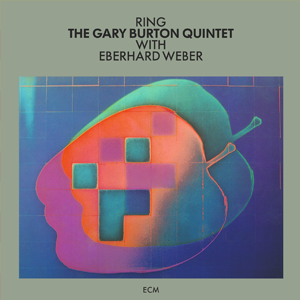
When Gary Burton released his album Ring in 1974, he already had a reputation as a modernizer of the vibraphone and a bandleader who moved between jazz and other musical genres. This time he was joined by Eberhard Weber, a German master bassist whose unique playing style was just beginning to attract attention on ECM recordings. The result was a unique hybrid: the American quintet and Weber’s cool European sound blended together in an interesting, though not always seamless, way.
Burton’s quintet was already a strange mix in itself. Mick Goodrick was the lead guitarist, but alongside him was the young Pat Metheny, who was only 20 years old and making his debut on an international album. Steve Swallow played electric bass, which left room for Weber to build quite melodic patterns on the double bass. Drummer Bob Moses completed the band, whose sound was both airy and slightly restless.
The two bassists are the most distinctive feature of the album. Swallow’s softly sounding electric bass and Weber’s often bowed double bass do not always find perfect harmony, but this is precisely what makes the whole so interesting. Weber brings with him a European melancholy and an almost symphonic undertone that contrasts with the quintet’s otherwise warmer and more percussive sound.
RIng features six compositions, the longest of which stretch to ten minutes. If the band’s lineup is unusual, the origin of the compositions is not exactly typical either. Only one of the six tracks on the album is the band’s own new composition. The album opens with Goodrick’s new composition ”Mevlevia” (one of the highlights of the album) and closes with a new version of the title track from Weber’s debut solo album, ”The Colours of Chloë.” Three tracks are the work of composer Mike Gibbs, and the longest track on the album, ”Silent Spring,” is a composition by Carla Bley. However, the connections to Burton were clear: Gibbs had been Burton’s music teacher, and Burton had played on many of Bley’s albums. It is clear, however, that the band makes the material their own with their personal performances and improvised sections.
Stylistically, the material fits right into the core of ECM’s early aesthetic: spacious, clearly recorded jazz with impressionistic tones, where improvisation remains controlled and deliberate. Several compositions follow modal arcs with an almost academic discipline, while Burton’s vibraphone floats lightly above it all. Metheny is not yet leading, but his sound is already astonishingly recognizable—round, clear, and melodic.
Ring is not the most balanced album. In places, it feels more like an experiment than a completely successful fusion, and some of the compositions remain in search of tone without any real climax. Nevertheless, it is an important document: Weber’s role opens the door to the later ECM aesthetic, and Metheny gets his first opportunity to play on the international stage. Burton himself remains at the center of it all as a leader who seems to enjoy the diversity of the band more than building unity.
The result is an album that is somewhat uneven, yet historically fascinating. It shows how American jazz and European chamber music thinking came together in the mid-1970s – not yet in perfect harmony, but precisely because of that, in an interesting way.
Burton and Weber returned to work together in 1977, when they recorded the album Passengers with Burton’s new quartet.
Best tracks: “Mavlevia”, ”Silent Spring”, ”The Colours of Chloë”
41. Cos: Postaeolian Train Robbery

Postaeolian Train Robbery is Cos’s first studio album.
Belgian band Cos, formed in 1974, made their debut with Postaeolian Train Robbery, an album that truly deserves to be called a cult classic. The band, formed around guitarist/flutist Daniel Schell, was influenced by the progressive rock of the time, but the album owes so much to the Canterbury scene in particular that it can be considered one of the most interesting European continuations of that trend.
The album has a soft, airy, and at the same time slightly homespun, clumsy but charming sound, in which the Fender Rhodes piano, melodic guitar, and swinging rhythm section create a framework for Pascale Son’s clear singing (Son also plays a little oboe here and there). Her voice does not function as a traditional soloist, but rather as one instrument among others. In addition to English, Son uses an invented language and wordless vocals, which take the band’s sound further away from the British style: whereas Canterbury singers such as Richard Sinclair and Robert Wyatt favor dry irony and restrained melodiousness, Cos’s vocals are more Dadaist, even Zeuhl-inspired. Especially in the song ”Cocalnut,” there is a clear departure into Magma territory.
Schell’s compositions are both gently melodic and boldly structured, and they often seem to follow their own paths based on instinct rather than logic. This approach is very Canterbury-esque, but Cos has its own, slightly more angular rhythmic touch and a clearly more continental, less pastoral tone. British bands often produced warm, earthy sounds, but Cos sounds cooler and sharper, which sets it apart from its most obvious influences.
Postaeolian Train Robbery is not a perfect album, but it is full of details that make it an intriguing listening experience even today. If a continental European combination of Canterbury and zeuch sounds like a promising mix, then Postaeolian Train Robbery is not to be missed.
Parhaat biisit: ”Postaeolian Train Robbery”, ”Cocalnut”, ”Populi”
42. Area : Caution Radiation Area

Caution Radiation Area is Area’s second studio album.
Founded in Italy in 1972, Area’s second album, Caution Radiation Area, is both fierce and bewildering. Whereas their debut album, Arbeit Macht Frei, already shattered conventional molds, this follow-up takes the band even deeper into avant-garde and sound improvisation. The intensity of jazz rock, electronic experimentation, and political charge collide in a way that makes the album challenging but also fascinating.
One track that stands out in particular is “Cometa Rossa,” sung in Greek, which blends Eastern tones with virtuoso rock rhythms. The frenzied “Brujo”, with its chaotic electric piano riffs, continues more in the vein of jazz rock, but tracks such as “Zyg (Crescita Zero)” and “Lobotomia” break with all familiar structures: they feature tape manipulation, noise, and fragmented ideas that feel more like sound art than rock. “MIRage! Mirage!” is perhaps the most radical display of Demetrio Stratos’s vocal acrobatics.
At only 32 minutes long, Caution Radiation Area is a somewhat frustrating listening experience. Among the catchy songs and sections, there are avant-garde studio experiments and improvisations that come across as somewhat pointless. I strongly suspect that Area started working on their second album too soon (according to some sources, their debut was released in early fall 1973 and this follow-up in early spring the following year) and had to fill the record with experiments that don’t quite hit the mark, when there was a shortage of ready-composed material.
This is not an easy album to listen to. For many, it may even be an exhausting experience. Yet that is precisely where its power lies: Area refuses to compromise, instead building its own world where political passion, musical anarchy, and technical mastery go hand in hand. Caution Radiation Area may not be as enjoyable as the albums that surround it, Arbeit Macht Frei and Crac! (1975), but it is definitely their wildest and most daring album.
Best tracks: “Cometa Rossa”, ”Brujo”
Author: JANNE YLIRUUSI
You can find other parts of the Year by Year series here.
 Pienemmät Purot
Jätä kommentti