
The author’s picks for the best albums of 1973, ranked 11-20.
In the Year by Year series, I’ll go through my favourite albums from 1969 to the present day.
11. Genesis: Selling England By The Pound (UK) ****½
12. Le Orme: Felona e Sorona ****½
13. Gong: Flying Teapot (UK) ****½
14. Roxy Music: Stranded (UK) ****½
15. Rick Wakeman: The Six Wives of Henry VIII (UK) ****½
16. Supersister: Iskander (NE) ****½
17. Yes: Yessongs (UK) ****½
18. Caravan: For Girls Who Grow Plump in the Night (UK) ****½
19. Roxy Music: For Your Pleasure (UK) ****
20. Eero Koivistoinen: Music Society: Wahoo! (FI) ****
21-30
31-43
11. Genesis: Selling England By The Pound
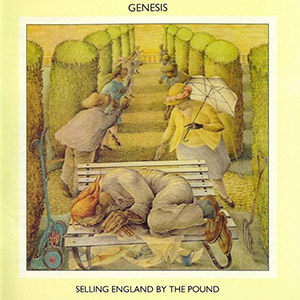
Selling England By The Pound is Genesis’ fifth studio album.
Assembled on Nursery Cryme in 1971, Peter Gabriel (vocals), Tony Banks (keyboards), Mike Rutherford (bass), Steve Hackett (guitar) and Phil Collins (drums) have become a skilfully cohesive group by the time of Selling England By The Pound.
Selling England By The Pound sounds much more muscular than its predecessors. Tony Banks uses a synthesizer alongside organ, piano and Mellotron for the first time on the album and Hackett’s soloing skills have improved dramatically. Some of the pastoralism of the earlier albums has been abandoned and much of their harshness has also been honed away by more skilful recording and improved playing…
12. Le Orme: Felona e Sorona

Felone e Sorona is the fourth studio album by Italian band Le Orme, formed in 1966.
Felona e Sorona is a concept album about two planets orbiting each other. One is a paradise-like sanctuary and the other a dark hellscape. In the end, the planets’ fates are reversed, with Felona becoming a bleak place and Sorona turning into a happy land. Or so I’ve been told. I still don’t know Italian.
ELP influences occasionally rear their head on Felona e Sorona, with the band still operating with the same keyboard-bass-drums lineup, but overall it feels like Le Orme really found their style on this album.
The dynamically striking opening track, “Sospesi nell’incredibile,” features impressive synths, intense Carl Palmer-esque drumming, and emotional vocals by Aldo Taglipietra. Taglipietra proves himself to be one of the best singers on the Italian prog scene. He sings skillfully and dramatically when needed, but without resorting to the excesses of some of his compatriots.
The atmospheric and melancholic ”Sorona” represents the other extreme of the album and serves as a stylish contrast to the more upbeat tracks. I would have liked to hear a little more of this. Another area where Le Orme surpasses most other Italian bands is Tony Pagliuca’s synthesizer sounds. Where many other Italian bands have thin, tinkling keyboards, Pagliuca has wonderfully thick, rich, deep sounds. His playing is also more than adequate.
The compact 33-minute Felone e Sorona has no weak moments and is not only Le Orme’s strongest album, but also one of the finest examples of Italian symphonic prog.
A year later, an English version with lyrics by Peter Hammill was released. However, the translated version can be considered more of a curiosity, as the original Italian release is absolutely the definitive version.
Best tracks: ”Sospesi nell’incredibile”, ”L’equillibrio”, ”Sorona”, ”Attesa inerte”, ”Ritratto di un mattino”
Note: The 2009 remastered version (The Universal Music Collection) is overly compressed and the music loses some of its dynamics. I recommend listening to the album on vinyl or earlier CD releases.
13. Gong: Flying Teapot

Flying Teapot is Gong’s third (or fourth, if Magick Brother and Continental Circus are included) studio album and the first part of the so-called Radio Gnome Invisible trilogy.
Flying Teapot had the honor of being the second album released by Richard Branson’s newly founded Virgin Records, following Mike Oldfield’s Tubular Bells, which came out on the same day.
Flying Teapot sees Gong move further away from psychedelic rock and towards progressive rock, while also adding more jazz influences. A certain psychedelic haziness remains a central part of Gong’s music (and lyrics), but overall the style is more musical and the playing considerably more skilled than before.
The drummer has changed from Pip Pyle to jazz musician Laurie Allen, and the bass is now played convincingly by Francis Moze, who previously played in Magma. The band has also been joined by keyboardist Tim Blake, a specialist in ”space sounds” who played a key role in creating the overall sound of Gong during the Radio Gnome Invible trilogy.
However, the most significant new recruit in the long run was young guitar virtuoso Steve Hillage. Hillage joined the band during the final stages of the Flying Teapot sessions and did not have much time to influence the album. He did contribute a few guitar solos, though. The core trio of Camembert Electrique still consists of guitarist/vocalist/visionary Daevid Allen, space whisperer Gilly Smyth, and wind player Didier Malherbe.
The best of Flying Teapot is represented by the 12-minute title track, which begins in a spacey atmosphere and winds its way through Francis Moze’s catchy bass pattern into a jazz-rock section and then, with psychedelic joy, into an avant-garde rattling section that awaits at the end. Exhilarating and diverse, yet cohesive (except perhaps for the avant-garde section), this track is one of the finest of Gong’s career.
The more ethereal 9-minute ”Zero the Hero and the Witch’s Spell” is also an impressive track and represents Gong’s take on Pharoah Sanders-style avant-garde jazz.
The third highlight of the album comes in the closing track, which features the band’s space whisperer Gilly Smyth. ”Witch’s Song / I Am Your Pussy” is Gilly Smyth’s moment to shine, singing alternately seductively and witchily, laughing and teasing. Smyth and Allen sing the song as a duet, but Smyth is definitely the star. With the song’s raunchy lyrics, Smyth and Gong prove that they are anything but a too-serious basic prog band:
“I am your pussy
You are my tramp
Don’t want to fuck you
Just hear you run
Miow… miow… miow…
You can be a cat too”
Flying Teapot is a playful fusion of humor and musicality that will bring a smile to the face of even the most hardened cynic. Just over six months later, Gong released their next album, Angel’s Egg, which is almost on par with Flying Teapot.
Parhaat biisit: ”Radio Gnome Invisible”, ”Flying Teapot”, ”Zero the Hero and the Witch’s Spell”, ”Witch’s Song / I Am Your Pussy”
It is recommended to avoid Flying Teapot, included in the Radio Gnome Invisible Trilogy collection on Spotify, as it has a distorted sound quality. The recommended version is Simon Heyworth’s 2019 remaster, which sounds absolutely fantastic.
14. Roxy Music: Stranded
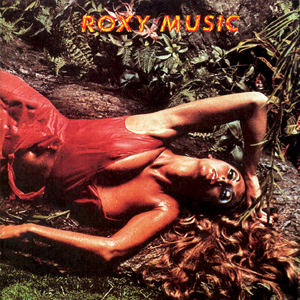
Stranded is Roxy Music’s third studio album and the first one the band made without Brian Eno.
With Bryan Ferry’s passive-aggressive ousting of Eno from the band, Roxy Music’s fate was firmly in his hands. However, Ferry understood that the other band members did not fully accept his dictatorial tendencies, and wind instrumentalist Andy Mackay in particular was very upset about his friend Eno’s departure. Ferry, being a smart man, understood that he had to give his bandmates some leeway (at least on the surface), and in the end, Stranded can even be considered a more democratic album than the two previous ones, as guitarist Phil Manzarena and Mackay both received songwriting credits on a Roxy Music album for the first time. With Eno out of the picture, the band’s instrumental soloists also took on a greater role in the construction of the arrangements…
15. Rick Wakeman: The Six Wives of Henry VIII

The Six Wives of Henry VIII is often regarded as keyboardist Rick Wakeman’s first solo album. Actually, whether this is true is a matter of opinion. After all, an album under Wakeman’s name, Piano Vibrations, was released back in 1971, with Wakeman playing cover songs alongside studio musicians. Wakeman himself does not credit that album as his debut and at least The Six Wives of Henry VIII can be considered the first Wakeman album to contain original music.
And very fine music it is! Where keyboardist Keith Emerson had a chance to shine in the spotlight on all the albums of the three-piece Emerson Lake & Palmer, Rick Wakeman was inevitably somewhat sidelined in the five-piece Yes, ”humbly” working as part of a team with guitarist Steve Howe grabbing most of the band’s instrumental solo space. On The Six Wives of Henry VIII, Wakeman then really lets his nimble fingers loose and finally gives Emerson a real challenge in the battle for the prog keyboard title…
16. Supersister: Iskander
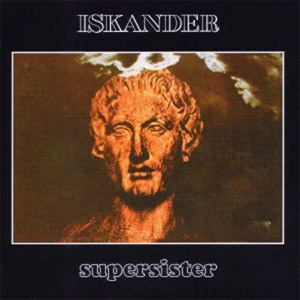
Iskander is Supersister’s fourth studio album.
After two excellent albums, Dutch band Supersister’s standard slipped with their third album, Pudding en Gisteren (1972), where the music was overshadowed by unnecessary humor. The concept album Iskander (Iskander is the Persian name for Alexander the Great), about the legendary military commander Alexander the Great (336 BC–323 BC), is a successful comeback for the band.
In connection with Alexander the Great, the theme of the album is, in a way, the meeting of the West and the East, and this is also reflected in the music. For example, in the magnificent ”Dareios the Emperor,” influences from Middle Eastern music blend naturally with Western jazz rock.
Jazz and jazz-rock influences have always been present in Supersister’s music, but with Iskander, the band moves more clearly in the direction of virtuosic jazz-rock. This side of the band is further reinforced by the addition of jazz-grounded wind player Charlie Mariano, who plays a wide range of horns on the album.
The album is mostly instrumental. In a few tracks, you can hear the soft vocals of keyboardist Robert Jan Stips. Stips isn’t much of a vocalist, but his singing isn’t unpleasant at any point, especially since the vocals play such a minor role. The band’s instrumental work is first-rate throughout the album.
Pierre Moerlen, known from Gong, visits one of the highlights of the album, the tightly rolling three-minute ”Bagaos,” playing marimba and other percussion instruments. Released as a single, ”Bagaos” is perhaps closest to the mood of previous Supersister albums, sounding a little more playful than Iskander on average, even though it is not really a humorous song.
In terms of sound, Iskander is also a big step forward for Supersister. Produced by Giorgio Gomelsky and recorded by Simon Heyworth at Manor Studios, the album sounds much snappier than the band’s previous releases.
Esoteric’s 2008 CD reissue includes a few excellent short bonus tracks that are definitely worth listening to. The fun single ”Wow” is particularly impressive.
Iskander received a mixed reception upon its release. Many fans of previous albums were disappointed by the more serious style. In my opinion, Iskander is Supersister’s most coherent work and therefore also the band’s best album. Iskander is an original take on jazz rock and doesn’t sound like any of the other albums.
Shortly after the release of Iskander, Mariano left the band and was replaced by Soft Machine horn player Elton Dean. With Elton Dean’s contribution, Supersister moved more towards free jazz, which further eroded the faith of the original Supersister fans in the band, which in turn was reflected in smaller audiences, although with Dean’s help, the band gained more international attention than before.
Discouraged, Supersister ceased operations in 1974, and Iskander remained the band’s last official studio album, although a slightly new lineup recorded an album called Spiral Staircase under the name Sweet Okay Supersister in the same year. In 2019, Robert Jan Stips reunited the band as Supersister Project 2019, which released a relatively successful album called Retsis Repus.
Best tracks: ”Dareios the Emperor”, ”Alexander”, ”Bagaos”
17. Yes: Yessongs

Released in May 1973, Yessongs is Yes’ first live album.
Yes was riding high during the Yessongs era and enjoying the heyday of its career. Close To The Edge (1972) included the band’s first half-album-length song, and the next album (released after Yessongs) Tales From Topographic Oceans (1973) had four similar songs! No wonder Yes’s first live album was a three-vinyl set. Today, massive live albums are commonplace, but in 1973, a three-disc live album was almost unheard of. Especially when the whole set was packaged in luxurious gatefold covers illustrated by Roger Dean.
Yessongs begins with a recording of Igor Stravinsky’s The Firebird, which transitions seamlessly into the band’s explosive version of ”Siberian Khatru” with the help of Rick Wakeman’s Mellotron strings. This band is not bashful!
The songs on Yessongs were recorded during the Fragile and Close To The Edge tours in 1971 and 1972. Bill Bruford was still with the band on the Fragile tour, but only three songs from that period are included. The other songs feature newcomer Alan White on drums, who had to learn Yes’ repertoire at lightning speed. White is a more straightforward and rocking drummer than Bruford, but he handles even the most complex sections with flying colors. In some of the more subtle songs, Bruford is somewhat missed, but on the other hand, in the rockier tracks, Alan White and Chris Squire power through the songs with irresistible force. The whole band is in great form. Steve Howe, in particular, is on fire throughout the album, and his guitar playing is at times downright crazy. This band was hungry, energetic, and very close to the peak of their playing skills (I would argue that Yes’s peak was in the late 70s). Yessongs is characterized by a certain energetic roughness. It is often claimed that prog bands don’t rock, which is bullshit on a general level, but at least in the case of Yes in 1972, it is definitely not true.
Arrangement-wise, Yessongs doesn’t offer anything particularly dramatic compared to the studio versions of the songs. Yes isn’t a band that radically rearranges songs live or throws themselves into long, wild improvisations. However, faster tempos and a relaxed, loose but intense approach, as well as slightly extended and varied solos, bring enough difference to the songs to make Yessongs a worthwhile alternative to the studio versions. And yes, the band occasionally lets loose with the arrangements on Yessongs: for example, ”Perpetual Change” has been successfully extended from its original 9 minutes to 14 minutes. The song also features a relatively rare drum solo from Bruford.
Repertuaarina Yessongsilla kuullaan kappaleita Yesin kolmelta viimeisimmältä levyltä eli The Yes Albumilta, Fragilelta ja Close To The Edgeltä. Viimeksi mainittu kuullaan kokonaisuudessaan. Erikoisuutena mukana on Wakemanin soolonumero jossa hän soittelee teemoja vastailmestyneeltä soololevyltään Six Wives Of Henry VII. Sinänsä harmi että kahdelta ensimmäiseltä Yesin levyltä ei kuulla mitään. Olisi ollut kiinnostavaa kuulla miten tämä hyvin erilainen Yes olisi tulkinnut noita alkuaikojen kappaleita.
There are occasional complaints about the sound onthe Yessongs. In my opinion, it’s mostly fine. It’s a little rough and unpolished, but on the other hand, it perfectly supports the rocking and intense attitude of the album. The album sounds live in a positive sense.
Yessongs was a huge success upon its release and sold as many copies as the band’s studio albums. Since then, Yes has released a slew of live albums, but this first one may still be the finest.
Best tracks: “Perpetual Change”, “Siberian Khatru”
18. Caravan: For Girls Who Grow Plump in the Night

For Girls Who Grow Plump In The Night is Caravan’s fifth studio album.
The jazzy Waterloo Lily from 1972 was an excellent album, but many of Caravan’s old fans rejected the band’s new sound. Caravan decided to take a step back towards the style of their most popular album, In The Land Of Grey And Pink (1971), but added a dose of slightly heavier rock sound. Caravan had never sounded quite this muscular before.
An essential part of the band’s new sound was the raucous violin of new recruit Geoff Richardson, which added its own spicy flavor to the sound. The hiring of the violinist was probably linked to guitarist Pye Hastings’s (who was clearly the leader of Caravan at this point) enthusiasm for the Mahavishnu Orchestra. Caravan had been playing as the opening act for the Mahavishnu Orchestra around this time, and the band made a big impression on Hastings. Although as a guitarist he couldn’t have been further from John McLaughlin’s style and virtuosity.
Richard Sinclair’s nimble bass was replaced by John G. Perry’s slightly heavier rock bass sound. Founding member Dave Sinclair returned to the band, bringing back Caravan’s more traditional keyboard sounds with his organ. Sinclair does have to fight for space with Richardson throughout the album, however, and is not given quite as much freedom as on previous albums. In a way, this is a good thing, as his solos on In The Land Of Grey And Pink were a little too prominent. On the track ”The Dog, the Dog, He’s at It Again,” however, Sinclair gets to rip into a long and tasty synthesizer solo. Another factor explaining Sinclair’s minor role is that he rejoined the band at the last minute before the recording sessions began, and all the songs were composed by Pye Hastings (although the last song borrows from Hugh Hopper’s composition ”Backwards”).
The song material Hastings has produced for For Girls is high quality and consistent. However, the pop song “Surprise, Surprise,” typical of Hastings, is less impressive than the other songs and does not measure up to Hastings’ best songs in this range. On the other hand, there are no individual timeless masterpieces to be found on the album, even among the longer songs.
The long opening tracks, “Memory Lain, Hugh / Headloss” and the ultra-annoyingly named “L’Auberge du Sanglier / A Hunting We Shall Go / Pengola / Backwards / A Hunting We Shall Go (reprise)”, both feature a small symphony orchestra in the background. The orchestra blends nicely with the band’s sound, and the experiment can be considered quite successful. Especially since these songs are among the best on the album. The alternately grandly romantic and understated ”L’Auberge du Sanglier,” however, is a somewhat fragmented composition and doesn’t quite feel like the sum of its parts.
However, my favorite track on the album is the impressively rocking, yet strangely buzzing prog track “C’Thlhu Thlu,” in which I can hear a hint of King Crimson’s influence.
For Girls Who Grow Plump In The Night is a strong album and, unfortunately, the last Caravan album that can be described as such. After that, the band’s quality declined rapidly, and even individual songs rarely hit the mark.
Best tracks: ”Memory Lain, Hugh / Headloss”, ”C’Thlhu Thlu”, ”L’Auberge du Sanglier / A Hunting We Shall Go / Pengola / Backwards / A Hunting We Shall Go (reprise)”
Year by Year: Best Albums of 1973 – 21-30
19. Roxy Music: For Your Pleasure
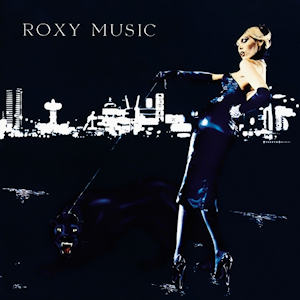
For Your Pleasure is the second studio album by Roxy Music, formed in 1971.
In the early 1970s, aspiring singer/songwriter Bryan Ferry auditioned for King Crimson to replace Greg Lake. He didn’t get the job, but Robert Fripp recommended Ferry to his management company EG as a promising talent. In 1971, Ferry began putting together his own band through a newspaper ad, which was answered by classically trained wind player Andy Mackay and his friend, keyboardist/non-musician Brian Eno.
Ferry was determined to have David O’List, whom he knew from The Nice, as the guitarist, and through a lucky (?) coincidence, O’List joined the band. However, the collaboration did not work out due to O’List’s huge ego and substance abuse problems. Ferry replaced the unreliable superstar with another prog rocker, Phil Manzanara, who had been hanging around the band for some time…
20. Eero Koivistoinen: Music Society: Wahoo!
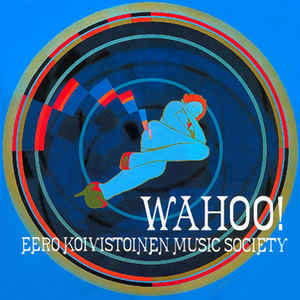
Saxophonist Eero Koivistoinen studied at the renowned Berklee College of Music in Boston in the early 1970s. In the fall of 1972, when he came back to Finland on vacation, Koivistoinen decided to put what he learned in America to good use and record a Finnish jazz-rock album with a strong funk flavor.
Adding funk to jazz, and especially jazz rock, became very trendy in 1973, and it’s a trend that I’m not entirely excited about. However, on Wahoo!, it works well, and the album has a good balance between jazz (and rock) and funk. Koivistoinen’s large and skilled band (including three wind players in addition to Koivistoinen himself) delivers a sweaty, tight groove, often in relatively complex time signatures. The song titles “7 Up,” “6 Down,” and “Suite 19” offer friendly hints about the rhythms.
The opening track, “Hot C,” is a bit too straightforward funk for my taste, but things immediately improve with the more diverse and complex 7/8 time signature of “7 Up,” which sways delightfully and gives Koivistoinen a chance to show off his solo skills. Electric guitarist Ilpo Saastamoinen also plays a nice solo on this track. The rest of the band provides tasty, almost orchestral-sounding backing. A great song.
The next track, “6 Down,” is a bit more funky, but it blends jazz and funk more effectively and is a worthy counterpart to Herbie Hancock’s legendary jazz-funk album Head Hunters, released in the same year. Head Hunters may be a more effective album in terms of funk, but I personally prefer Wahoo! for its more jazzy expression.
Jazz is served up particularly nicely in the more free-form 11-minute “Suite 19,” which, with Edward Vesala’s percussion, brings to mind Pharoah Sanders’ free jazz. The peaceful “Bells,” with its chimes, also leans more toward free jazz than funk.
Recorded at Finnvox Studios in December 1972, the album sounds very good, which was by no means a given for Finnish records in the 1970s. The sound is clear even though the band is large and there is a lot going on in the music almost all the time. Produced by Koivistoinen himself, the sound of Wahoo! is rich but balanced.
Wahoo! is one of the pioneers of Finnish jazz rock and still pretty much the best this genre has to offer in Finland.
Best tracks: “7 up”, 6 Down”, “Suite 19”
Kirjoittaja: JANNE YLIRUUSI
Other parts of the Year by Year series can be found here.
 Pienemmät Purot
Jätä kommentti