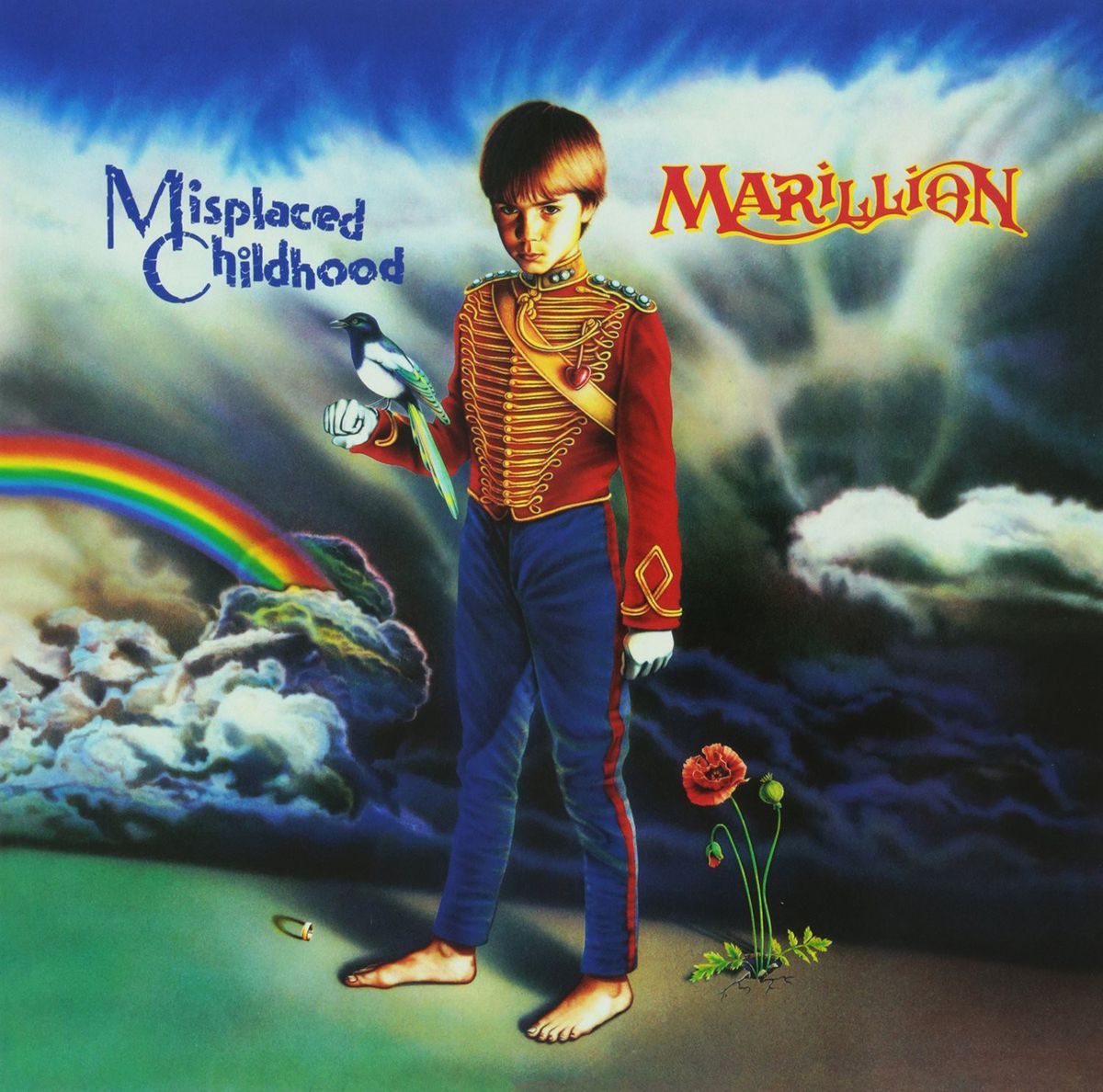
Misplaced Childhood is Marillion’s third studio album.
With their debut album A Script For A Jester’s Tear, released in 1983, Marillion rose to become the undisputed kings of the neo-prog movement that had gained momentum at the beginning of the decade, leaving their closest competitors (IQ, Pendragon, Pallas, Solstice) eating their dust. At least in terms of commercial success. The band improved artistically on their second album, Fugazi (1984), but the costly album did not sell as well. EMI even considered terminating the band’s record deal. Unaware of this, Marillion boldly embarked on a project for their third album that was hugely unpopular in the mid-1980s. The band decided to make their third album a concept album, i.e. an album where all the songs revolve around a single theme.
Marillion had difficulty finding a producer for the album, especially since it was a concept album, which was frowned upon at the time. Producers, especially big-name ones, usually took a percentage of the album’s profits, and many potential candidates decided that Marillion’s planned album wasn’t going to generate that much. In the end, however, they managed to sign Chris Kimsey, who had worked with the Rolling Stones (Kimsey also engineered ELP’s Brain Salad Surgery).
Kimsey proved to be an excellent choice. He got the band to work efficiently and did his best to help them strip away the most obvious influences from their earlier work, which had at times made the band sound a little ridiculous. Kimsey’s excellent production gives the album just the right amount of polished pop sparkle without making the whole thing sound bland or overly sterile. There is no resorting to overly clichéd 80s sounds; instead, the sound is just the right mix of the 70s and 80s.
Legend has it that vocalist Fish wrote the lyrics to Misplaced Childhood during an epic 10-hour LSD trip. Fish certainly got the idea for the album while tripping, and developed the main themes in his hazy state, but the truth is that he feverishly finished the lyrics in the studio while the music was being recorded.
But what is the concept behind Misplaced Childhood?
Super producers Don Simpson and Jerry Bruckheimer launched the concept of ‘high concept’ in Hollywood in the 1980s. The idea behind high concept was to create a film with such a striking and simple theme that it could be summed up clearly in one sentence or even a few words. For example, Jurassic Park can be easily summarised as ‘What if we could clone dinosaurs and put them in a zoo?’.
The high concept never really caught on in progressive rock, and the theme of Misplaced Childhood is not easy to describe in a few words. The lyrics, written solely by Fish, are clearly autobiographical and describe in a stream of consciousness the pain of growing up. The lyrics mix the sexual pressures of a young man, a thirst for success, experimentation with various intoxicants, world-weariness, mental health issues and, above all, a vague anxiety about the loss of childhood innocence. Fish’s lyrics are once again brimming with melodrama that at times threatens to suffocate in its own ridiculousness, but thanks to Fish’s devoted and sincere performance and the band’s powerful sound, the overall experience is ultimately a positive one.
Read also: Review: Porcupine Tree – Closure/Continuation (2022)
Fugazin found Marillion struggling to create new material, and the recording sessions were challenging. The songs on Misplaced Childhood, on the other hand, came together effortlessly, and the recordings under Kimsey’s direction in West Berlin went so smoothly that the album was completed under its £80,000 budget. The £74,000 spent on the album was almost half of what had been splashed out on Fugazi. Even the debut album had cost more. And Misplaced Childhood sounds much better than either of those albums!
However, the work on Miscplaced Childhood did not go entirely smoothly, as serious friction was developing between the vocalist and the rest of the band. The worst example of this was when the paranoid (and probably intoxicated) Fish lifted the much smaller guitarist Steve Rothery onto the wall, aggressively accusing him of saving his best songs for his solo album. This was somewhat tragicomic considering that Rothery had composed most of the album that was in the works at the time. Rothery’s first solo album, The Ghosts of Pripyat, was released in 2014. Rothery has said that all the friendship he still had left for Fish died at that moment. The problems between Fish and the rest of the band would soon escalate further.
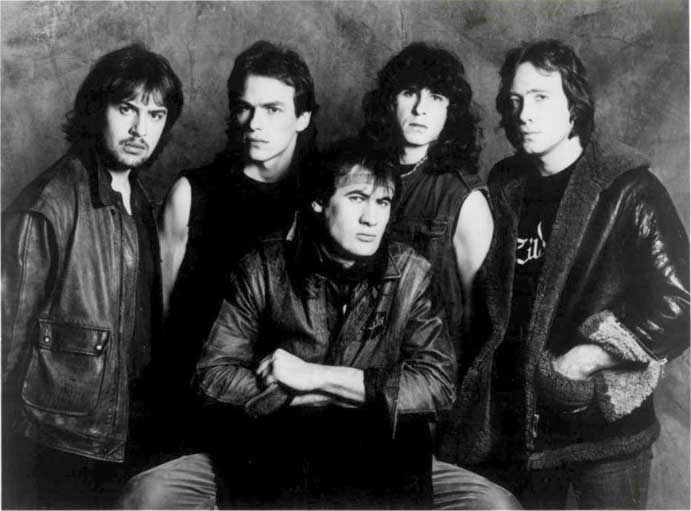
Before the album was released, Marillion teased their fans (part of Misplaced Childhood was also performed live before recording) that an album was coming with only two long songs called ‘Side One’ and ‘Side Two’. In practice, however, the 41-minute album that was eventually released is a so-called song suite consisting of 10 tracks that are linked together more or less seamlessly. This is a similar structure to that used by Pink Floyd on The Dark Side Of The Moon and, even more clearly, on the more conceptual The Wall. Some of the longer individual tracks on Misplaced Childhood are further divided into sub-sections (the eight-minute ‘Bitter Suite’ has no fewer than five named sections), resulting in a rather fragmented whole. Contrary to expectations, however, these fragments form a surprisingly seamless and coherent whole. At least for me, it has always been difficult to separate the individual songs on the album from their context (with the possible exception of the two pop hits). The music on Misplaced Childhood is best enjoyed exactly as it was intended, as a complete album.
Typical of neoprog, the music on Miscplaced Childhood is mostly very simple in terms of rhythm and harmony. It is mainly built around childlike melodies, embellished with atmospheric synthesizer pads and guitar solos. Fortunately, the melodies are strong, and the beautifully melancholic atmosphere is effectively created with stylish guitar and keyboard sounds. In particular, Mark Kelly’s rich keyboard pads make a big impression in several places.
Fish’s charismatic vocals take centre stage on this Marillion album, and he has successfully shed the most obvious Peter Hammill / Peter Gabriel influences from his voice.
Fish’s vocals are probably at their best on this album. His singing technique has improved since his early days, and his wild lifestyle had not yet taken its toll on his voice, which at this stage still reaches quite high notes. Fish’s lyrics are still ‘more is more’, and he likes to use three sophisticated words instead of one. This creates a colourful and complex impression that you either love or hate. I think the style works because, in addition to superficial brilliance, the lyrics often contain genuine insights, and he skilfully paints larger-than-life drama from everyday situations, which at times is mixed with intriguing psychedelia. Once again, the lyrics have a greater sense of personal significance, which prevents them from sinking completely (but not entirely!) into cheap melodrama.
Read also:
- Vuosi vuodelta : Parhaat levyt 2000 – Sijat 11-20
- Review: Univers Zero – Ceux Du Dehors (1981)
- Levyarvio: Steve Walsh – Glossolalia (2000)
- Year by Year : Best Albums of 1976 – 21-29
- Levyarvio: Jimmy Page – Outrider (1988)
- Review: Brian Eno + David Byrne – My Life in the Bush of Ghosts (1981)
The album kicks off with the darkly toned ‘Pseudo Silk Kimono’, which showcases keyboardist Mark Kelly’s rich, thick synthesizer pads at their best. Fish’s high-pitched, distant vocals paint a picture of a bleak and hollow existence where all hope seems lost. ‘Pseudo Silk Kimono’ is a stylish intro full of doom, melancholy and menace.
”Huddled in the safety of a pseudo silk kimono wearing bracelets of smoke, naked of understanding.”
The mood changes abruptly in the second song. The catchy, slightly melancholic but nostalgically hopeful ‘Kayleigh’ became a big hit. The song rose to number two on the UK singles chart and brought the entire album to the attention of a wider audience. Fish combined the names Kay and Lee to create a completely new name, Kayleigh, and today there are a large number of women in their forties who owe their name to Marillion’s hit. ‘Kayleigh’ is a great pop song that fits surprisingly well into the mostly darker tone of the album.
The third track, ‘Lavender,’ continues in the pop vein. Beginning as a piano ballad, ‘Lavender’ is the second pop song on the album and is more gentle than its predecessor. The playful chorus brings the childlike quality of the album to its peak. The chorus is inspired by an old English folk song from the 1600s called ‘Lavender’s Blue’.
Lavenders blue, dilly dilly, lavenders green
When I am King, dilly dilly, you will be Queen
A penny for your thoughts my dear
A penny for your thoughts my dear
A deep rumbling synthesiser and Ian Mosley’s echoing drum rolls take the mood back to the darker waters of the album’s intro. ‘Bitter Suite’ is the first of two long, multi-part ‘mini-symphonies’ on the album. After an atmospheric instrumental intro, Fish recites a colourful picture of an urban and slightly dystopian landscape with a strong Scottish accent, followed by two sections describing the protagonist’s encounters with the opposite sex. First, there is an apparent first love with a suburban girl, and then we move on to a romanticised encounter with a prostitute. Each of the five parts of ‘Bitter Suite’ introduces new melodic material, and the connection between them is so loose that it is strange how well this mini-series works within the larger series.
After the introverted ‘Bitter Suite’, the energy is ramped up with ‘Heart Of Lothian’, a defiant rock anthem typical of Marillion’s early days. The song begins toying with irregular time signatures before returning to the steady 4/4 rhythm that dominates the rest of the album. Fish’s vocals are at their most aggressive on ‘Heart of Lothian’, and Rothery’s electric guitar screeches loudly throughout most of the song.
The short ‘Waterhole (Expresso Bongo)’ is also an energetic track, supported in particular by Mosley’s powerful drumming and Fish’s intense vocals. Rothery’s piercing electric guitar, which emerges here and there and then disappears again, also creates an effective effect.
Less than two minutes long, ‘Lords of the Backstage’ takes us into the paranoid world of a protagonist who has achieved rock stardom. ‘Lords of the Backstage’ feels very much like the second mini-epic on the album, ‘Blind Curve,’ which starts right after it, and it’s strange that it’s indexed as a separate track.
The nearly ten-minute-long ‘Blind Curve’ consists of five parts and, unlike the album’s other long track, ‘Blind Curve,’ it feels a bit more natural as a whole. It is a ‘mini-symphony’ typical of progressive rock, alternating between quiet, atmospheric sections and moments of solid band playing. The song culminates in its fifth part, ‘Threshold’, which feels like a pressure cooker where all the pain of the world that has grown throughout the album is finally condensed through the narrator. In ‘Threshold,’ Fish overwhelms us with a heavy dose of the world’s evil and hopelessness, singing about war widows who have lost their husbands, children who are destined to be raped in the back alleys, twisted politicians who stir up war, and hypocritical priests.
I saw a war widow in a launderette
Washing the memories from her husband’s clothes
She had medals pinned to a threadbare greatcoat
A lump in her throat with cemetery eyes

The penultimate track on the album, ‘Childhoods End?’, serves as catharsis after the climax of anxiety in ‘Threshold’ and is conceptually a somewhat clumsy solution. In Deus ex machina style, morning dawns and with it comes a kind of realisation that the narrator is an adult but the child within him is still alive. This, in turn, leads to liberation from anxiety and angst. Suddenly, everything is fine. Not very convincing, but since ‘Childhoods End?’ is a rather catchy song with The Edge-esque broken guitar riffs and melodic Pete Trewavas bass, it’s easy to forgive. At the end, there is also a short synthesiser solo, which is rare on this album, leading directly to the finale.
The closing track, ‘White Feather’, with its military drumming, is downright jubilant, and the album ends on a high note with flags flying. The song manages to be life-affirming without being corny.
I will wear your white feather
I will carry your white flag
I will swear I have no nation
But I’m proud to own my heart
I will wear your white feather
I will carry your white flag
I will swear I have no nation
But I’m proud to own my heart
My heart, this is my heart
The single ‘Kayleigh’ from the album Misplaced Childhood became a big hit. The album reached number one in the UK and sold over 500,000 copies in Germany alone. Some sources consider Misplaced Childhood to be the most successful prog album since The Wall, released in 1980. This may well be true. Of course, it depends a little on what you consider prog, as the albums released by Yes and Genesis in the early 80s were also huge successes. In any case, Misplaced Childhood briefly elevated Marillion to a whole new level, and the band got to play in large arenas.
Misplaced Childhood is an almost perfect prog pop gem. It’s like a perfect mix of candies, containing just the right combination of sweet and sour flavours that complement each other perfectly. Misplace Childhood is a prime example of an album that is more than the sum of its parts. Taken individually, none of the songs on Misplaced Childhood are particularly masterful, but when put together, they form a diverse and colourful whole that is just perfect.
Best tracks: ”Pseudo Silk Kimono”, ”Waterhole (Expresso Bongo)”, ”Blind Curve”, ”Heart Of Lothian”, ”Childhoods End?”, ”White Feather”
Author: JANNE YLIRUUSI
Read also: Review: Marillion – An Hour Before It’s Dark (2022)
Tracks
- ”Pseudo Silk Kimono” 2:15
- ”Kayleigh” 4:04
- ”Lavender” 2:28
- ”Bitter Suite” 7:53
i) ”Brief Encounter”
ii) ”Lost Weekend”
iii) ”Blue Angel”
iv) ”Misplaced Rendezvous”
v) ”Windswept Thumb” - ”Heart of Lothian” 4:08
i) ”Wide Boy”
ii) ”Curtain Call” - ”Waterhole (Expresso Bongo)” 2:13
- ”Lords of the Backstage” 1:53
- ”Blind Curve” 9:30
i) ”Vocal Under a Bloodlight”
ii) ”Passing Strangers”
iii) ”Mylo”
iv) ”Perimeter Walk”
v) ”Threshold” - ”Childhoods End?” 4:33
- ”White Feather” 2:24
Marillion
Fish: vocals Steve Rothery: guitar, bass guitar Mark Kelly: keyboards Pete Trewavas: bass guitar Ian Mosley: drums, percussion
 Pienemmät Purot
Jätä kommentti