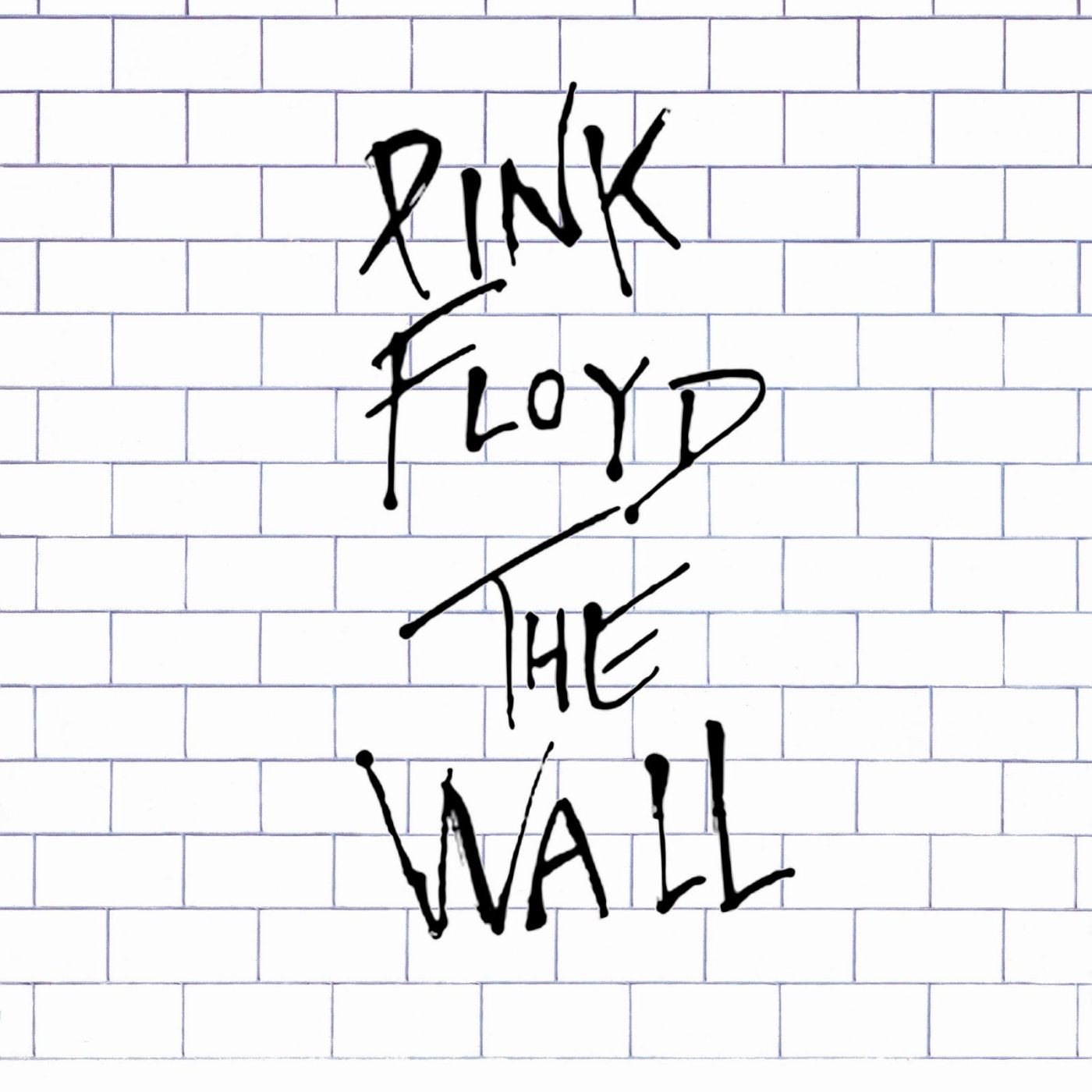
The Wall is the 12th studio album by Pink Floyd, formed in 1965.
Towards the end of the 70s, the dissatisfaction of Pink Floyd’s self-appointed visionary, bassist/vocalist Roger Waters, with the rock circus had reached the point where it was time to put up a wall between the band and the audience.
According to Waters, the spark for The Wall was ignited at the closing concert of the 1977 In The Flesh tour in Montreal that promoted album Animals. Over the years, Water, who had gradually become more and more accustomed to massive stadium concerts, finally blew his top that night, fed up with the antics of what he thought was a misbehaving fan. Waters lured a noisy and boisterous teenage fan to the front of the stage and spat a giant slobbering glob of snot directly into the face of the ticket buyer.
Later, Waters, shocked by his act, realised that Pink Floyd, or at least he personally, had been alienated from his audience. A barrier had come up between them… Waters had a strange but brilliant idea: what if he really did put up a wall between the audience and the band? It would provide a powerful and original outlet for a whole new kind of rock show.
Waters was free to bring his own obsessions to Pink Floyd’s music as in the previous years the other members of the band had been very lazy in developing songs for the band and by around 1978 the situation was even worse as guitarist David Gilmour and keyboardist Rick Wright had put their ideas into their first (and rather modest) solo albums. Drummer Nick Mason, who hadn’t composed much music for Pink Floyd before, had spent his time on his Ferrari hobby and went on to produce Gong guitarist Steve Hillage’s solo album Green. Waters, on the other hand, was more prolific than ever and had been working on material for several albums in his home studio.
In July 1978, Roger Waters presented Pink Floyd with two separate concepts and demos. Waters gave the band a say in which set of songs they would start working on. Released later in 1984 as Waters’ solo album, The Pros And Cons Of Hitch Hiking was judged too personal and the band decided to go for The Wall which, despite its autobiographical elements, had a more universal appeal.
The Wall was a massive project from the start. Not only was it a narrative two-vinyl album, but the project also included a very ambitious stage show and a feature-length film. The film was not completed until 1982, so the concept of The Wall, with its touring and film, eventually captivated Waters for five years.
The album part alone seemed such a challenging project that Waters unexpectedly decided to hire outside producer Bob Ezrin. Pink Floyd had long produced their albums themselves without outside influence so this was a rather surprising move from the dictatorial Waters. Ezrin was a producer on the upswing who had worked with the likes of Alice Cooper and Peter Gabriel and produced Lou Reed’s dark classic Berlin. An album with which The Wall shares a number of characteristics, not least the pitch-black darkness of the lyrics and the rock band backed orchestrations.
Ezrin was a strong-willed producer and used to getting his way, so the relationship with Waters sparked and the two alphas often clashed during the project. However, Ezrin’s influence was largely fruitful and he was able to shape Waters’ song ideas in a more musical direction and, on the other hand, brought Waters and Gilmour together to the best of his ability. The Wall’s producer’s chair was also in flux, with Gilmour and recording engineer James Guthrie being awarded producer credits alongside Waters and Ezrin. Rick Wright also tried to get his name under the producer title, but after sitting in the studio for a couple of weeks ’producing’, i.e. doing nothing, he was unceremoniously kicked out.
In the end, Wright was not only fired from the producer’s job, but also from the band. Waters got fed up with Wright’s limited contribution to the album (Wright’s out-of-control cocaine use didn’t help) and the final straw was when Wright refused to end his vacation when The Wall’s sessions got longer. Wright was canned from the band by Waters’ ultimatum to shelve the entire The Wall project if Wright refused to leave the band. However, Wright was allowed to continue as a paid member until the end of the album and also participate in The Wall tour which eventually became such an expensive project that Wright has said that he was the only Pink Floyd member (well, ex-member at this point) to earn anything from the tour because he was on a fixed fee while the band members paid the losses out of their own pockets.
Pink Floyd had a lot at stake with The Wall. While one might have imagined that, after a hugely successful album and major tours, the Floyd quartet would have been flush with cash, their financial situation had actually turned unexpectedly dire. Millions of dollars of Pink Floyd money had been invested in high-risk investments, and several of these investments had happened to go bust at the same time. Moreover, the money invested had not yet been taxed. This was problematic, especially as the UK tax rate for the rich was a whopping 83%. Of course, Floyd had also put money into his own Britannia Row studio and simply into a life of luxury with mansions and expensive holidays. In 1979 it looked worryingly like Pink Floyd were living beyond their means and there was a real danger that they would lose everything if their next album wasn’t a big hit.
Theme
The Wall is a concept -or theme-album. But what is the theme or subject matter that The Wall deals with? It’s easy, at a glance, to condemn the album as the self-indulgent ramblings of a rich rock star. Indeed, the album’s narrative is built around the rise and fall of the rock star, but there are deeper themes behind it, such as loneliness and the emptiness of modern life, which is self-medicated in devastating ways.
The story of The Wall stars a rock star called Pink (remember the lyrics from Wish You Were? ”By the way which one is the Pink?”). Originally Pink was apparently even more like Waters himself, but under Ezrin’s direction the story was made more universal and Pink himself eventually became a mixture of Waters, Pink Floyd’s original leading man Syd Barrett, keyboardist Rick Wright and a generic rock star.
Pink is the main character in The Wall, but at least as important to the story are the ”bricks” he builds between himself and the world. For Waters, the bricks are a metaphor for the adversity and injustices (real and perceived) that Pink experiences. Out of these adversities Pink builds a psychological wall around herself behind which he cowers and hides in order to avoid human contact which, throughout life, has only hurt him.
Pink’s difficulties start from the day she is born. His father is killed in the war when he is a newborn. His mother becomes a repressive figure, compensating for her single parenthood, and the inhuman, egalitarian school system tries to strip Pink of any personality. In the end, the rock stardom that was supposed to be Pink’s salvation turns into a nightmare in the crossfire of drugs, a cheating wife and mental health problems.
Pink’s shaky mental health, combined with blind adoration from fans, leads to an extreme sense of superiority that eventually escalates to the point where Pink elevates himself to the role of fascist dictator. At least in his own confused mind.
There are many phases in Pink’s life that the average listener may not be able to directly relate to, but on the other hand, his longing for connection and general brokenness is certainly something that will resonate with almost anyone who hasn’t lived their life in a vacuum. And even if Waters’ subject matter or lyrics don’t touch you on an emotional level, their venomous satire tinged with black humour is in itself a very entertaining listen.
The album is basically divided into three acts: the first presents Pink’s childhood which damages him in many ways, the second presents a rock star who medicates himself as rock stars tend to medicate themselves: with expensive toys, drugs and meaningless sex. The third and final one takes the rock star to the brink of madness and beyond as he turns into a fascist megalomaniac.
Musically, The Wall is more pop-oriented than Pink Floyd’s previous output (on the other hand, some of the songs have nothing to do with pop music), including some hard-rock tones. The orchestra used here and there brings to the music a sense of dignity and an almost Broadway-like dramatic quality. Waters’ vocals, which often dominate, leaving Gilmour’s voice on the sidelines, also assume a theatrical style. The Wall’s 26 songs are short (1-6 min.) and some of them are just interludes whose function is to link the different songs together.
Sound effects and speech clips are used effectively in the music and the sounds on the album are polished to perfection. The Wall is one of the finest albums of all time in terms of sound and for me it is always one of the albums I test new hi-fi equipment purchases on (I recommend playing The Wall loud. Its dynamics are especially rewarding at high volumes).
Read also: Pink Floyd – The Dark Side Of The Moon (1973)
Side A: childhood traumas
The Wall begins with an explosive leap into the middle of the Pink character’s days of glory. The dramatic 6/8 time signature ”In the Flesh?” throws listeners straight into Pink’s concert at the height of his popularity. A theatrical hard rock-inspired song reminiscent of Queen and Lou Reed, it’s clear that all is not well with Pink:
If you wanna find out what’s behind these cold eyes
You’ll just have to claw your way through this disguise
Pink is still successfully playing the role of the beloved rock star, but the situation is in danger of spiralling out of control at any moment.
At The Wall gigs, ”In The Flesh” was played by a fake band wearing masks resembling Pink Floyd members’ faces. It was a brilliant trick by Waters to demonstrate very sharply the distancing effect of stadium shows: it no longer matters to the audience who those stick figures standing on the far stage in the middle of the spectacle actually are.
The next track ”The Thin Ice” throws the listener into the beginning of the story. The song begins with a child crying. Newborn Pink cries, not yet knowing that her father has just died in World War II. The wall thus gets its first brick as fatherlessness will be one of the great tragedies of Pink’s life. Waters, of course, drew this plot directly from his own life. Waters’ father was killed in Italy at the Battle of Anzio in 1944, less than six months after Waters was born.
”Another Brick in the Wall, Part II” is The Wall’s most famous single song. Ezrin played a major role in what proved to be a huge success. Not only did he bring that steady stomping disco beat to the song, but also the chorus of ordinary school children (a great touch!) were his ideas. Disco beats are not my cup of tea, but I have to admit that the monotonous jingle fits perfectly in a song about an oppressive and egalitarian school system that smooths out the edges of people and saps them of their originality and, along the way, their creativity. Pink Floyd had never come so close to pop music as in this song attacking the oppressive English school system, which was both egalitarian and even violent, and eventually sold over four million copies as a single.
The A-side ends with ”Mother”, which begins with a gentle organ and acoustic guitar accompaniment. It is one of the most interesting songs on the whole album. Waters takes on the role of Pink, where a boy worried about his future asks his mother increasingly desperate questions (”Mother, do you think they’ll drop the bomb?”). Gilmour, meanwhile, sings the role of the mother, answering little Pink’s questions in a way that makes it obvious that this is an overprotective mother whose compensatory maternal love for single parenthood becomes poisonously suffocating.
Musically, ”Mother” has a story that is a bit embarrassing, but it illustrates the unity of Pink Floyd, or rather the lack of it. Rhythmically, ”Mother” is unusually sophisticated for Pink Floyd and contains several subtle changes of time signature. Drummer Nick Mason couldn’t get his playing chops right so, apparently under pressure from a tight production schedule, Mason was simply pushed aside and studio ace Jeff Porcaro, who also played on Toto, was brought in to play drums. On the other hand, it doesn’t say much for Mason’s work ethic and skills that he couldn’t do the job with over ten years’ experience. On the other hand, it does not paint a particularly rosy picture of Floyd (read: Waters) solidarity or band spirit. Instead of changing the arrangement or giving Mason enough time to learn his part, he was coldly replaced by another drummer. Also, a significant portion of the keyboard parts in The Wall are played by uncredited keyboardist Peter Wood and Ezrin instead of Wright because Wright’s performance did not satisfy Waters.
The lyrics of ”Mother” are dripping with sarcasm, and it’s extremely amusing that nowadays, around Mother’s Day, people are quite sincerely sharing ”Mother” on social media as a tribute to their own mothers or mothers in general. They have obviously never really listened to the lyrics of the song. Or understood what they heard at all…
Mama’s gonna make all of your nightmares come tru
Mama’s gonna put all of her fears into you
Mama’s gonna keep you right here under her wing
She won’t let you fly but she might let you sing
Mama’s gonna keep baby cosy and warm
Ooh baby
Ooh baby
Ooh baby, of course mama’s gonna help build the wall
Side B: the joys and pains of rock stardom
The B-side of The Wall tells the story of Pink’s rock star status and the cracks that will soon begin to form in that dream. Like Roger Waters himself, Pink discovers that rock stardom and mass worship are not enough to make a broken man happy and whole. Waters had already explored this theme on Wish You Were Here and Animals.
The B-side starts with the beautifully ringing acoustic guitar accompanied ”Good Bye Blue Sky”. The acoustic guitar is joined by a small, menacing synthesizer. ”Good Bye Blue Sky” depicts the Nazi bombing of London that left a lasting horror in Pink’s/Waters’ heart as a young boy. On The Wall tour in 2010, Waters used visuals to cleverly transform this part of the story into a ”cultural bombing” in which citizens are hammered with logos dropped from bombers and symbols of various isms.
The Wall contains several short songs that act as a kind of bridge or glue between longer songs. These interludes might not work in isolation from the album as a whole, but they too contain delicious moments and some of these miniatures I would have liked to have lasted much longer. One of the most delightful interludes is ”Empty Spaces”, which follows ”Good Bye Blue Sky”. It’s a menacing song that at the gigs led to the delicious and powerful ”What Shall We Do Now” which lists things that a lonely and unhappy person can do to fill the gaps in his or her hollow life. Unfortunately, lasting only a few minutes, ”What Shall We Do Now?” was left off the album at the very last minute for reasons of space (in vinyl days, the length of the half of the album was of great importance for the sound quality) and replaced by the shorter ”Empty Spaces” which was originally intended to reiterate the theme of ”What Shall We Do Now?”. In fact, the removal of ”What Shall We Do Now?” was so last minute that the original vinyls included the lyrics to the song.
”Young Lust” answers the question of how to fill the empty spaces. With a raunchy female company, of course. The song, composed by Gilmour, plays with hard rock clichés in both its lyrics and music, but at the same time remains a prisoner of them. ”Young Lust” may play an essential part in the story, but musically it is the least interesting offering on the album.
”One Of My Turns” brings a salacious woman to Pink’s hotel suite, but instead of enjoying her company, our hero is worrying about ageing and his separation from his wife (who, of course, is cheating on our rocker on the other side of the Atlantic). Pink’s brooding soon turns to rage and the music becomes more intense, and finally she flees the suite in terror as Pink shows off his guitar, which is perhaps an axe (axe = guitar/axe) and smashes the hotel room to smithereens (this is made clear to us by the sound effects of the song and Waters’ furious vocal performance).
But I can feel one of my turns coming on
I feel, cold as a razor blade
Tight as a tourniquet
Dry as a funeral drum
Run to the bedroom
In the suitcase on the left you’ll find my favourite axe
Don’t look so frightened, this is just a passing phase
One of my bad days
In ”Don’t Leave Me Now” Pink’s self-pity reaches its peak when he begs his wife to stay with him. The reasoning is a little shaky, though:
Don’t say it’s the end of the road
Remember the flowers I sent
I need you, babe
To put through the shredder in front of my friends
Oh, babe, don’t leave me now
How could you go?
When you know how I need you
Need you, need you, need you, need you, need you, need you)
To beat to a pulp on a Saturday night
Oh, babe, don’t leave me now
The last two songs of the B-side ””Another Brick in the Wall, Part 3” and ”Goodbye Cruel World” sealed Pink’s fate. After his wife leaves him, Pink gives up for good and decides he doesn’t need anything or anyone anymore. The quiet song ”Goodbye Cruel World” sounds like a suicide note, but it is actually Pink’s farewell, not to life, but to humanity. The wall is up and Pink is safe behind it.
I don’t need no arms around me
And I don’t need no drugs to calm me
I have seen the writing on the wall
Don’t think I need anything at all
No, don’t think I’ll need anything at all
All in all, it was all just bricks in the wall
All in all, you were all just bricks in the wall
Lue myös: Levyarvio: Pink Floyd – Wish You Were Here (1975)
C-side: the collapse
The C-side of the album begins with a strong, co-written by Gilmour and Waters, ”Hey You” which features intense guitar work from Gilmour. In the lyrics of the song, which are among the most touching moments on the album, Pink makes one last attempt to connect with other people and humanity in general, but fails to do so. The strange, fly-like buzzing sound in the middle of the song is a great illustration of Pink’s stuck brain. At the end of the song Pink makes a desperate plea: ’Hey you, don’t tell me there’s no hope at all. Together we stand, divided we fall…’ which is somewhat ironic given the way Waters himself had used a ruthless divide-and-conquer technique to take control of Pink Floyd.
In general, the C-side describes Pink’s retreat into his shell and his self-centredness and self-pity, which grows to the point of insanity. This is illustrated by Waters’ song ”Nobody Home”, composed for The Wall at the very last moment. In this subtle and delicate song, with its understated use of a string orchestra, Pink has shut herself away in her sullen hotel room, trying to reach her wife on the other side of the Atlantic. Waters draws on his own experiences, the fate of Syd Barrett and Rick Wright, who has slipped into the cocaine addiction:
I got nicotine stains on my fingers
I got a silver spoon on a chain
Got a grand piano to prop up my mortal remains
”Nobody Home” is followed by another orchestral track, ”Vera”, a nostalgic evocation of the World War II-era British singer Vera Lynn, which is a musically elegant interlude, but whose relevance to the story of the album I have never fully understood.
The Wall’s orchestrator was a young Michael Kamen, who went on to become a very successful composer of film music (Lethal Weapon, Brazil, Die Hard, Robin Hood: Prince Of Thieves). At The Wall, Kamen had a 55-piece symphony orchestra at his disposal, which is used in impressive style on several tracks.
The C-side ends with one of Pink Floyd’s most beloved songs ”Comfortably Numb”. The song was originally intended for Gilmour’s next solo album, but when it was accompanied by Waters’ lyrics it became one of the key moments on The Wall. The song describes a foggy moment in which a dazed Pink is buoyed up with drugs/drugs to get back in shape for the show to go on. The song neatly describes, as its name suggests, a comfortably numb feeling where Pink hovers between consciousness and uncertainty, remembering the intense fever he experienced as a child. The song culminates with Gilmour’s stunning and long guitar solo, which is probably one of the best he has ever played.
Side D: the wall is coming down?
The last half of the album opens with ”The Show Must Go On”, where the now medicated Pink starts to really go crazy. Musically, thanks to the carefully arranged backing vocals, the song is like a mix of Beach Boys and Queen. Waters initially envisaged the whole Beach Boys crew singing on the song, but in the end settled for just Bruce Johnston, who sings backing vocals on a couple of other songs and was reportedly very amused to be singing Waters’ ’worm songs’.
”In The Flesh” is a reprise of the opening track ”In The Flesh?”. The question mark has been dropped and Pink has gone full fascist (David Bowie’s Thin White Duke to the power of a thousand?), attacking gays, Jews and other minorities in concert.
Are there any queers in the theatre tonight?
Get ’em up against the wall
There’s one in the spotlight
He don’t look right to me
Get him up against the wall
And that one looks Jewish
And that one’s a coon
Who let all this riffraff into the room?
There’s one smoking a joint
And another with spots!
If I had my way
I’d have all of you shot
From the pompous organ fanfares of ”In The Flesh” we move to ”Run Like Hell” which features some of the most inspired synthesizer playing on the album from Rick Wright. Composed by Gilmour alone, the song is an effective stadium rock tune flavoured with disco sounds, with Gilmour and Waters sharing vocal duties. Lyrically, it depicts Pink’s increasing paranoia and his fascist fantasies of his paramilitary ’hammer squads’ hunting down their victims.
After ”Run Like Hell” Pink’s fascist tendencies only deepen in the slow marching ”Waiting For The Worms” which features a delightfully vicious guitar riff. Partly sung through a megaphone, the song adds further twists of theatricality and Pink promises his fans that as long as they follow the worms (which in The Wall symbolise the negative forces within man himself) then Britain will rise again to prosperity and the ”coloured cousins” will be sent back home.
Would you like to see Britannia
Rule again my friend
All you have to do is follow the worms
Would you like to send our coloured cousins
Home again my friend
All you need to do is follow the worms.
Throughout The Wall, Waters’ own rather dramatic vocals have been the main feature, softened here and there by Gilmour’s more melodic and ”human” expression. In the album’s climax ”The Trial”, Waters’ vocals are at their most theatrical as he voices several different characters who attack Pink’s confused mind in the courtroom. Waters handles the various roles with honorable intensity, sometimes ranting as the principal, sometimes as Pink’s mother. It is in ”The Trial” that Kamen’s orchestra makes the most of its power.
”The Trial” is a composition that can be called a rock opera with a clear conscience. On the other hand, it is interesting that the mood of ”The Trial” is not miles away from the ”real” opera Ça Ira, composed by Waters in 2005, which dealt with the French Revolution.
”The Trial” culminates with Pink’s hallucinated characters accusing him of showing human emotions and actually trying to contact other people when the goal was total isolation. Apparently, this contradiction will eventually cause Pink to crack and, in the process, break down the wall he has spent decades building. At the end of the song, the choir impressively chants ”tear down the wall”, and finally the rumbling sound effects suggest that this is indeed happening.
”The Trial” is followed by a short and quiet acoustic track ”Outside The Wall” with clarinet and mandolin, where Pink is apparently naked and exposed outside the wall. The ending of The Wall is cryptic and frankly a little unsatisfying.
Make their stand
And when they’ve given you their all
Some stagger and fall after all it’s not easy
Banging your heart against some mad buggers wall
The above excerpt from the lyrics of ”Outside The Wall” may show a commendable self-awareness on Waters’ part. That passage could easily be interpreted to describe, say, Rick Wright’s collision with the Waters Wall. Incidentally, the album ends with the lyric ”Isn’t this where …” which continues at the beginning of the album with ”… we came in?”. Waters’ cyclical ending to the album seems perhaps to suggest that you can ’fix’ yourself for a while, but you can’t change your true nature and eventually the pendulum swing throws you back into your own groove of making the same old mistakes over and over again. Not a very comforting thought. Waters himself has never agreed to explain or analyse in detail the denouement of The Wall. Perhaps he himself does not fully know what it means. And that’s okay. That’s the way art is sometimes.
Outside the wall
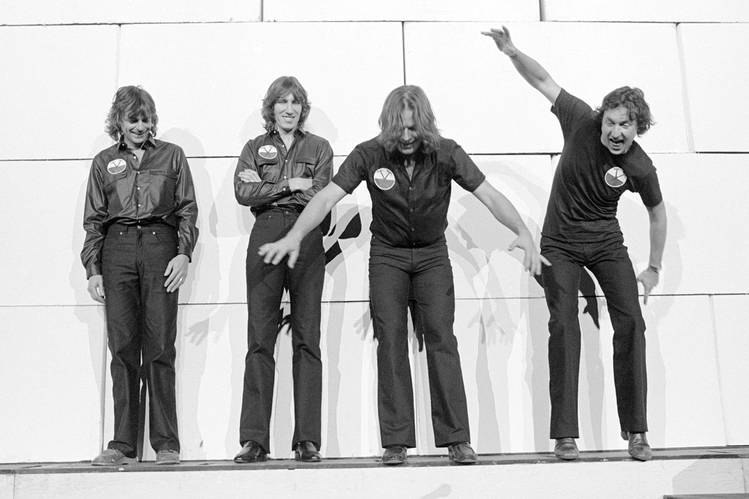
After the album was completed, Pink Floyd went on tour and performed the album in its entirety. So the tour included nothing but the music from The Wall. An unprecedented solution and I can’t think of any band with a long career that would have devoted an entire tour to the music of their latest album. I think Yes tried it on the Tales From Topographic Oceans tour, but in the end had to submit and play older music as well.
Of course, The Wall tour was exceptional in many other ways. It was a totally extraordinary theatrical rock show where a high wall was actually built between the audience and the band. As well as the wall, the gigs featured many other props, such as huge dummies designed by illustrator Gerald Scarfe and huge bombers roaring over the audience. The production was expensive and made financially challenging by the fact that Waters refused to perform in stadiums, which he considered ”inhumane” places to present art. The Wall was only performed in arenas that drew around 15 000 people. Performing for such ’small’ audiences was an expensive business and in the end Pink Floyd lost out on a tour that included 31 concerts.
Premiered in Cannes in May 1982, the film of the The Wall, called Pink Floyd – The Wall, was the last part of Waters’ grand plan after the album and tour. Alan Parker (who had made many important films since The Wall), who had excelled in advertising, was hired as director and Waters was originally to play the lead role. After some screen tests, Waters realised that he couldn’t do everything and Bob Geldof of the punk band Boomtown Rats was cast as Pink.
Waters and Parker’s visions clashed along the way and the two alphas clashed so furiously at times that both have described the filming as hellish. And in the end, neither maestro was entirely happy with the end result. And while The Wall cannot be called a masterpiece, it is a surprisingly successful adaptation of Waters’ story. The film’s strengths are its rather hallucinatory touch and its strong visuals. And, of course, the music of Pink Floyd. In fact, The Wall could be described as the best feature-length music video of all time. There may not be much competition in the series (that Nightwish film… ugh…), but the characterisation is still meant more as a compliment than a rebuke!
At the heart of The Wall phenomenon is, of course, the original album. The Wall is an almost bottomless treasure trove of musical and lyrical detail. Of course, not all the moments on the double album are up to the level of Pink Floyd’s greatest moments, but the hit rate is still surprisingly high. The Wall is one of the finest double albums in rock history.
The progressive rock of the 2000s in particular has produced an almost endless stream of massive concept albums. Without exception, however, their bloated and vacuous themes have not come close to the timelessness of The Wall or Waters’ clever way of interweaving many different themes into one (relatively) coherent narrative. Another of The Wall’s strengths is its extreme personal nature. It draws strength from Waters’ own conflicted and disturbed personality, rather than remaining a hollow narrative.
Read also: Pink Floyd – The Final Cut (1983)
When it was released, The Wall received a mixed reception from critics, but the general public fell in love with the album. All the old space cadets who had been following Pink Floyd’s career for years might not have liked The Wall’s new, snappier and in a way more pop-like expression, but the sales figures were not affected by these purists’ quibbling: the expensive double vinyl sold millions of copies in a few months and today sales are estimated to be somewhere around 30 million. The Pink Floyd organisation’s money troubles were over.
The Wall was not a short-lived phenomenon either, and new generations have rediscovered the album over the decades. For a young audience, the album offers a gripping surface, especially with its angry angsty story that is nevertheless told in a very musical way. Mature listeners, on the other hand, can experience strong feelings of identification and understanding with the way Waters describes human frailties and the darker sides of the psyche. Despite the fact that everything is done with rather caricatured and big brush strokes. Roger Waters himself has also worked hard to keep his epic relevant. In 1990, after the fall of the Berlin Wall, Waters performed the work at a charity concert to an audience of over 350,0000 people. In 2010, Waters also organised a hugely successful arena tour in which The Wall was performed with the aid of modern technology. On the tour, Waters used the visual aspect of the show to emphasise its political side in particular, bringing it in many ways to bear on the issues of the day, at times brilliantly and always with at least an interesting polemic.
However, the success of The Wall did not bring Pink Floyd back together. Pink experienced a kind of catharsis and perhaps even salvation at the end of The Wall, but Roger Waters was not ready to tear down his own wall. Pink Floyd was now completely in Waters’ hands. Keyboardist Wright had been cast off on permanent leave to a Greek island, and his star guitarist Gilmour and his Ferrari-collecting, insecure drummer Mason would have to content themselves with their roles in the gilded cage of rock stardom as sheep obeying orders and Waters as a dog, commanding them at will.
Best tracks: ”In the Flesh?” ”Mother”, ”Empty Spaces”, ”Hey You”, ”Nobody Home”, Comfortably Numb”, ”In The Flesh”, ”Run Like Hell”, ”Waiting For The Worms”
Author: JANNE YLIRUUSI
Tracks
Side A
- ”In the Flesh?” 3:16
- ”The Thin Ice” 2:27
- ”Another Brick in the Wall, Part 1” 3:11
- ”The Happiest Days of Our Lives” 1:46
- ”Another Brick in the Wall, Part 2” 3:59
- ”Mother”
Side B
- ”Goodbye Blue Sky” 2:45
- ”Empty Spaces” 2:10
- ”Young Lust” (Waters, Gilmour) 3:25
- ”One of My Turns” 3:41
- ”Don’t Leave Me Now” 4:08
- ”Another Brick in the Wall, Part 3” 1:18
- ”Goodbye Cruel World” 1:16
Side C
- ”Hey You” 4:40
- ”Is There Anybody Out There?” 2:44
- ”Nobody Home” 3:26
- ”Vera” 1:35
- ”Bring the Boys Back Home” 1:21
- ”Comfortably Numb” (writers: Gilmour, Waters) 6:23
Side D
- ”The Show Must Go On” 1:36
- ”In the Flesh” 4:15
- ”Run Like Hell” (writers: Gilmour, Waters) 4:20
- ”Waiting for the Worms” 4:04
- ”Stop” 0:30
- ”The Trial” (writers: Waters, Bob Ezrin) 5:13
- ”Outside the Wall” 1:41
Producers: Bob Ezrin, David Gilmour, James Guthrie, Roger Waters
Label: Harvest / Columbia

 Pienemmät Purot
Jätä kommentti