
Figures is the fourth studio album by Belgian artist Aksak Maboul, founded in 1977.
Aksak Maboul is a band whose four albums are all quite different from each other. Their debut Onze danses pour combattre la migraine (1977) was a strange and absurd album full of short, playful songs. That album was still a bit uneven and frustrating as a whole, but with their next album Aksak Maboul really hit the jackpot. With 1980’s Un peu de l’âme des bandits, former Henry Cow members Fred Frith on guitar and Chris Cutler on drums joined the band. The result was an album of highly original and complex music that is one of the brightest gems of avant-prog.
However, Bandits remained Aksak Maboul’s last album for a long time. The band’s main man, multi-instrumentalist Marc Hollander, began touring with Belgian new wave band The Honeymoon Killers and recording pop songs with the aforementioned band’s vocalist Véronique Vincent (Hollaneder and Vincent later became a married couple). The songs were to have been Aksak Maboul’s third album, but the project was abandoned and Hollander concentrated on running his experimental music label Crammed for 30 years.
Read also:
- Review: A.W. Yrjänä – Eidolon (2026)
- Review: Rush – Roll The Bones (1991)
- Review: David Sylvian – Gone To Earth (1986)
- Review: David Bowie – Low (1977)
- Levyarvio: A.W. Yrjänä – Eidolon (2026)
- Review: Khatsaturjan – Monologue Of Chronos (2026)
- Review: Yes – Going For The One (1977)
- Levyarvio: Echolyn – Mei (2002)
- Review: Island – Pictures (1977)
The album project started by Hollander and Vincent in the first half of the 80s was finally revived in 2014 and would be released, with some finishing touches, as Aksak Maboul’s third album under the title Ex-futur album. The experimental, Stereolab-like pop of the Ex-futur album was a far cry from the style of the band’s first two albums, but there is some elusive similarity. The Ex-futur album was well received and Hollander decided to make an album of all-new Aksak Maboul music. Hollander has stated that his aim with Figures is to combine the different genres of the first three albums.
Figures is the first album of all-new Aksak Maboul music in almost four decades and not surprisingly Hollander had accumulated a large number of songs over the years as Figures is a double album.
Divided into two CDs (or two vinyls), the album is 75 minutes long. In CD format the material could have fit on one disc, but apparently Hollander is of the same opinion as I am, i.e. 40 minutes is the optimum amount of music to enjoy at once. I have a habit of listening to albums in their entirety, but I’ve given myself enough leeway here to listen to double albums one disc at a time.
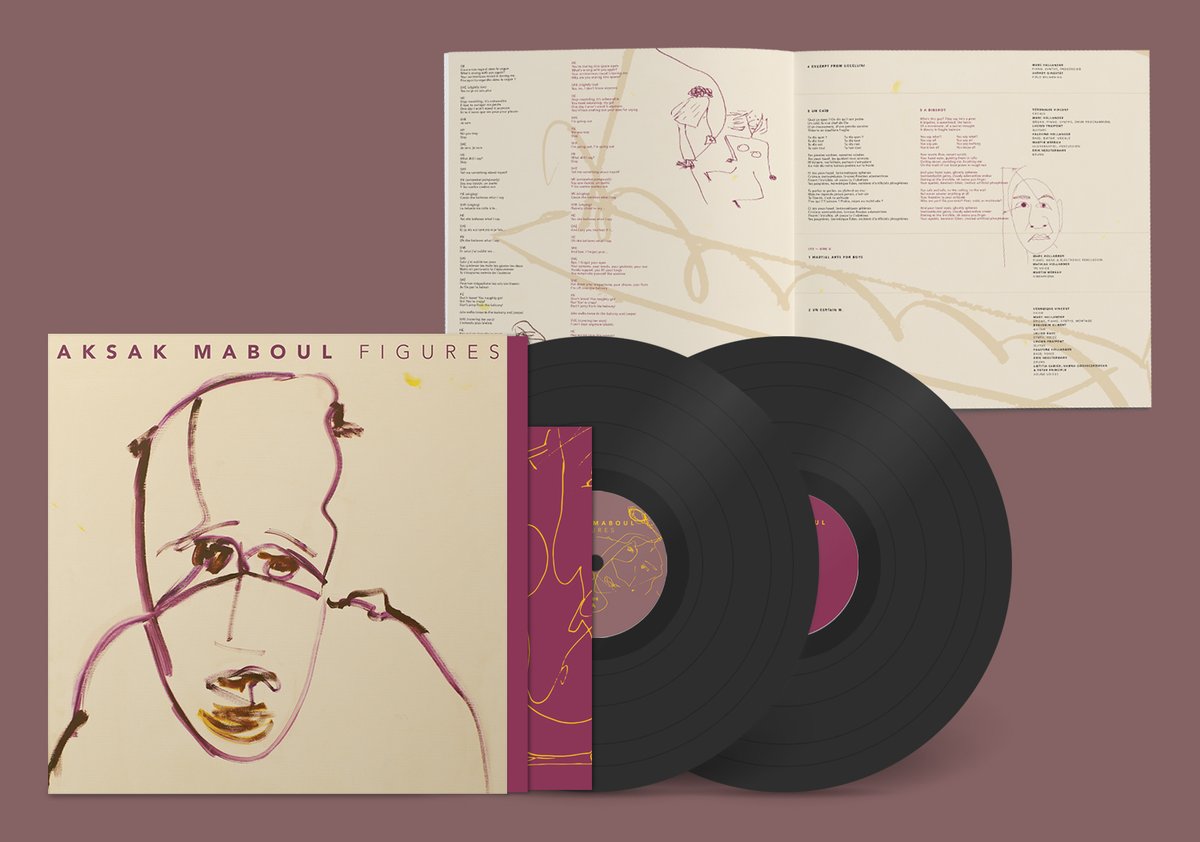
There are 11 tracks on both Figures albums, with durations ranging from half a minute to just over eight minutes. There are many short vignette-like short interludes between the ’real’ songs, somewhat reminiscent of Brian Eno (think his ”pop” albums of the seventies). I’m not usually very keen on such interludes, but on Figures they blend in quite nicely.
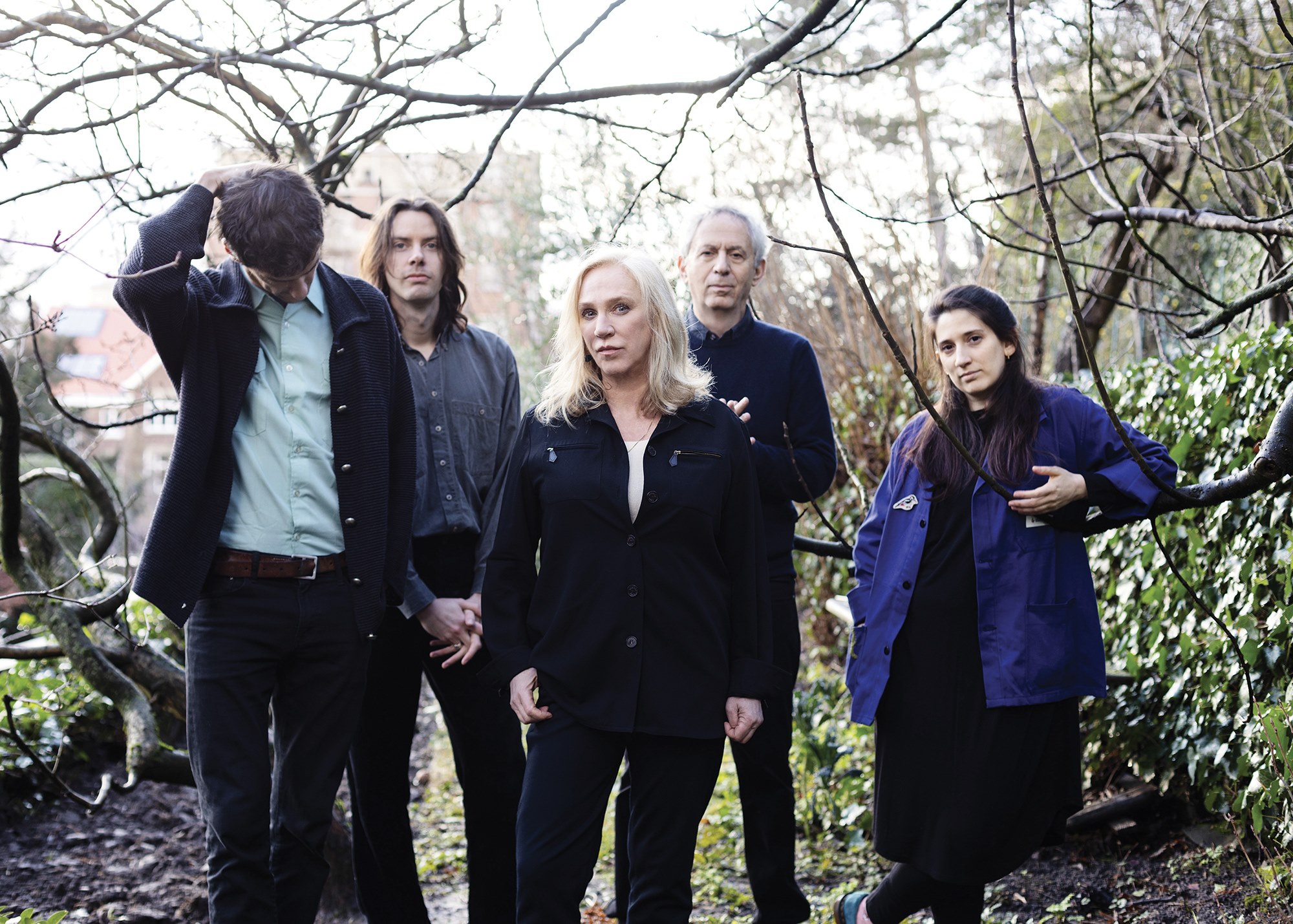
From the beginning, Aksak Maboul’s line-up has lived strongly from album to album, with Marc Hollander as the only unifying factor. For Figures he has assembled yet another completely new line-up consisting of younger musicians Lucien Fraipont (guitar), Erik Heestermans (drums) Faustine Hollander (backing vocals, bass, guitar) who I assume is Hollander’s daughter. Vocals and lyrics are still handled, as on the Ex-Futur album, by Véronique Vincent. The band’s previous line-up includes Fred Frith and Michel Berckmans (Univers Zero), who can be heard on guitar or viola on several songs and Berckmans on bassoon on a couple of tracks. The album also features a few other guests on vibraphone, clarinet and other instruments. A few members of Aquaserge also play on the album. Hollander himself plays synthesizers, clarinet, piano, saxophone, guitar and does the drum machine programming.
The Roland 808 drum machine from the early 80s plays a central role in many of the songs. Fortunately, it is almost always accompanied by real drums or percussion. However, the drum machine defines the rhythm of the album a bit too much and a more energetic loosening up in that department would have done the album good. Overall, the drum machines combined with the other varied instrumentation give the album an exciting retro-futuristic vibe. Figures sounds like something from the 80s, but the kind of 80s that never really happened, but could have if pop music had gone in a slightly different direction.
Instead of a serious avant-prog, Figures is more of a mischievously eye-catching avant-pop. Much of Figures’ music is good-humoured, effervescent pop music, but always with something a little off-kilter and strange. The pop structures are by no means slavishly followed and the arrangements, with their horns and bells and whistles, are something quite different from what you’re used to hearing in top-40 music. Figures’ song material is of high quality, but in some ways perhaps a little too similar in style. However, there are a few special diamonds that stand out among the consistent quality of the album.
One of them is the thrillingly driving ”Dramuscule”. In it, playful synthesizers collide with tastefully jagged saxophone tones. The song’s vocals begin as a spoken dialogue between Veronique Vincent and Marc Hollander. The dialogue is sometimes in English, sometimes in French. The conversation is sometimes quite intense. Eventually the speech becomes a song and the song becomes faster and faster. Berckman’s bassoon also plays a nice little cameo role in the song (Berckmans’ best moment is in the song ”Fatrasie pulvérisée” where he plays a quite delightfully lyrical, and unfortunately short, bassoon solo). Of all the songs on the album, ”Dramascule” is perhaps the most successful in Hollander’s aim to bring together the different sides of Aksak Maboul.
The most addictive part of the album is ”Histoires de fous” with its Arabic-tinged organ texture and twee sound, which is a real treat to listen to. The upbeat and rather straightforward pop song (with a few tasty twists, of course) ”Un Caïd” is also an effective piece of pop and Vincent’s lilting vocals are at their best. Hollander’s synthesizer work also impresses.
”C’est Charlesin”, ”Taciturne”, ”Silhouttes” and ”Spleenétique” are also among the album’s highlights. In ”C’est Charles”, the supple, meandering synthesizer riff and the closing, emphatic recitative-like co-song by Vincent and Hollander are pleasing. ’Taciturne’ features heavy pounding drums and Vincent’s rhythmically emphatic chorus with a wildly atonal electric guitar in the background. ”Silhouettes” is a modern chanson with a relatively low key and beautiful lead vocals by Vincent, nicely spiced up by Frith’s alto violin and Martin Méreau’s vibraphone. ”Spleenétique” begins with bouncing programmed rhythms, bursting electric piano patterns and Vincent’s commanding vocals, building up an intensity that is initially unleashed by the bursts of saxophone and then, after a brief respite towards the end of the track, we hear the wildest and most edgy electric guitar soloing on the album from Lucien Fraipont.
Figures ends with the longest song on the album, the eight-minute-plus ”Tout A Une Fin”. In ”Tout A Une Fin”, Aksak Maboul sounds more like Aquaserge than ever. Closing the circle: Aquaserge is probably Aksak Maboul’s most obvious disciple and now the original is taking inspiration from the juniors? An interesting song in any case. I particularly like the way the bass clarinet builds a rhythmic base with the bass guitar. Unfortunately, the steady beat of the drum machine is too dominant in this track too. The latter half of the track presents a Philipglass-like synthesizer pulsation, the rhythmic energy building as the real drums finally come in and the organ hits with a stabbing impact. All in all, a great song that could have been even better if the drum machine had been left to play a smaller role. And this would have been the perfect song to bring Chris Cutler along for a visit and bring perhaps a hint of surprise to the rhythm section.
Figures succeeds quite well in Hollander’s aim to combine the different styles of Aksak Maboul’s albums. It’s a charming mix of upbeat pop and avant-garde experimental joy. Although I would have liked to have heard something a little more radical and brash, like Bandits, Figures is an elegant package of experimental pop music and a tasty summary of Aksak Maboul’s original music.
Best songs: ’C’est Charles’, ’Histoires de fous’, ’Dramuscule’, ’Taciturne’, ’Silhouettes’, ’Tout a une fin’, ’Un Caïd’
 Pienemmät Purot
Jätä kommentti