
Lives Outgrown is Beth Gibbons’ first solo album.
Born in 1965, Beth Gibbons is best known for the Bristol-based Portishead, formed in 1991, which, together with Massive Attack, put triphop on the world map. After their first two albums, Portishead took a long break and since their third album, Third, in 2008, the band has gone quiet again.
Gibbons’ recording career has not been particularly busy during Portishead’s hiatus. In 2002, Gibbons made an album called Out Of Season with Rustin Man, aka Paul Webb, formerly of Talk Talk on bass. In 2019, Gibbons surprised everyone by singing on Henryk Górecki’s Symphony No. 3 (Symphony of Sorrowful Songs). The orchestra was conducted by the legendary Polish composer Krzysztof Penderecki.
Out Of Season already gave a taste of what Gibbons’ very own music could sound like and this first proper solo album builds largely on that. On Out Of Season, however, all the music was co-written by Gibbons and Webb, but now on Lives Outgrown Gibbons is responsible for most of the compositions alone.
Even though it is a solo album, Gibbons is not without support. Lives Outgrown is produced by James Ford, who has produced Chrome Hoof, Depeche Mode and Florence And The Machine, among others. Multi-instrumentalist Ford also plays a wide range of instruments on the album. Another notable collaborator is Lee Harris, who not only plays drums and other percussion on the album but also co-wrote four of the tracks with Gibbons.
Let’s stop for a moment in Harris. Like Paul Webb, Lee Harris is best known for his art rock band Talk Talk. On the face of it, it’s surprising that Gibbons has now worked with two former Talk Talk members (unfortunately, the band’s leading man Mark Hollis has died so we can’t expect a Gibbons/Hollins album…). On reflection, however, this is not so surprising as Gibbons’ links with Harris and Webb predate Portishead. Gibbons was due to join Harris and Webb’s Talk Talk successor band .O.rang, but then Portishead’s debut was unexpectedly a massive hit and there was no time for the collaboration. Gibbons had, however, already made a guest appearance on .O.rang’s debut Herd Of Instinct (2004).
And then back to Lives Outgrown.
From producer Ford’s credits, one would imagine that after the relatively organic Out Of Season, Gibbons would head in a more electronic direction with Lives Outgrown. However, this assumption would be wrong as the album is on the contrary even more acoustic and again has a very organic sound. You could almost imagine it was a 60’s record, but there is no forced retro styling in the sounds of the album. Rather, one could clichédly say that Lives Outgrown sounds timeless.
Read also: Review: Sleepytime Gorilla Museum – Of The Last Human Being (2024)
The sound of Lives Outgrown is dark but inviting, like a warm summer night. Besides the overall soundscape, the first thing I noticed about the album was the way it used drums. Drummer Harris eschews the use of cymbals and even snare and instead conjures up a tribal and downright ancient pagan atmosphere, especially with the tom drums. When this restrained but emphatic rhythm is combined with the eerily wavering strings, the result is at times quite hypnotic.
On the other hand, the hypnotic nature of Live Outgrown is not a case of krautrock (although perhaps influences are taken from that direction as well) jamming as the arrangements are richly detailed. Producer Ford in particular makes the most of his multi-instrumentalism, playing an astonishing variety of instruments from double bass, trumpet and trombone to mellotron. On the other hand, this is not an album of virtuoso performances, but often the individual instruments act as effects; a little detail here and there to create atmosphere.
There are small, clever arrangements that will keep you engaged for a long time. Sometimes you can hear an Italo-Western whistle (”Lost Changes”, sometimes a children’s choir is brought up to support the music, bringing to mind Talk Talk’s classic song ”Happiness Is Easy”. At times, underneath the melodic surface layer, atonal sounds and children’s shouts swirl, adding to the restless atmosphere, as in ”Rewind” (the sound of the rusty swing in the last song is also positively disturbing!). Even the old triphop sound rears its head in ”Reaching Out”. However, the effect is created entirely without any programmed sequences or samples, using acoustic percussion and rhythmically buzzing brass. Acoustic triphop? Awesome!
The strings are used a lot on the album and the arrangements (which are usually done by Gibbons and Ford) are also stylish. The strings often play with a restrained menace, simmering in the background, but sometimes with a violent dramatic edge. Alongside the actual string section, Raven Bush (Kate Bush’s nephew), also known from prog band Syd Arthur, plays a more solistic role. Bush plays various violins on almost every track on the album, and on ”For Sale” he even gets to play a nice little solo with North African scales.
Thanks to their rich arrangements, almost every composition on the album feels far more epic than its duration. I was surprised to discover, after listening to the album a few times, that the songs only last between three and six minutes.
Cos the burden of life just won’t leave us alone
And the times never right when you’re losing a soul
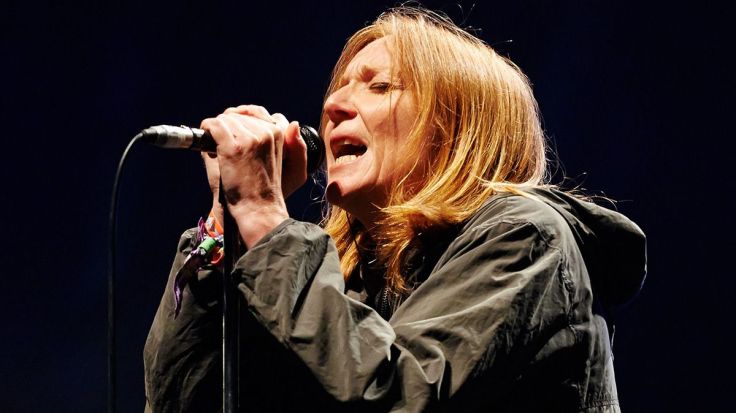
But instead of clever arrangements and successful production, the focus is on Beth Gibbons herself. Her singing is still very recognisable and skilful. On the old Portishead albums her voice often had a certain tense anguish (in a positive way), but now it is somehow gentler and more mellow. There’s also a new roughness to his voice that comes with age and sounds very charismatic and natural. Gibbons’ lyrics seem to be very much about letting things go. Gibbons reflects on life from a broad perspective; whether the life lived has been a good one, what kind of person she has been and will be. Gibbons’ voice and lyrics reflect a life lived. If Portishead’s music was like something set against the backdrop of a super-stylish agent thriller, Lives Outgrown has a more everyday feel. It has the drama of everyday life in all its richness.
Reality fails me, it takes me so close
I reach out over can’t take anymore
Cos my heart was tired and worn
Read also
- Review: Camel – Moonmadness (1976)
- Review: Gong – Gazeuse! (1976)
- Review: Mike Johnson – The Gardens Of Loss (2026)
- Levyarvio: Mike Johnson – The Gardens Of Loss (2026)
- Levyarvio: Led Zeppelin – Presence (1976)
- Vuosi vuodelta : Parhaat levyt 2000 – Sijat 11-20
Compared to Out Of Season, Lives Outgrown is more sophisticated, darker in tone and much better produced. Out Of Season’s wandering folk-jazz tones have moved on to more sharply striking chamber pop, although folk and jazz are still important building blocks. Out Of Season felt like a demo or sketch and Lives Outgrown as if it is the finished and final work of art.
Few artists release their solo debut at 59 and even fewer start with a masterpiece. Gibbons did it. I can’t wait for her next move.
Best tracks ”Tell Me Who You Are Today”, ”Burden Of Life”, ”Rewind, ”Beyond The Sun”
Author: JANNE YLIRUUSI
Read also: Levyarvio: Peter Gabriel – i/o (2023)riel – i/o (2023)
Tracks
- ”Tell Me Who You Are Today” 3:55
- ”Floating on a Moment” 5:26
- ”Burden of Life” 3:35
- ”Lost Changes” 5:41
- ”Rewind” 4:47
- ”Reaching Out” 4:15
- ”Oceans” 3:43
- ”For Sale” 4:25
- ”Beyond the Sun” 3:54
- ”Whispering Love” 6:10
Beth Gibbons – vocals (all tracks), backing vocals (tracks 1–9), acoustic guitar (1, 3–5, 9), guitar (2), vocoder (10) Lee Harris – drums (tracks 1–9), percussion (1, 3–6, 9, 10); daf, Mellotron (1); whistle (4), field recordings (10) James Ford – vibraphone (tracks 1, 2, 4), double bass (1, 2), piano (1, 3, 4, 6, 9), harmonium (1, 3, 9, 10), backing vocals (1, 5); Mellotron, spoons (1); cello (2–4, 6, 9), percussion (2, 4–9), bass (2, 4, 5, 7, 9), acoustic guitar (2, 4, 5, 9, 10), baritone guitar (2, 4, 5), flute (2, 4, 6–8), recorders (2, 4, 6, 7, 9), Hammond organ (2, 4), hammered dulcimer (2, 5), drums (2, 7, 8), pedal steel (2), Farfisa (3, 5, 9), dulcimer (4, 9, 10), electric guitars (4, 9); Solina, additional drums (4), bass clarinet (5, 6, 9, 10), feedback (5), guitars (6, 7); Chinese lute, synth piano, marching snare, trumpet, trombone (6); bowed saw (7, 9), EBow dulcimer (7), violin drones, acoustic bass (8, 10); 12-string acoustic guitar, resonator guitars (8); fuzz flute, violin, singing tubes (9); toms (10) Orchestrate – strings, woodwinds (tracks 1, 3); brass (1) Senab Adekunle – backing vocals (tracks 2, 4–6) Gracie – backing vocals (track 2), ”instrumental ooh/hum” (10) Herbie – backing vocals (track 2) Roe – backing vocals (track 2) Raven Bush – violin (tracks 3–8, 10), viola (3–6), baritone viola (7, 8, 10), violin solo (8) William Rees – noise guitar (track 4) Robbie McIntosh – acoustic guitar (track 4) Howard Jacobs – bass saxophone, tenor saxophone, clarinets, percussion, frame drum, mizmar (track 6)
 Pienemmät Purot
Jätä kommentti