The author’s picks for the best albums of 1975, ranked 31-42.
In the Year by Year series, I’ll go through my favourite albums from 1969 to the present day.
31. Camel: The Snow Goose (UK) ****
32. Bob Dylan: Blood On The Tracks (US) ****
33. John Abercrombie, Dave Holland & Jack DeJohnette: Gateway (US) ****
34. Il Volo: Essere o non essere? Essere, essere, essere! (IT) ****
35. Steve Hackett: Voyage Of The Acolyte (UK) ****
36. Tangerine Dream: Ricochet (DE) ****
37. Harmonia: Deluxe (DE) ****
38. Fripp & Eno: Evening Star (UK) ****
39. John Abercrombie : Timeless (US) ****
40. Miles Davis : Agharta (US) ****
41. McCoy Tyner : Trident (US) ****
42. Pavlov’s Dog : Pampered Menial (US) ****
See the best albums of 1974 here.
31. Camel: The Snow Goose
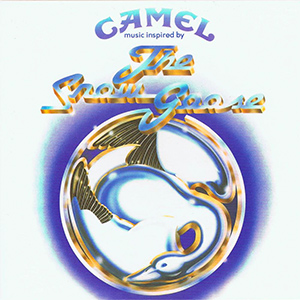
The Snow Goose is Camel’s third studio album.
Camel’s excellent album Mirage from the previous year boosted the band’s stock slightly, but the group was still stuck in the C-series of progressive rock in terms of popularity. Far behind the yeses, elps and pinkfloyds.
What’s next? Camel had yet to look at the concept album card and after considering various options (including Herman Hesse Siddhartha was considered), the band decided to adapt Paul Callico ’s novella The Snow Goose: A Story of Dunkirk. However, the rights to use Callico’s lyrics directly were denied (for the same reason the full official title of the album is The Music Inspired By The Snow Goose) and the band decided to make the album entirely instrumental…
32. Bob Dylan: Blood On The Tracks
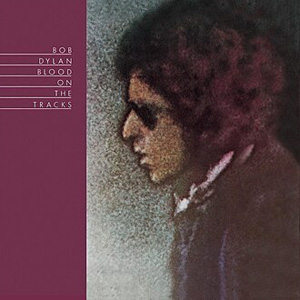
Blood On The Tracks is Bob Dylan’s 15th studio album.
For me, many of Dylan’s albums have been more like collections of individual highlights than fully coherent entities. Blood On The Tracks, however, hits the nail on the head in terms of Dylan at his best. I have enormous respect for Dylan, and over the years I have accumulated a respectable number of his albums on my shelf, but often his long, almost recitative-like songs seem to stretch around musically thin ideas. The power of his lyrics is undeniable, but it doesn’t always carry an entire album.
Blood On The Tracks manages to avoid this pitfall remarkably well. The songs are compact – only two exceed the seven-minute mark, and even the longest track does not stretch to insurmountable lengths. This makes the album unusually airy and focused: the stories breathe, but they don’t become tedious, muddled word salad. The song structures are tight, and Dylan seems to use their limitations to his advantage.
It also includes some of Dylan’s most beautiful melodies. The melancholic ”Simple Twist of Fate,” carried almost entirely by acoustic guitar, is a perfect example of this—the song’s calmness, oscillating between melancholy and resignation, is one of the purest sighs on the album. At the other extreme is ”Idiot Wind,” one of Dylan’s most straightforward and angry outbursts. Its furious energy, bitter tone, and almost spitting vocal style form a perfect contrast to the quieter moments on the album. This tension is a key reason why the album works so well: it is not just a breakup album, but a full-fledged emotional arc in which despair, tenderness, and aggression alternate without excessive theatricality.
Although the album is considered one of Dylan’s most personal, it also has a charming tone that explores the boundary between fiction and reality. The stories seem to draw on real experiences, but their form varies—perspectives shift, timelines blur, and the songs unfold like memories that cannot be neatly arranged in chronological order. This instability serves the album well: it is at once intimate and distant, like an attempt to say something honest without saying everything.
Blood On The Tracks is ultimately one of those few Dylan albums that I return to repeatedly when I want to hear him at his best—concise, melodically strong, deeply human, and at the same time sharp as a razor. It is one of the rare occasions when his storytelling and musical form come together almost perfectly. The conceptual clarity and emotional intensity of the album make it a classic, but above all, it reminds us how powerful Dylan can be when he gives his stories clear musical contours.
Best tracks: ”Tangled Up In Blue”, ”Simple Twist Of Fate”. ”Idiot Wind”, ”Shelter From The Storm”
33. John Abercrombie, Dave Holland & Jack DeJohnette: Gateway

1975 was a good year for American guitarist John Abercrombie (1944–2017). Not only did he release his first solo album, Timeless, which he made with drummer Jack DeJohnette and keyboardist Jan Hammer, but he also released the debut album of his band Gateway.
The debut album by Gateway is often credited to the trio, but it was actually a band formed by Abercrombie, drummer DeJohnette, and bassist Dave Holland. The trio made two Gateway albums in the 1970s and continued to collaborate under the same name in the 1990s.
Whereas Timeless was, in a way, Abercrombie’s answer to the furious jazz-rock of the Mahavishnu Orchestra, Gateway is considerably more acoustic and lighter in tone. It could also be described as a more typical ECM release than Timeless. That said, Gateway does have more bite than the average ECM album.
Abercrombie plays the electric guitar with ease, mostly with a bright ”jazz sound,” but the rhythm section plays completely acoustically. Holland, who rose to prominence in Miles Davis’ band in the late 1960s, plays his double bass with great style, and DeJohnette plays alongside the others in his familiar light-handed style, but still plays a lot and, when necessary, very intensely.
The trio’s ensemble playing is truly delightful at its best. The obvious musical chemistry between Holland and DeJohnette in particular is a joy to hear. Abercrombie’s guitar playing doesn’t always seem to integrate as smoothly with the rest of the music, but on the other hand, this adds a kind of positive tension to the songs. In the last song, ”Sorcery I,” Abercrombie gets carried away with a rather tasty distorted sound, and there could have been a little more of this sprinkled throughout the album.
Most of the tracks are credited to Dave Holland, but in reality, improvisation probably plays a large part. The Gateway album successfully balances improvised experimental jazz and composed jazz-rock.
Best tracks: ”Backwoods Song”, “Sorcery I”
34. Il Volo: Essere o non essere? Essere, essere, essere!

Essere o non essere? Essere, essere, essere! is the second studio album by Italian band Il Volo, formed in 1974.
Il Volon eponymous debut was released in 1974, and this second album, Essere o non essere?, is quite similar to it. The difference is that on this album, the vocals have been almost completely omitted. A few songs feature wordless vocals to spice up the instrumental jamming, and only one song has lyrics. The music works well as instrumental, and you probably wouldn’t even miss the vocals if you hadn’t heard Il Volo’s debut album. I personally enjoyed the more vocal-heavy debut, so I think that a few more sung songs would have been good for Essere o non essere?.
Like their debut album, Essere o non essere? is more concise and simpler sounding than typical Italo prog. Tasty grooves play a bigger role than complex song structures or sudden changes in direction, unlike in Italian prog. At times, the album also ventures into jazzy moods.
The rich, rumbling bass sound once again plays a central role and, for me, is a key part of Il Volo’s appeal. Il Volo skillfully plays with the contrast between the low, melodic bass guitar and the high-pitched electric piano. The combination is absolutely delightful.
I would have liked to see a longer career for the unique Il Volo, but unfortunately Essere o non essere? Essere, essere, essere! was their last studio album.
Best tracks: “Gente in amore”, “Essere”
35. Steve Hackett: Voyage Of The Acolyte

Voyage Of The Acolyte is the first solo album by Genesis guitarist Steve Hackett.
Steve Hackett was somewhat frustrated with his role in Genesis, as he felt that his compositions were not really getting through the band’s filter. Instead of Hackett’s songs, it was especially keyboardist Tony Banks’ compositions that got more space on Genesis’ albums.
However, Hackett was not yet ready to leave the band, so the logical solution to the problem was, of course, to make a solo album. In fact, Voyage Of The Acolyte is not only Hackett’s first solo album, but also the first solo album ever made by a Genesis musician. Even Peter Gabriel, who had just left the band, would have to wait a few more years before making his solo debut…
36. Tangerine Dream: Ricochet

Released in December 1975, Ricochet is German band Tangerine Dream’s first live album and their seventh recording overall.
In the case of Tangerine Dream, the terms ”live album” and ”studio album” are somewhat fluid concepts, as many of the band’s so-called studio albums were also recorded live and then pieced together in the studio. On the other hand, live albums are also often patched together and compiled from a huge amount of recorded material, and the songs that end up on the album are not at all what was originally heard live. Ricochet was also compiled from 40 hours of recorded material.
Ricochet consists of two long tracks, each half the length of the album, as was often the case with Tangerine Dream albums at that time.
Ricochet is clearly the most energetic of the band’s albums to date and uses percussion (both programmed and hand-played) much more than before. Edgar Froese also plays electric guitar at times. The result is more rhythmic and rocking music, and it can actually be said that Tangerine Dream found their own ”electronic rock” format on this album, which the band then repeated with varying success for a long time to come.
Ricochet is a great start to Tangerine Dream’s ”rock era.”
Best track “Ricochet Part One”
37. Harmonia: Deluxe

Deluxe is the second studio album by German band Harmonia, founded in 1973.
Harmonia consists of Neu! guitarist Michael Rother and Cluster members Hans-Joachim Roedelius and Dieter Moebius, both of whom mainly play keyboards on the album and sing on a few tracks. The quartet is completed by Guru Guru drummer Mani Neumaier. Harmonia can therefore be considered a kind of krautrock supergroup.
I don’t know if the band’s intention was to deliberately make ”commercial” krautrock, but at least Deluxe’s music is considerably more accessible than your average krautrock. Deluxe’s music is downright friendly, and in a way, the album’s title is very descriptive. Deluxe’s sound is richly luxurious, yet at the same time kraut-like, sparse, and minimalistic.
Deluxe is also less surprisingly reminiscent of Neu!’s music and, on the other hand, especially Cluster’s 1974 album Zuckerzeit. Deluxe just sounds less piercing and aggressive than, say, the album Neu! ’75 and is less experimental than the aforementioned Zuckerzeit. And perhaps there is also a hint of the more straightforward and populist influence of Kraftwerk? All this may make Deluxe sound like some kind of impotent and watered-down mishmash, but on the contrary, I think it’s a very successful mix and manages to create an interesting krautpop hybrid from its influences.
As far as I understand, Deluxe was not a big commercial success (most krautrock was not very successful, especially in Germany), but it has nevertheless been an influential album. For example, David Bowie’s late 70s ”Berlin Trilogy” would probably sound very different without the influence of Harmonia. In particular, the song ”Monza (Rauf and runter)” is strongly reminiscent of some of the songs Bowie wrote just a few years later. And the hypnotic proto-synthpop vibes of the ten-minute ”Walky Talky” have certainly inspired some of Steve Hillage’s songs.
Best tracks: “Walky Talky”, “Golum”
38. Fripp & Eno: Evening Star

Evening Star is the second studio album by the duo formed by legendary guitarist Robert Fripp, best known from King Crimson, and studio wizard Brian Eno.
Fripp & Eno’s 1973 debut album (No Pussyfooting) is often considered a kind of proto-ambient, and of course it is. However, (No Pussyfooting) is a little too sharp and ”disturbing” to be considered true ambient music. (No Pussyfooting) does not really lend itself to being background music.
Evening Star, on the other hand, is a slightly more relaxed album than its predecessor and in many ways better fits the definition of ambient music.
Fortunately, Evening Star is not completely toothless background music. The album contains many moments that demand active listening or captivate the listener with their sheer magic. One of the finest of these moments is Fripp’s lyrical guitar solo that introduces the title track, accompanied by a bell-like sound in the background. The 8-minute song ”Evening Star” is simple but incredibly beautiful music.
The 28-minute “An Index Of Metals,” which fills the second half of the album, also challenges established definitions of ambient music. The song begins with a quiet drone and then slowly builds up Fripp’s looped guitars on top of each other. At first, the guitars sound clear, albeit a little eerie, sparkling, but then more distortion and bite are added to the guitar sounds, and the soundscape becomes more and more massive and overwhelming. Not exactly soothing music!
Evening Star is not as groundbreaking as (No Pussyfooting), but it successfully builds on the framework created by its predecessor to create truly interesting and unique musical landscapes.
Robert Fripp and Brian Eno continued to collaborate on many different projects (including David Bowie’s albums) after Evening Star, but the next actual Fripp & Eno album, The Equatorial Stars, was not released until 2004.
Best track: ”Evening Star”
39. John Abercrombie : Timeless

Timeless is the debut album by American guitarist John Abercrombie.
Timeless features two virtuosos as accompanying musicians. Mahavishnu Orchestra keyboardist Jan Hammer and Miles Davis’s drummer Jack DeJohnette (the world’s best jazz drummer!). There is no bassist in the band, but surprisingly little is missed when listening to the album, as Hammer often takes on the bassist’s duties with his synthesizer.
The album’s 12-minute opening track, ”Lungs,” composed by Jan Hammer, feels like a clear continuation of the Mahavishnu Orchestra’s fiery jazz-rock, but Abercrombie’s trio’s expression is lighter and airier. This is particularly thanks to Jack DeJohnette’s drumming, which is considerably lighter and more stylish than Billy Cobham’s pounding style. Of course, another difference is that, compared to John McLaughlin, Abercrombie mostly plays with a clean, jazz-style sound without distortion.
With the exception of ”Lungs” and the intense ”Red And Orange” (also penned by Hammer), Timeless is mainly calmer material than Mahavishnu Orchestra, even at times ambient and contemplative. This aspect is somewhat reminiscent of another ECM guitarist, Terje Rypdal. However, in my opinion, Abercrombie’s songwriting is not as sharp as Rypdal’s.
Timeless is not actually timeless, as its name suggests, but rather a prime example of the edgy jazz-rock of the mid-70s, which had not yet been watered down by the harmful influences of funk and smooth jazz.
Best tracks: “Lungs”, “Red And Orange”, “Timeless”
40. Miles Davis : Agharta
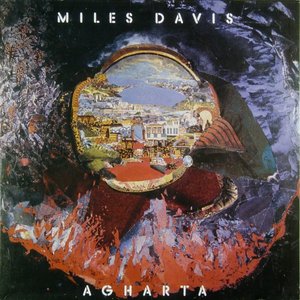
The live album Agharta was one of the last recordings of the original electric jazz-rock period of 48-year-old Miles Davis.
The 98-minute double album contains only four massive tracks, ranging from 22 to 26 minutes in length. Agharta’s music could be lazily described as jazz-rock meets krautrock.
The dark, churning music lingers and buzzes on simple riffs and grooves – at its best, hypnotically tasty; at its dullest, meaningless. At times, the band hammers away at a single chord for too long, but at least rhythmically, the music is mostly strong and interesting.
All four tracks are essentially new works that combine pre-planned and improvised material. Some excerpts from Davis’s previous albums have also been included.
At this point, Davis’ band had lost its true jazz virtuosos, and the remaining seven members (including Miles) were young musicians whose backgrounds were more in rock, soul, or funk than pure jazz.
Davis suffered from many physical ailments during this period, and his drug use had gotten out of hand. His mental state was not particularly good either. Davis’s trumpet is heard very little on the album (and often through a wah-wah effect), and the performances are certainly not among his best. Miles’s playing during this period has sometimes been maliciously described as ”leaning on the keys.” In practice, Davis acted more as a conductor during gigs at that time, directing the rest of the band’s playing.
Agharta is an interesting experiment in which Davis largely abandons melody and harmonic development in favor of rhythms. At times, the album may seem a little dull, but in the right frame of mind, it draws you in with its unique style.
Best tracks: ”Prelude (Part 2) / Maiysha”
41. McCoy Tyner : Trident

Trident is pianist McCoy Tyner’s 21st album as bandleader, including live releases.
The trio format album features a formidable lineup: alongside Tyner is drummer Elvin Jones, already familiar to the pianist, and on double bass is Ron Carter, who rose to fame in Miles Davis’ band. The entire trio is among the absolute cream of the jazz world.
The first track, ”Celestial Chant,” begins with a charming harpsichord part that briefly takes the mood in the direction of spiritual jazz or even prog, but otherwise the album is more traditional post-bop. The harpsichord and even the celesta make brief appearances in a few other tracks, but for the most part Tyner sticks to the familiar acoustic piano, which he plays with a rhythmically unique yet airy touch. Elvin Jones’ relaxed and effortlessly stylish drumming is also a joy to listen to throughout the album.
Half of the tracks on the album are Tyner’s compositions and half are jazz standards. Tyner’s own compositions are ultimately the most interesting part of the album, so it would have been nice to have more of them included.
The sound of the album is delightfully airy and at the same time crisply rhythmic – not only thanks to Tyner’s unique playing style, but also made possible by the seamless ensemble playing of the virtuoso rhythm section.
Best tracks: ”Celestial Chant”, ”Land Of The Lonely”
42. Pavlov’s Dog : Pampered Menial

Pampered Menial is Pavlov’s Dog’s debut album.
Founded in Missouri in 1972, Pavlov’s Dog plays quite unique melodic rock, with more than a hint of British prog rock influences, but also a down-to-earth rootedness – like their better-known compatriots Kansas.
The seven-piece band has a rich sound, and the usual rock instrumentation is nicely colored not only by synthesizers and Mellotron, but also by flute and violin.
However, Pavlov’s Dog’s real draw (or repellent!) is the highly distinctive singing voice of the band’s main composer and vocalist, David Surkamp. Surkamp’s helium-high voice sounds a bit like a whiny version of Geddy Lee. His vocals differ from Lee’s 70s shrieks in that Surkamp seems to sing mostly naturally within his own vocal range. Surkamp’s extreme vibrato also brings to mind Roger Chapman (Family), although Surkamp screams considerably higher. At times, his performance goes a little over the top, but for the most part I enjoy his vocals. I can well imagine that many people will disagree with me completely!
Pavlov’s Dog did not quite reach the top level with their debut album, either in terms of composition or performance, but on their next album, At The Sound Of The Bell (1975), which was released later that same year, the band improved considerably.
Pampered Menial is not an earth-shattering release, but it is a very pleasant hybrid of pop, rock, and prog. It could perhaps be considered a pioneering work of the AOR genre. Surkamp’s unique vocals ensure that Pampered Menial (fortunately) does not sink completely into the often bland mold of that genre.
Parhaat biisit: ”Julia”, ”Song Dance”, ”Of Once and Future Kings”
Author: JANNE YLIRUUSI
You can find other parts of the Year by Year series here.
 Pienemmät Purot
Fascinating list. I’ve been doing a very similar project at Vinyl Connection ( http://www.vinylconnection.com.au ). Lots of overlap!
TykkääLiked by 1 henkilö