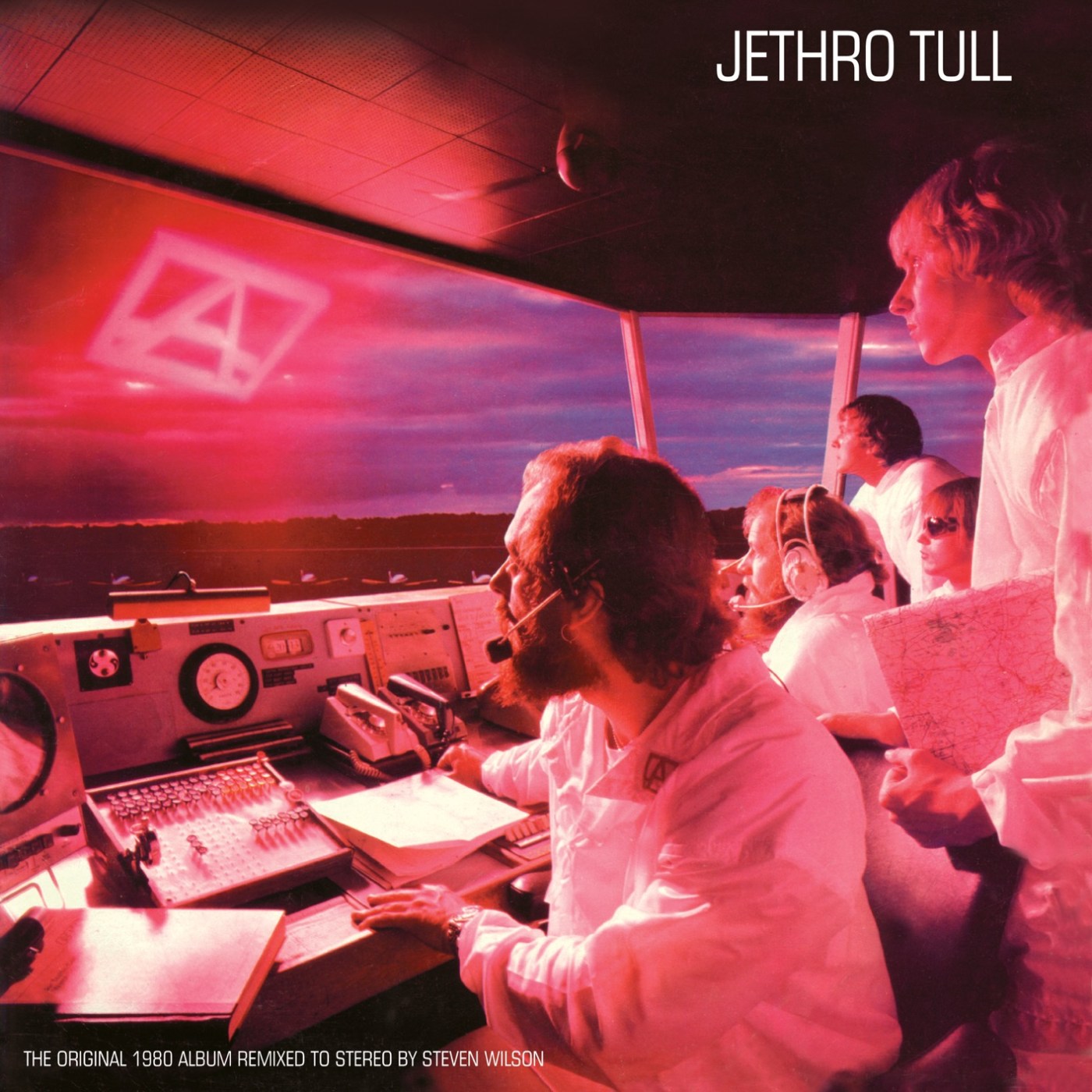
A is the 13th studio album by Jethro Tull, founded in 1967.
The late 1970s were a difficult time for Jethro Tull. The band was exhausted and despondent, which was no surprise given that bassist John Glascock died during the recording of the album Stormwatch (1979). The resulting album sounded tired, especially when compared to its excellent predecessors (Songs From A Wood and Heavy Horses). The band’s frontman, flutist/vocalist/composer Ian Anderson, realized that it was time to shake things up and try something new. Anderson decided to make his first solo album.
However, things don’t always go according to plan, even if you’re a rock star. The album A, recorded in the spring of 1980, was originally intended to be Anderson’s solo album (A for Anderson), but in the end, the record company Chrysalis persuaded Anderson to release it under the name Jethro Tull.
Anderson has said he regrets the decision. I’m not quite sure why, as the album’s content doesn’t really deviate that dramatically from the band’s usual style. Especially when you consider the kind of albums (not very good ones…) Jethro Tull released after A. Perhaps Anderson’s regret is ultimately based on how much bad blood the decision caused among the band’s former members when they suddenly found themselves unemployed and replaced by completely new musicians…
So who were the members of the new Jethro Tull?
The first musician Anderson contacted was A’s not-so-secret weapon, keyboardist/violinist Eddie Jobson, who brings a refreshing dose of virtuosity to the album. Jobson began making a name for himself in British prog circles at the age of 17 when he replaced Darryl Way in Curved Air. He then cemented his reputation with Roxy Music and especially with his own supergroup, U.K. The somewhat prima donna-like Jobson refused to join Jethro Tull, but he played with the band as a ”special guest” during the recording of the album A and for one tour.
With Jobson’s help, Jethro Tull gained its first American member when he brought along drummer Mark Crane, with whom he had just been working on his first solo album, The Green Album, when Anderson invited him to join. The young drummer had previously worked with Jean-Luc Ponty, among others, and his precise, skillful, but more economical drumming than his predecessor Barriemore Barlow brings a more modern touch to A.
In addition to Jethro Tull’s existing lineup, bassist Dave Pegg, who had previously played with the folk rock band Fairport Convention, was also invited to join the Stormwatch tour. Pegg is a reliable team player who usually does his job without excessive fanfare, but when necessary, he also has the technique to handle even the most challenging twists and turns of Anderson’s compositions. Pegg also plays the mandolin on A.
In Anderson’s original plan, there was no guitarist on the album, and Jobson’s keyboards were supposed to take on a more central role. In the end, however, he ended up asking Jethro Tull’s long-time guitarist Martin Barre to play guitar on a couple of tracks. Barre and the new band clicked so well that he ended up playing on all the tracks on the album.
A is a clear change of direction compared to the band’s previous albums. In particular, folk influences have been stripped away from the music. The songs are short and concise, with only one of them stretching over six minutes. Most of the extra frills have been neatly and decisively removed from this crisp and concise album. Fortunately, there are still a few more complex moments to be found.
The album begins with a song about the SAS special forces’ hostage rescue operation. Terrorists took 26 hostages at the Iranian embassy in London in early April-May 1980. The SAS managed to rescue all but one of the hostages. The incident, which received a lot of media attention, was a timely phenomenon, as Anderson and his musicians were rehearsing for the actual A recording sessions at the time of the dramatic events. Anderson seized the moment and quickly developed a song for the album based on the topic. ”Crossfire” begins with an all too brief intro on Jobson’s electric piano, after which Dave Pegg’s thick, slightly disco-esque pumping bass guitar provides the backbone for the song, over which Jobson’s keyboards, Anderson’s flute, and Barren’s electric guitar launch their crossfire. Anderson’s vocals sound a little tired, but otherwise ”Crossfire” is a light and pleasant little song. Perhaps a little too light for its subject matter!
The next song, ”Flyingdale Flyer,” also begins with Jobson’s keyboards. This time, they play intermittently until Anderson’s short a cappella vocal section briefly transports the mood back to the era of Songs From The Woods (1977). The vocal parts of the song, which tell of the British nuclear warning system, are a bit dull, but the rhythmic instrumental section in the middle, with Jobson’s brightly sounding keyboards, is impressive. The a cappella section returns towards the end, followed by another effective instrumental section utilizing stop-time tricks. ”Flyingdale Flyer” is a great song, but it still leaves you with the feeling that the material could have been exploited more fully. A slightly more energetic and rough interpretation might have done the song more justice.
The third track, ”Working John, Working Joe,” is the weakest offering on the album, relying too heavily on a dull chorus pattern that makes the five-minute song feel overly long. Jobson’s short synthesizer riffs and Crane’s crisp drumming do liven up the song a bit, though.
The undisputed highlight of the album is its longest track, the slightly over six-minute ”Black Sunday.” Although A’s overall sound is more synthetic than before, and thus also more polished and pop-oriented than the band’s previous albums, it does contain a few rather quirky songs, such as the rhythmically challenging ”Black Sunday,” which Anderson considers one of Jethro Tull’s most challenging songs. The song features nimble electric piano parts from Jobson and a few of his characteristic thick synthesizer bursts. Anderson and Barre also get to solo briefly, and Crane’s drumming is once again delightfully precise. Crane’s tight drum sound is pleasant to listen to throughout the album, but works particularly well on this track. ”Black Sunday” is a great song and, unfortunately, has received little attention, as it is the only A’s song that definitely belongs among the band’s classic tracks.
The two three-minute tracks that follow ”Black Sunday,” ”Protect And Survive” and ”Batteries Not Included,” don’t make much of an impression, even though they’re not bad. ”Protect And Survive” has an effective intro, and Jobson’s violin riff brings some variety to the overall sound of the album, but otherwise the song doesn’t really grab you. In ”Batteries Not Included,” Jobson succumbs to slightly corny synth sounds, and the song doesn’t really manage to inspire, or even annoy (although Anderson’s son’s spoken part in the middle of the song almost succeeds). Even at its weakest, A is always quite pleasant to listen to.
Read also: Review: Jethro Tull – Thick As A Brick (1972)
The seventh track, ”Uniform,” raises the bar a little. In ”Uniform,” Jobson’s electric violin finally comes into its own and alternates delightfully with Anderson’s flute. The violin riff in the intro is strongly reminiscent of Kate Bush’s song ”Violin” from Never For Ever, which was released just a week after A. This is an interesting coincidence, as it is impossible that either song could have influenced the other unless one of the parties had somehow heard the song during the recording process. ”Uniform” again features, as in ”Black Sunday,” some admirably nimble changes of direction from a tightly knit band.
After ”Uniform,” we hear the several-year-old composition ”4.W.D.,” which Jethro Tull had already been working on during the sessions for Heavy Horses (1978). The song was abandoned, but Anderson picked it up again for further development for A. The song, which tells the story of four-wheel drive SUVs, would have fit well with the rural romantic mood of Heavy Horses. Musically, the electric guitar-driven song is the heaviest and simplest on the album and, like ”Working John, Working Joe,” repeats its chorus too much, which is fun at first but quickly becomes boring.
The penultimate track, the entirely instrumental ”The Pine Marten’s Jig,” is quite a complex piece. In fact, it is so complex that Anderson makes a big deal out of it in his between-song banter at the LA Sports Arena show recorded on November 12, saying that the band has not managed to play it correctly even once during the tour… This fast-paced prog-folk instrumental, with its many surprising stops and changes of direction, references the band’s earlier folk trilogy for the first time with its mandolins. Jobson gets to play a magnificent fuzz-box-driven violin solo that one wishes would last longer. ”The Pine Marten’s Jig” is a fine instrumental that doesn’t quite fit in with the rest of the album’s material, but perhaps that’s precisely why it’s so exciting to hear.
The album ends with the melancholic ”And Further On,” in which Jobson’s dramatic grand piano parts alternate with Crane’s drumming and more subtle vocal and flute parts. ”And Further On” has some impressive moments, but as a whole it is not entirely convincing. There is something slightly forced about it.
A doesn’t belong among Jethro Tull’s true masterpieces because of a few insignificant songs, but it’s still a nice, snappy little album. And a definite pick-me-up after the tired Stormwatch. I think A is even slightly underrated among Jethro Tull fans, not to mention the wider prog audience. In a way, A is reminiscent of Yes’ Drama album from the same year. Both A and Drama modernized the band’s sound, perhaps a little too quickly for the band’s old fans, and in both cases, the band’s lineup changed radically. Drama has experienced something of a resurgence in popularity over the decades, but Ahas perhaps not yet experienced the same. The 2021 A La Mode box set (more on that at the end of this article) may help to reevaluate the album’s reputation.
Unfortunately, A’s lineup did not return for the next album (the 1980s-style The Broadsword and the Beast, 1982), as Craney fell seriously ill and ”special guest” Jobson returned to build his solo career. After A, Jethro Tull went through a poor period: the band initially sank into a swamp of clichéd 80s sounds for several albums, after which they released a few sleepy, mediocre albums drawing on blues rock. After A, fans had to wait until 1995 for Jethro Tull’s next good album, Roots To Branches.
In 2021, Jethro Tull issued a box set called A La Mode, which includes three CDs and three DVDs. box set, which includes not only the original version remixed by Steven Wilson, but also a 5.1 surround version of the album, a complete concert from November 1980, and, as the icing on the cake, the 57-minute mini-movie Slipstream, which was made to promote the album at the time. The box set also includes a substantial information package related to the album. Highly recommended for fans of A!
Best tracks: ”Black Sunday”, ”Flyingdale Flyer” ”Uniform”, ”The Pine Marten’s Jig”
Author: JANNE YLIRUUSI
Tracks
- ”Crossfire” 3:55
- ”Fylingdale Flyer” 4:35
- ”Working John, Working Joe” 5:04
- ”Black Sunday” 6:35
- ”Protect and Survive” 3:36
- ”Batteries Not Included” 3:52
- ”Uniform” 3:34
- ”4.W.D. (Low Ratio)” 3:42
- ”The Pine Marten’s Jig” 3:28
- ”And Further On” 4:21
Jethro Tull
Ian Anderson: vocals, flute Martin Barre: guitars Dave Pegg: bass guitar, mandolin Mark Craney: drums
Other musicisans
Eddie Jobson: Keyboards and violin
 Pienemmät Purot
Jätä kommentti