
The author’s picks for the best albums of 1973, ranked 31-43.
In the Year by Year series, I’ll go through my favourite albums from 1969 to the present day.
31. Banco del Mutuo Soccorso: Io sono nato libero (IT) ****
32. Genesis: Live (UK) ****
33. Herbie Hancock: Headhunters (US) ****
34. Fripp & Eno: (No Pussyfooting) (UK) ****
35. Museo Rosenbach: Zarathustra (IT) ****
36. Soft Machine: Six (UK) ****
37. Peter Hammill: Chameleon In The Shadow Of The Night (UK) ****
38. Dave Holland Quartet: Conference Of The Birds (US) ****
39. Samla Mammas Manna: Måltid (SE) ****
40. Gentle Giant: In a Glass House (UK) ****
41. Return To Forever: Hymn Of The Seventh Galaxy (UK) ****
42. Faust: Faust IV (DE) ****
43. Alan Sorrenti : Come Un Vecchio In Incensiere All’Alba Di Un Villaggio Deserto (IT) ****
31. Banco del Mutuo Soccorso: Io sono nato libero

Io sono nato libero (”I Was Born Free”) is the third studio album by Banco del Mutuo Soccorso, a band formed in Rome in 1969.
Banco has not attempted to reinvent the wheel on their third album; Io sono nato libero offers much the same fast-paced and ornate symphonic prog as its two predecessors. The songs are of roughly the same high quality. What Io sono nato libero loses in its exuberance and energy compared to its predecessors, it gains back with slightly more sophisticated compositions and, in particular, vastly improved sounds. The boisterous keyboard attacks of the Nocenzi brothers benefit particularly from this improvement, and now the brothers’ sound is finally roughly on par with their British counterparts.
A slight Io sono nato libero bothers the typical carelessness of Italoprog in the compositions. This is particularly evident in the two long tracks on the album, the 15-minute ”Canto nomade per un prigionero politico” and the nine-minute ”Dopo… niente è più lo stesso,” where the famous red thread tends to get lost in the jumble of intricate arrangements.
The tracks jump around quite recklessly from one section to another, which makes them more like a collection of different good (fortunately!) fragments than comprehensive works. On the other hand, the aforementioned tracks contain the most delicious moments of the album, so they do slightly tip the scales in its favor.
The weakest offering on the album is the folky hippie rocker ”Non mi rompete,” which is downright corny and brings to mind Renaissance at its worst. This is probably Banco’s weakest song to date.
I’ve never been particularly fond of vocalist Francesco Di Giacomo’s delivery, and on this album it starts to grate on me even more than before for some reason. There is something fundamentally disturbing about Di Giacomo’s bleating vibrato, and on too many tracks throughout the album he sounds as if he is about to burst into tears.
Io sono nato libero is often called the best Italian prog album ever. In my opinion, it’s not even close, but it is an entertaining musical roller coaster ride. The album also marked the end of the band’s three-album golden age, and a fairly steady decline in quality followed. Fortunately, after a long hiatus, the band’s 2019 album Transiberiana is once again a high-quality effort.
Best tracks: ”Canto nomade per un prigionero politico”, ”Dopo… niente è più lo stesso”
32. Genesis: Live

The boringly named Live is Genesis’s first live album.
Live contains only five long prog rock tracks ranging from 8 to 11 minutes in length, two of which are from Foxtrot (1972), two from Nursery Cryme (1971) and one from Trespass (1970). The songs from the latter two albums in particular benefit from the energetic playing on Live and the improved skills of the band members in general.
The songs on Live were recorded in England in February 1973, and Phil Collins’ drumming in particular has improved greatly since the Nursery Cryme days. And, of course, Collins shines in the album’s closing track, ”The Knife,” compared to the original drummer, John Mayhew. Along with ”The Knife,” the highlight of the album is the furious ”The Return Of The Giant Hogweed.”
On the other hand, although Live versions are energetic and, at least to some extent, better played than the originals, their weakness lies in the fact that, typical of Genesis, the arrangements are not particularly adventurous, and so these versions do not really offer anything extra to admire compared to the studio versions, which nevertheless have their own unique magic.
It is also unfortunate that while their rival Yes released a live album covering no less than three vinyl records, Yessongs, the considerably lower-profile Genesis had to settle for (in fact, the entire release was the idea of the record company Charisma, and the band was not particularly interested in the idea) to a single 46-minute vinyl record. Especially from today’s perspective, Live is a very concise concert release. It is a shame that even today there has been no expanded edition of the album, especially since it is known that Live was originally released as a two-disc test pressing that included the band’s legendary 20-minute spectacle ”Supper’s Ready.”
Live is a competent recording of Genesis’s live performance in 1973, but it doesn’t offer enough ”extras” compared to the studio albums to elevate it to the ranks of the very best live albums.
Best tracks: ”The Return Of The Giant Hogweed” ja ”The Knife”
33. Herbie Hancock: Head Hunters

Head Hunters is the 12th studio album by keyboardist Herbie Hancock.
On Head Hunters, Hancock strips away the experimentalism and complexity of his music and moves even more strongly in the direction of funk. Whereas Hancock’s previous albums could be said to have at least flirted with funk, Head Hunters is pure funk. Sweaty funk rock at its best! Long improvised synthesizer and wind instrument solos add enough variety and jazziness to the tight funk groove to keep things from getting too monotonous. At least at times. In fact, a little less repetition would have been enough, and the songs on the album tend to be a bit too long.
Head Hunters’ sound is excellent. The bass rumbles thickly, almost physically, and the crisp drum hits and sharp keyboard sounds provide a wonderful contrast. Without such a successful soundscape, Head Hunters would be a much poorer experience.
Head Hunters, spiced up with just the right amount of refreshment, is the perfect album for a hot summer day. Head Hunters was also a huge success by jazz standards and was actually the most successful jazz album ever for several years. Or at least the most successful ”jazz” album. Unfortunately, the success of Head Hunters caused Hancock to get stuck in funk for several years, with mostly declining results.
Best tracks: ”Watermelon Man”, ”Sly”
34. Fripp & Eno: (No Pussyfooting)

(No Pussyfooting) is the first joint album by King Crimson guitar virtuoso Robert Fripp and Roxy Music sound sculptor Brian Eno. However, they had already met professionally during the sessions for Fripp’s second Matching Mole album, Little Red Record (1972), on which Eno played a small part as a synthesiser player. (No Pussyfooting) marked not only the beginning of a lifelong friendship between Fripp and Eno, but also the start of a lasting musical collaboration to which they have returned with regular irregularity.
(No Pussyfooting) contains only two long tracks. The opening track, ‘The Heavenly Music Corporation’, lasts a whopping 21 minutes, and the second track, ‘Swastika Girls’, is almost 19 minutes long. (No Pussyfooting) is often referred to as ambient music, or at least proto-ambient. However, the music on the album is quite violent and piercing in places, and it does not fade into the background in the same way as ambient music usually does…
35. Museo Rosenbach : Zarathustra

Zarathustra is the first studio album by Museo Rosenbach, a band formed in Bordighera, Italy, in 1971. The album also remained the band’s only release until their 1999 comeback album, Exit.
Zarathustra is a concept album based on the philosophies of Friedrich Nietzsche, focusing particularly on the novel Thus Spoke Zarathustra, to which the entire A-side of the album is dedicated in the form of a five-part song series lasting almost twenty minutes.
Zarathustra’s music is organ-driven and, for prog, fairly straightforward and simple. The music is also exceptionally dark for Italian prog and has a lot of hard rock influences. In terms of style, Zarathustra is ultimately closer to heavy band Uriah Heep than, say, King Crimson.
The music is dominated by Pit Corradi’s keyboards. He mainly favors Hammond and Farfisa organs. The album is full of bold and catchy organ riffs. The hoarse-voiced vocalist Stefano Galifi plays his role with style and great emotion. The other band members, guitarist Enzo Merogno, drummer Giancarlo Golzi, and bassist Alberto Moreno, do their jobs well, but they don’t really stand out from the crowd. The guitars, in particular, play a very minor role alongside Corradini’s keyboards.
Zarathustra offers some truly memorable moments, such as the fifth part of the title track, “Superuomo,” which culminates in the magnificent cry “Viiiivo superuomooooooooh!” However, none of the songs on the album reach the very top level, and perhaps Zarathustra is also a little outdated for a 1973 release. The album could easily be imagined as a so-called proto-prog album released in 1970.
Zarathustra was not very successful when it was released. Its poor reception has been attributed, at least in part, to a boycott by RAI (Italian public broadcasting). The boycott was due to the Museo Rosenbach being mistakenly suspected of right-wing sympathies (Italy in the 1970s was very left-wing), which in turn were based on the Nietzsche concept of the album and the image of Mussolini appearing in the cover collage.
Nowadays, many consider Zarathustra to be one of the finest albums of Italian prog rock. Personally, I wouldn’t rank it among the very best, but it’s still a great album, and its rough simplicity is quite unique compared to the average Italian prog scene, which tends to be rather convoluted.
Best tracks ”Zarathustra” ja ”Della natura”
36. Soft Machine : Six

Soft Machine’s sixth album Six is a hybrid of live and studio music. The first vinyl consists of live recordings made in London in October/November 1972 and the second of new studio tracks recorded at the end of the same year. On CD, the entire 76-minute set fits on a single disc.
Soft Machine has never been a very long-lived job for its musicians. Crew changes have occurred with almost every album and Six was no exception. The aggressively playing saxophonist Elton Dean was replaced on Six by the much softer sounding Karl Jenkins, whose instrumental range on the album includes oboe, baritone and soprano saxophones. Jenkins also plays keyboards backed by founding member Mike Ratledge. Innovative bassist Hugh Hopper is also still there, but Six was his last Soft Machine album…
37. Peter Hammill: Chameleon In The Shadow Of The Night
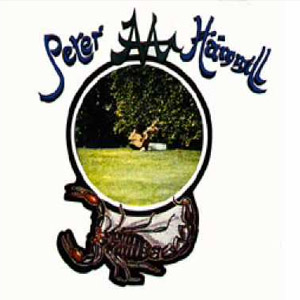
Chameleon In The Shadow Of The Night is Peter Hammill’s second solo album and the first he made after Van der Graaf Generator broke up following Pawn Hearts.
Chameleon In The Shadow Of The Night balances somewhere between singer-songwriter music and VdGG-style dramatic prog rock. Some of the songs are quite simple, based mainly on Hammill’s vocals and fairly basic acoustic guitar strumming, with some occasional electronic effects.
Some of the songs are more sophisticated works that refer more clearly to Van der Graaf Generator. The most powerful of these is the stunning 11-minute prog spectacle ”(In The) Black Room,” which at times reaches truly furious heights. Even demonic. The entire classic VdGG lineup plays impressively on this track. The song was later played at VdGG concerts and was originally intended for the VdGG album that was to follow Pawn Hearts. The rough rocking ”Rock And Role” also benefits greatly from the support of the VdGG members and stylistically foreshadows the music of Hammill’s alter ego Rikki Nadir, which was to come a few years later.
The highlight of the album’s more minimalist side is the dramatic piano-driven ”In The End,” where Hammill’s vocal expressiveness ultimately becomes truly piercing. For more sensitive listeners, perhaps too piercing.
Alongside “(In The) Black Room”, another key track on the album is the truly impressive “Easy To Slip Away”, which returns to the characters of Mike and Suzie from the song “Refugees” (1970) and deals poignantly with the gradual disappearance of friendship. ”Easy To Slip Away” is a slice of dizzying, genuinely touching melodrama that only Hammill is capable of.
Chameleon In The Shadow Of The Night is a somewhat schizophrenic listening experience due to its duality. Not all of the songs are particularly inspired, at least musically speaking. For example, “What’s It Worth” is a rather pointless strumming exercise. However, a few gems easily tip the scales in favor of this album.
Chameleon In The Shadow Of The Night heralded the beginning of Hammill’s golden age. Next up was a winning streak that lasted until 1981, including eight nearly flawless solo albums and four great albums with the reunited VdGG. Few musicians have ever been able to achieve the same combination of quality and quantity.
Best tracks: “(In the) Black Room/The Tower”, ”Rock And Role”, ”In The End”, ”Easy To Slip Away”
38. Dave Holland Quartet : Conference Of The Birds

Conference Of The Birds is bassist Dave Holland’s (b. 1946) first album as band leader. Holland earned his stripes in Miles Davis’ band in the 1960s and 1970s, playing on Davis’ career-defining jazz-rock albums In A Silent Way and Bitches Brew.
Conference Of The Birds is very wind instrument-driven acoustic avant-garde jazz. In addition to Holland and drummer Barry Altschul, the quartet includes two wind players, Sam Rivers and Anthony Braxton. The music is very free-form, but Holland’s double bass patterns anchor it nicely so that it doesn’t get too restless. On the other hand, Holland does take some solo space for himself at times and gets to showcase his virtuoso playing skills.
Although the music is mostly improvised, it contains some clearly composed passages, such as the beautiful flute melodies in the title track.
The sound of the album is relaxed, airy, and light. However, it is not bland. Conference Of The Birds is relatively easy to listen to for avant-garde jazz.
Conference Of The Birds was released by ECM and is one of the few releases by the label that doesn’t really sound or look like an ECM album.
Best tracks: ”Four Winds”, ”Conference Of The Birds”
39. Samla Mammas Manna : Måltid

Måltid is the second studio album by Swedish band Samla Mammas Manna.
Måltid is fast-paced avant-prog tinged with hilarious humor, yet played with virtuoso skill. Its uniqueness comes from a lively dose of Nordic folk music influences. Many of the songs are embellished with funny, slightly yodeling-like vocals. Most of the time this works well, but at times it can be a little annoying. There are no actual lyrics on the album, and most of the songs are instrumental. The entire quartet, consisting of Lars Hollmer (keyboards, vocals), Lars Krantz (bass, vocals), Coste Apetrea (guitar, vocals), and Han Bruniusson (drums, vocals), plays with great skill. The most impressive aspects are not only Hollmer’s skill on the electric piano, but also Apetrea’s clean-sounding electric guitar patterns.
Måltid has undoubtedly been hugely influenced by Frank Zappa, and I would guess that the Dutch band Supersister was also familiar to the Samla Mammas Manna crew. Henry Cow also feels like a musical soulmate, even though the music of these serious artists does not contain any humorous elements. However, Henry Cow hardly had time to influence SMM, as the band released their first album in the same year that Måltid came out. It is probably more a case of both bands having common influences. Later in the 1970s, Samla Mammas Manna joined the Rock In Opposition movement organized by Henry Cow.
With the exception of the 10-minute ”Dundrets fröjder” and the 8-minute ”Minaret,” the songs on the album are very short, usually lasting only two or three minutes. This makes the listening experience a bit fragmented, especially since there are many times more ideas per song than there would be in a pop song of the same length. It might have been wise to cut down on the number of ideas and develop the best ones into slightly longer songs.
Måltid has a good vibe, even though the musical diversity and occasionally excessive humor can be distracting at times. The album is highly recommended for fans of Supersister (humor) and Henry Cow (no humor).
Best tracks: ”Dundrets fröjder”, “Minareten”
40. Gentle Giant: In a Glass House

In A Glass House is Gentle Giant’s fifth studio album and the first without founding member Phil Shulman.
Hard to say how much of the change can be attributed to Phil Shulman’s departure from the band, but In A Glass House is quite a drop in level compared to last year’s Octopus which is the finest album of Gentle Giant’s career. It seems that, with keyboardist/multi-instrumentalist Kerry Minnear and vocalist/player Derek Shulman left in charge of composing on this album, they’ve been a bit lost without Shulman. The technique is there, but the content is a bit lacking…
41. Faust: Faust IV
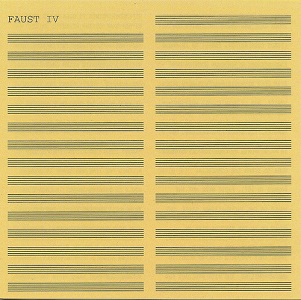
Faust IV is Faust’s fourth studio album.
Faust was born in Germany in 1971, at a time when German rock music was searching for its own identity in the shadow of Anglo-American influences. The band was formed by journalist/producer Uwe Nettelbeck, who was given free rein by record label Polydor to put together a German equivalent of The Beatles or Frank Zappa (pretty tall order!). He brought together members from two bands: Campylognatus Citelli and Nucleus (not to be confused with the jazz-rock band led by Ian Carr).
The new band, named Faust, withdrew to Wümme, a studio building in the countryside, where they worked in complete isolation and lived together in a communal setting. Produced by Nettelbeck, Faust developed a unique style: a combination of musique concrète, free jazz, rock, and pure cacophonous noise. Their debut album, Faust, released in 1971, was not a commercial success, but it attracted attention for its radicalism. Their second album, Faust So Far (1972), brought more form and melody, while retaining its experimental spirit.
In 1973, Faust signed with British label Virgin Records. Their third album, The Faust Tapes, was a collection of sound collages and sketches, which Virgin sold at a very low price. Virgin’s releases were riding high in the wake of Tubular Bells, and the strategy worked; The Faust Tapes found a surprisingly large audience, selling over 50,000 copies. This laid the foundation for Faust IV. Now, for the first time, Faust made an album that was both properly produced and clearly structured. Faust IV combined the band’s Dadaist experimentation with a more melodic and accessible form, without compromising on its core exploration of freedom and structural tension.
At least some of the German bands considered the term “krautrock”, coined by the English music press, to be derogatory, but Faust playfully appropriates the definition by opening the album with the song “Krautrock”. The nearly 12-minute instrumental ”Krautrock” is a mesmerizing trance based on a simple fuzz bass riff, over which other instruments are gradually layered. This drone-based music is a clear continuation of La Monte Young’s experiments, but now in a much rockier and dirtier form. Due to its strangeness, Faust is not usually mentioned alongside Can and Neu! when discussing the essence of krautrock, but this drone odyssey certainly travels straight to its core.
The second track, “Sad Skin Head”, offers a completely different angle on Faust’s world. Beginning with a strange cry and the sound of a nose being blown, this miniature piece, barely two minutes long, bounces along merrily on a ska beat. The lyrics, sung laconically to the light-hearted melody, seem to mock the often violent skinheads. The song features delightful marimba jingles and guitar riffs that destroy its radio play potential with their angry buzzing. A thoroughly delightful song.
Apart from all the bad times you gave me
I always felt good with you
Going places, smashing faces
What else could we do?
What else could we do?
My third favorite is ”Giggy Smile,” which also expands Faust’s musical spectrum. At nearly eight minutes long, the playful ”Giggy Smile” sounds almost like early Gong. Or maybe a Gong parody? It even features a shaky saxophone solo. At the end, the tempos vary uninhibitedly, culminating in a truly addictive organ ostinato accompanied by fun electric guitars.
Faust IV is a schizophrenic entity that swings from dense drone to almost radio pop, from avant-garde noise to hippie rock and back again, but that is partly what makes it so delicious and constantly surprising to listen to. In a way, Faust IV is Faust at its most fearless, because this time they dare to be easily approachable at times. Some Faust fans consider Faust IV to be the band’s sell-out album, but for me it is the most rewarding album by this anarchic and uncompromising group.
Best tracks: ”Krautrock”, ”The Sad Skin Head”, ”Giggy Smile”
42. Return To Forever: Hymn Of The Seventh Galaxy
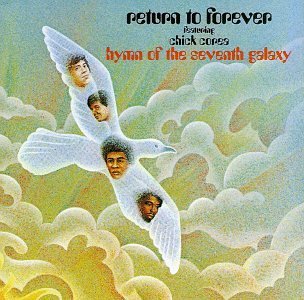
Hymn Of The Seventh Galaxy is the third studio album by Return To Forever.
American keyboardist Chick Corea (1941–2021) founded Return To Forever in 1972. Corea’s vision was to create a band that transcended the boundaries of jazz and world music, combining Latin American rhythms, modal jazz, and melodic sensitivity. In addition to Corea, the original lineup included Flora Purim (vocals), Airto Moreira (percussion), Joe Farrell (saxophone and flute), and Stanley Clarke (bass). The first two albums, Return To Forever and Light As A Feather (both 1972–73), represented an airy and melodic jazz style, with Latin rhythms and Corea’s keyboards at the center.
The Mahavishnu Orchestra, led by John McLaughlin, had started a new, rougher and rockier trend in jazz rock, and soon Corea also wanted to move in a more electric and aggressive direction. He broke up the original acoustic-oriented lineup and formed a new, entirely instrumental quartet: Corea and Clarke were joined by Lenny White on drums and Bill Connors on electric guitar. This quartet produced the first fully electric Return to Forever album, Hymn of the Seventh Galaxy, which marked a completely new phase in the band’s career.
Consisting of six tracks ranging from 3 to 9 minutes in length, Hymn Of The Seventh Galaxy reveals its new colors right from the first track.
The title track, ”Hymn Of The Seventh Galaxy,” opens the album with explosive energy and serves as a declaration of the band’s new, electric direction. The song kicks off with a fast, precisely played unison riff, with Chick Corea’s synthesizer and Bill Connors’ heavily overdriven electric guitar running parallel with almost mechanical precision. This intense opening sets the mood: this is no longer airy acoustic jazz, but tight, virtuosic, electrically charged music that seamlessly combines the power of rock with the complexity of jazz. In fact, one might question whether this is even jazz-rock or whether ”Hymn Of The Seventh Galaxy” is already pure progressive rock.
The structure of this three-minute song is concise but multi-layered. The song moves quickly between different sections: alternating thematic riffs, breakaway solos, and occasional pauses create variety, but the whole remains logically coherent. Corean’s electric organ dominates the song with its spacious, metallic sound, which, together with the song’s title, evokes a futuristic, even sci-fi-like imagery. Connors’ playing, on the other hand, brings an angularity and intensity not previously heard in Return to Forever’s music.
Rhythmically, the song makes use of irregular accents and precise synchronisation. Lenny White and Stanley Clarke don’t just follow each other, they constantly play with tension, creating a foundation that is both heavy and elastic. This rhythmic precision, combined with harmonic richness, makes the song a kind of microcosm of fusion jazz.
The second track on the album, ”After The Cosmic Rain,” takes the music in a slightly calmer direction and is the only composition on the album penned by Stanley Clarke. If ”Hymn of the Seventh Galaxy” was like a big bang, then ”After The Cosmic Rain” is like a slower-moving, beautifully floating but still super-hot spark of space dust that gives birth to the rest of the album. ”After The Cosmic Rain” sounds more melodic, almost hymn-like, but at the same time there is a hint of funk in the music and the rhythm is more liberated. And even though the vibe is not as explosive as on the first track, the atmosphere remains intense throughout. Corean’s electric piano is given plenty of space, and he also plays a tasty keyboard solo with a really rough sound that almost sounds like an electric guitar. Connors responds to this with bright, sparkling clean electric guitar riffs. Wonderful.
The two-part ”Space Circus” is a bit dull jamming and soloing, but the rest of the album is quite high-quality material, especially ”Captain Señor Mouse,” which brings out the band’s old Latin influences. However, it must be admitted that at times the quartet gets lost in excessive technical brilliance, and a solo or two less would have done the album good. The album also suffers from a slightly muddy and messy sound.
The energetic Hymn Of The Seventh Galaxy propelled Return To Forever to the highest heights of jazz rock alongside the Mahavishnu Orchestra. Chick Corea did not look back, and Return To Forever continued in an increasingly electric direction on their subsequent albums, adding synthesizers to their palette.
Best tracks: ”Hymn of the Seventh Galaxy”, ”After The Cosmic Rain”, ”Captain Señor Mouse”
43. Alan Sorrenti : Come Un Vecchio In Incensiere All’Alba Di Un Villaggio Deserto

Come Un Vecchio In Incensiere All’Alba Di Un Villaggio Deserto is the second studio album by Neapolitan singer-songwriter Alan Sorrenti.
Come Un… continues in the same vein as Sorrent’s previous debut album, Aria. In other words, it is dark and dramatic singer-songwriter music with a progressive twist. Sorrent’s highly distinctive singing voice is still the main attraction on this album, but this time he doesn’t take his voice into quite such wild realms. The overall mood is a little more subdued than on the debut.
As on the first album, there is one massive track. The title track on Arian was 19 minutes long, but this time the epic is a whopping 23 minutes. The massive ”Come un vecchio incensiere all’alba di un villaggio deserto” contains some of the most impressive moments on the album, but despite its avant-garde nature, it never quite achieves the same drive as the title track on the debut album. The five shorter tracks on the album are more consistent, but on the other hand, they don’t have the same thrilling peaks as the title track.
The album features a couple of star musicians from the British prog scene: Francis Monkman, known from Curved Air, plays keyboards and electric guitar on two tracks, and David Jackson of Van der Graaf Generator, guests on flute on two tracks. However, these British musicians do not make a huge impact on the album, and their performances do not particularly stand out from the rest of the music. Well, Monkman’s synthesizer riffs on the title track are quite impressive.
Come Un Vecchio In Incensiere All’Alba Di Un Villaggio Deserto deserves praise, like Sorrentino’s debut album, for its bold self-expression and original atmosphere, but this time it does not quite reach the level of Aria’s compositions. From this point on, Sorrentino’s career took a clear turn towards a more popular style, ”culminating” in 1980 with Italy’s entry into the Eurovision Song Contest. Progressive glory is fleeting.
Best tracks: ”Serenesse”, ”Oratore”, ”Come un vecchio incensiere all’alba di un villaggio deserto”
Author: JANNE YLIRUUSI
Other parts of the Year by Year series can be found here.
- Levyarvio: Steve Walsh – Glossolalia (2000)
- Year by Year : Best Albums of 1976 – 21-29
- Levyarvio: Jimmy Page – Outrider (1988)
- Review: Brian Eno + David Byrne – My Life in the Bush of Ghosts (1981)
- Levyarvio: Gong – Zero To Infinity (2000)
- Review: Michael Oldfield – Heaven’s Open (1991)
- Review: Talk Talk – The Colour Of Spring (1986)
- Levyarvio: Jeff Wayne – Jeff Wayne’s Musical Version Of The War Of The Worlds (1978)
- Review: Gong – Shamal (1976)
 Pienemmät Purot
Jätä kommentti