
The author’s picks for the best albums of 1971, ranked 1-10.
In the Year by Year series, I’ll go through my favourite albums from 1969 to the present day.
- King Crimson: Islands (UK) *****
- Yes: Fragile (UK) *****
- Soft Machine: Fourth (UK) *****
- Van der Graaf Generator: Pawn Hearts (UK) *****
- Emerson, Lake & Palmer: Tarkus (UK) *****
- Gentle Giant: Acquiring The Taste (UK) *****
- Yes: The Yes Album (UK) *****
- Caravan: In The Land of Grey And Pink (UK) ****½
- Genesis: Nursery Cryme (UK) ****½
- Egg: The Polite Force (UK) ****½
Rankings 11-27 can be found here.
1. King Crimson: Islands

Islands is the fourth studio album by King Crimson, formed in 1969.
By the time of Islands, the original line-up of King Crimson was down to guitarist Robert Fripp and lyricist/general visionary Peter Sinfield.
The duo recruited Mel Collins, who had appeared on In The Wake Of Poseidon (1970), to play wind instruments and Ian Wallace, who had played drums with Jon Anderson in The Warriors, to play drums.
The most surprising choice for the new line-up was vocalist Boz Burrell, who had previously worked mainly in R&B bands. But that wasn’t the surprising part, it was the fact that Burrell also became the bass player of the band, even though he had never played an instrument before..
2. Yes: Fragile
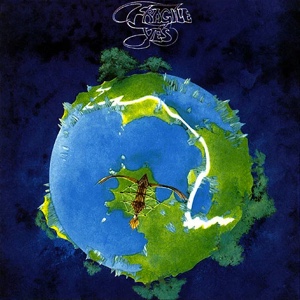
Yes’s previous album, The Yes Album, released just nine months earlier, was a major breakthrough for the band. Commercially even more than artistically. With The Yes Album, the band moved, if not quite into the A-category of rock bands, then firmly into the B-category. But the band wanted more. Leaders Jon Anderson and Chris Squire were not only hungry for more success, but also wanted to make their band even more perfect musically.
The duo denounced keyboardist Tony Kaye as the weak link in the band. Kaye’s main weakness was said to be that he was not interested in the latest synthesizer technology and stubbornly stuck to his Hammond roots. Kaye was also not perceived to be on a par with the rest of the band in terms of playing skills. Anderson and Squire wanted one more virtuoso in the band. Goodbye Kaye and welcome Rick Wakeman…
3. Soft Machine : Fourth
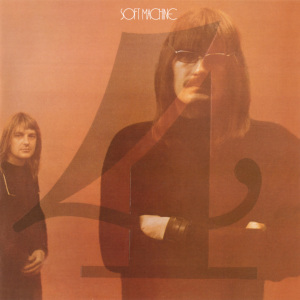
Soft Machine takes a real step in the direction of jazz on their fourth album. On Fourth, the psychedelia of the previous albums and rock in general is a life left behind, as are the Dadaist lyrics of drummer/vocalist Robert Wyatt, since the album is entirely instrumental.
A certain rhythmic aggressiveness and, of course, the electrification of the bass and keyboards still lock Fourth into the rock world to some extent, but the album is still closer to avant-garde jazz than jazz-rock proper. All in all, Soft Machine is entirely credible as a jazz band and Fourth is an impressive combination of highly complex compositions and wildly free improvisation…
4. Van Der Graaf Generatot : Pawn Hearts
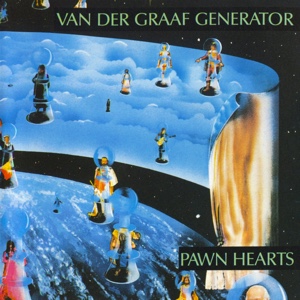
Pawn Hearts is the fourth studio album by Van Der Graaf Generator, founded in 1967. Their first masterpiece.
Where Pawn Hearts’ predecessor H to He, Who Am the Only One (1970) was a good but somewhat cautious album, this time VdGG indulges in a completely unrestrained way and ends up in very deep waters. In short: Pawn Hearts is an album gone completely bonkers.
A tour of 21 cities in 23 days, in difficult circumstances and with almost no money, drove the four members of the band to the brink of madness…
5. Emerson Lake & Palmer: Tarkus

Tarkus is the second studio album by Emerson Lake & Palmer.
ELP got off to a flying start with their first album which was a huge success. So the band headed back into the studio again at the strong urging of the record company just six months after the release of their debut album.
Recorded at Advision Studios with engineer Eddie Offord, Tarkus consists of the legendary title epic, lasting almost 21 minutes, and six short tracks, the longest of which is only four minutes long.
The fairly general consensus on the album is that the title track is excellent and the short songs covering the second half of the album not so much. ”Tarkus” does dominate the album, but the songs on the b-side are also of high quality and are underrated…
6. Gentle Giant: Acquiring The Taste

Gentle Giant’s second studio album, Acquiring the Taste, presents a band that has already fully matured. Gone is the slight fumbling of their first eponymous album (1970) , in favour of a confident, skilful band and a masterfully polished album.
With Acquiring the Taste, Royal Academy Of Music educated keyboardist Kerry Minnear was given more space as a composer and arranger. This is reflected in more complex songs on the album, but also in smoother transitions from one idea to another. The influences of the Renaissance music that Minnear loves can also be heard at several points on the album. Phil Shulman, the band’s senior and unofficial leader and vocalist/percussionist, encouraged Minnear to make more and more complex and intricate music. Herein lay the paradox of the three Shulman brothers in the band: they wanted to succeed with their music and make some real money, but at the same time they knew they couldn’t do it with the kind of music they really wanted to make…
7. Yes: The Yes Album

The Yes Album is the third studio album by Yes, founded in 1968.
The Yes Album is a clear leap from the prog-inspired rock of the first two albums towards the deep end of progressive rock. However, Yes is only about halfway through the pool at this point. For although the songs are longer than on the previous albums, they are still relatively conventional in structure. Especially the three long songs ”Yours Is No Disgrace”, ”Starship Troopers” and ”Perpetual Change”, which last about ten minutes, give a foretaste of the colossal direction in which the band was slowly heading. For the most part, however, even the aforementioned songs are ”just” extended rock songs in structure. Of course, they are very cleverly arranged and contain a wide range of instrumental pyrotechnics…
8. Caravan: In The Land Of Grey And Pink
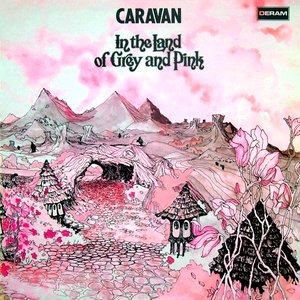
With their third studio album, In The Land Of Grey And Pink, Caravan bid a final farewell to the hazy psychedelic moods of their first albums. There is also less jazz/jazz-rock spirit than before. With Grey And Pink, the band headed more towards symphonic prog and even pop. It was not only a conscious change of direction, but also because guitarist/vocalist Pye Hastings’ pockets as a songwriter were empty at the time. Whereas he had been responsible for most of the songs on the first two albums, In The Land Of Grey And Pink was dominated by bassist/vocalist Richard Sinclair and his cousin keyboardist Dave Sinclair.
Producer David Hitchcock also brought a whole new polish to the sound. The more refined sound is probably also explained by the fact that the album was one of the first productions at George Martin’s newly established Air studio, which at the time was one of the top London studios…
9. Genesis: Nursery Cryme
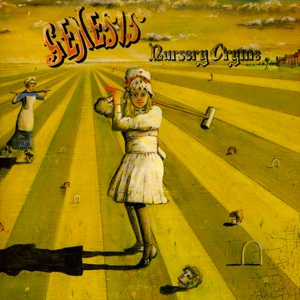
Nursery Cryme is Genesis’ third studio album. Where the previous album Trespass (1970) was a giant leap forward for the band compared to their debut, Nursery Cryme continues in the vein of Trespass, with just a few more twists. Despite the fact that 2/5 of the band’s line-up changed, Nursery Cryme is a surprisingly similar album to Trespass.
Founding guitarist Anthony Phillips left Genesis shortly after the release of Trespass after his fear of performing became unbearable. Phillips was replaced by another shy man, Steve Hackett. Already with Nursery Cryme, Hackett is a stylish and innovative guitarist, though not as virtuosic as, say, Yes’ Steve Howe or King Crimson’s Robert Fripp.
Drummer John Mayhew had to leave because the rest of the band was not satisfied with his performance…
10. Egg: The Polite Force

The Polite Force is the second studio album from Egg, a British band founded in 1969.
Egg’s style, usually associated with the Canterbury scene, could be described in the simplest terms as a clash between Soft Machine and The Nice. The band also clearly took influences from J.S. Bach, Igor Stravinsky and Frank Zappa, among others.
Like The Nice, Egg was an organ trio made up of three talented musicians. The band’s central figure was bassist/vocalist Mont Campbell. Campbell was not only a skilled bassist but also a talented composer who almost exclusively wrote Egg’s complex songs. Campbell was very interested in classical music and drew much of his musical inspiration from there. In particular, the influence of Stravinsky and Bach can often be heard in Campbell’s compositions.
As an instrumentalist, the trio’s most important player was of course the band’s only lead player, keyboardist Dave Stewart. Stewart was already a virtuoso player at this stage, whose original style was richly influenced not only by Keith Emerson’s percussively aggressive style but also by the fuzz-edgedorgan sound of Mike Ratledge of Soft Machine.
The drummer Clive Brooks, who completed the trio, was a rhythmic bedrock on which Stewart and Campbell were able to build their complex patterns. Brooks serves a somewhat similar purpose in Egg as John Weathers did in Gentle Giant: no matter how complex the music gets, Brooks and Shulman manage to ”straighten” it out with their playing and make even the most challenging irregular rhythms rock naturally.
The four-track album opens with ”A Visit To Newport Hospital”, which starts with a heavy organ riff and changes its style after a minute to a much lighter one with almost carnival-like keyboard sounds. The song is about the adventures of the trio’s former band Uriel (with guitarist Steve Hillage) on the Isle Of Wight. Cambell’s dryly declarative lyrics include this excellent snapshot:
There were four of us then, the group was Uriel
We played five nights a week at Ryde Castle Hotel
We spent our time avoiding skinheads and the law
It was a freedom that we’d never felt before
And now we’re doing this instead
The ”this” in the lyrics of course refers to the present moment of the trio, Egg. Campbell sings beautifully, albeit in a slightly thin voice, reminiscent of Caravan’s Richard Sinclair.
Next up is the album’s best song ”Contrasong” which is a joyfully jerky rock song alternating between two different irregular time signatures (5/8 and 9/8). ”Contrasong” also makes effective use of a four-piece wind section. With many interesting complex sections, the song is very entertaining, not least thanks to Campbell’s breathtaking vocal performance as he tries to keep up with the difficult rhythms that bounce along at a fast pace.
The third track ”Boilk” is a fascinating experimental sound collage of rattling, hissing and grinding musique concreté. At over nine minutes, the song, which sometimes directly quotes Bach, is a little too long, but I still find it a nice contrast to the more ”musical” and boisterous pieces on the album.
The album ends with the almost 21-minute instrumental composition ”Long Piece No. 3”. This highly complex piece is defined by a massive and aggressive ”over-driven” Hammond organ sound, fast tempos and a heavy use of irregular time signatures. Campbell is said to have drawn heavily from Stravinsky, and the staccato sound of the song has a similar angularity and aggression to that of, say, ”Rite Of Spring”. However, the song is not a very coherent whole. It is still a respectable early work when it comes to progressive rock songs of epic proportions.
Some of the organ sounds on The Polite Force sound a bit antiquated (Stewart’s organ sounds have always been a bit patchy to me), but the only thing that’s really dated about the album is the creepy psychedelic vomit that serves as the album’s cover art.
The Polite Force achieved almost no commercial success and was to remain the band’s last studio album as no follow-up contract was forthcoming from the label. The band split up for a couple of years, but surprisingly in 1974 Virgin Records offered the trio a new contract and Egg returned to record another album, The Civil Surface. The Civil Surface is a good album, but The Polite Force still held its place as the band’s most consistent album.
Best tracks: ”Contrasong” and ”A Visit To Newport Hospital”
Author: JANNE YLIRUUSI
Other parts of the Year by Year series can be found here.
 Pienemmät Purot
Jätä kommentti