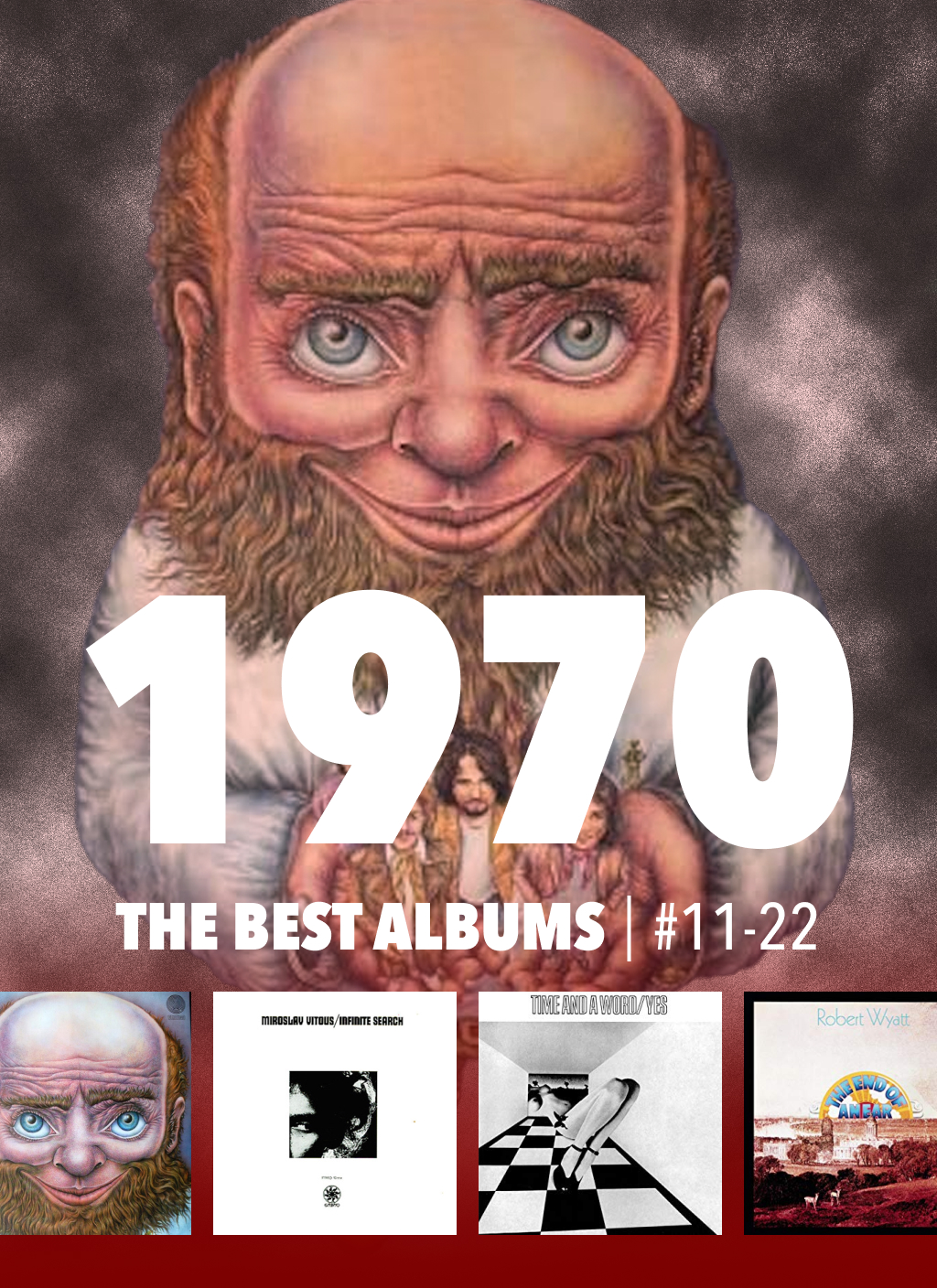
The author’s picks for the best albums of 1970, ranked 11-21.
In the Year by Year series, I’ll go through my favourite albums from 1969 to the present day.
11. Miroslav: Vitous: Infinite Search (CZ) ****
12. Yes: Time and a Word (UK) ****
13. Gentle Giant: s/t (UK) ****
14. Robert Wyatt: The End of an Ear (UK)****
15. Magma: Kobaïa (FR) ****
16. Pink Floyd: Atom Heart Mother (UK) ****
17. Atomic Rooster: Atomic Roooster (UK) ****
18. Egg: s/t (UK) ****
19. Supersister: Present From Nancy (NL) ****
20. Kevin Ayers and the Whole World: Shooting at the Moon (UK) ****
21. Atomic Rooster: Death Walks Behind You(UK) ****
22. Black Sabbath: Paranoid (UK) ****
Year by Year: Best Albums of 1970: 1-10
11. Miroslav Vitous: Infinite Search
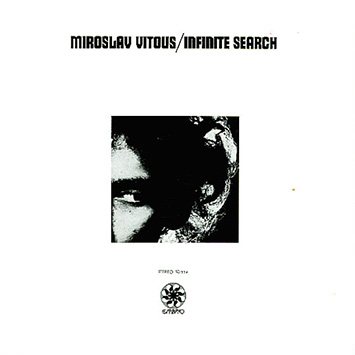
Born in Prague, Miroslav Vitous (b.1947) started playing the violin at the age of six, moved on to piano at the age of ten and finally to double bass at the age of 14. Vitous completed his classical music education at the Prague Conservatory and the Berklee College of Music in Boston. While studying in Boston, Miles Davis invited Vitous to stand in for the then regular bassist of his band for a few gigs. The band also featured saxophonist Wayne Shorter and a few years later Shorter and Vitous formed Weather Report which became one of the most important jazz-rock bands of all time.
Before Weather Report, however, Vitous, only 22 years old, managed to make his first solo album Infinite Fire. For this album, Vitous assembled a very impressive but still relatively young line-up of players, most of whom had also recently played in Miles Davis’ band. Within a few years, the whole group became some of the biggest stars on the jazz scene of the 70s. On drums, Infinite Fire has the nimble-handed Jack DeJohnette, on electric guitar, British virtuoso John McLaughlin, on tenor saxophone Joe Henderson and on electric piano Herbie Hancock. De Johnette is joined on the last song by Joe Chambers.
With a group like this, it’s almost impossible to fail. At the very least, a decent album would be created by simply putting the band in the studio for a day of free improvisation. This was not necessary, however, as Vitous is not only a virtuoso double bassist and a skilled electric bassist, but also a talented composer. Of course, there is also plenty of room for improvisation on the album.
Stylistically, Infinite Search represents early jazz-rock at that tasty stage where the rock element still played a relatively minor role and there were also a fair amount of avant-garde and free jazz. The sound is mainly rather acoustic and airy. Electric guitar and electric piano are used tastefully to support the acoustic instruments, but even they are mostly played with quite clean sounds. Vitous himself sticks exclusively to acoustic double bass.
Of the six tracks on the album (later editions include the three-minute composition ”Cérečka” as a bonus), five are composed by Vitous himself. The most impressive composition on the album is actually the only one not written by Vitous himself, saxophonist Eddie Harris ’ ”Freedom Jazz Dance”, which lasts about ten minutes. Vitous has erased the soul from Harris’s often covered soul-jazz song and replaced it with lush jazz-rock with a touch of avant-garde. It’s a fast-paced and edgy start to the album. Vitous soars through the song with acoustic bass, occasionally giving the lead to Herbie Hancock’s electric piano and John McLauglin’s really fiery electric guitar playing. The most amazing thing about the song, however, is how the whole band seems to be soloing most of the time at the same time and still manage to do justice to the composition. This collective ”no one solos, everyone solos” style also became later a basic principle of Weather Report.
Vitous’ own compositions are mostly a bit more mellow, acoustic and lyrical. The songs are full of beautiful atmospherics, but the instrumental performances are still lively and full of nice intricacies. Even the slower songs never get boring. The longest track on the album, the 11 minute ”I Will Tell Him On You”, returns somewhat to the more energetic moods of the opening track. In ”I Will Tell Him On You” the players are allowed to let loose more with the other material and the song is clearly more free-form, including a long improvised section that sometimes goes to quite avant-garde extremes. What all the songs have in common is that Vitous’ bass plays a very central role. And in a very natural melodic way.
Infinite Search is one of the most important albums of early jazz-rock, even if its status has been somewhat forgotten, and is a must-listen, especially for all lovers of skilful bass playing.
Best tracks: ”Freedom Jazz Dance”, ”Infinite Search” ja ”I Will Tell Him On You”
12. Yes: Time and a Word
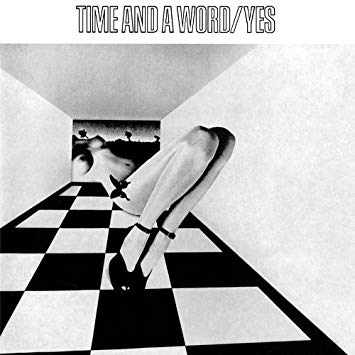
Yes continues with its second album largely in the direction set by its first album, skilfully combining pop, folk and rock with supple instrumental parts that still remain relatively short and don’t get too complex.
Chris Squire and Bill Bruford in particular play beautifully throughout the album and have already shown themselves to be not only a skilful but, above all, highly original rhythm section.
This time, too, there are a couple of cover songs (writtenby Richie Havens and Stephen Stills ) in addition to the band’s own compositions. Apart from a few shaky songs (especially ”Clear Days”), the song material is quite good, although nowhere near the top level. The most impressive tracks are the brash organ odyssey ”Astral Traveller”, the dramatic ”Then” and probably the most famous song on the album, the hippie anthem ”Time And A Word”.
The biggest difference to the debut album is that it features a small symphony orchestra of Royal Academy Of Music students. Tony Cox’s orchestral arrangements are a little too toothless and obvious, but on the other hand they don’t hurt the album. And at times the orchestra even brings in some real drama, such as the punctuated string attacks of ”Then”, which are an effective touch. Or on the title track where they add a nice touch of pathos to the chorus of the song.
The biggest loser in the orchestral experiment was guitarist Peter Banks who doesn’t get as much space as on Yes’ first album. Banks was very critical of the orchestral use of the band, which strained his relations with the rest of the band. This was to be Banks’ last Yes album. On the other hand, the rest of the Yes crew were probably not so enthusiastic about the results of the experiment, as the band stayed away from orchestras for decades until they finally experimented with symphonic ensemble power again with the great 2001 album Magnification.
”Time And A Word” received a rather mixed reception when it was released and didn’t sell much better than its predecessor. The band’s position with Atlantic was even at stake. However, Atlantic decided to give Yes one more chance and the band made the most of it with the following year’s stunning The Yes Album.
Best tracks: ”Astral Traveller”, ”Then” ja ”Time And A Word”
13. Gentle Giant: s/t

Gentle Giant was born from the ruins of the soul band Simon Dupree and the Big Sound when the three Shulman brothers Derek, Phil and Ray wanted to move into more progressive music.
The brothers recruited drummer Martin Smith from the Big Sound and enlisted blues guitarist Gary Green and classically trained keyboardist Kerry Minnear.
With Big Sound’s reputation, the fledgling band quickly landed a deal with the newly formed Vertigo label and within weeks recorded their debut album under producer Tony Viscount in November 1970.
Gentle Giant’s eponymous debut is still somewhat of a raw album, but the band’s sound was already surprisingly complete at this stage. Gentle Giant’s music isn’t quite as sparkling as on the following albums, but it’s witty and richly arranged, with the band’s trademark counterpoints and a good number of time changes from the start. And a much wider range of instruments than a normal rock band. Apart from drummer Smith and guitarist Green, the other four members of the band were all multi-instrumentalists, fluent in the addition of more familiar rock band instruments for example timpani, violin, saxophones and trumpet.
The simpler and more melodic take on the debut album’s has the advantage that rarely has Gentle Giant sounded so sympathetic and approachable as on the debut’s most delicious songs. Highlights include the quirky ”Funny Ways”, the slightly edgier ”Alucard”, which uses a tasty buzzing Moog synth, but also makes great use of counterpoint, and the elegant acoustic chamber music/jazz mix ”Isn’t It Quiet And Cold?” featuring keyboard violin, cello, marimba and more.
Also the song ”Nothing At All” starts beautifully and could have even had the hit potential of ”Stairway To Heaven”, but the song is ruined by a boring and shockingly long interlude with poor drum solo and boring noodling. A potentially great five-minute song has been stretched unnecessarily to nine minutes.
In general, Gentle Giant is at its strongest on this album with slightly lighter, more melodic songs. The more rocking pieces like ”Why Not?” don’t feel as original and successful. Overall, however, the album is quite high quality if you ignore the slightly muffled sonics, the pointless interlude of ”Nothing At All” and the album-closing, less than two minutes long and totally pointless ”The Queen” which is an instrumental arrangement of the British national anthem ”God Save the Queen”.
Best tracks: ”Funny Ways”, ”Alucard”, ”Isn’t It Quiet And Cold?”
14. Robert Wyatt: The End Of An Ear
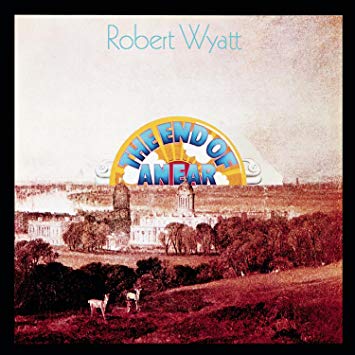
The End Of An Ear is Robert Wyatt’s first solo album. The End Of An Ear could be defined as a kind of avant-garde jazz with a lot of tape trickery. In other words, it’s very experimental music. The wild experimentalism of the album is a bit paradoxical in the sense that Wyatt rebelled against the complexity of the band’s music and the reduction of pop influences in Soft Machine and then his first solo album is such extreme stuff. Even the vocals on the album are mainly used as an instrument among others and there is no regular lyrical singing at all. A surprising move from Wyatt.
Half of the album is used to cover Gill Evans’ ”Las Vegas Tango”. Evans’ original 6 minute composition has been creatively stretched into two separate tracks lasting a total of 19 minutes. The rest of the songs on the album are Wyatt’s own compositions and/or improvisations.
The skilfully played album features familiar guests from Soft Machine and Caravan, among others. Elton Dean on saxophones , Dave Sinclair on organ and Mark Charig on cornet. Mark Ellidge plays wild piano patterns, slightly reminiscent of Keith Tippett, and Wyatt is paired with the great jazz bassist Neville Whitehead for the rhythm section.
The sounds on the album are surprisingly crisp for such a weird project with what you’d imagine was a pretty small budget. If only Soft Machine’s Third, released the same year, had been recorded as well.
Wyatt himself hasn’t been particularly warm about The End Of An Ear in retrospect, but I think it’s an extremely interesting album in all its experimentalism, even if not all the songs quite hit the mark.
Best tracks: ”Las Vegas Tango (Part I) (Repeat)” ja ”To Mark Everywhere”
15. Magma: Kobaia
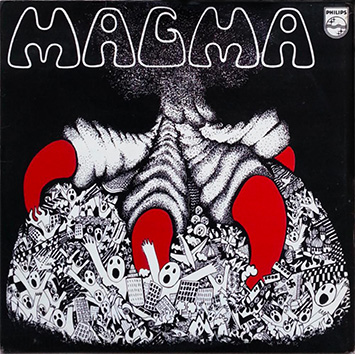
Magma have never been bashful band and even started their recording career directly with a double album. At this stage, Magma was not yet completely dominated by drummer Christian Vander and four of the ten songs on this debut album were composed by other band members. This division also makes the 81-minute album a somewhat choppy whole.
Some of the music on Kobaia, released in the spring of 1970 (the album was initially released untitled and only got the name Kobaia with the reissue), is fairly standard jazz-rock, but there is still a healthy dose of magmatic militarism and otherworldly orchestral menace.
On the other hand, there are also some pastoral, light flute-led moments (e.g. Laurent Thibault’s composition ”Naü Ektila”) that later disappeared almost completely from Magma’s music.
In Vander’s own compositions, his zeuhl vision can already be clearly heard, even if it is not yet fully realized. The influences ofJohn Coltrane and Carl Orff can already be heard in the music in thin echoes, and ”Stöäh” already features the extreme falsetto vocalisation that reached a kind of peak on the 1973 Mekanïk Destruktïẁ Kommandöh album.
Kobaia is far from being a musical tour de force, but on the other hand, the almost total originality of the music even at this early stage can only be admired and respected.
With Kobaia, a new kind of unique and unprecedented power marched onto the rock stages.
Parhaat biisit ”Kobaia”, ”Naü Ektila”, ”Stöäh”
16. Pink Floyd: Atom Heart Mother
With their fifth studio album, Atom Heart Mother, Pink Floyd leap into the symphony orchestra boom of the early 70s.
The central track on the album is a six-part, nearly 24-minute title track with orchestral arrangements by avant-garde composer Ron Geesin (b.1943). Geesin also assisted the band in the composition of the piece. The epic has some really nice themes, but the whole is rather shaky and contains a lot of unnecessary padding. However, the orchestral parts are at their best very good and the choral parts even bring to mind the cosmic moods of György Ligeti attimes. Floyd’s orchestrations were much more modern and ambitious than those on Yes’ Time And A Word album of the same year.
The b-side of the album is also uneven. Roger Waters ’ (b.1943) ”If” and David Gilmour’s (b.1946) ”Fat Old Sun” are sympathetic, but still rather unremarkable folk ballads, and the album’s closing mess of music and sound effects (including bacon frying!), ”Alan’s Psychedelic Breakfast”, is a rather dull affair. Especially when the song lasts 13 minutes!
On the B-side, the highlight of the album is definitely keyboard player Rick Wright’s (1943-2008) composition ”Summer ’68”, which makes great use of the horn section. The melancholically beautiful vocal part of the song and the combination of the instrumental part, amplified by the brass section, has a certain Canterbury scene feel. The lyrics, sung by Wright himself, tell of an encounter with groupies. A very Canterbury theme too, although in the case of the real Canterbury bands the groupies were in reality perhaps more of a daydream…
Atom Heart Mother is an uneven whole that contains some brilliant moments and Floyd deserves credit for an open-minded willingness to experiment, even if these experiments on this album were not always successful. Pink Floyd had gotten themselves into such a groove at this point that even such an experimental album went to number one in the British album charts, despite mixed reviews in the press.
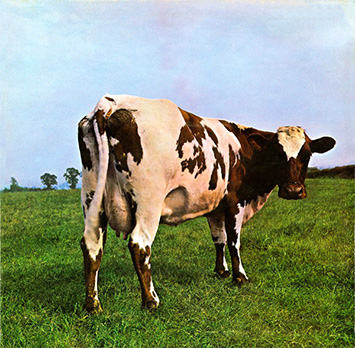
Now more than fifty years after the release of Atom Heart Mother, it is interesting to note that the album is perhaps better known for its iconic cover than the music itself. The text-free cover, designed by Storm Thorgerson, features an ordinary cow, shot from the rear in a very conventional way in a flat daylight setting, looking at the camera. Simple, but ingenious.
Best tracks: ”Atom Heart Mother” ja ”Summer ’68”
17. Atomic Rooster: s/t
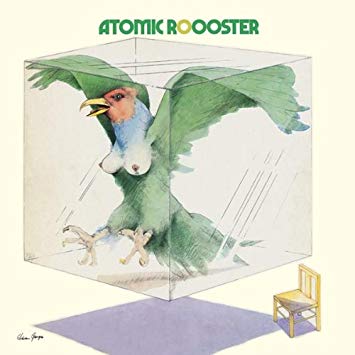
Released in February 1970, Atomic Rooster’s eponymous album is sometimes known as Atomic Roooster , as the album’s cover artwork indicates. And what a cover it is: the Atomic Age is celebrated by a cartoon green rooster (although it looks more like an eagle) with huge female tits, scurrying around in glass cube!
Atomic Rooster was a sort of sequel to Crazy World of Arthur Brown, featuring Rooster’s founding members, classically trained organist Vincent Crane (1943-1989) and drummer Carl Palmer. In addition to Palmer, bassist/vocalist Nick Graham was recruited to join the band under Crane’s musical leadership (Palmer handled the practical side of the band). Graham also plays flute on a couple of songs.
Atomic Rooster’s style is hard rock-influenced prog with a touch of soul and funk. A rather original combination that works quite nicely. Vincent Crane’s organ dominated music is quite heavy, but Carl Palmer’s perky and skilful drumming adds a nice airiness to the sound. There’s plenty of added spice from the wind instruments played by studio musicians.
In particular, ”Friday 13th”, which rocks with a heavy organ riff, and the beautiful, yet dark and peaceful ”Winter”, which Palmer embellishes with a chiming bell, are great songs. Some of the other songs are a bit too generic, but on the whole, it’s a pretty strong affair.
After the debut, Carl Palmer left the band and joined Keith Emerson and Greg Lake to form Emerson Lake & Palmer. Crane carried on doggedly without his ace drummer and released a second album that same year.
Best tracks: ”Friday 13th” ”S.L.Y.” ja ”Winter”
18. Egg: s/t
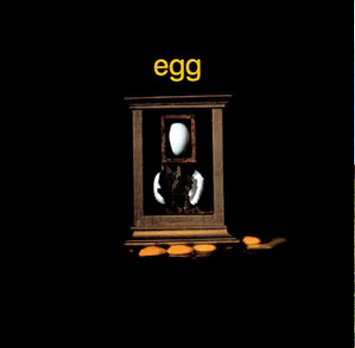
Egg’s eponymous album is a trio of Dave Stewart (keyboards), Mont Campbell (bass and vocals) and drummer Clive Brooks, whose intricate music is stylistically somewhere between The Niche and Frank Zappa.
Egg is usually counted in the so-called Canterbury scene even though there is no geographical connection. However, Stewart later contributed to important Canterbury bands such as Hatfield And The North and National Health, and Egg’s jazz-influenced style and montypythonic humour make him a good fit for that club. On the one hand, the classical influences lead the band in the direction of symphonic prog, and on the other hand, in its most experimental way, it also refers to the later avant-prog trend.
Egg’s music is already quite complex on this debut album, mixing jazzy sounds with classical influences. The end results are a little rough in places, but mostly sympathetic. The Bach cover ”Fugue in D Minor” is a bit too obvious a ”rock-goes-to-classics” move, but the twenty-minute ”Symphony No. 2” is a more interesting mix of classical music influences (and many direct quotes) and rock energy.
The highlight of the album is the energetic and maniacally paced (and awkwardly named!) ”The Song of McGillicudie the Pusillanimous (Or: Don’t Worry James, Your Socks Are Hanging in the Coal Cellar With Thomas)” in 5/8 time.
Egg’s debut album was a good start for the band, but the trio made a big improvement with The Polite Force the following year.
(Trivia fact: The album was recorded by Roy Thomas Baker who later became the producer of Queen’s best-selling albums in the 70s.)
Best tracks: ”Bulb”, ”The Song of McGillicudie the Pusillanimous (Or: Don’t Worry James, Your Socks Are Hanging in the Coal Cellar With Thomas)”
19. Supersister : Present from Nancy
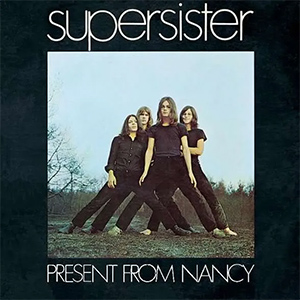
Present From Nancy is the excellent debut album from Dutch Supersister.
Present From Nancy has a nice relaxed and playful atmosphere. The playing is supple and light, but not at any point too pliant or tame.
What makes the sound of the album quite original is the fact that the main instruments are keyboards and flute instead of guitars. Robert Jan Stips does a good job on keyboards and I really like his electric piano sound. The fuzz sound of the organ is clearly influenced by Mike Ratledge (Soft Machine). The upbeat drumming of drummer Marco Vrolik is also nice to hear and reminds me a bit of Carl Palmer.
Supersister is often called the Dutch Canterbury, and the sound certainly points in that direction. Certainly the first albums of Soft Machine and Caravan have been spinning voraciously on the Supersisters’ turntables.
Unfortunately, a couple of Supersister’s excellent singles released before Present From Nancy, ”She Was Naked” and ”Radio”, didn’t make it onto the album itself. Maybe they were sneaked in on a later remaster, but they’re not on my CD.
The song material is a bit uneven and a few of the blander noodling bits (e.g. ”Dreming wheelwhile”) lower the overall quality and the aforementioned singles could have easily replaced them. The B-side generally doesn’t measure up to the first half of the album.
Present From Nancy’s sounds are quite thin and clumsy. The drums in particular sound weak, and the jaggedness of Jan Stips’ organ doesn’t always come across satisfactorily.
Despite its slight unevenness, Present From Nancy is a good start to Supersister’s career, but there were much better albums to come.
Best tracks: ”Present From Nancy”, ”Memories Are New”
20. Kevin Ayers And The Whole World : Shooting At The Moon
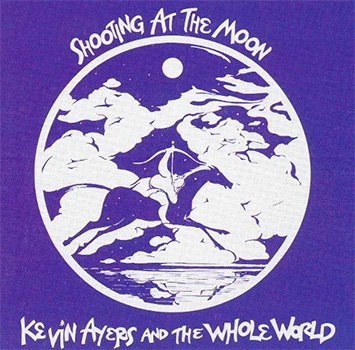
Shooting At The Moon is the second studio album by ex-Soft Machine vocalist Kevin Ayers.
Shooting At The Moon is a very eclectic art-pop album that goes from light pop tracks to experimental avant-garde and back again through psychedelia. Throughout the album there’s a pleasant tongue-in-cheek feel without it all becoming a total farce.
Ayers assembled a strong and unique band called The Whole World, with 17-year-old Mike Oldfield on guitar and bass, avant-garde composer David Bedford on keyboards and wild player Lol Coxhill on brass. On drums is the slightly less well-known Mick Fincher. On ”Lunatics Lament” Oldfield gets to pull off a handsome and rather psychedelic guitar solo that is the finest performance of his career so far. Mostly Oldfield plays bass guitar, though. And he plays it well. Ayers himself sings his witty lyrics in a confidently declarative and charismatic style with his pleasant baritone voice.
The more pop moments of the album work better than the more experimental tracks and for example ”Pisser Dans un Violon” is very much a pointless whimpering and fiddling. The album’s most delicious pop gems, ”The Oyster and the Flying Fish” and ”Clarence in Wonderland”, are somewhat frustrating experiences at a couple of minutes. The songs’ fine melodies could have stood a little more extended flourish.
Shooting At The Moon is an annoyingly uneven album, but at its best a truly charming and original affair. The Whole World disbanded shortly after Shooting At The Moon, but Oldfield and Bedford continued with Ayers for the next studio album.
Best tracks: ”May I”, ”Rheinhardt & Geraldine/Colores Para Dolores”, ”Lunatics Lament”, ”The Oyster and the Flying Fish”, ”Clarence in Wonderland”
21. Atomic Rooster: Death Walks Behind You
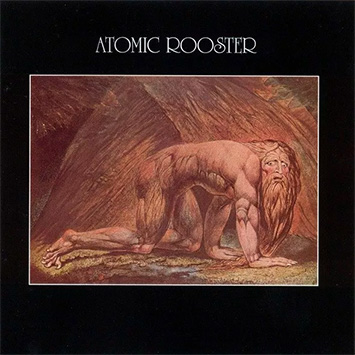
Death Walks Behind You is Atomic Rooster’s second studio album. The only remaining member of the line-up from the first album is keyboardist/composer Vincent Crane. Carl Palmer had already left to form ELP and was replaced by the slightly heavier drummer Paul Hammond. Bassist/vocalist Nick Graham was replaced by guitarist John Du Cann, who also handled vocals. There is no bass player on the album, but instead Crane handled the low frequencies on the organ pedals.
Death Walks Behind You, decorated with a painting by William Blake, largely continues the style of the debut album, a mix of progressive rock, soul and hard rock. On this album, the band takes a slightly heavier and more straightforward approach, leaning more clearly towards hard rock. The lyrics are also still in the same desolate and dark register as on the previous album, as you might have guessed from the title. The style of the album has been aptly described as a mixture of ELP and Black Sabbath.
Death Walks Behind You is a good album and contains many catchy riffs but is also a bit monotonous at times and doesn’t quite reach the level of the debut album.
Best tracks: ”Death Walks Behind You” ja ”Tomorrow Night”
22. Black Sabbath: Paranoid
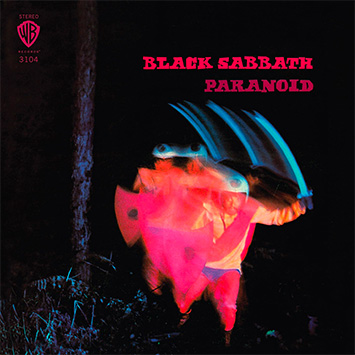
Paranoid is Black Sabbath’s second studio album.
Paranoid is a tasty mix of heavy rock and psychedelic. The album is a major milestone and pioneering work of the heavy rock genre, which was still in its embryonic stage in 1970.
The album contains two of the band’s most famous, slightly played-out songs, the title track ”Paranoid” and ”Iron Man”. However, the most successful tracks on the album are the angrily buzzing ”War Pigs” and the lightly jazzy(!) ”Planet Caravan”.
Ozzy Osbourne’s whining voice is something new in the same way that Peter Hammill’s distinctive vocalisation on Van Der Graaf Generator is something new, even if it’s not as versatile.
Despite its many delicious moments, Paranoid as a whole is plagued by an unnecessary monotony.
Best tracks: ”War Pigs”, ”Planet Caravan”
 Pienemmät Purot
Jätä kommentti