
In the Year by Year series, I’ll go through my favourite albums from 1969 to the present day.
- King Crimson: In the Court of the Crimson King (UK) *****
- Miles Davis: In a Silent Way (US) *****
- The Beatles: Abbey Road (UK) ****½
- The Soft Machine: Volume Two (UK) ****½
- Miles Davis: Filles de Kilimanjaro (US) ****½
- Colosseum: Valentyne Suite (UK) ****½
- Pharoah Sanders: Karma (US) ****½
- Frank Zappa: Hot Rats (US) ****
- Yes: s/t (UK) ****
- Caravan: s/t (UK) ****
- Kevin Ayers : Joy Of A Toy (UK) ****
- Can : Monster Movie (DE, 1969) ****
- Pink Floyd: Ummagumma (UK) ****
See also: Year by Year : Best Albums of 2023
1. King Crimson : In The Court Of The Crimson King
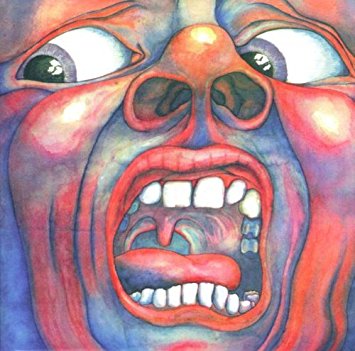
King Crimson’s roots go back to the trio Giles, Giles and Fripp, who played psychedelic and deeply humorous pop. The trio consisted of drummer Michael Giles (b.1942), his brother bassist Peter Giles (b.1944) and guitarist Robert Fripp (b.1946). The trio released an album in 1968, The Cheerful Insanity of Giles, Giles and Fripp, which was a complete commercial pancake.
Shortly after the first album, multi-instrumentalist (mainly winds and keyboards) Ian McDonald (1946-2022) joined the band. The extended Giles, Giles and Fripp tried to make a second album with singer Judy Dyble (McDonald’s girlfriend at the time), but with little interest from record companies, the band finally called it quits. Soon after, Michael Giles, Robert Fripp and Ian McDonald formed King Crimson, recruiting Fripp’s old friend Greg Lake (1947-2016) to replace Peter Giles as bassist-vocalist. The final line-up was completed by lyricist/visionary Peter Sinfield (b. 1943)…
2. Miles Davis: In a Silent Way

In 1969, 43-year-old Miles Davis (1926-1991) was already a recognised jazz legend, with an impressive catalogue of acclaimed albums to his name, and he had already created a few completely new trends in jazz. By the end of the 1960s, however, Miles wanted to do something completely new again. For some time he had watched with envy as the new rock bands had achieved cultural mainstream status, and as these pop acts had become unprecedentedly rich in the process. Miles wanted to be part of this success and saw that one of the keys to change was to electrify his music. Miles Davis’s two previous albums, Miles In The Sky (1968) and Filles de Kilimanjaro (1969), had already flirted lightly with the use of electronic instruments, but In A Silent Way definitively integrated them as a central part of the band’s sound.
The line-up of In A Silent Way was essentially the same as the final line-up of its predecessor Filles de Kilimanjaro (Kilimanjaro’s line-up changed slightly mid-session), namely Wayne Shorter (b.1933) on saxophone, Tony Williams (1945-1997) on drums, Dave Holland (b.1948) on bass and Chick Corea (b.1941) and Herbie Hancock (b.1940) on electric piano. However, Miles Davis invited young British guitarist John McLaughlin (b.1942) and keyboard player Joe Zawinul (1932-2007) to join the sessions, asking them to bring ”something to play”. And Zawinul did. Namely, the composition that became the opening movement of the album’s title track ”In A Silent Way/It’s About That Time”, ”In A Silent Way”. According to Zawinulhu, the second half was also largely his composition, although the song was credited to Miles Davis. As was often the case with the work of guest composers on his albums.
In A Silent Way is the first Miles Davis album to be built in the studio, in the manner of pop albums, by cutting and pasting the final tracks together from different samples. Producer Teo Macero even went so far as to repeat as-is copies of previously heard parts. It works brilliantly from a musical point of view, but it is apparently these studio manipulations that have introduced a slightly more distracting tape noise than usual. Apparently, Macero also had a key influence on the fact that both tracks on the album follow, at least loosely, the three-part sonata form of classical music, which traditionally consists of an introductory section, a development section and a recapitulation section.
The album opens with the 18-minute ”Shhh/Peaceful”, a meditatively beautiful, yet insistent and almost hypnotic forward-moving track. For most of the song, Tony Williams, using hi-hat and cymbals, clacks and swooshes a steady and simple rhythm in the background of the band, to which the various soloists then layer solos and themes. John McLaughlin’s subtle, yet crisp, clean electric guitar, played without distortion, is an important part of the song.
Zawinul’s composition ”In A Silent Way” was significantly changed by Miles Davis’ treatment, as he simplified it by removing chord changes from the theme and making the rhythms more rock ’n’ roll. Zawinul was not happy with the changes and later recorded the original version of the song for his third solo album Zawinul (1971). Never mind Zawinul, the version crafted by Davis is stunning. The song begins with a beautiful and atmospheric opening, slightly reminiscent of Davis’s classic album Kind Of Blue (1959), released a decade earlier. After a minute and a half the song becomes more rhythmic and Davis plays the second theme with a thunderous trumpet sound. Here again, Tony Williams has to tinker with rather simple and straightforward patterns. I wonder what he was thinking about his role? Personally, I would have liked a little more lively drumming (which Willams could have done, of course, if Davis had wanted it), but of course it works well as it is. And on the other hand, when Williams is let loose for a while after a long period of fiddling, it’s even more rewarding.
Incidentally, it’s a bit confusing that the album features no less than three keyboard virtuosos: Corea and Hancock on electric pianos and Zawinul on organ. But the trio’s work never degenerates into a competition, even though each of them would go on to lead their own jazz-rock bands in the 70s, sometimes playing a million notes a minute. On In A Silent Way, however, the whole trio shows respectable self-control, playing with restraint and listening to each other. There are no actual keyboard solos on the album.
In A Silent Way is a classy album, and I always think of it as Kind Of Blue’s raunchier little brother in a way. The cool blue vibe is largely the same, although the tone is perhaps a little darker and of course a lot of things have changed in the music. Not only was In A Silent Way an important pioneer for the nascent jazz-rock genre, but I would also see it as a strong influence on the development of the so-called third stream (a loose genre combining jazz and classical music). The jazz records of ECM Records, founded by Manfred Eicher in 1969, also seem to owe a considerable debt, at least to some extent, to this blue jewel of Miles Davis.
3. The Beatles: Abbey Road

Abbey Road is the 12th studio album by The Beatles, formed in 1960. Abbey Road is in fact the last album the band made together although in practice Let It Be, most of which was recorded before Abbey Road, was released after it before The Beatles officially called it a day.
And what an album it is! It feels like everything clicks together on Abbey Road better than on any of The Beatles’ albums before, and the whole is stronger than ever.
The album opens with the gorgeously sweet, swaying groove of ”Come Together”, composed by John Lennon (1940-1980). The song is simple, but very addictive.
Next up is the beautiful ”Something” by guitarist George Harrison (1943-2001), which was also the album’s first single. The delicate song builds up in the chorus with the help of strings and may well be Harrison’s best song ever. Along with the other Harrison song on this album…
4. The Soft Machine: Volume Two

Volume Two is the second studio album from The Soft Machine, a British band founded in 1966.
Soft Machine (The was later dropped from the name) was founded in 1966 in Canterbury by Robert Wyatt (b.1945), Kevin Ayers (1944-2013), Daevid Allen (1938-2015) and Mike Ratledge (b.1943). Daevid Allen (who later formed his own spacey prog band Gong) didn’t make it onto the band’s debut album, which was recorded by the remaining trio. Released in 1968, the untitled debut is a charming psychedelic rock album, a struggle between the pop leanings of Kevin Ayers and the more experimental impulses of Wyatt and Ratledge. Shortly after his debut, Ayers became frustrated with music he found too complex and left the music business altogether for a while, before returning later to build his own solo career with varying degrees of success…
5. Miles Davis: Filles de Kilimanjaro

Filles de Kilimanjaro is a transitional album with its predecessor Miles In The Sky (1968), in which Miles Davis continues his tentative experimentation with adding electronic instruments to his band’s sound.
Filles de Kilimanjaro is the last album to feature his ”second great quintet”, saxophonist Wayne Shorter, keyboardist Herbie Hancock, electric bassist Ron Carter and drummer Tony Williams. Midway through the recording of the album, Dave Holland on acoustic bass replaced Carter, and Hancock was replaced by Chick Corea on electric piano.
The album opens with the fast-paced and less than six-minute long ”Frelon Brun”, where especially Tony Williams’ hyperactive playing is great to hear, and Ron Carter’s understated and powerful bass supports him wonderfully. What a great rhythm section!
The next track, the 14-minute ”Tout de suite”, is an interestingly shifting five-part piece in which William pauses occasionally to tap out a stubbornly repetitive rhythm, over which Herbie Hancock’s Rhodes softly solos.
The third track, ”Petit machins”, credited to Miles Davis and Gil Evans, is probably the most complex on the album. At the beginning of the song, Davis’s trumpet-driven melody is intricate, and the powerful theme is played in 11/4 time signature. Wayne Shorter plays a wonderful solo at the beginning of the song after Davis’ trumpet intro.
Filles de Kilimanjaro is not a groundbreaking album in the same way as some of Miles Davis’ seminal works, such as In A Silent Way, released later that year, but the material is very strong throughout, and the band plays with understated style throughout. A great album.
Best tracks: ”Frelon brun” ja ”Petit machins”
6. Colosseum: Valentyne Suite
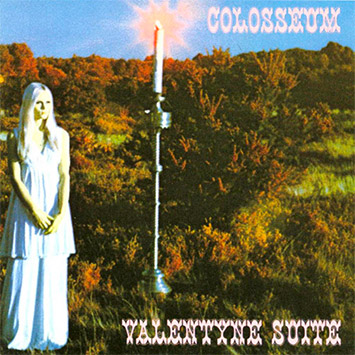
Valentyne Suite is Colosseum’s second studio album
Valentyne Suite was released in November 1969, just under a year later than the band’s debut Those Who Are About to Die Salute You (March 1969). Colosseum was formed in 1968 by drummer Jon Hiseman (1944-2018) and saxophonist Dick Heckstall-Smith (1934-2004), who had both previously played together in the New Jazz Orchestra and the semi-legendary The Graham Bond Organisation (the band had played with Jack Bruce, Ginger Baker, John McLaughlin, etc.). Graham Bond, who led the Organisation, was a heavy substance abuser and the band was chaotic, which contributed to Hiseman and Heckstall-Smith forming their own band. Another reason was the desire to make more ’complex and serious’ music. The Graham Bond Organisation, however, despite its quality players, was a relatively traditional rhythm & blues outfit, and Hiseman in particular had much higher ambitions…
7. Pharoah Sanders: Karma

Karma is the third album by saxophonist Pharoah Sanders (b. 1940) as leader of the band. Before forming his own band, Sanders played for a couple of years in John Coltrane’s band (and on the albums Ascension and Meditations), where his saxophone playing influences moved in both directions between the two master players.
Karma is a colourful and psychedelic-sounding avant-garde jazz with a clear ”spiritual” touch, and Karma could well be seen as a kind of continuation of John Coltrane’s spiritual jazz in A Love Supreme (1965). And Sanders’ music, like some of Coltrane’s late recordings, is also influenced by African and Indian music.
Karma consists of just two tracks, with ”The Creator Has a Masterplan” taking up 32 minutes of the 38-minute duration. The track opens with a rich, screeching percussion backdrop, over which Sanders layers his wistful, piercing yet huge tenor saxophone sound. The music grows with the big band (tenor saxophone, two bassists, two percussionists, flutist, pianist, drummer and French horn) and eventually becomes a cosmic roar, occasionally surging back into a calmer mood until it’s time for another brave climax. At times it becomes a mad free-jazz honking, and those moments are not always among the most successful of the piece. It’s a wild and wonderful piece of work that doesn’t quite carry its massive duration one hundred percent.
After the long epic, there is the slightly less than six-minute ”Colors”, a more conventional ballad in style and structure. The vocal parts of the song are sung by percussionist Leon Thomas. ”Colors” is not particularly strong as a stand-alone song, but it serves well as a cool-down after the main act, ”The Creator Has a Masterplan”.
Karma is a highly recommended album for lovers of spiritual avant-garde jazz and John Coltrane fans who long for a follow-up to his late recordings.
8. Frank Zappa: Hot Rats

Hot Rats is Frank Zappa’s (1940-1993) second studio album (sixth if you count his work with The Mothers Of Invention) and is considered by many to be his best. Including me.
Hot Rats may well be the most complex rock music that had been made up to 1969. The album’s complex songs are heavily influenced by jazz, but it’s still difficult to pin it directly to the jazz-rock genre. Perhaps partly because the songs are mostly so carefully composed. The carefully arranged parts by the band’s wind player Ian Underwood (b. 1939) are particularly indicative of this. Underwood plays a number of different wind parts (flute, saxophone, clarinet) on several tracks through overlapping recordings. At times on the album he is a one-man brass band. There are also more free parts to counterbalance the tightly composed sections, but they are more blues than jazz. Those free parts are not the best material on the album, and unfortunately they are a bit too long.
The two extremes of Hot Rats are well illustrated by the album’s highlight, the charmingly chirpy yet organically evolving instrumental ”Peaches En Regalia”, which is just over three minutes long, and the almost ten-minute blues-rock revival ”Willie The Pimp”. ”Peaches En Regalia” is a very carefully considered, constantly progressing composition that keeps changing subtly without repeating itself. The intricate use of wind instruments creates an exciting ’fake’ medieval feel to the song. ’Peaches En Regalia’ is a perfect example of a song that is very complex, yet accessible to the listener. An excellent achievement!
On the other hand, ”Willie The Pimp”, which represents the opposite side of the album, sinks far too long into a rather empty blues jam, although the main theme of the song itself works nicely, and the raw vocal performance of guest vocalist Captain Beefheart (1941-2010) is downright exhilarating. The longest track on the album, the 17-minute ”The Gumbo Variations”, also gets bogged down in overlong and boring jams, but fortunately the album ends with the superb studio trickery of ”It Must Be Camel” which, like ”Peaches On Regalia”, is very carefully composed.
In addition to the complexity of the compositions, Hot Rats was also a trailblazer in terms of studio technology. Zappa experimented with all kinds of studio tricks, such as double-speed instrumental parts, a good example being the fun percussion parts of ”It Must Be Camel”. Hot Rats is also one of the first albums to record drums using multiple tracks (in this case four) instead of the hitherto standard mono recording. The one-man-orchestra overdubs by Ian Underwood mentioned above were, of course, also innovative in 1969.
Hot Rats is a somewhat frustrating experience because of its dichotomy. The short, meticulously composed songs are great, but the longer, more free-form songs contain too much idling.
The influence of Hot Rats, and of Frank Zappa in general of course, on progressive music has been enormous. On the prog side, the British Canterbury scene in particular has benefited enormously from Zappa’s music. As did the complex avant- prog movement that blossomed a little later. In my home country Finland, the influence of Hot Rats could be clearly heard on Pekka Pohjola’s first few solo albums, and even earlier on Wigwam.
Best tracks: ”Peaches En Regalia” ja ”It Must Be Camel”
9. Yes : s/t

None of the members of Yes had much of a resume when the band was formed, but they were already quite accomplished musicians through hard gigging and practice by the time they began recording their untitled debut album in the spring of 1969.
Yes was formed by jazz-loving drummer Bill Bruford (b.1949), choir-trained, melodic but aggressive bassist Chris Squire (1948-2015), rocking, rhythmic organist Tony Kaye (b.1946), who started piano lessons at the age of four., psychedelic rock guitarist Peter Banks (1947-2013) and vocalist Jon Anderson (b.1944) with his distinctive countertenor sound.
Yes may not have started their career with a legendary album like King Crimson or Pink Floyd, but the band has already put together a good package with this debut album. Of course, the package was dismantled and reassembled many more times during the band’s career. Yes’ music at this stage is still a long way from the epic progressive rock of the years to come, but the band’s pop/rock songs were already carefully arranged and the playing was skilful. Above all, the album’s energy and good vibes are, at their best, downright intoxicating. Everyone is already playing well at this stage, especially the rhythm section Bruford/Squire is rocking really hard together. Peter Banks’ psychedelic-meets-Wes Montgomery guitar playing also impresses at many points, even if it’s not always so precise or technically flawless.
Most of the songs on the album are composed by Jon Anderson or Chris Squire, but there are also two covers, ”Every Little Thing” by The Beatles and ”I See You” by Byrds, which Yes have arranged nicely to their own style. Especially ”I See You” has a nice long instrumental section added.
One of the highlights of the album is ”Looking Around”, co-written by Anderson and Squire, which is paced by Tony Kaye’s excellent organ riffing. The chorus is damn catchy!
Of the songs on the debut, only the beautiful and delicate Jon Anderson-penned ”Survival” really had any kind of life in Yes’ live sets for any length of time, but I think that says more about the hard-hitting nature of the band’s future material than the weakness of these songs.
Yes’s first album received some positive reviews, but sold poorly. However, the band continued to tour vigorously, winning over audiences and returning the following year to record their second album Time And A Word with the same line-up. And with a symphony orchestra…
Best tracks: ”Beyond And Before”, ”Looking Around” ja ”Survival”
10. Caravan : s/t

Formed in 1968, Caravan was born on the ruins of the legendary Canterbury band Wilde Flowers. After the demise of Wilde Flowers (who never recorded), ex-members guitarist/vocalist Pye Hastings (b.1947), bassist/vocalist Richard Sinclair (b.1948), keyboardist Dave Sinclair (b.1947) (Richard’s cousin) and drummer Richard Coughlan (1947-2013) formed Caravan while Robert Wyatt founded Soft Machine (later joined by another Wilde Flowers veteran Hugh Hopper).
With Caravan and Soft Machine, the most influential bands of the so-called Canterbury scene were assembled. While Soft Machine from the beginning went into more experimental and challenging waters, Caravan always had a somewhat more pop-oriented feel, although their music, like Soft Machine’s, was also heavily influenced by psychedelia and jazz.
Recorded in late 1968 and released in January 1969, Caravan’s untitled debut is an important part of the early days of progressive rock, even if it cannot quite be described as a mature representative of the genre. The album has a charming and slightly home-spun atmosphere. The music is cosy and approachable, but never at any point languid. The band’s young musicians may not be virtuosos, but they already have a good command of their instruments at this stage. Dave Sinclair’s organ parts in particular have a nice kick at times. There is no excessive desire to show off and the musicians don’t come across as rock gods on the album, but instead there is a nice feeling of humanity over everything and after listening to the album you get the feeling that it would be nice to talk about music with these guys over a pint in the pub. A little bit of Monty Python-like humour also plays an important role on the album. This combination of a certain warm earthiness and a twinkle in the eye was to become important elements on future Canterbury bands’ albums.
The album opener ”Place Of My Own” is a beautiful and wistful pop song, sung by Pye Hastings in a very sympathetic way. The next song ”Ride” also works nicely. ”Ride” reminds me of the late production of The Beatles. At first calmly and psychedelically plodding along, but then exploding into life with the organ, the song is good stuff until it comes to a shaky end with a rather clumsy fade-out at the end.
The third track, ”Policeman”, composed and sung by Richard Sinclair, is a rather shaky affair and doesn’t really go anywhere. Fortunately, the next track, ”Love Song With Flute”, is one of the best on the album. The beautiful melody is developed leisurely for the first minute and a half and then the tempo picks up and the song continues to build up energy while remaining serenely melodic and inviting throughout. Pye Hastings’ vocals sound remarkably much like Robert Wyatt in this song. Pye Hastings’ older brother Jimmy Hastings (b.1938) plays a beautiful flute solo (which he improvised in one take without ever having heard the song before) and then this song ends with a bit of a bump. ”Love Song With Flute” is already quite mature Caravan and also a good general example of what the ”Canterbury sound” really is.
The next track, ”Cecil Rons”, differs from what we heard before with its more rhythmic sound, although the chorus is again quite melodic. And quite catchy! The highlight of the song is the vocalist’s bellowing cry of ”Cecil RoooONS!”. Very amusing sound! The mood calms down again with ”Magic Man” which is a bit like ”Place Of My Own”, a melancholic pop track, but not nearly as successful. After a promising beginning, the song stays a bit stagnant. ”Grandma’s Lawn” is the second song on the album, sung and composed by Richard Sinclair. And thankfully much more successful than ”Policeman”. As a singer Sinclair is still a bit rough around the edges and Hasting does a better job. In the years to come, the situation would be quite the opposite.
The album closes with the most humorously titled 9-minute ”Where But For Caravan Would I?”, which foreshadows the band’s future prog direction. The song had its origins back in the days of Wylde Flowers, which is why Brian Hopper (Hugh’s brother), a member of that band, was given the composition credit. The slightly more complex song lets the band rip a little more than the other material. The organ-led, rocking instrumental section, which starts at around three minutes, is a nice listen, but on the other hand could be even more powerful. However, David Sinclair gets to play his longest and best organ solo on the album.
It’s a pretty strong debut, even if not all the songs on the album were a total success. However, the album already provided a good starting point and building blocks for a band that developed quickly but organically in the following years.
Best tracks: ”Place Of My Own”, ”Love Song With Flute”, ”Cecil Rons”, ”Where But For Caravan Would I?”
11. Kevin Ayers: Joy Of A Toy

Joy Of A Toy is Kevin Ayers’ first solo album.
Kevin Ayers (1944-2013) left the pioneering Soft Machine in September 1968 because he could no longer stand the constant touring of the band and the music business in general. Ayers left music altogether for a while and retired to Ibiza to loiter with another former Soft Machine member, Daevid Allen. Ayers, who was often accused of being lazy, was actually more of a downshifter in his own time as new songs soon began to emerge in the Mediterranean sun. Things just had to happen at Ayers’ own leisurely pace.
However, Ayers had not left Soft Machine out of sheer laziness. It was also about musical differences. Ayers felt that the band’s music was becoming too complex and he was not a jazz fan to the same extent as the other members. So it was not surprising that when it came time to make his first solo album he turned to simpler music.
In his solo career, Ayers headed in the direction of quite simple songs, without sinking into the blandness of the mainstream. Despite their simplicity, Ayers’ best songs are cleverly and richly arranged. On the other hand, especially on his early albums, there are always surprising avant-garde elements that sometimes push the mood in a very bizarre direction.
Ayers didn’t burn bridges towards Soft Machine, however, and drummer Robert Wyatt, bassist Hugh Hopper and keyboardist Mike Ratledge form the core of Joy Of A Toy’s backing band (Rob Tait plays drums on a couple of tracks instead of Wyatt). The trio play mostly in a rather subdued way, as if in the role of studio musicians, but occasionally their personalities emerge, as in Ratledge’s wild and typically distorted organ playing that closes ”Song For Insane Times”. Classically trained composer David Bedford also plays a prominent role on the album and is responsible for the fine arrangements and also plays piano. Bedford’s colourful arrangements are performed by the Soft Machine men, along with cellist Paul Buckmaster, double bassist Jeff Clyne and oboe player Paul Minns. Bedford became a member of The Whole World, the band founded by Ayers the following year.
Joy Of A Toy sounds at times like a sequel to Sgt. Pepper. This sensation is especially evident in the carnivalesque ”Joy Of A Toy” marching-band-meets-circus instrumental that kicks off the album (well, there are some boisterous wailing vocals). The music on the album is often similarly richly orchestrated and arranged melodic pop surrounded by a subtle psychedelic haze throughout. The lyrics of ”Song For Insane Times” even contain a direct reference to The Beatles (”And everyone sung a chorus of I am the walrus”).
The psychedelia side of the album also has a strong Syd Barrett influence that can be heard in the lyrics and a certain playfulness in the music. Although where Barrett seemed like a real man-child, Ayers appears more like a ladies’ man telling his funny stories with a twinkle in his eye. This creates an interesting impression that is at once naively playful but also naughty. In this sense, Ayers has had a great influence on the so-called Canterbury scene.
The shadow of The Beatles and Syd Barrett is not too heavy, however, and Ayers’ soft, declarative baritone voice and his Canterbury background in particular add a special touch.
The highlight of the album is the fateful-sounding, mostly acoustic ballad ”The Lady Rachel”, which became something of a trademark Ayers song and a big live favourite. The otherwise straightforward ballad is tinged with odd melodica and kazoo flourishes. It’s as if Ayers was trying to undermine his own commercial potential! This trait would colour his later output as well. A couple of years later Bedford arranged an orchestral version of ”Lady Rachel” which can be found on Joy Of A Toy’s 2003 reissue. On the same release, there is also a previously unreleased song ”Religious Experience (Singing Song In The Morning)” which features Syd Barrett’s psychedelic guitar playing. The rhythm section is played by Caravan bassist Richard Sinclair and drummer Richard Coughlan.
Unlike some of Ayers’ later albums, Joy Of A Toy doesn’t slip into being too avant-garde, except for the minimalist, plodding ”Oleh Oleh Bandu Bandong” with two female vocalist singers in Malay (Ayers lived in Malaysia for six years as a child) and Bedford’s piano screeching atonally.
Ayers made a lot of great music in the following years until the level of recordings started to drop sharply after the mid-70s. This first album by the Canterbury eccentric may even be the most consistent release of his career.
Best tracks: ”Joy of a Toy Continued”, ”Town Feeling”, ”Girl” On A Swing”, ”Song For Insane Times”, ”Lady Rachel”
12. Can: Monster Movie
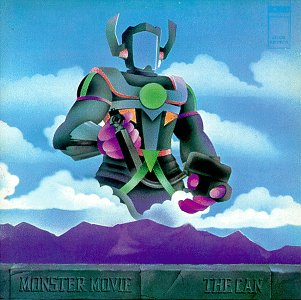
Monster Movie is Can’s first studio album.
Can was founded in Cologne in 1968. Two of the founding members, bassist Holger Czukay (1937-2017) and keyboardist Irmin Schmidt, were students of the avant-garde composer Karlheinz Stockhausen. These academically oriented musicians were guided in the direction of new, more experimental rock music by the talented younger guitarist Michael Karoli. The quintet was completed by the addition of former free-jazz drummer Jaki Liebezeit, and eventually American singer/poet Malcolm Mooney.
Can had already recorded an album in 1968, Prepared to Meet Thy PNOOM, which was intended for its first release, but the material was not accepted by the record companies and it was not released until 1981 under the name Delay 1968.
Monster Movie is Can’s more commercial attempt to get a foot in the door of the music industry. The operation was clearly a success as Music Factory released it in July 1969. However, there is no compromise to be found with the album. None whatsoever.
Can’s debut consists of just four tracks. The three songs on the A-side range in length from 4-7 minutes, while the B-side is filled with the 20+ minute ”Yoo Doo Right”. It is one of the first songs that fill the one full vinyl side on a rock album.
”Yoo Doo Right” contains some really great moments like Mooney’s painfully wailing vocals, a rather magical sounding and endlessly chanted chorus, as well as charmingly primitive tapping drumming that rolls from speaker to speaker, strange effects and fascinating atonal guitar playing, but the whole still feels a bit stretched.
The best moments of the album come in the first half. Especially the album opener ”Father Cannot Yell” is really impressive music. It offers electronic bleeps, rubbery, bouncing bass guitar, hypnotically buzzing organ, simultaneously unpredictable and yet assured drumming, torturedly wailing electric guitar and, as the icing on the cake, Mooney’s completely improvised vocals, which range from an emphatic, declarative style to an excellent, wordless, repetitive growl. Mooney even manages to spontaneously build in a completely believable chorus. ”Father Cannot Yell” is certainly one of the most stunning performances as far as improvised vocals are concerned. After a more chaotic section in the beginning, the band finds a hypnotic and slightly mechanical groove in the middle stages that the band would later become known for. ”Father Cannot Yell” presents Can’s style in a surprisingly seasoned and mature way.
Reminiscent of the Velvet Underground, ”Mary, Mary So Contrary” is a calmer, but in its own way just as powerful. You could almost call it a ballad with the gentle way Mooney sings, but on the other hand, Karol’s insistent buzzing and wrenching electric guitar takes the mood in a completely different, more twisted direction. I’m sure ”Mary, Mary So Contrary” has been a huge influence on American Cheer-Accident.
The short ”Outside My Door” is a slightly less important song. It’s more straightforward, entertaining contemporary psychedelic rock. Mooney’s vocals, on the other hand, are full-on punk rock. So maybe ”Outside My Door” was ahead of its time after all.
Monster Movie is a slightly more polished and stylistically diverse album than Delay 1968, but it’s still pretty rough around the edges. Can’s music at this stage is a peculiar blend of psychedelic rock, blues, free jazz and many other genres. The band’s own ’motorik’ style, a huge influence on the krautrock scene as a whole, was still taking shape, but repetitive jamming already defines some of the songs on the album.
Monster Movie is an exciting album. It sounds very ancient and very contemporary at the same time. One thing is for sure; with this debut, Can was reaching decades into the future.
( By the way, the cover of the album features a variation of Galactus, the world-eater from Marvel comics, originally drawn by Jack Kirby.)
Best tracks: ”Father Cannot Yell”, ”Mary, Mary So Contrary”
13. Pink Floyd: Ummagumma

Ummagumma is the fourth album by Pink Floyd, formed in 1965.
Pink Floyd had made only one album (the soundtrack album More) before Ummagumma entirely without their original artistic director Syd Barrett, and the band was obviously still looking for direction in 1969, still feeling a little lost. Perhaps a certain lack of faith in the present was also reflected in Ummagumma’s rather unusual and partly backward-looking format. The first disc contains four live tracks while the second disc contains five new songs that are the individual work of the band members, both in terms of composition and execution…
Author: JANNE YLIRUUSI
Other parts of the Year by Year series can be found here
 Pienemmät Purot
Jätä kommentti