
Of The Last Human Being is Sleepytime Gorilla Museum’s fourth studio album.
The Sleepytime Gorilla Museum (hereafter SGM) was born in California in the late 90s. Vocalist/guitarist Nils Frykdahl and bassist Dan Rathbun, formerly of Idiot Flesh, joined forces with violinist Carla Kihlstedt and two percussionists Moe! Staiano and David Shamrock to form SGM in 1991. The band recorded their debut album Grand Opening And Closing (2001) a couple of years later.
On the next album Of Natural History (2004), after a few drum changes, the line-up was stabilised with Frykdahl, Rathbun, Kihlstedt, drummer Matthias Bossi (who is also Kihltedt’s husband) and multi-instrumentalist Michael Iago Mellender.
This quasi-definitive line-up of the band recorded one more album In Glorious Times in 2007. In 2011, SGM announced three farewell shows and after that it all seemed to be over. Permanently.
Immediately after the SGM split, Nils Frykdahl and Dan Rathbun founded the Free Salamander Exhibit , while Kihlstedt and Bossi founded Radio Radio Rabbit. SGM was thus divided into two camps, as it were. Free Salamander Exhibit, which so far has released only one album, continued to play more or less SGM-style music, while Radio Radio Rabbit, which was to release as many as six albums by 2022, took a more experimental art-pop direction. Kihlstedt also played in the acoustic Tin Hat Trio and, together with Boss, in Fred Frith’s Cosa Brava for a few years.
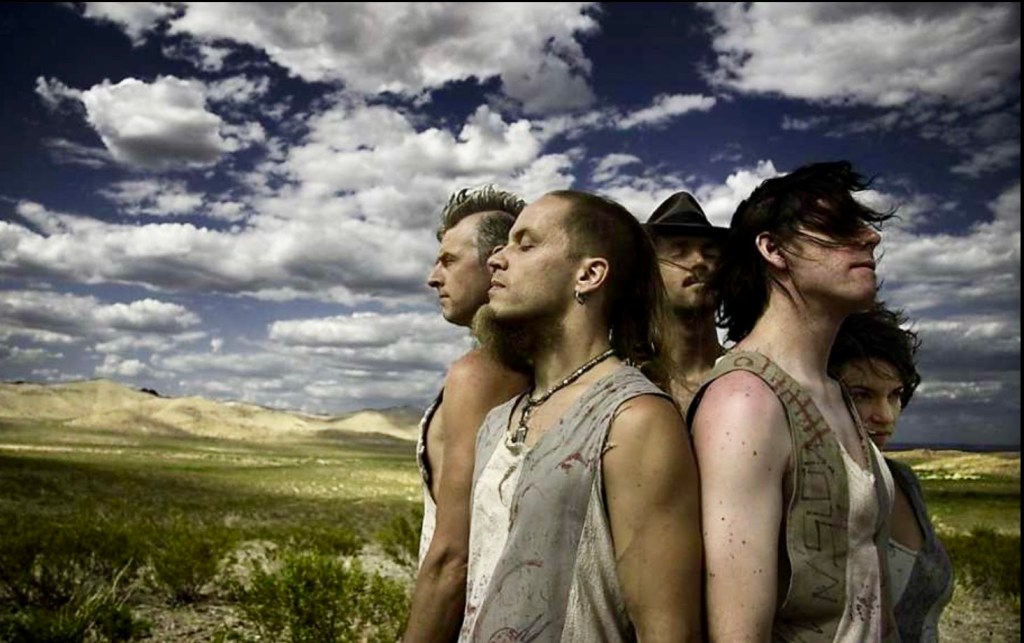
As the years and decades passed, many could hardly have imagined the return of the Sleepytime Gorilla Museum. In August 2023, however, the band members launched the ”Save the Last Human Being!” campaign on Kickstarter to raise funds for a studio album, short film and tour. The Kickstarter campaign was ultimately a great success, raising even more money than the original goal.
But before we get to SGM’s return, let’s take a moment to examine what kind of band they really are.
Read also: Review: Henry Cow – Leg End (1973)
SGM’s two main composers, Frykdahl and Kihlstedt (who is an ardent Béla Bartók fan!) both have a classical education, so it’s not surprising that the band’s original aim was to combine the compositional techniques of art music with the power of rock music. It is very much a concept familiar from the early days of progressive rock. However, Frykdal and Kihlstedt were particularly interested in the more modern 20th century art music, and when these influences are combined with rock music, it is no wonder that SGM’s music is easy to associate stylistically with avant-progressive bands like Henry Cow, Art Bears and Univers Zero . Like these bands, SGM’s music is intense and complex rhythmically and harmonically. The band’s lyrics, often with an apocalyptic theme, are intellectually challenging, or at least very strange. The instrumentation is varied and alongside the familiar and trusted rock instruments one often hears violin, various wind instruments, custom instruments built by Rathbun and percussionist Mellender’s metal scrap percussion. SGM’s music is therefore very far from the middle ground of prog. Not to mention mainstream rock!
However, there is one feature of the band’s music that clearly distinguished it from the avant-prog bands that started in the 70s. SGM’s music is also very strongly influenced by extreme metal. The band’s music features heavily distorted and low-tuned guitars and, most remarkably, also includes crowled vocals. However, Nils Frykdahl’s vocals are not just angry cookie monster crowling but, in the style of Peter Hammill, he is able to move smootly from a very fierce and raucous style to a quiet sensitivity. Frykdahl’s vocals could be described as a combination of Hammill, Tom Waits and death crowl. It is worth noting, however, that Frykdahl is not the only vocalist in the band, but that the other members also contribute to the vocals. SGM’s vocal arrangements are often very varied and complex.
”Sleepytime Gorilla Museum does things that we never dreamed of doing in King Crimson or in any band that I’ve been in.
Tony Levin
An essential part of SGM is also a kind of vaudevillian freakshow spirit involving strange costumes, face painting and general theatricality. The band’s gigs were often more like performances than regular rock shows. Sometimes the music could be interrupted by a puppet show!
Lue myös
- Levyarvio: Steve Walsh – Glossolalia (2000)
- Year by Year : Best Albums of 1976 – 21-29
- Levyarvio: Jimmy Page – Outrider (1988)
- Review: Brian Eno + David Byrne – My Life in the Bush of Ghosts (1981)
- Levyarvio: Gong – Zero To Infinity (2000)
- Review: Michael Oldfield – Heaven’s Open (1991)
Now that we know roughly what kind of music SGM plays (my description only scratches the surface, please listen for yourself!) it’s time to move on to the band’s comeback album Of The Last Human Being.
Of The Last Human Being is a bit of a strange listening experience if you are familiar with the history of SGM and its ”side projects”. Indeed, the album evokes strange deja-vu sensations here and there. ”Wait a minute… this sounds somehow familiar… and so does this…”. I have to admit I was a little disappointed when I realised that Of The Last Human Being was not composed entirely of recent SGM music, but that it was more of a ”lost” album from the early 2010s. An album that never came out. Except that it did, eventually.
Most of the music on Of The Last Human Being was recorded between 2010 and 2011. Originally, the band had planned to release this album, which was ultimately unfinished, as a farewell after the decision to break up had been made. For one reason or another, however, the project was not completed in time.
And since the album’s music was never used, it’s no wonder that some of it has since materialised on albums by the band members’ other projects. ”The Gift” premiered on the debut Free Salamander Exhibit and ”Silverfish” and ”Hush Hush” have been heard on Radio Radio Rabbit. ”Hush Hush” was composed after the break-up of SGM so would not have been heard on the original ”lost” album. To be honest, I think the RRB original is better than the SGM interpretation, but that’s not really the point, the point is that the song has been successfully adapted into a more rumbling interpretation that sounds more like SGM than a cover song.
Somewhat surprisingly, the album also includes one real cover song. ”SPQR” by avant-garde rockers This Heat (from the album Deceit, 1981) gets a raucous and enthusiastic interpretation. SGM does the song credit handsomely, but I’m not entirely convinced that there’s enough of their own vision to merit its place on an otherwise long, almost 66-minute album.
Although most of the music on Of The Last Human Being was composed, and even recorded, over 10 years ago, it doesn’t sound like a direct continuation of In Glorious Times. The main difference is that the music is not quite as heavy as on the band’s first three albums. The most obvious metal edge seems to be gone. The music is not as heavy as before and you don’t hear Frykdahl’s growling vocals as much. The overall sound is more eclectic and varied than before.
The album’s opening track ”Salamander In Two Worlds” reflects the overall change in the album. The slow and chamber-like ”Salamander In Two Worlds” first transforms into a beautiful ballad with mystical flutes and screeching xylophones. Then it grows into a violent pounding, led by an trumpet and violin, but without the frenetic brutality that SGM’s music used to be. Some might see this as a kind of dilution, but I actually enjoy the band’s more restrained approach. Those who approach the band from a metal perspective may disagree, but I find the band’s diversification of expression with Of The Last Human Being interesting.
Along with ”Salamander In Two Worlds”, the album’s highlights for me are ”El Evil”, ”The Gift”, and ”Old Grey Heron”.
True to its name, the deliciously mischievous ”El Evil” is carried along by a fast, intricate violin riff. Here and there, alongside the violin, the song’s brash riffing electric guitar, Bossi’s frenetic drumming and, of course, Frykdahl’s idiosyncratic take on the growl vocals add a touch of swagger to the song. The tolling bells in the background of the chorus ”Let the bells ring!”is an excellent detail. ”El Evil” is followed seamlessly by the sort of song coda ”Bells for Kith and Kin” which is built solely on a variety of chiming bells evoking Tibetan monks.
”The Gift” is the most hard-hitting track on the album. It has the most of SGM’s old avant-garde metal spirit and stylistically it would have been a perfect fit for In Glorious Times. ”The Gift” features the tightly played heavy riffs familiar to SGM, flexible tempos, complex time signatures and Frykdahl’s furious vocals softened here and there by Kihlsted’s voice. One of the song’s lightning-fast riffs sounds surprisingly much like King Crimson. In a way ”The Gift” is a clichéd SGM song, but never mind when the result is so entertaining!
SGM has some ten-minute and even longer songs, but Of The Last Human Being keeps the durations quite contained. The album’s longest track, at just over seven minutes, ”Old Grey Heron” is one of its best moments. Where my other favourite tracks on the album are relatively heavy and fast, ”Old Grey Heron” is a fairly subdued track that progresses and grows in a way that is uncharacteristic of SGM, without any big shock effects or surprises. And I mean this in a completely positive sense. It’s as if the band manages to channel their DNA into a song in a very different way than they usually do, but still sounding just like themselves.
The album’s clearest departure from the old is ”Save It”. It’s a strongly funky oddball that jerks along in a very complex rhythm. SGM hasn’t done anything quite like it before. ”Save It” is an interesting and entertaining track, but perhaps stands out a little too much stylistically from the rest of the material.
Of The Last Human Being is not quite as coherent and strong as the two best albums of the band’s original period, Of Natural History and In Glorious Times, but the lighter and more varied style opens up interesting possibilities if the band decides to continue. Now that the cupboards have been cleaned out, it would be great to hear more new Sleepytime Gorilla Museum music built from scratch.
Best tracks: “Salamander In Two Worlds”, “El Evil”, The Gift”, ”Old Grey Heron”
Author: JANNE YLIRUUSI
Read also: Review: Jack O’ The Clock – The Warm, Dark Circus (2023)
Tracks
- Salamander in Two Worlds (6:31)
- Fanfare for the Last Human Being (1:31)
- El Evil (5:45)
- Bells for Kith and Kin (1:26)
- Silverfish (7:17)
- S.P.Q.R. (4:05
- We Must Know More (3:36)
- The Gift (6:11)
- Hush, Hush (7:45)
- Save It! (2:59)
- Burn into Light (5:25)
- Old Grey Heron (7:24)
- Rose-Colored Song (5:46)
Nils Frykdahl: guitar, flute, vocals Carla Kihlstedt: violin, percussion, bass harmonica, vocals Michael ”Iago” Mellender: guitar, xylophone, trumpet, percussion, vocals Dan Rathbun: bass guitar, violin, vocals, anvil Matthias Bossi: drums, glockenspiel, xylophone, piano, backing vocals
 Pienemmät Purot
Jätä kommentti