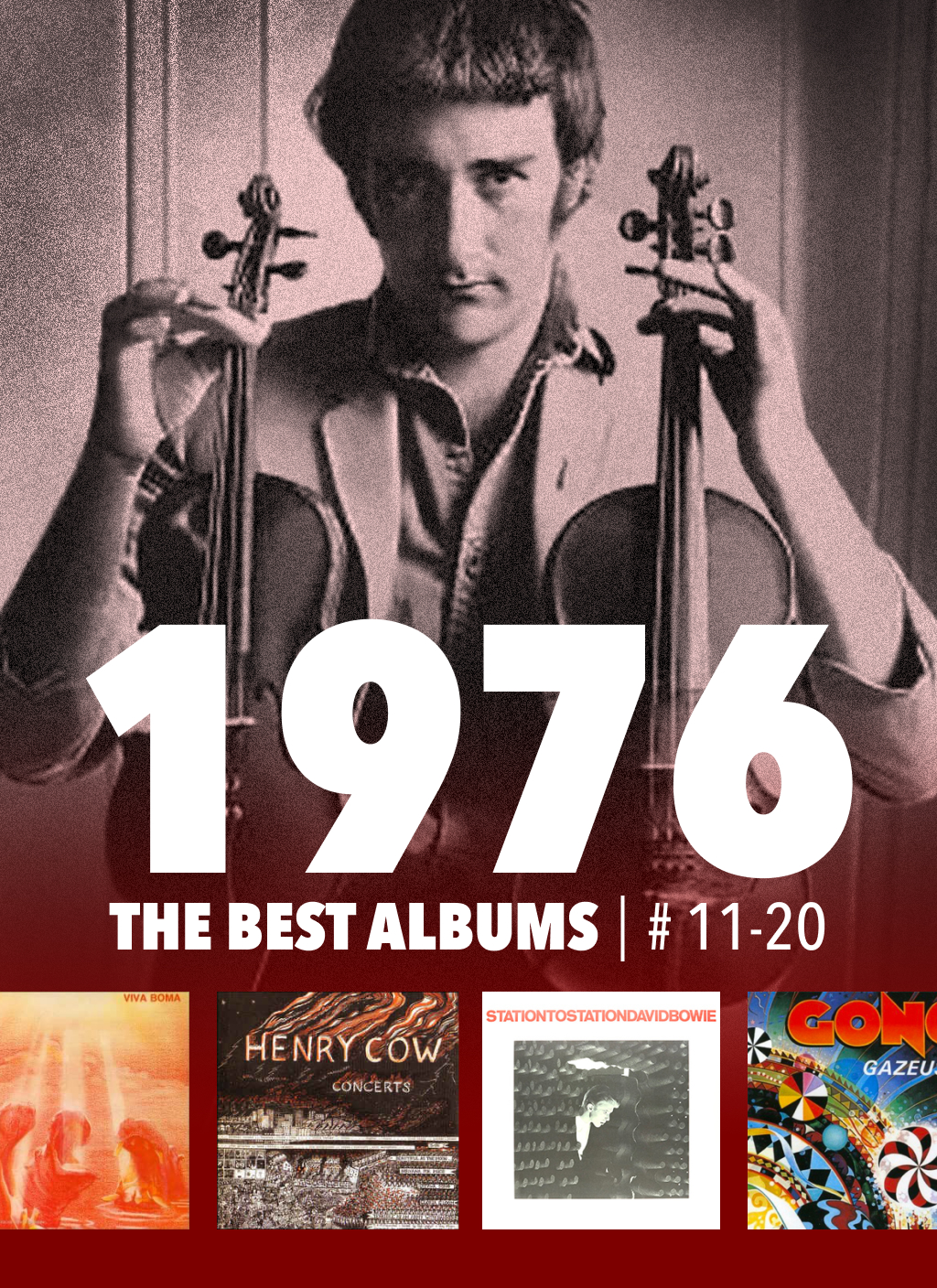
The author’s picks for the best albums of 1976, ranked 11-20.
In the Year by Year series, I’ll go through my favourite albums from 1969 to the present day.
- Henry Cow: Concerts (UK) ****½
- David Bowie: Station To Station (UK) ****½
- Gong: Gazeuse! (UK) ****½
- Cos : Viva Boma (BE) ****
- Steely Dan: The Royal Scam (US) ****
- John G. Perry: Sunset Wading (UK) ****
- Vangelis : Albedo 0.39 (GR) ****
- Art Zoyd : Symphonie Pour Le Jour Où Brûleront Les Cités (FR) ****
- Tangerine Dream: Stratosfear (DE) ****
- Wigwam: Lucky Golden Stripes and Starpose (FI) ****
11. Henry Cow : Concerts
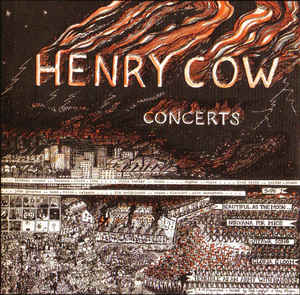
Concerts is the first live album by Henry Cow, an avant-prog band founded in 1968.
After the release of In Praise Of Learning (1975)it quickly became clear that the merger between Henry Cow and Slapp Happy had come to an end. Anthony Moore left the band, and Peter Blegvad was dismissed shortly thereafter.
The remaining members—Fred Frith (guitar, violin, percussion), Tim Hodgkinson (keyboards, clarinet), John Greaves (bass, piano), Chris Cutler (drums), Lindsay Cooper (bassoon, oboe), and Dagmar Krause (vocals)—decided to focus their energy on live performances. What followed was an intense year-and-a-half-long tour during which the band was on the road almost constantly, living modestly—almost starving—usually staying in their trusty tour bus and cooking their own meals by the side of the road. They played gigs wherever they were offered, which meant that at times the band would zip around in their bus, say, from France to Norway and from there straight back to Portugal. The band thus lived under extremely challenging conditions. Fans had to wait a full three years for the next studio album, due in part to the grueling tour schedule, label issues, and artistic disagreements…
12. David Bowie: Station To Station
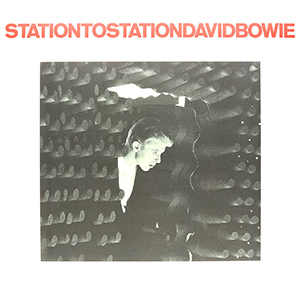
Station To Station is the tenth studio album by David Bowie, who released his first album in 1967.
Bowie’s previous album, Young Americans (1975), was a pure soul album. Or as pure as one could expect from a white British vocalist. Bowie himself called his experiment, which was only partially successful, ”plastic soul.” Station To Station is a counter-reaction to the polished soul pop of Young Americans and, on the other hand, a clear transitional album that gives a taste of Bowie’s future.
Station To Station was recorded in the US, but it also marked the beginning of Bowie’s transition to a more European rock style. Soul and funk are still present in many of the songs on the album, but at the same time, influences from krautrock, prog, and even Western art music are creeping into the music. Station To Station is a collision point between American and European influences, and on subsequent albums, the balance shifted increasingly towards Europe…
13. Gong : Gazeuse!
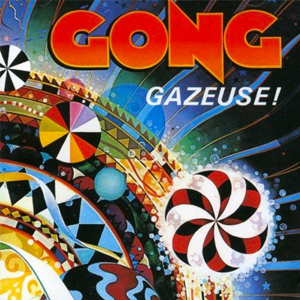
Gazeuse! is Gong’s seventh album, but it can also be considered the first album by Pierre Moerlen’s Gong, even though it isn’t officially referred to by that name. In the U.S., Gazeuse! (the word “gazeuse” is French and roughly translates to “sparkling” or “bubbly”) was released under the title Expresso.
Gong’s previous album, Shamal, was a brilliant transitional album that struck an interesting balance between Gong’s earlier style and the direction continued by Gazeus!. However, the Shamal lineup could not withstand the musical conflicts that had been simmering within the band for several years, dating back to the sessions for the You album (1974).
Guitarist Steve Hillage had only participated in Shamal as a guest musician, and now he left the band entirely. Bassist Mike Howlett, who had remained an important link to the old Gong sound on Shamal, eventually decided to leave the band as well. Or rather, he was forced to do so. Howlett wanted to make more vocal music going forward, while drummer Pierre Moerlen wanted to focus purely on instrumental music…
14. Cos: Viva Boma
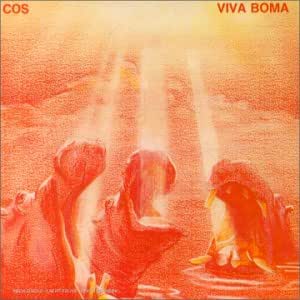
Viva Boma is the second studio album by the Belgian band Cos.
Cos was founded by guitarist/flutist Daniel Schell in 1974, and the band released its excellent debut album, Postaeolian Train Robbery, that same year. Postaeolian Train Robbery drew inspiration from, among others, Magma and Hatfield And The North, as well as jazz-rock in general.
Their debut album, Postaeolian Train Robbery, was already an excellent record, but Viva Boma marks a clear step forward for the band. The music on Viva Boma is more sophisticated and complex, and I particularly enjoy the increased prominence of the keyboards as well as the expanded role of vocalist Pascale Son (Schell’s wife). Somewhat paradoxically, Viva Boma sounds both more pop-oriented and more progressive than its predecessor.
Viva Boma also feels, more so than before, like an album that fits specifically into the Canterbury scene, even though the band’s geographical location doesn’t quite match…
Read also:
- Year by Year : Best Albums of 1976 – 11-20
- Review: Wigwam – Lucky Golden Stripes And Starpose (1976)
- Review: Rain Tree Crow – s/t (1991)
- Review: John G. Perry – Sunset Wading (1976)
- Levyarvio: Black Sabbath – Master Of Reality (1971)
- Review: Henry Cow – Concerts (1976)
- Levyarvio: Spock’s Beard – V (2000)
- Review: Cos – Viva Boma (1976)
- Levyarvio: King Crimson – The ConstruKction Of Light (2000)
15. Steely Dan: The Royal Scam
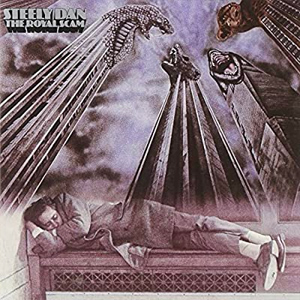
The Royal Scam is the fifth studio album by the American band Steely Dan, formed in 1972.
Led by keyboardist/vocalist Donald Fagen and guitarist Walter Becker, Steely Dan blended rock and jazz in a unique way without ever actually becoming a true jazz-rock band. The jazz-loving duo created their own sophisticated adult rock style by blending jazz with various forms of popular music. Fagen’s cryptic and often sarcastically laced complex lyrics always played a central role.
In their early years, Steely Dan was more of a “real” band, but by the time of The Royal Scam, the group had for some time been essentially just Fagen and Becker, along with a small army of studio musicians. In fact, over 20 studio musicians are credited on The Royal Scam. Aside from Becker, there are no fewer than four different guitarists featured on the album. However, the majority of the album’s numerous guitar solos are tastefully performed by studio veteran Larry Carlton, who has a background in jazz-rock.
Steely Dan’s first four albums contain many excellent songs, but none of them fully convince me as a whole.The Royal Scam, on the other hand, is a strong album from start to finish. The album’s strongest tracks, however, are the raucous opening track “Kid Charlamagne” and the stylish and dramatic title track that closes the album—a track running over six minutes in which the horns finally take on a larger role on an otherwise guitar-driven album—rank among the best songs of the band’s entire career.
The groovy, almost disco-like “The Fez” is also an excellent and fun song. The lyrics might be about safe sex, or if “fez” isn’t a metaphor for a condom, then maybe it’s just about a guy who likes to have sex while wearing a fez. And there’s nothing wrong with that.
In addition to disco, Fagen and Becker also experiment with light reggae tones in “Haitian Divorce,” which makes use of a talkbox. Dean Parks’ talkbox guitar playing (manipulated by Becker), however, gets a bit over the top toward the end. Less would have been enough.
The Royal Scam is an outstanding rock album, rich with diverse influences, and within Steely Dan’s own catalog, it is rivaled only by its follow-up, Aja (1977), which took the band’s sound in an even more sophisticated direction.
Best tracks: ”Kid Charlamagne”, ”Don’t Take Me Alive”, ”The Fez”, ”The Royal Scam”
16. John G. Perry : Sunset Wading
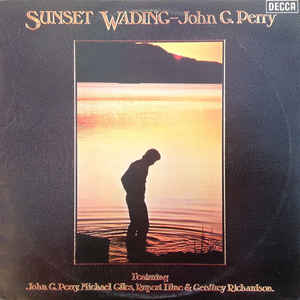
Sunset Wading is the first solo album by bassist John G. Perry.
John G. Perry is best known for his brief stint with Caravan, with whom he recorded two excellent albums, For Girls Who Grow Plump In The Night and Caravan & The New Symphonia.
After leaving Caravan, Perry worked extensively as a session musician for the young and up-and-coming producer Rupert Hine. Together with Rupert Hine, Perry also co-founded the band Quantum Jump, which released a rather excellent debut album blending prog and pop in 1976.
That same year, Perry was offered the chance to make a solo album as well. Naturally, his longtime friend Rupert Hine was chosen as the producer; he also plays all the keyboards on the album. They managed to recruit a rather impressive lineup of musicians…
Read also:
- Year by Year : Best Albums of 1976 – 11-20
- Review: Wigwam – Lucky Golden Stripes And Starpose (1976)
- Review: Rain Tree Crow – s/t (1991)
- Review: John G. Perry – Sunset Wading (1976)
- Levyarvio: Black Sabbath – Master Of Reality (1971)
- Review: Henry Cow – Concerts (1976)
- Levyarvio: Spock’s Beard – V (2000)
- Review: Cos – Viva Boma (1976)
- Levyarvio: King Crimson – The ConstruKction Of Light (2000)
17. Vangelis : Albedo 0.39
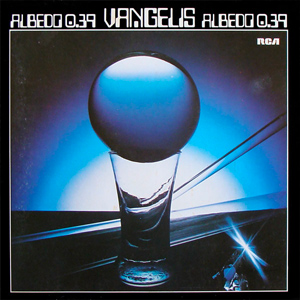
Albedo 0.39 is the seventh solo album—including soundtracks—by the Greek artist Evángelos Odysséas Papathanassíou, also known as Vangelis.
Albedo 0.39 is an instrumental concept album about space and related phenomena—pulsars, nebulae, and the like. Instrumental concept albums often fall a bit short in terms of how well they convey their concept. With Albedo 0.39, Vangelis manages quite well to conjure up atmospheres that truly seem to reflect the song titles and the phenomena hidden behind them. The album’s soundscape is also suitably cold and majestic, capturing the wonders of the cosmos.
As with most of Vangelis’s other albums, he produced the entire record from start to finish on his own. Vangelis plays drums and bass guitar on the album, but most of the instrumentation is performed on keyboards, on which he is a virtuoso both in terms of his playing skills and his ability to conjure up interesting sounds from those machines.
Albedo 0.39 is more electronic than Vangelis’s earlier albums, and the heavy use of sequencers takes the music somewhat in the same direction as Tangerine Dream. Vangelis’s music is, however, more melodic and versatile. Albedo 0.39 even features slight jazz-rock influences at times. The clearest example of this is the energetic eight-minute track “Main Sequence,” which isn’t a million miles away from Weather Report’s early albums. The two-part “Nucleogenesis” also returns to a jazz-rock sound, and the track brings to mind Yes’s Relayer. That is, the album Vangelis almost participated in making! I’ve always thought that Vangelis wouldn’t have fit very well with Yes, but maybe I’ve been wrong after all.
The undisputed highlight of the album, however, is its most famous track, “Alpha.” The song naturally builds from the repetition of a simple opening melody into a truly majestic-sounding, celebratory march. “Alpha” is downright uplifting, heroic music! “Alpha” would be perfect as the end credits music for some epic sci-fi movie.
Albedo 0.39 is one of Vangelis’s best albums and certainly one of the maestro’s albums that appeals most to fans of progressive rock.
Best tracks: ”Pulstar”, ”Alpha”, ”Main Seguence”, ”Nucleogenesis (Part One)”
18. Art Zoyd : Symphonie Pour Le Jour Où Brûleront Les Cités
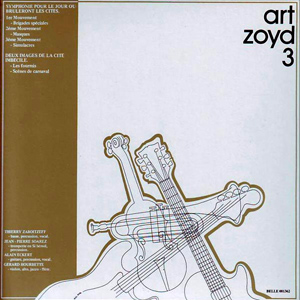
Symphonie Pour Le Jour Où Brûleront Les Cités is the debut album by the French avant-prog band Art Zoyd.
Founded in 1969 by violinist Gérard Hourbetten and bassist Thierry Zaboitzeff, Art Zoyd has perhaps taken the blending of classical and rock music more seriously than any other rock band. By the time of this debut album, however, rock had largely been weeded out of the band’s sound. The drums were completely absent, replaced by a somewhat chamber-music-like sound that nevertheless still retained rock’s intensity and aggression.
The band’s influences included early 20th-century masters of composition such as Igor Stravinsky and Bela Bartók, as well as the French group Magma, which had been creating a unique style of progressive rock since the early 1970s. Together with Magma and Henry Cow, Art Zoyd can be considered the third pillar of the so-called “avant-prog” subgenre of progressive rock. These three bands have all been key influences on nearly every band classified within that subgenre. Art Zoyd deserves particular credit for initiating the chamber music-like branch of avant-prog. For example, another important pioneer of the genre, Univers Zero, likely owes a great deal to Art Zoyd. It is hard to imagine that Univers Zero’s first albums would be what they are without Art Zoyd’s pioneering work.
Symphonie Pour Le Jour Où Brûleront Les Cités (i.e., Symphony for the Burning Cities) was originally released under the name Art Zoyd 3 because the lineup that recorded the debut album was the third iteration of the band, which had formed in 1969. The numbering was dropped in reissues, and since then the band has been known simply as Art Zoyd. A completely new version of the album was also recorded in 1981 because the master tapes of the original version had been lost. However, the new version largely follows the compositions and arrangements of the original album.
The instrumentation of Symphonie Pour Le Jour Où Brûleront Les Cités consists of trumpet, violins, cello, guitar, and bass, as well as occasional percussion. The ensemble’s violinist, Gérard Hourbette, also plays the flute. The resulting sound is at times minimalist and at times massively orchestral.
Symphonie Pour Le Jour Où Brûleront Les Cités features harsh and modernist compositions. The band plays delightfully with atonality and irregular time signatures. The music is dark and instrumental, but Art Zoyd also uses vocalizations that are at times eerie and at other times quite aggressive to support the music. Bassist Thierry Zaboitzeff’s fierce playing style and his strange vocals are the most obvious connection to the aforementioned Magma. A significant portion of the music could easily be imagined as the soundtrack to an extremely dark horror film.
Symphonie Pour Le Jour Où Brûleront Les Cités is an important pioneering work in the avant-prog genre and one of the key links between modern art music and progressive rock.
Art Zoyd has since become something of a small cultural institution in France through its own Art Zoyd Studios, which is involved in a wide range of interdisciplinary activities. Art Zoyd’s own music has maintained an avant-garde and uncompromising attitude for decades, shifting toward an increasingly electronic direction starting in the mid-1980s. Symphonie Pour Le Jour Où Brûleront Les Cités is a captivating start to the career of this fascinating band.
Best tracks: “i. 1er mouvement: Brigades spéciales”, ”Simulacres”
19. Tangerine Dream : Stratosfear
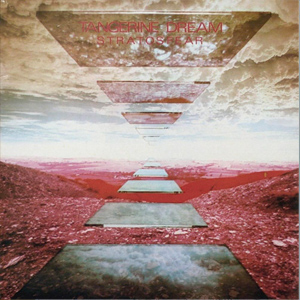
Stratosfear is the seventh studio album by the German band Tangerine Dream.
Stratosfear is a natural continuation of the band’s previous album, Rubycon, continuing to serve up a delicious cocktail of pulsating sequencer sequences and, on the other hand, eerie Mellotron sighs. There is also something new on offer. The overall mood of the album’s four tracks is clearly more energetic and even more melodic than before. In a way, Tangerine Dream is heading toward the mainstream with Stratosfear. Or at least toward the mainstream of progressive rock.
Stratosfear was Tangerine Dream’s final album with the band’s classic lineup of Edgar Froese, Chris Franke, and Peter Bauman, as the latter left the band after the 1977 U.S. tour.
Stratosfear may not please all die-hard fans of the band’s early albums, but in my opinion, this fast-paced album is one of the band’s best.
Best track: ”Stratosfear”
20. Wigwam : Lucky Golden Stripes And Starpose
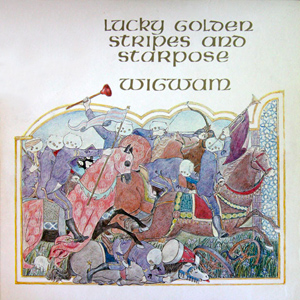
Lucky Golden Stripes And Starpose is the sixth studio album by Wigwam, which was formed in 1968.
Wigwam’s previous album, Nuclear Nightclub, had taken the band’s musical direction in a more stripped-down and simpler direction. The album was a huge success in Finland, but it did little to advance the band’s dream of conquering the world, even though Richard Branson’s newly launched Virgin record label—focused on progressive rock—promoted the album in the UK.
Virgin, however, didn’t give up on Wigwam; instead, they flew the band to their own mansion-studio, Manor, to record the follow-up to Nuclear Nightclub. This was the same place where the label’s massive hit, Mike Oldfield’s Tubular Bells, had been recorded a few years earlier. Wigwam’s Finnish record label, Love Records, did not, however, give up on its flagship band but retained the Scandinavian rights to the album, meaning that Lucky Golden Stripes And Starpose became a joint production between Virgin and Love…
Author: JANNE YLIRUUSI
You can find other parts of the Year by Year series here.
 Pienemmät Purot
Jätä kommentti