
The author’s picks for the best albums of 1974, ranked 11-20.
In the Year by Year series, I’ll go through my favourite albums from 1969 to the present day.
11. Hatfield And The North: s/t (UK) ****½
12. King Crimson: Starless And Bible Black (UK) ****½
13. Peter Hammill: The Silent Corner And The Empty Stage (UK) ****½
14. Can: Soon Over Babaluma (DE) ****½
15. Camel: Mirage (UK) ****½
16. Eberhard Weber: The Colours Of Chloë (DE) ****½
17. Emerson, Lake & Palmer: Welcome Back My Friends To The Show That Never Ends (UK) ****½
18. Magma: Ẁurdah Ïtah (FR) ****½
19. Tangerine Dream: Phaedra (DE) ****½
21. Renaissance: Turn Of The Cards (UK) ****½
#1-10
#21-30
#31-42
11. Hatfield And The North: s/t

Hatfield And The North is the first studio album by the band of the same name.
Hatfield And The North was formed in 1972 by guitarist Phil Miller and drummer Pip Pyle. The band went through several line-up changes in the early days, with David Sinclair, Steve Miller, Alan Gowen and Roy Babbington among the band’s members. Shortly before the recording of this debut album, however, the line-up was settled on Miller, Pyle and new additions bassist Richard Sinclair and keyboardist Dave Stewart.
Despite the relatively young age of the players, the foursome that was eventually assembled already had a considerable amount of experience…
12. King Crimson: Starless And Bible Black

Starless and Bible Black is King Crimson’s sixth studio album and the second in the so-called Wetton/Bruford trilogy.
King Crimson had entered a new era with last year’s Larks’ Tongues In Aspic. The new King Crimson’s music was heavier and more angular than before. The melodies were more dissonant and the rhythms more complex. Starless and Bible Black builds on its predecessor and is at least as defiant and bold.
The band’s line-up remained the same, but wild percussionist Jamie Muir had left the band after a religious awakening. Muir became a monk in a Buddhist monastery and for a time left music behind. That left guitarist/founding member Robert Fripp, bassist/vocalist John Wetton, violinist/keyboardist David Cross and drummer Bill Bruford. Muir’s wild-card influence on Crimson’s music is missed at times, but Bruford took many elements of Muir’s experimental style into his own playing and makes up for it admirably…
13. Peter Hammill: The Silent Corner And The Empty Stage

The Silent Corner And The Empty Stage is the third solo album by Van Der Graaf Generator vocalist Peter Hammill.
Hammill’s first two solo albums, Fool’s Mate (1971) and Chameleon In The Shadow Of The Night (1973), contained some fine individual songs, but as a whole they were not yet fully convincing. With The Silent Corner And The Empty Stage this changed and Hammill’s solo career really took off. If not commercially, at least artistically. The Silent Corner is a very strong piece of work from start to finish.
The songs on the first half of the album are mostly played by Hammill alone in his home studio, but on the b-side he is joined by old Van der Graaf Generator mates keyboardist Hugh Banton, drummer Guy Evans and wind player David Jackson…
14. Can: Soon Over Babaluma
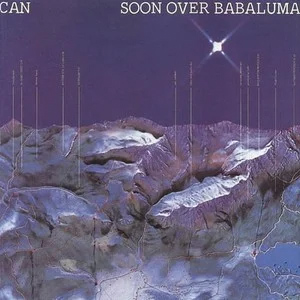
Soon Over Babaluma is the sixth studio album by German band Can, founded in 1968.
Soon Over Babalumalla Can continues the trend that began with Future Days (1973) of condensing its musical expression. This is evident not only in the pruning of stylistic excesses, but also in the length of the songs. Of the five songs on the album, only one exceeds the ten-minute mark this time around.
At the heart of Can’s sound on Soon Over Babaluma is still the tremendous motoristic groove of bassist Holger Czukay and drummer Jaki Liebezeit, which has crept closer to funk with each album. Of course, Can’s take on funk is still very unique on this album. And very German.
Guitarist Michael Karolin’s violin plays a surprisingly large role in the opening track, ”Dizzy Dizzy.” Karolin’s violin also features much more prominently throughout the album, which is no bad thing. Karoli’s sometimes quite shrill violin playing provides a perfect contrast to the otherwise rather soft and rounded sound of the album. In ”Splash” in particular, the violin plays magnificently, alternating with the electric guitar. Karoli may not be a violin virtuoso, but that doesn’t matter, because his playing supports the music on the album so wonderfully.
”Come Sta, La Luna” Karolin’s violin entices the band to play a bit of tango. The song is a funny mix of krautrock jamming, tango, and strange vocals reminiscent of Gong.
Soon Over Babaluma may not be among Can’s most groundbreaking recordings, but to my taste, it is one of Can’s most enjoyable albums. Unfortunately, Soon Over Babaluma was also the album that marked the end of the band’s strongest period.
Best tracks: ”Dizzy Dizzy”, ”Come Sta, La Luna”
- Levyarvio: King Crimson – The ConstruKction Of Light (2000)
- Review: Camel – Moonmadness (1976)
- Review: Gong – Gazeuse! (1976)
- Review: Mike Johnson – The Gardens Of Loss (2026)
- Levyarvio: Mike Johnson – The Gardens Of Loss (2026)
- Levyarvio: Led Zeppelin – Presence (1976)
- Vuosi vuodelta : Parhaat levyt 2000 – Sijat 11-20
- Review: Univers Zero – Ceux Du Dehors (1981)
- Levyarvio: Steve Walsh – Glossolalia (2000)
15. Camel: Mirage
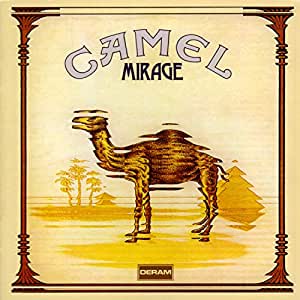
Mirage is the second studio album by Camel, formed in 1971.
Camel builds on Mirage, their promising but uneven debut album released the previous year. The songs on Mirage are more progressive, the playing more intense, the sounds more powerful, and even the band’s eternal weak link, the vocals, now work a little better.
Mirage is exceptionally edgy and rocking for a Camel album. The album strikes a very successful balance between prog and more straightforward rock. The opening track, ”Freefall,” is a rough rock song and most similar to the songs on the debut album. Not a bad start, but after ”Freefall,” the level rises even higher, and ”Nimrodel / The Procession / The White Rider,” which refers to the stories of J. R. R. Tolkien, is particularly great. The instrumental section that begins at around seven minutes into the song is absolutely magnificent!
Another highlight of the album is the nearly 13-minute epic ballad ”Lady Fantasy,” which features delightfully naive lyrics (in a charming way!) and some truly beautiful musical moments.
Guitarist Andy Latimer’s wistful, melodic yet still edgy guitar riffs are given plenty of space on Mirage, but Peter Bardens’ keyboards also get to solo tastefully here and there. The collaboration between these two key figures in Camel’s early career was at its most fruitful on this album.
Mirage marked the beginning of Camel’s golden age, which spanned three albums, and 50 years later, the album is still among the band’s three best.
Best tracks: ”Nimrodel / The Procession / The White Rider” ja ”Lady Fantasy”
16. Eberhard Weber: The Colours Of Chloë

The Colours Of Chloë is the first solo album by German jazz double bassist Eberhard Weber.
Weber’s band is small but skilled, and above all, stylishly performing group that includes keyboardist Rainer Brüninghaus, flugelhorn player Ack van Rooyen, and drummers Peter Giger and Ralf Hübner (Hübner plays on only one track, with Giger handling the rest). In addition, the 19-minute closing track, ”No Motion Picture,” features the cello section of the Südfunk Orchestra. However, everything is led by Weber’s magically humming and undulating cello and the supple rumbling of the double bass.
The Colours Of Chloë has a lingering, slightly pastel-toned atmosphere, which is always bordered by a hint of darker, more threatening tones, bringing an interesting tension to the music and preventing it from becoming mere pleasant background music.
As is usually the case with ECM recordings, The Colours Of Chloë balances somewhere between jazz and art music. The music could be described as symphonic jazz. However, it is not particularly grandiose, but rather minimalist and modern. The music is pleasantly quiet without ever being boring. As a counterbalance to the quiet mood, there are also a few more rhythmic and slightly faster sections, such as the most jazzy track on the album, ”An Evening With Vincent Van Ritz,” where Ac Van Rooyen gets to play his flugelhorn with exceptional joy.
The Colours Of Chloë is a very typical ECM album in its restrained chamber jazz style, but it should be remembered that Weber was one of the pioneers who created the entire genre. And a half century later, The Colours Of Chloë remains not only the best album of Weber’s distinguished career, but also one of the brightest gems in the entire ECM catalog.
Best tracks: “More Colours”, ”An Evening With Vincent Van Ritz”, “No Motion Picture”
17. Emerson, Lake & Palmer: Welcome Back My Friends To The Show That Never Ends
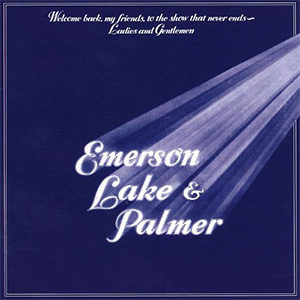
Welcome Back My Friends To The Show That Never Ends is Emerson Lake & Palmer’s second live album. The album, which takes its name from the lyrics of ”Karn Evil 9,” is a hefty set. It was originally released as a three-vinyl set.
The 110-minute album is also impressive in terms of quality. ELP is in top form, racing through its most difficult repertoire, such as ”Toccata,” ”Karn Evil 9,” and ”Tarkus,” with ease. The highlight of Welcome Back is the over 27-minute-long ”Tarkus,” which is a truly furious performance. ELP is not content to play its songs mechanically from start to finish, but is inspired to rearrange the songs in interesting ways on several occasions, and this is especially true of ”Tarkus,” particularly in the improvisations of the ”Aquatarkus” section.
I have to say, though, that the idea of slipping a snippet of ”Epitaph” (a King Crimson song originally sung by Greg Lake) into ”Tarkus” wasn’t a particularly effective solution. And ”Take A Pebble” could have been played in one go, but now it has been strangely divided into two parts, with Lake’s hits ”Lucky Man” and ”Still You Turn Me On” and Emerson’s piano improvisation ”Piano Improvisations” (doh!) squeezed in between.
Welcome Back is particularly Keith Emerson’s bravura, as he shines throughout the album with numerous stunning solos that often ingeniously vary from the studio versions. Emerson’s piano improvisations in the song ”Piano Improvisations” are particularly unparalleled in the rock context.
Welcome Back My Friends to the Show That Never Ends is often criticized for its sound, and it is by no means as crisp and distinct as the band’s first live album, Pictures At An Exhibition, but despite its rumbling echoes, the album still sounds quite satisfactory. Most importantly, the album conveys not only ELP’s technical prowess, but above all their immense joy in playing and positive attitude.
Best tracks: ”Tarkus”, ”Piano Improvisations”
18. Magma: Ẁurdah Ïtah

Ẁurdah Ïtah is either Magma’s fourth album or Christian Vander’s first solo album. The history of the album’s creation is somewhat complicated. The album was originally recorded in four days as the soundtrack to Yvan Lagrange’s 1972 art film Tristan et Iseult and released under that name as a solo album by Vander in 1974. In 1989, Vander’s own record label, Seventh, re-released it under its current name, Ẁurdah Ïtah, adorned with the Magma logo. The 2012 reissue finally named it a Magma album.
If we disregard the brands and cover art, the content of Ẁurdah Ïtah (English: ”Dead Land”) sounds exactly like Magma music. It was also recorded by the band’s core quartet from the same era. Vander plays on the album, with Klaus Blasquiz on vocals and percussion, Stella Vander on vocals, and Jannick Top on bass.
Although Vander also plays the keyboards effectively on the album (and surprisingly skillfully at that!), the instrumentation is considerably more sparse than what was usually heard on Magma’s albums at the time. The orchestration, or lack thereof, is the main difference between Ẁurdah Ïtahin and Magma’s other albums. The sound is raw and punchy. Vander’s jazzy and effectively aggressive drumming comes across better than on many other Magma albums, which in the 1970s were often a bit dull, partly due to the grandiose orchestration. Ẁurdah Ïtah sounds more like a spontaneous jazz album recorded live in the studio than a typical prog spectacle of its era.

Blasquiz’s magnificent vocal performances also come across beautifully. The album seems a little lighter in style than its predecessors, Mekanïk Destruktïw Kommandöh(1973) and Köhntarkösz (1974). Ẁurdah Ïtah is not quite as aggressive and heavy as those two masterpieces. Ẁurdah Ïtah does not sound like film music at all, and I actually find it hard to believe that it would have worked very well as a soundtrack, but I have not had the opportunity to see the film in question.
The album is divided into 12 short sections, each lasting between 1 and 5 minutes, but in reality it consists of two suites lasting almost 20 minutes each.
Calling Ẁurdah Ïtah a Magma album is also justified because it is the second part of the so-called Theusz Hamtaahk trilogy. Only live recordings exist of the first part, entitled Theusz Hamtaahk, and the final part, Ẁurdah Ïtah, was preceded in release date by Mekanïk Destruktïw Kommandöh (1973). Confusing? No, it’s progressive rock! So what is the Theusz Hamtaahk trilogy about? I have no idea… All I know is that the title of the trilogy roughly translates into English as ”the age of hatred.”
Ẁurdah Ïtah is a great album that has received too little attention. Probably because its status as part of Magma’s discography is so confusing. And if my praise for the album doesn’t convince you, remember that Ẁurdah Ïtah is Henry Cow drummer Chris Cutler’s favorite of all Magma albums!
Best tracks: ”Malaẁëlëkaahm”, ”C’est la vie qui les a menés là!”
19. Tangerine Dream: Phaedra

Phaedra is the fifth album by the German band Tangerine Dream, founded in 1970.
Influential British DJ John Peel chose Tangerine Dream’s previous album, Atem (1973), as the album of the year, which had a significant impact on Richard Branson’s newly established record label Virgin, which was rapidly gaining momentum, signing the band to its high-quality roster of artists. With the advance they received from Virgin, Tangerine Dream bought a Moog synthesizer, among other things, which had a major effect on the band’s new sound.
The album features Tangerine Dream’s perhaps most classic lineup: Edgar Froese, Christopher Franke, and Peter Baumann. The trio had already made two albums together, but with Phaedra, everything finally fell into place.
The album was recorded in six weeks at Virgin’s The Manor studio, the same place where Mike Oldfield’s Tubular Bells (1973), which put Virgin on the world map, was recorded.
The trio mainly plays (or programs) various synthesizers and keyboards, and the only traditional instruments heard are Froese’s bass guitar, which is played occasionally, and Baumann’s flute, which is played in the last short piece.
The A-side of the album is filled with the nearly 17-minute title track ”Phaedra,” in which a bubbling sequence pattern rises from the misty and abstract organ painting, accelerating and changing shape, occasionally taking over the soundscape. This was something completely new for Tangerine Dream’s music. Sequencers were used by Tangerine Dream for the first time and they play a significant role throughout the Phaedra album. For me, ”Phaedra” paints a picture of a journey to the center of the earth, to a vast, mysterious stalactite cave. At times, the song has something in common with Pink Floyd’s epic ”Echoes.” However, the effective use of sequencing clearly distinguishes ”Phaedra” from ”Echoes,” and at its most intense, the mood of the song becomes downright oppressive. The floating section at the end, however, calms the situation and allows the listener to catch their breath.
The B-side of the album features three shorter tracks, two of which are still over eight minutes long. The second half of the album begins with the slightly over ten-minute-long ”Mysterious Semblance At The Strand Of Nightmares,” an ethereal and almost rhythmless song in which the eerie sounds of Mellotrons and synthesizers transport the mood from underground worlds to the cold and desolate depths of space. Fascinating and, in 1974, very original music.
The third track, “Movements of a Visionary,” begins with unusual whistles and soft clicks. Gradually, a sparkling, bubbling sequence pattern rises to the surface. The organ sounds in the song are reminiscent of Pink Floyd’s Rick Wright. Overall, “Movements of a Visionary” remains a somewhat formless mood piece and does not measure up to the first two tracks on the album.
The album ends with the short, less than three-minute track ”Seguent ’c’,” which is Tangerine Dream’s only song that does not use any keyboard instruments. The track features Peter Baumann’s flutes, recorded multiple times, layered, echoed, and otherwise effected, engaging in an ethereal dialogue with each other. As a single track, it may not be particularly impressive, but it works well as a minimalist conclusion in the context of the album as a whole.
With its eerie humming and buzzing, Phaedra is a minimalist, stylish, atmospheric proto-ambient album that offers enough to grab hold of to make it worth listening to actively. Phaedra is not just background music.
Virgin’s release of Phaedra was a surprise hit in the UK, where it peaked at number 15 on the best-selling album chart and remained on the charts for 15 weeks. The band received gold records in many other countries, and with this success, Tangerine Dream also became a major player on the concert stage.
Best tracks: ”Phaedra”, ”Mysterious Semblance at the Strand of Nightmares”
20. Renaissance: Turn Of The Cards

Turn Of The Cards is the fifth studio album by English band Renaissance, formed in 1969.
With Turn Of The Cards wrapped in a handsome tarot-themed cover designed by design agency Hipgnosis, Renaissance continues the line-up from previous album Ashes Are Burning with Annie Haslam (vocals), Jon Camp (bass, acoustic guitar), John Tout (keyboards) and Terrence Sullivan (drums). In addition, founding member Michael Dunford (acoustic guitar) returned to the band after a stint as a songwriter. The lyrics are still written by poet Betty Thatcher.
So the line-up is stable, what about the music? Stylistically, too, Turn Of The Cards is very much along the same lines as Ashes Are Burning. In other words, it’s the familiar and safe Renaissance: dramatic and mostly acoustic piano-driven symphonic prog with a touch of symphony orchestra. There are some minor differences…
Kirjoittaja: JANNE YLIRUUSI
You can find other parts of the Year by Year series here.
 Pienemmät Purot
Jätä kommentti