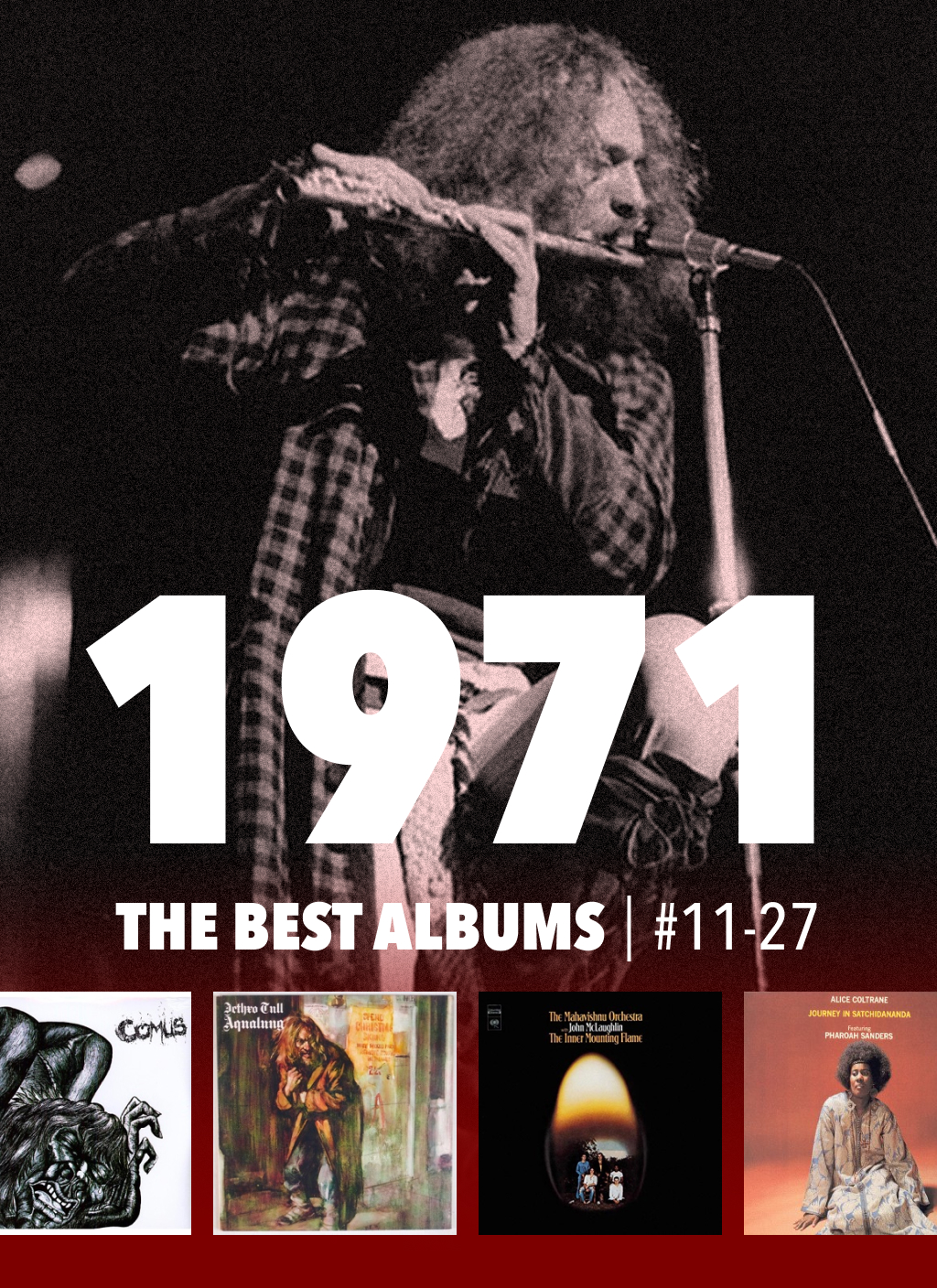
The author’s picks for the best albums of 1971, ranked 11-27.
In the Year by Year series, I’ll go through my favourite albums from 1969 to the present day.
- Jethro Tull: Aqualung (UK) ****½
- The Mahavishnu Orchestra: The Inner Mounting Flame (UK) ****½
- Comus: The First Utterance (UK) ****½
- Alice Coltrane: Journey In Satchidananda (US) ****½
- Emerson, Lake & Palmer: Pictures at an Exhibition ****½
- Supersister: To the Highe$t Bidder (NL) ****½
- Can: Tago Mago (DE) ****
- The Keith Tippett Group: Dedicated To you, But You Weren’t Listening (UK) ****
- Miles Davis: Live-Evil (US) ****
- Magma: 1001° centigrades (FR) ****
- Jack Bruce: Harmony Row (UK) ****
- Gong: Camembert Electrique (UK) ****
- Pink Floyd: Meddle (UK) ****
- Out of Focus: s/t (UK) ****
- Miles Davis: A Tribute to Jack Johnson (US) ****
- Elton Dean: s/t (UK) ****
- Weather Report : s/t (US) ****
See the top 10 of 1971 here.
11. Jethro Tull : Aqualung

Aqualung is the fourth studio album by Jethro Tull, founded in 1967.
Jethro Tull, led by flute and acoustic guitarist Ian Anderson, had already achieved relative success with their three previous albums, especially in their home market of Britain, but Aqualung opened the way to true rock stardom through the American market. The album was a huge success and is still today Jethro Tull’s most successful album with over seven million copies sold.
While the band’s previous albums were still relatively straightforward blues-rock, Aqualung is clearly a more eclectic affair…
12. Mahavishnu Orchestra: The Inner Mounting Flame
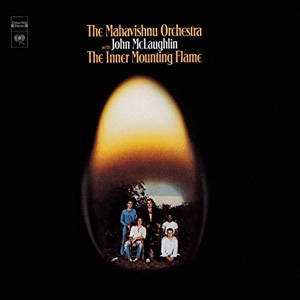
The Inner Mounting Flame is the first studio album by The Mahavishnu Orchestra, led by British guitarist John McLaughlin.
Conceptually, The Mahavishnu Orchestra was largely a continuation of drummer Tony Williams’ jazz-rock band Lifetime, in which McLaughlin had played with bassist Jack Bruce. The Mahavishnu Orchestra continued in the Lifetime vein, playing raw and upbeat jazz rock with a predominantly rock dominating over jazz.
For the Mahavisnu Orchestra, McLaughlin assembled a truly multinational cast…
13. Comus: First Utterance

First Utterance is the first studio album by British artist Comus. Comus was formed in 1969 as a folk duo by two guitarists Roger Wootton and Glenn Goring. By the time of their debut album, the band had expanded to a six-piece line-up including bassist, percussionist, violinist, wind player and female vocalist Bobbie Watson who shared vocal duties with Wooten. As a trivia fact, David Bowie was an early Comus fan who often attended the band’s gigs and in fact Comus played a few gigs as Bowie’s opening act. And according to Wooten at least, band did it’s job all too effectively because Bowie cancelled the gigs they had already agreed to do together for fear of being overshadowed by Comus…
Recorded in October 1970 and released in February 1971, First Utterance is a boisterous mix of progressive rock, psychedelia and folk…
14. Alice Coltrane: Journey In Satchidananda

Journey In Satchidananda is Alice Coltrane’s fourth studio album.
Journey In Satchidananda is an excellent follow-up to Coltrane’s previous album Ptah, The El Daoud, released the previous year, on which his spiritual jazz burst into full bloom.
Journey In Satchidananda travels deeper into the East and Coltrane’s ethnic influences are now highlighted in the instrumentation. In particular, the buzzing and buzzing tanpura of Tulsi Sen Gupta brings a mystical atmosphere and the last long track on the album has the ring of Vishnu Wood’s oud. The bells and tambourine played by Majiz Shabazz also ring out in a way that is often suggestive of Asia.
More traditional jazz instrumentation is represented by the double bass played either by Cecil McBee or Charlie Haden and Rashied Ali’s drums. As on the previous album, Pharoah Sanders’ mostly surprisingly melodic saxophone and, of course, Coltrane’s own harp, from which the notes often flow with waterfall-like ripples, play a central solo role. Coltrane concentrates on the harp this time, playing the piano only on the shortest track on the album, ’Stopover Bombay’.
Especially the first track of the album, the hypnotic ”Journey In Satchidananda”, which hangs on a buzzing tambura and a dark, dancing bass line, is a magical song. There’s something timeless about it, even though at the same time in 1971 its sound was something completely new.
The album-closing, almost 12-minute, mournful live ”Isis and Osiris” doesn’t quite hit the mark for me, but the songs in between are of consistently strong quality. ”Shiva-Loka” is dominated by Coltrane’s virtuosically strumming harp and Sanders proves in ”Something About John Coltrane” that he is just the man to channel Alice’s late husband’s themes in a new context.
Journey In Satchidananda is one of the brightest gems of meditative spritual jazz and perhaps the strongest of Alice Coltrane’s albums.
Best tracks: ”Journey in Satchidananda”, ”Shiva-Loka”, ”Something About John Coltrane”
15. Emerson Lake & Palmer: Pictures at an Exhibition

Pictures at an Exhibition is the first live album by Emerson Lake & Palmer, formed in 1970.
However, it is not a conventional live album featuring the band playing their old songs, Pictures At An Exhibition contains only new, previously unreleased material. Or ”new”, as it is ELP’s interpretation of the popular piano suite from ”Pictures at an Exhibition” (1874) by Russian classical composer Modesto Mussorgsky. Originally composed as a kind of showpiece for virtuoso pianists, ”Exhibition Pictures” achieved even greater fame when French composer Maurice Ravel orchestrated the piece for full symphony orchestra.
ELP’s rock version of the composition is thus its third stylistic manifestation. However, ELP did not limit themselves to a single arrangement: they have omitted some parts and added many completely new songs. It is therefore gratifying to see how ELP treats the source material with reckles anything-goes attitude. It is certainly not a dusty reproduction with an admiringly reverent presentation, but the band plays in a relaxed manner and applies the source material in a very free and creative way. The attitude throughout the album is brash and downright cheeky.
The highlights of the album are the very intense and fast ”The Curse Of Hut Yaga” and ”The Hut Of Baba Yaga” which is topped by Greg Lake’s aggressive vocals and Keith Emerson’s very fierce interpretation on keyboards. Not surprisingly, the song, originally composed for piano, offers Emerson many moments to shine, but the star of the album is surprisingly Lake, who is more intense than usual on bass and vocals. In my opinion, it is on this album that we find Lake’s strongest moments as an instrumentalist, both on bass and acoustic guitar.
The album is crowned with stunningly good sounds. Not many other live albums, even years later, have achieved such a clear and balanced sound.
Pictures at an Exhibition is a bit of an odd interlude in ELP’s early 70s output, but in terms of quality it doesn’t really pale in comparison to the band’s first four studio albums.
Best tracks: ”The Old Castle”, ”Promenade”, ”The Hut Of Baba Yaga”, ”The Curse Of Hut Yaga”
16. Supersister: To the Highe$t Bidder

To The Highe$t Bidder is the second studio album by Dutch band Supersister.
To The Highe$t Bidder largely follows the path set by debut Present From Nancy (1970), but with some improvement in every area. The sounds are vastly improved, the band plays with more confidence and skill and, above all, the compositions are of higher quality and the overall sound is much smoother than on the debut. Some of the slightly frustrating antics and sound experiments of the previous album have been left aside.
Supersister cleverly combines jazz-rock influences in their prog, but also very catchy, upbeat pop melodies. The band’s playing is supple and the sound is pleasantly upbeat and downright joyful. These Dutch boys are not gloomy! On this album, the description ”Dutch Canterbury” is not just an empty phrase either. The band’s style has a lot of the same quirky homey feel as, say, Caravan. Supersister’s music is a little more complex than Caravan’s, though, so in that sense the comparison could also be made with Canterbury’s later king Hatfield And The North. But in which direction did the influences flow in that case?
Best tracks: ”A Girl Named You” ja ”No Tree Will Grow”
17. Can: Tago Mago
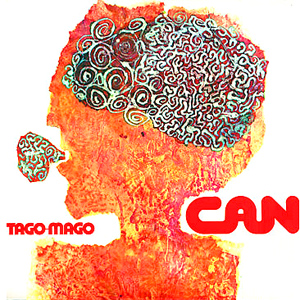
Tago Mago is the third studio album by the German band Can and the first one the band made with the wild Japanese-born vocalist Damo Suzuki.
Can is often regarded as the definitive krautrock band. But what exactly is krautrock? Some people think broadly that all German experimental rock is krautrock and some even more open-minded individuals may even think of all German rock as krautrock. In my opinion, krautrock is a kind of German version, or rather the next step, of psychedelic rock. Apart from the psychedelic haze, an essential part of the krautrock sound is a certain kind of insistent rhythmic repetitiveness. Many krautrock bands have taken advantage of a thumping steady (so-called motorik beat) rhythm that the most skilled German drummers like Can’s Jaki Liebezeit can still somehow magically make groove…
18. The Keith Tippett Group: Dedicated To you, But You Weren’t Listening
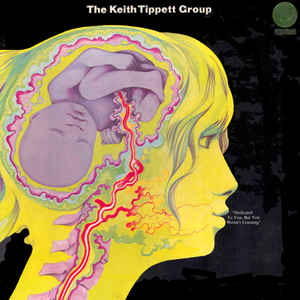
Dedicated To you, But You Weren’t Listening is the second studio album by The Keith Tippett Group.
At the time of the album’s release, Keith Tippett (1947–2020) was only 22 years old, but already not only a highly skilled pianist, but also an excellent composer and a strong band leader. It also speaks well for Tippett’s moderate ego size that whereas he is usually known for his virtuosic but chaotic (”cat walks on keyboards” – as King Crimson vocalist Gordon Haskell said of Tippett’s style) piano solos, on this album the piano largely takes a back seat and the soloing is mostly left to the winds. On the other hand it’s a pity because I love Tippett’s piano solos.
Although Tippett was the clear leader of the band, not all of the material on the album was written by him: trombonist Nick Evans wrote two of the songs, saxophonist Elton Dean wrote one and the title track ”Dedicated To You, But You Weren’t Listening” is a very loose interpretation of Hugh Hopper’s eponymous composition from Soft Machine’s second album.
Tippett doesn’t take a back seat completely, however, as ”Thoughts To Geoff” features the wild and rhythmic piano playing that has become Tippett’s trademark in the form of a long, delicious solo to which Elton Dean eventually responds with violent alto sax bursts as Charig and Evans join in the fun with their own horns. It’s a blast!
The more formal side of the album is represented by ”Green Orange And Night Park” which features a truly delicious melodic riff that juices up everything it can in a massive uplift that swells into a magnificent controlled chaos. Tippett also used the same theme on his Centipede album Septober Energy later that year for a big 50-piece band.
The album flirts with jazz-rock, especially in terms of rhythms, but stays more on the jazz side. There are no less than three drummers on the album, Robert Wyatt, Phil Howard and Bryan Spring. As far as I understand it, all three drummers do not play at the same time at any point, but there is double drumming. Dedicated To You balances between successfully composed melodic material and free-form avant-garde honking, depending on the song or section, moving sovereignly on both sides.
Dedicated To You, But You Weren’t Listening is a somewhat forgotten jazz gem that is recommended listening for anyone interested in avant-garde jazz with a light jazz-rock flavour.
Best track: ”Thoughts To Geoff” ja ”Green Orange And Night Park”
19. Miles Davis: Live-Evil
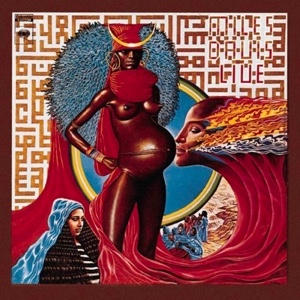
Live-Evil was Miles Davis’ third album since the groundbreaking Bitches Brew (1969). The only releases in between were the soundtrack project A Tribute To Jack Johnson and the live album Miles Davis At Fillmore. Combining concert recordings and studio sessions, Live-Evil was originally intended as a spiritual successor to Bitches Brew, and there are many similarities between the two albums, although there are also differences.
Where Bitches Brew was an upbeat and colourful album, Live-Evil also has a strong presence of darker tones. I see Brew as a yellow-orange album while Live-Evil leans more towards dark blues and purples. In the slower tracks like the couple of minutes long ”Selim”, the sound swims in very dark waters. Of course, the 101-minute double album has more than enough upbeat riffing to counterbalance this. And the intensity is generally strong even on those darker and slower tracks.
All songs feature a 7-9 piece band with the line-up varying slightly from song to song. Jack DeJohnette plays drums on all but one short track (where he is replaced by Billy Cobham). Airto Moreira strums percussion on every song and the electric bass guitar is handled by Michael Henderson, who brings a mostly funky sound to the mix. Henderson also acts as the central anchor amidst all the chaos, maintaining a simple, tight groove that supports the soloists.
The saxophones are played mostly by Steve Grossman, but there are also Gary Bartz and Wayne Shorter. Electric piano and organ is usually played by Keith Jarret alone or by a duo of Herbie Hancock and Chick Corea. On ”Medley: Gemini/Double Image”, however, Corea is paired with Joe Zawinul. The only electric guitarist on the album is John McLaughlin, who plays on six of the eight tracks on the album. So Miles has got one hell of a gang again!
The music is mostly improvised, although there are occasional themes from Bitches Brew and Jack Johnson, and once again it was edited by producer Teo Macero in the studio.
For me, the highlight of the album, which is at times even a little tediously long, is the 21 minute long ”What I Say” with a minute and a half of breathtakingly gorgeous trumpet soloing from Miles Davis. Drummer DeJohnette and percussionist Moreira also do a great job on an intense track.
Live-Evil is an intense and uncompromising album that occasionally falls into a bit of a boring rut, but for the most part it’s an excellent follow-up to Bitches Brew, and for fans of that album it can be recommended with some reservations.
Best track: ”What I Say” ja ”Funky Tonk”
20. Magma: 1001° centigrades
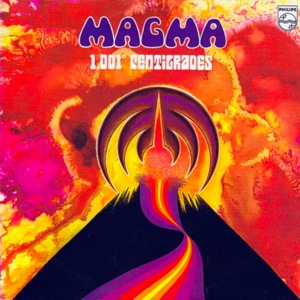
1001° centigrades is the second studio album by the French band Magma, founded in 1969.
Like last year’s debut album, 1001° centigrades is still much softer music, with sometimes surprisingly gentle clarinets and flutes, than Magma’s later, more aggressive and sharply striking material. Jazz-rock influences are still strongly present in the music, but the band nevertheless manages to take the most original elements of their music a step further.
Comprising just three extended tracks, the central focal point of 1001° centigrades is drummer Christian Vander’s 21-minute epic ”Rïah Sahïltaahk”, which successfully combines orchestral sounds with jazz-rock and a still-nubile Zeuhl style. At this stage, for example, the rhythmic stomping is not yet as aggressive as later and there are no female vocalists on the album, which later became a very central part of Magma’s sound. The vocals are handled with a pseudo-operatic baritone voice in the convincing style by Klaus Blasquiz and Vander himself adds higher and wilder screams in between, as if in accents. Magma’s typical warlike marching section can also be heard, but still in a somewhat cautious version.
Vander clearly saw more potential in the ”Rïah Sahïltaahk” composition as he recorded a new full studio version of it in 2014 (released as the EP Rïah Sahïltaahk). And yes, that version is all in all tighter, sharper and more ”magmatic”.
The other two tracks on the album, the 12-minute ”’Ïss’ Lanseï Doïa” by Teddy Lasry (clarinet, saxophone, flute) and ”Ki Ïahl Ö Lïahk”by François Cahen (keyboards) are slightly more conventional jazz-rock pieces, although they are not standard stuff either. Especially the rich brass parts of ”’Ïss’ Lanseï Doïa” clearly distinguish it from the grey mass. The song also has some subdued chamber music parts to contrast the more raucous brass. ”’Ïss’ Lanseï Doïa” also contains some really weird moments of growling vocals that no other jazz-rock band could have imagined incorporating into their music.
Cahen’s ”Ki Ïahl Ö Lïahk” is a more rhythmic contrapuntal track with perky brass parts that are not miles away from soul music. Frances Moze gets to accompany the song tastefully on a few occasions with her bass guitar. Moze, who joined Gong shortly afterwards, gives a very fine performance on the album. But as a whole, the song is the least important and least Magma-sounding on the album.
1001° centigrades was a transitional album that already pointed strongly in the direction Christian Vander’s vision was taking the band. Unique visions are often met with resistance, and that was the case this time too. Saxophonist Yochk’o Seffer and François Cahen jumped ship, unhappy with the new direction after the release of 1001° centigrades, and formed their own band called Zao, which to some extent continued along the ”half-zeuhl” line of Magma’s first two albums. Vander, on the other hand, marched determinedly towards his own dark vision of mechanical opera, and Magma released what was perhaps their most definitive album, Mëkanïk Dëstruktïẁ Kömmandöh, as early as 1973.
The best track ”Rïah Sahïltaahk”
21. Jack Bruce : Harmony Row

Jack Bruce’s (1943-2014) third solo album Harmony Row is a stylish art rock record from the former top Cream bassist.
Jack Bruce’s compositions are of high quality and he plays the bass beautifully and sings the songs quite well. Bruce’s rock’n roll piano playing is also tasty to listen to, for example on one of the album’s highlights ”You Burned The Tables On Me”. Bruce also plays the cello on the album. The song ”Smiles And Grins” soars nicely not only with Bruce’s aggressive (almost punky!) vocals, but also with his really wild bass patterns mixed to the surface. It’s a great sound that you could imagine Chris Squire learning from. Overall, however, the album is not a bass show, but the good songs are the main thing alongside the skilful playing.
The other two members of the trio, the skilled guitarist Chris Spedding and the virtuoso drummer John Marshall, who also played in Soft Machine, provide quality backing. Listening to these guys, you won’t miss Eric Clapton or even Ginger Baker. Spedding doesn’t come out too strongly though as Bruce’s piano and bass take up most of the solo space. However, Spedding does get to play a few tasty solos, for example on ”Post War”.
In fact, I think Harmony Row beats the releases of Bruce’s former supergroup in almost all areas, but especially in the quality of the compositions it is superior.
Harmony Row is a successful combination of energetic rock roll and jazz-rock intricacies and, in my opinion, is by far Jack Bruce’s most successful solo album.
Best tracks: ”Can You Follow?”, ”Escape to the Royal Wood (On Ice)”, ”You Burned The Tables On Me”, ”Smiles And Grins”
22. Gong : Camembert Electrique

Camembert Electrique is the second studio album by Gong, founded in 1969.
Gong was founded by Daevid Allen (1938-2015), an eccentric who emigrated from Australia to Britain and was also a founding member of the legendary Soft Machine. Gong’s line-up, especially in the early days, consisted of a mix of English and French musicians in addition to Allen. France was the band’s home country around the time of Camembert Electrique and although the album was released there in October 1971, it was not given an official UK release until the summer of 1974 as part of the Virgin label’s 59 pence (the normal price of a single) campaign.
In the days of Camembert Electrique , Daevid Allen’s Gong music was a natural extension of the atmosphere of Soft Machine’s first couple of albums. The music and especially the lyrics are full of the anarchic and dadaist madness familiar from Soft Machine, and Allen also drew inspiration from the cosmic psychedelia of Pink Floyd and was a big fan of Syd Barrett. Like Floyd, Gong was an important pioneer of so-called space rock.
The album starts with a bang (after a short intro to ”Radio Gnome”) with one of the band’s most popular songs, ”You Can’t Kill Me”. In a defiant show of free will, Pip Pyle’s snappy and downright overbearing drumming is great to hear. Wind player Didier Malherbe’s serpentine saxophone and flute parts are also a delight. Pyle and Malherbe were the musical driving forces of the band at this point, as Allen, who handles guitars on this album, and bassist Christian Tritsch were not particularly skilled instrumentalists.
Gong could already be classified as progressive rock at the time of Camembert Electrique, but like ”normal” prog bands, instrumental virtuosity was not yet very important to Gong at this stage. Gong also breaks away from the norm with their anarchistic approach and some of the lyrics are downright aggressive, such as this verse from ”Dynamite – I Am Your Animal”:
I am your animal
Your head is in my hands
And I am going to fuck you up
Fuck you up
Fuck you up
Fuck you up
Fuck fuck fuck fuck
It was hard to imagine hearing something similar on an album by Yes or Genesis.
”Foghat Digs Holes In Space”, which represents the more musical side of the album, is one of the most interesting tracks on the album and one of the pioneering songs of so-called space rock. In the song, Gong builds layers of floating synth tracks on top of a thick groove, as well as ghostly wordless vocals from Gilly Smyth that were dubbed ”space whisper” and became one of Gong’s trademarks. Malherbe solos in a relaxed, gritty way and the song could well be described as space punk jazz.
Immediately after ”Foghat”, the third gem of the album, the slightly Canterbury-esque ”Tried So Hard” is heard. The song starts with a wistfully beautiful vocal part that reminds me a bit of Caravan or Kevin Ayers’ more laid-back material. The more rocking parts of the song, on the other hand, recall the hazy feel of Pink Floyd’s psychedelic warrior Syd Barrett.
Camembert Electrique is a fun, but slightly uneven, album. However, Camembert Electrique was only the starting point for the band’s most fruitful phase, the Radio Gnome Invisible trilogy that began with 1973’s Flying Teapot.
Best tracks: ”You Can’t Kill Me”, ”Foghat Digs Holes In Space” ja ”Tried So Hard”
23. Pink Floyd: Meddle
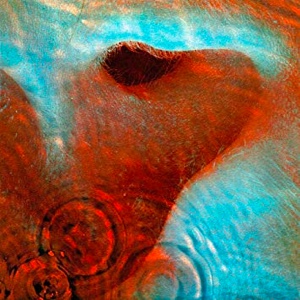
Meddle is the sixth studio album by Pink Floyd, formed in 1964.
Meddle, like its predecessor Atom Heart Mother, is a very uneven album. The opening track ”One Of These Days” and especially the 20 minute epic ”Echoes” are mostly excellent, but the rest of the songs are clearly of a lower standard.
The album kicks off nicely with the full band instrumental ”One Of These Days”, which thunders along with its simple but powerful bass riff, sounding quite primitive and a bit like krautrock. The song features two bass guitar tracks, one on top of the other. One played by David Gilmour and the other by Roger Waters. The simple bass ostinato is occasionally punctuated by Rick Wright’s light organ stabs and Gilmour’s menacing electric guitar…
24. Out Of Focus: s/t

The rather little-known German band Out Of Focus released three competent albums in the 70s, of which this eponymous album is the middle one. And perhaps also the highest quality.
Out Of Focus was a five-piece band with a bassist, guitarist, keyboardist, drummer and a vocalist playing saxophone and flute.
Out Of Focus is a pleasantly eclectic, jagged mix of krautrock, prog and jazz-rock. The psychedelia of the first album, on the other hand, is largely a thing of the past. This album has a more focused approach (no pun intended!) and the compositions are a bit more complex.
Moran Neümuller’ s snarling saxophone is at times reminiscent of the Van der Graaf Generator, while the bluesier moments with flutes are reminiscent of the early days of Jethro Tull.
Neümuller’s most angsty vocal ventures also remind me, especially in the great song ”Blue Sunday Morning”, that the Swiss Paternoster, formed in 1972, must have taken inspiration from this German pop group. In the lyrics, the band has a charmingly defiant and strong counter-cultural touch. The lyrics of ’Television Program’, in particular, which lists the horrors of television, are amusing, but still regrettably topical.
The five-track album is a high quality whole and there is not a single hiccup among the songs, but almost all of them feel a bit stretched. Especially the 13 minute long ”Whisper” gets bogged down in a rather simple jam section built on a couple of chords.
In 1972 Out Of Focus released their third and final album Four Letter Afternoon, which saw the band move further into jazz-rock.
Best tracks: ”What What Can a Poor Boy Do (But to Be a Streetfighting Man)”, ”Blue Sunday Morning” ja ”Fly Bird Fly / Television Program”
25. Miles Davis : A Tribute To Jack Johnson

A Tribute To Jack Johnson was Miles Davis’ first full-scale studio project since the jazz-rock masterpiece Bitches Brew (1969). The album was partly made using the same musicians and was the soundtrack to director Bill Clayton’s documentary about the influential early 20th century black boxer Jack Johnson (1878-1946).
A Tribute To Jack Johnson consists of two songs over 25 minutes long and is clearly more straightforward than Bitches Brew. There are stronger funk and even hard rock influences creeping in. Especially on the opening track ”Right Off”, John McLaughlin’s gritty and very distorted electric guitar and Billy Cobham’s heavy drumming bring a clear rock spirit. On the other hand, Michael Henderson’s soul-infused bass playing adds a funky edge to the sound. The second track ”Yesternow” is a bit slower, lighter and more lyrical on average. ”In the second half of ’Yesternow’ the rhythm section changes (uncredited) to Jack DeJohnette and Dave Holland who, as slightly more traditional jazz musicians, contribute a lighter and airier sound.
As with Bitches Brew, Jack Johnson’s Miles Davis playing is sometimes very fiery and some of his solos are truly dizzying to listen to. It’s quite possible that Davis, in his forties, was at the peak of his powers as a player at the time. At least in terms of power and stamina as a trumpet player of tricky upper notes.
More than Bitches Brew, however, Jack Johnson sounds like Miles Davis’s other major 1969 release In A Silent Way. Like In A Silent Way, A Tribute To Jack Johnson relies heavily on repetition and groove. On the other hand, the long songs are also quite episodic and contain some surprising (and somewhat jarring) transitions from one theme to another. Jack Johnson’s instrumentation is also more or less the same as on In A Silent Way and not as massive and colourful as on Bitches Brew. The album sounds to me like the more brutal and nastier little brother of In A Silent Way.
A Tribute To Jack Johnson is a jazz album for rock lovers. I would imagine it’s a good first step for a rock fan into the world of jazz. Its weakness is its monotony in places, but on the other hand it also offers more than enough of a great addictive grooves and some nice solos.
The best track ”Right Off”
26. Elton Dean : s/t
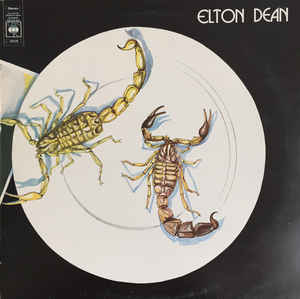
The first solo album by saxophonist Elton Dean (1945-2009).
Elton Dean is known not only for his virtuoso skills as a saxophonist and his membership of Soft Machine, but also for the fact that a pianist, Reginald Dwight, snatched half of his future stage name, Elton John, from him. Elton Dean and Reginald Dwight had played together in the late 60s in the band Bluesology with vocalist Long John Baldry.
Elton Dean played on two excellent albums in 1971 alongside this solo debut, Soft Machine’s Fourth and The Keith Tippett Group’s Dedicated To You, But You Weren’t Listening. Stylistically, Dean’s eponymous album falls relatively close to the aforementioned albums, but reaches even deeper into free jazz.
The core group around Dean on the album is made up of cornetist Mark Charig, bassist Neville Whitehead and drummer Phil Howard. Dean’s Soft Machine bandmate Mike Ratledge on drums and Roy Babbington on double bass, who also later became a member of Soft Machine.
The music on the album is very free jazz with Dean and Charig’s fierce playing taking centre stage. There is no fear of dissonance and the music can be quite tricky to listen to for the uninitiated, especially on the stormy 15 minute opening track ”Ooglenovastrome” or Babbington’s ripping stringed double bass playing on ”Neo-Caliban Grides”. Also fascinating to listen to is the darkly mellow ”Something Passed Me By” where Whitehead’s insistent repetitive bass line carries the song as the winds buzz angrily overhead and Phil Howard pounds the drums with a chaotic sound. On a lighter note, ”Blind Badger” recalls Miles Davis’ late 60s music from the days of Nefertiti and Miles In The Sky.
Originally a five-track album, the 1998 re-release (Cuneiform) increased it to seven tracks. Two live songs, recorded in 1972 with a slightly different line-up, added an extra 25 minutes to the album and the album was named Just Us. The 1972 live tracks are a great addition to the album, but even in its original form the album was one of the gems of British avant-garde jazz in the early 70s.
The album was recorded at Advision studios by Eddie Offord, who at the same time had a distinguished career behind prog greats Yes and Emerson Lake & Palmer.
Best tracks: ”Ooglenovastrome” ja ”Something Passed Me By” ja ”Blind Badger”
27. Weather Report : s/t

Weather Report’s eponymous debut album is the first album from the jazz-rock band formed by keyboardist Joe Zawinul, saxophonist Wayne Shorter and bassist Mirloslav Vitous, all of whom played with Miles Davis.
The trio recruited Alphonse Mouzon on drums and Airto Moreira on percussion, who also had a background in Davis’ band. Also playing uncredited on the album are percussionists Barbara Burton and Don Alias, who had such a falling out with Zawinul that they were thrown out of the band before the debut album was completed.
Weather Report’s debut album is a natural continuation of Miles Davis’ albums of the 60s/70s and especially Bitches Brew. The music on the album is free-form and apparently largely improvisational, avoiding standard song structures. Like a musical counterpart to an impressionist painting. Here and there, one recognises or is likely to recognise forms until the whole blurs into a fascinating mixture of different sounds. The music is sometimes rhythmically spastic with its Rhodes electric piano and screeching percussion, but the band also often manages to settle down into contemplative moods with a nice dark and misty tone.
Consisting of eight rather short pieces (2-8 min.), the album is an elusive and somehow vague whole. Not all of the songs seem to hit the mark, if there was a mark at all, but for all its electronic fogginess, the album is a fascinating listen. This debut album has none of the jazz-rock clichés that many of the genre’s exponents, including Weather Report themselves, later succumbed to.
Best tracks: ”Umbrellas”, ”Orange Lady”, ”Waterfall”, ”Tears”
Author: JANNE YLIRUUSI
Other volumes of the Year by Year series can be found here.
 Pienemmät Purot
Jätä kommentti