
Hergest Ridge is Mike Oldfield’s second studio album.
Mike Oldfield’s debut album Tubular Bells was released just a week after the young multi-instrumentalist’s 20th birthday. Against all expectations, the almost entirely instrumental Tubular Bells became a phenomenal success and Oldfield himself found himself in the bright spotlight of the music world. Oldfield had dreamed of success, but now that he had achieved it, he realised it didn’t make him happy. On the contrary. An inward-looking introvert, he was downright terrified of the attention and adoration he received. Oldfield also flatly refused to go on tour and played only two live shows with Tubular Bells under intense pressure. The second of these was in the BBC studio for the 2nd House programme.
So Oldfield did not throw himself into the jet-set life or begin networking in London’s music circles as most of his peers would have done after suddenly becoming successful and rich beyond their wildest dreams. Instead, Oldfield secluded himself in the rural tranquillity of Herefordshire, over 200 miles away in London.
Strictly speaking, however, Oldfield was not yet rich because, as anyone with a little knowledge of the music business will understand, royalty payments are usually delayed and even a big success may not show up in the form of increased zeros in the bank account until the following year. Besides, the success of Tubular Bells at the time of its release was by no means meteoric. Released in May, it didn’t hit the UK album charts until July, debuting at number seven. After that, the album slowly grew in popularity until December, when William Friedkin’s horror film The Exorcist used a snippet of the Tubular Bells intro in its soundtrack, which in turn exploded the original’s popularity to new heights. Between February 1974 and May 1975, Tubular Bells dropped out of the UK album chart’s top 10 for just four weeks. In total, Tubular Bells spent an astonishing 264 weeks on the UK album charts. Over the years, Oldfield’s debut is estimated to have sold over 17 million copies.
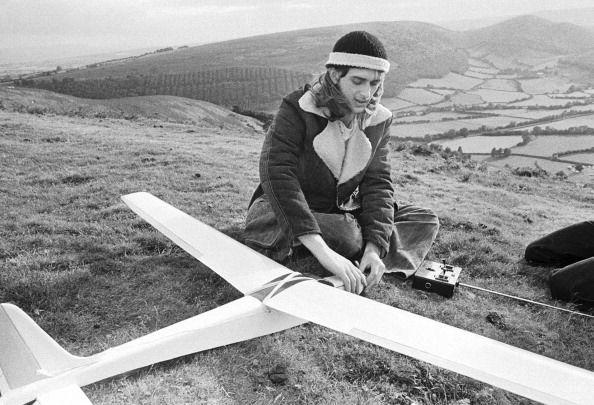
In the spring of 1974, however, when Oldfield began to consider his next album, the millions of pounds to come were still years away. Instead of millions, Oldfield enjoyed a modest £25 a week salary from Virgin and also managed to get enough of an advance to buy a shabby little house with no central heating or fridge near a hill called Hergest Ridge in Herefordshire. ”The house, named ’ The Beacon’, became Oldfield’s base where, with the help of Virgin, he built a simple home studio to help him demo his next album. Oldfield has amusedly recalled how the future billionaire himself, Virgin boss Richard Branson, carried the Farfisa organ into the house with no effort spared. The ever energetic Branson was prepared to go to great lengths to keep his golden goose happy. Oldfield would not have really wanted to embark on a new record, but was most comfortable in a nearby pub playing medieval folk music with local musician Leslie Penning. However, under pressure from Virgin, Oldfield finally got down to business.
It was a painful start, but once Oldfield got back on the job, things started to move forward as if by its own accord. Oldfield put together a detailed and meticulous demo (which can be heard on the 2010 deluxe edition) and then Tubular Bells producer Tom Newman was brought in to help and the project moved into the real studio. An attempt was first made to record the album at Basing Street and Chipping Norton studios, but Oldfield was not happy with the results and eventually the recordings were moved to the Manor, a country mansion studio owned by Virgin. The same place where Tubular Bells had been recorded.
Like Tubular Bells, Hergest Ridge consists of two vinyl-half length compositions simply titled ”Part One” and ”Part Two”. The first part lasts almost 22 minutes and the second part also runs to close to 19 minutes. This time there is no unrelated epilogue like ”Sailor’s Hornpipe”.
Read also: Review: Mike Oldfield – Discovery (1984)
Echoes of Gustav Mahler and Vaughan Williams have been heard in Hergest Ridge, and I feel like adding Jean Sibelius, who, as is well known, is Oldfield’s favourite composer, because of the strong rural romanticism of the music. Indeed, Hergest Ridge moves even further away from rock music than Tubular Bells and classical music is increasingly the main source of inspiration. Of course, Oldfield does not use symphonic structure in the formal way of the aforementioned classical masters, but compared to Tubular Bells, the development of themes is much more elaborate. There are also far fewer themes, which are longer and more complex. Whereas in Tubular Bells the different themes were even used lavishly, sometimes jumping from one theme to another in a somewhat half-hearted way, this time Oldfield’s principle seems to be ”less is more”. Just a few themes are varied in many different ways endlessly and very successfully. The mechanics of the composition also feel more sophisticated. The harmonic language is richer and extends more often to dissonance, and counterpoint is also used here and there.
Hergest Ridge’s music is more pastoral, introspective, serious and melancholic than its predecessor. The album is not as easy to open as Tubular Bells, but there are still plenty of beautiful melodies and emotionally charged, fine guitar playing. The rural atmosphere is captured so effectively in places that it’s easy to imagine Oldfield wandering the moors with his Irish Wolfhound (called Bootleg, by the way), drawing inspiration from ancient landscapes. Hergest Ridge could be described as a symphonic poem rather than a symphony, a more free-form style than a classical music symphony that seeks to describe a phenomenon or theme not directly related to music.
Tubular Bells established Oldfield’s reputation as a one-man band and multi-instrumentalist. And although Oldfield again plays most of the instruments alone this time, he is also joined by other musicians. Ted Hobarth on trumpet and Lindsay Cooper (Henry Cow) and June Whiting on oboe. Mike’s brother Terry Oldfield plays the flute. There is hardly any drumming on the album, but the original mix features a Chilli Charles snare drum that was completely mixed out in 1976. The trumpet’s role was also reduced in that version. Clodagh Simonds and Sally Oldfield provide the wordless vocals here and there, but the chorus arranged by David Bedford plays an even bigger role, especially in the finale of ’Part One’. Bedford is also responsible for the string arrangements on the album, which can be heard in the second half of the album. Oldfield’s own instrumental contribution focuses on various guitars, bass guitar, percussion and organ. There are no synthesizers on this album either and in fact the whole album is surprisingly acoustic.
The first half of the album starts with a mysterious drone that launches into a long and beautiful melody played with wind instruments and chimes. The intro has been compared to Mahler’s first symphony. About halfway through ’Part One’ we hear an extremely touching and delicate oboe melody played by Cooper, which after a while is followed by another melody played by the trumpet, which finally forms a delightful counterpoint with the electric guitar. Tubular bells lead the song into a new section where the bass guitar takes the lead for a moment. ”From the ’bass solo’ we move into a celebratory, life-affirming section where the sleigh bells ring and Oldfield unleashes a charming electric guitar solo adorned with a strong buzzing fuzz effect. The long guitar solo moves into a slow and ethereal finale where Bedford’s gorgeously arranged choir of mixed voices sigh eerily. At the end, the tubular bells chime in a race with the increasingly intense singing choir, from which we return to the initial drone. The use of tubular bells in the finale bows, in my opinion, unnecessarily to Tubular Bells and gave an easy target to the critics. We will return to this later.
The second part begins with an acoustic guitar and a buzzing organ that modulates several times, accompanied by a fast and virtuosic electric guitar. The music takes on a new rhythmic quality and a mandolin joins in alongside several guitars. The wistful melody is gorgeous and the music has a great sense of kinetic energy. After a short 7/4 section, the music moves into a calmly floating section where the ripping electric guitar then wakes up. The raucous electric guitar and the drums in the background move the music into a strange, jerking organ section with Terry Oldfield’s flute playing a hesitant melody above it.
Then all hell breaks loose.
A really experimental and aggressive section begins with a huge number (depending on the source, there were 100-1000 guitar tracks) of electric guitars recorded on top of each other at the same time. This brutally roaring section, nicknamed ”electric thunderstorm”, provides a powerful contrast to the overall subdued mood of the album. This section is truly ferocious and the massive wall of organ-like buzzing guitars was something never heard before. Indeed, many people are mistaken to think that the section was created with organ, but guitars they are. When I was introduced to Hergest Ridge as a teenager, I had never heard anything remotely as bizarre as this section that turns electric guitars into a demonic string orchestra.
After an electric thunderstorm comes a beautifully serene section of organ and acoustic guitar, accompanied by a string section. Little by little, the music transforms into a devotional mass driven by vocals and acoustic guitar. The melody is beautiful but sad, and the dissonances at the very end add their own tragic touch. In cinematic terms, one could say that the ending of Hergest Ridge is not a happy one.
Read also
- Levyarvio: King Crimson – The ConstruKction Of Light (2000)
- Review: Camel – Moonmadness (1976)
- Review: Gong – Gazeuse! (1976)
- Review: Mike Johnson – The Gardens Of Loss (2026)
- Levyarvio: Mike Johnson – The Gardens Of Loss (2026)
- Levyarvio: Led Zeppelin – Presence (1976)
The end almost was not happy for Oldfield either. For the critical backlash had begun. While Tubular Bells had received almost 100% praise, the reviews of Hergest Ridge were more mixed and in some cases even very damning. Some critics even accused Oldfield of plagiarising himself. Which in this case is a relatively ridiculous accusation. Thousands of pop artists have made their own albums in a forced three-minute format, using the same basic instrumentation, without any such accusations, and when Oldfield makes two consecutive albums with only two songs that fill half the album but contain very different music, it’s an immediate sign of stagnation. Strange and very unfair.
Commercially, it was also clear that after Tubular Bells, the road would only go downhill. However, Hergest Ridge went straight to the top of the British album charts and stayed there for three weeks until Tubular Bells, which had been hanging around for a year, went to number one, dropping Hergest Ridge to second place. For a while Oldfield held the top two spots on the UK album charts. In the end, Hergest Ridge sold a couple of million copies, which is peanuts compared to Tubular Bells’ 16 million, but still quite an incredible achievement for such experimental and introverted instrumental music.
For Virgin, however, the performance of Hergest Ridge was disappointing and Oldfield himself was not entirely satisfied with the album, feeling that he had already given his all on Tubular Bells and that Hergest Ridge felt at times like a forced release and a feeding of the Virgin machine. The feeling of being forced to crank it out does not come across at all, at least not to this listener, but on the contrary: Hergest Ridge is, for the most part, even more beautiful and more successful than Tubular Bells, in my opinion.
The many different mixes of Hergest Ridge also show that Oldfield was never completely at ease with his work. He felt that the recordings were made in too much of a hurry, which had a negative effect on the performances. The first vinyl presses also failed to reproduce the subtle music satisfactorily because of the poor quality of vinyl records at that time due to the oil crisis. Oldfield remixed the album for the first time for the compilation album Boxed and again in 2010.
Boxed, released in 1976, contained Oldfield’s first three studio albums and additional music. Boxed Hergest Ridge was considerably more minimalist than the original version. Whereas the original 1974 Hergest Ridge was more symphonic in the sense of the romantic era of classical music, the Boxed version veered slightly towards more contemporary art music, while also emphasising its folk music side. At Oldfield’s insistence, the Boxed version went on to become the default version of the album and was the only version available in CD format until 2010 when Oldfield remixed the album again. So I myself was originally introduced to the album through this mix and it is still the version I am most familiar with.
Apparently Oldfield felt that the original version sounded muffled by recording challenges and many parts of which he was proud did not stand out clearly from the whole. So for this reason he went in a more pared-down direction. In 2010, however, it was possible to return to the original version and restore its richer sound with a new mix. So Oldfield did, and the third version of Hergest Ridge was premiered in 2010 with a three-CD deluxe edition. However, this third mix is quite different from either of the previous ones, in that Oldfield didn’t just take the time to clean up the first version, but the new mix again highlights a completely different side of the composition. The 2010 mix is, to me, a little more guitar-centric and perhaps a little rockier than either of the previous interpretations. The 2010 mix is interesting, but in parts a little sloppy work and contains some parts that sound to me like outright playing errors.
For me, the definitive version of Hergest Ridge is the 1976 remix, but that could just as well be because that’s how I got to know this delightful composition. In any case, all versions are interesting in their own way and offer fascinating alternative angles on the composition.

1975 also offered another dramatically different interpretation of Hergest Ridge. Avant-garde composer David Bedford arranged a version of Hergest Ridge for large orchestra and choir. He had previously done a similar orchestral version of Tubular Bells, which was released on disc as The Orchestral Tubular Bells. Unfortunately, the orchestral version of Hergest Ridge has not been officially released on disc to date, but it was even performed on television in England at one time. This version can be seen on YouTube where you can also find a low-quality studio version. The orchestral arrangement by Hergest Ridge works much better than Tubular Bells, which reflects the more symphonic style of this composition.
For the sensitive Oldfield, the reception at Hergest Ridge was a devastating experience and an anticlimax after Tubular Bells. For me, however, Hergest Ridge is a pretty much perfect move for Oldfield, who had retreated into rural tranquillity as a recluse, and a strong demonstration that he was far from being a one-hit wonder. The negative criticism also finally energised Oldfield and he retreated back to his ridge-side cottage, determined that the next album would be his true masterpiece…
Best tracks: ”Part One”, ”Part Two”
Author: JANNE YLIRUUSI
Read also Review: Mike Oldfield – Exposed (1979)
Tracks
- ”Hergest Ridge (Part One)” 21:29
- ”Hergest Ridge (Part Two)” 18:45
Musicians
Mike Oldfield: electric and acoustic guitars, bass guitar, glockenspiel, sleigh bells, mandolin, nutcracker, drums, gong, Spanish guitar, Farfisa organ, Lowrey organ, GEM Gemini organ June Whiting: oboe Lindsay Cooper: oboe Ted Hobart: trumpet Terry Oldfield: flute Chilli Charles: timpani Clodagh Simonds: vocals Sally Oldfield: vocals David Bedford: choir and string section leader.
 Pienemmät Purot
Jätä kommentti