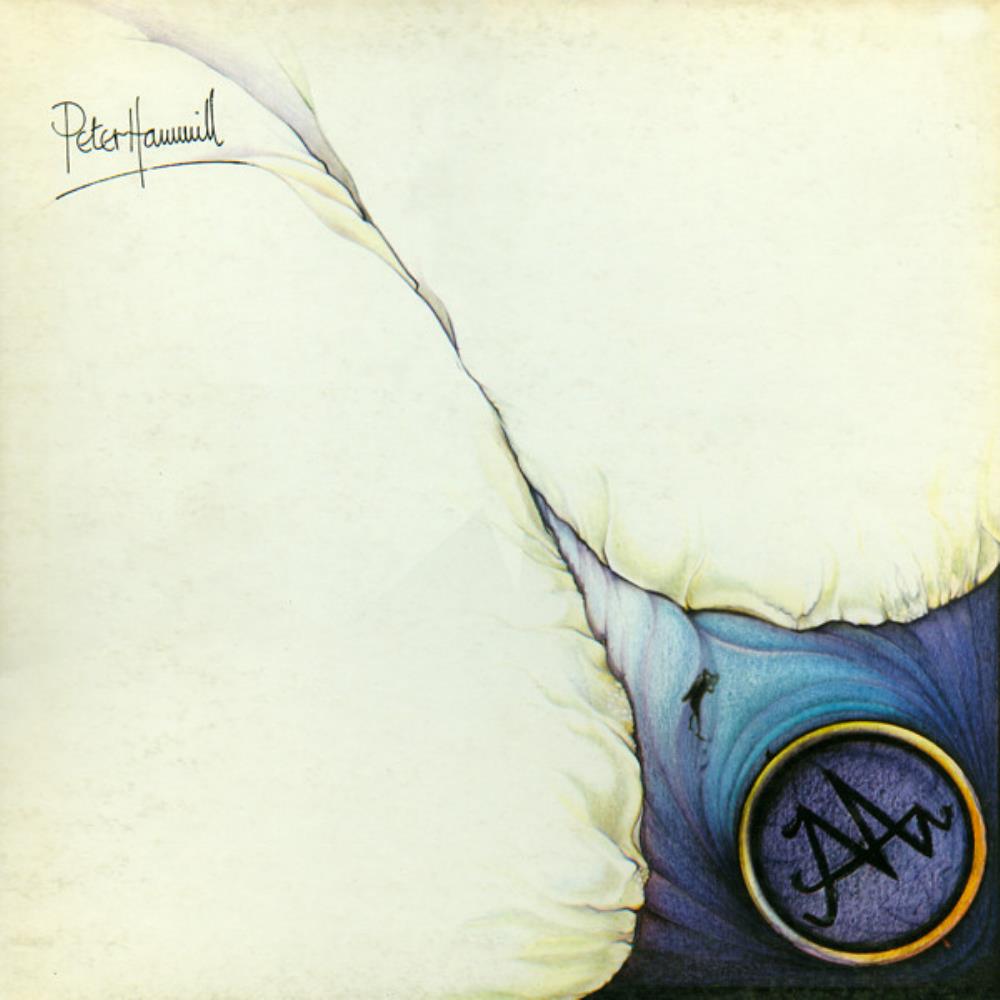
The Silent Corner And The Empty Stage is the third solo album by Van Der Graaf Generator vocalist Peter Hammill.
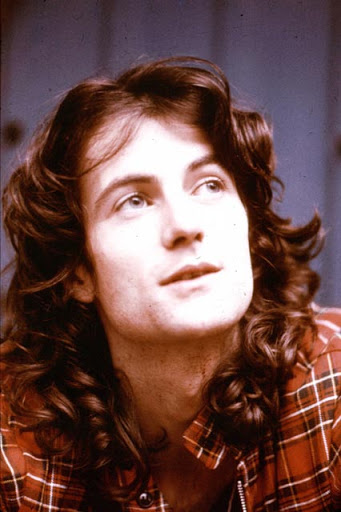 Hammill’s first two solo albums, Fool’s Mate (1971) and Chameleon In The Shadow Of The Night (1973), contained some fine individual songs, but as a whole they were not yet fully convincing. With The Silent Corner And The Empty Stage this changed and Hammill’s solo career really took off. If not commercially, at least artistically. The Silent Corner is a very strong piece of work from start to finish.
The songs on the first half of the album are mostly played by Hammill alone in his home studio, but on the b-side he is joined by old Van der Graaf Generator mates keyboardist Hugh Banton, drummer Guy Evans and wind player David Jackson.
Although the b-side is the stronger half of The Silent Corner, the a-side is not far behind. Hammill can make a surprisingly impressive racket on his own. Or almost alone. Hugh Banton, as I understand it, helps out on keyboards on all the tracks on the album. The album’s tender, but certainly not sentimental, track ’Wilhelmina’, written for Guy Evans’ newborn daughter, may well be entirely Hammill’s solo effort. It would be easy for a song like that to descend into sentimental platitudes, but Hammill certainly doesn’t indulge in that, as this excerpt from the lyrics shows:
Willie, you are the future; all our lives, in the end,
Are in your hands. Life’s hard now — you know,
It gets harder, and hope is but a single strand;
We pass it on and hope you’ll understand….
We know that we do it wrong, we’re not so strong
And not so sure at all; groping in our blindness,
We may seem big now but, really, we’re so small
And alone and searching for a home
in the night.
One of the highlights of the album is ”Red Shift” which was actually recorded during the sessions of the previous album but remixed for The Silent Corner. In the song, Hammill uses the astronomical concept of the red shift to describe the distancing of man from the rest of the world. Musically, the song progresses in a furiously irresistible way. Evans’ drums constantly kick the song forward, Jackson’s saxophone tones are wildly atonal, cosmic synthesizer sounds pierce the soundscape like meteors through space, and Hammill’s intense vocals roar above it all.
And that’s not all: towards the end of the song, the electric guitar of Randy California of Spirit fame joins in, playing through the sonic storm created by the VdGG quartet in an almost droning wail, bringing another strong emotional anchor to the song alongside Hammill’s voice. (A curious fact: Randy, according to Hammill, ate about twenty lemons during the few hours of recording).
”Red Shift”, which roars almost out of control at times, is like an ancient machine that, once it has reached full speed, almost shakes itself to pieces. It’s certainly not precise and subtle music, but it’s all the more passionate and moving.
As great as The Silent Corner is, the 12-minute ”A Louse is not a Home” is the real masterpiece of the album. ”A Louse is not a Home” was intended for the album following VdGG’s Pawn Hearts, but when the band collapsed the song ended up on this album. It’s fortunate that the VdGG members didn’t fall apart in the band’s shipwreck anyway, so since the whole foursome is together on the song we can realistically assume that the version we end up with is pretty close to what it would have been on the VdGG album. And ah what a song ”A Louse is not a Home” is!
”A Louse is not a Home” is easily one of the best in the vast catalogue of both Hammill and VdGG combined. ”A Louse Is Not A Home” offers a tremendous amount of dynamics and drama. The song literally ranges from Hammill’s lone whispered vocals to a full-band electronic storm with tremendous power. Hammill’s frantic voice reaches a whole new angered level and flogs the listener through the music like a whip. As versatile and extreme as Hammill had used his voice in the earlier years of his career, it seems that he really did find the next level in ’A Louse is not a Home’. It’s a style he would take even further in the years to come. The lyrics are poignant and wade in the deep, dark waters of Hammill’s typically existential angst.
And people are imaginary, nothing else exists
Except the room I’m sitting in,
And, of course, the all-pervading mist —
Sometimes I wonder if even that’s real …
Maybe I should de-louse this place;
Maybe I should de-place this louse;
Maybe I’ll maybe my life away
In the confines of this silent house.
Sometimes it’s very scary here; sometimes it’s very sad;
Sometimes I think I’ll disappear; sometimes I think …
1974 was a fruitful year for Hammill as just six months later, after The Silent Corner And The Empty Stage, he released his next studio album In Camera which is even slightly better than its predecessor. Hammill was on fire! And the return of VdGG was already on the horizon…
Best tracks: ”Modern”, ”Forsaken Gardens”, ”Red Shift”, ”A Louse Is Not A Home”
Rating: ****½
Author: JANNE YLIRUUSI
Read also: Van der Graaf Generator – The Least We Can Do Is Wave to Each Other (1970)
Tracks:
Peter Hammill: vocals, electric and acoustic guitars, piano, harmonium, Mellotron, bass guitar (1, 2, 6) Hugh Banton: organ, bass pedals and bass guitar (3, 4, and 7), keyboards, backing vocals (3-5,7) Guy Evans: percussion, drums (4-5, 7) David Jackson: flute, alto, tenor and soprano saxophones (4-5,7) Randy California: electric guitar (5)
Producer: Peter Hammill
Label: Charisma
 Pienemmät Purot
Jätä kommentti