
The Least We Can Do Is Wave to Each Other is the second studio album by Van der Graaf Generator, formed in 1967. In practice, however, it is actually the band’s first real album, as its predecessor, The Aerosol Grey Machine, released in 1969 by the American Mercury label, was actually intended as a solo album by vocalist/composer Peter Hammill (b.1948). However, as a result of complicated record company wrangling, the album was put under the VdGG label. The Aerosol Grey Machine also did not receive a very wide distribution and was only released in the USA.
With The Least We Can Do Is Wave to Each Other, VdGG found a fitting home as one of the first artists to join Rare Bird and The Nice on the new Charisma label, founded by ex-journalist Tony Stratton Smith. Stratton Smith was also VdGG’s manager, and had a strong faith in frontman Peter Hammill in particular, supporting the band perhaps even more than the band’s rather wild and strange music deserved for its commercial (un)potential.
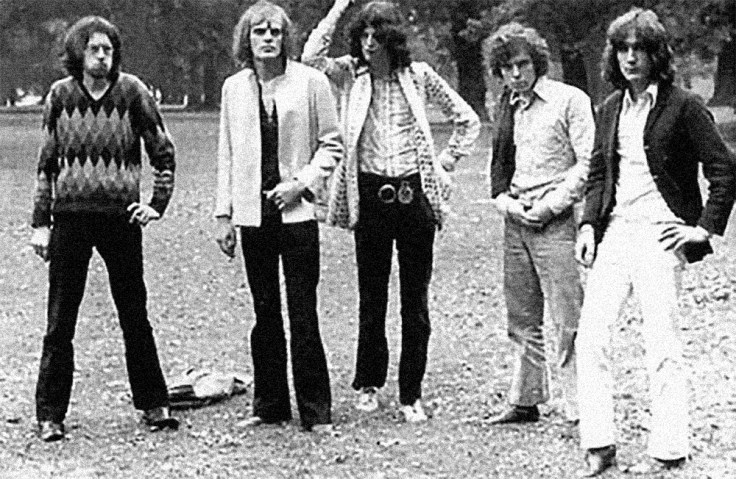
The Aerosol Grey Machine’s core group of Peter Hammill, keyboardist Hugh Banton (b.1949) and drummer Guy Evans (b.1947) were joined by wind player David Jackson (b.1947) and bassist Nic Potter (1951-2013) replaced Keith Ellis.
Recorded in four days, the album opens with ”Darkness (11/11)”, which starts off quietly and ominously, accompanied by wind effects, until after a couple of minutes it explodes into life and crystallizes what the album is all about; extreme contrasts. Hammill uses his voice superbly, moving in an instant from beautiful choirboy singing or quiet whispers to diabolical, furious roars. The band provides effective accompaniment and David Jackson’s booming double saxophone tones (yep, Jackson played two saxes at the same time!) are already great to hear at this stage. Unfortunately, the somewhat lacklustre recording takes away from the power of the drums and keyboards in particular. Only the vocals and saxophone cut through properly. With a more efficient production The Least We Can Do Is Wave to Each Other would have been a much bigger affair and could have even challenged King Crimson’s debut In The Court Of The Crimson King for the throne of early dark prog.
The album’s second track ”Refugees” is a pastoral and beautiful song, a perfect counterpart to the upbeat opening track. The wistfully beautiful vocal part alternates with a more intense instrumental part. The song also features the cello of studio musician Mike Hurwitz. The same gentle side of the band (not often heard after this album) is also represented by the song ”Out Of My Book” which is not quite as successful as ”Refugees”.
The wildest and perhaps most charming song on the album is ”White Hammer”, a somewhat comically sincere tale of medieval witchcraft. Built on a riff of darkly buzzing bass and organ, it’s a really entertaining song. The closing blow of the first verse
And the Hammer struck hard
is glorious!
In the last, massively humming, part of the song, all hell breaks loose as Guy Evans pounds away on drums with a spinning organ note in the background and David Jackson rips his saxophone into the most jagged free jazz-like flourishes he can muster. The atmosphere is truly blistering and nicely matched to the dark lyrics.
The compact six-minute ”Whatever Would Robert Have Said?” despite its short duration, contains many twists and turns and may be the most complex track on the album, but it also feels a little disjointed. The song’s title is a reference to Robert J. Van de Graaff, from whose name the band’s name Van Der Graaf Generator was coined.
After the gentle ”Out Of My Book”, the album ends with the apocalyptically roaring ”After The Flood”, about a flood that will destroy humanity (maybe caused by climate change?), which is a nice finale to the album. Especially its refrain
And when the water falls again,
All is dead and nobody lives
is impressive, and the subsequent heavy instrumental section is truly harrowing. At one point Hammill’s roar (”Total annihilatiooooooooooooooooooon!”) is effected to sound a bit like Greg Lake’s voice in ”21st Century Schizoid Man”. An impressive moment.
However, at over 11 minutes, After The Flood is a bit overlong and the electric guitar playing of bassist Nic Potter in the last minute is not particularly convincing. On the other hand, it was the first time Potter had ever tried electric guitar in his life…!
 The Least We Can Do Is Wave to Each Other is a consistently strong showcase of the young band’s skills. It’s just a shame that the studio side of the album (produced by John Anthony and engineered by Robin Cable) isn’t quite up to scratch and some of the power of the songs is clearly not conveyed.
The album received good reviews when it was released and even reached the top 50 of the British album charts. In fact, it was the band’s best performance in their home market, although in the years to come they enjoyed much greater popularity in continental Europe, particularly in Italy.
VdGG released another studio album in late 1970, but the somewhat more subdued H to He Who Am the Only One, while a fine album, did not quite reach the level of The Least We Can Do.
Best songs: ’Refugees’, ’White Hammer’ and ’After The Flood’
Rating: ****
Author: JANNE YLIRUUSI
Tracks:
- ”Darkness (11/11)” 7:30
- ”Refugees” 6:25
- ”White Hammer” 8:18
- ”Whatever Would Robert Have Said?” 6:10
- ”Out Of My Book” 4:07
- ”After The Flood” 11:36
Bändi:
Peter Hammill: acoustic guitar, vocals and piano on ”Refugees” David Jackson: tenor and alto saxophones, flute and backing vocals Hugh Banton: Farfisa organ, piano and backing vocals Nic Potter: bass guitar and electric guitar Guy Evans: drums and percussion
Other musicians:
Mike Hurwitz: cello (”Refugees”) Gerry Salisbury: corner (”White Hammer”)
Producer: John Anthony
Label: Charisma
More reviews here.
 Pienemmät Purot
Jätä kommentti