Founded in London in 1974, Japan began with glam rock that imitated David Bowie but gradually evolved into a more original sound with each album. The four subsequent albums, released in quick succession, steadily shifted the band’s style toward a more experimental direction, and their final studio album, Tin Drum (1981), was already highly original art pop.
Japan’s success grew slightly with each album, and their final release—the heavily studio-edited live album Oil On Canvas—even reached the top 10 of the UK album charts. Oil On Canvas was actually released six months after the band had broken up. Japan broke up due to tensions among the band members. There was particular friction between bassist Mick Karn (1958–2011) and vocalist David Sylvian, and the final straw came when Karn’s girlfriend started dating the singer.
After Japan disbanded, the core quartet of David Sylvian, Mick Karn, Steve Jansen (drums), and Richard Barbieri (keyboards) went their separate ways, becoming musicians with distinct voices who worked largely on the fringes of pop music. Sylvian’s solo career achieved the greatest success, but he, too, did so with a highly distinctive blend of art pop, ambient, and jazz. Over the years, the former members of Japan worked back and forth on each other’s projects. Sylvian even appeared on Karn’s solo album Dreams Of Reason Produce Monsters (1987). Despite their collaboration, however, their relationship remained cool.
By 1989, time had apparently softened their memories enough that Japan’s core quartet—Sylvia, Barbieri, Jansen, and Karn—decided to make music together again. Japan’s fifth member, guitarist Rob Dean, was not invited to join the festivities.
Read also: Review: David Sylvian – Brilliant Trees (1984)
They set out to make a new album with the generous budget provided by Virgin. The quartet had decided in advance to make commercial pop music for a change. Apparently, the combination of this vision and Japan’s former reputation loosened Virgin’s purse strings to such an extent that none of the musicians had ever seen such a large recording budget before. But things don’t always go according to plan. No pop music was produced, and the money ran out before the project was finished.
A few other things also went as originally planned. In the original plan, Michael Brook—who had worked with Jon Hassell and Brian Eno—was supposed to produce the album, and avant-garde guitarist David Torn was set to serve as lead guitarist. It soon became clear, however, that Sylvian was overly concerned about maintaining control. He refused to accept an outside producer, and Torn was apparently not brought on board for fear that the guitar virtuoso—a close friend of Karn’s—would turn against Sylvian. In the end, Sylvian also played most of the guitar parts on the album. However, guitarists Bill Nelson and Phil Palmer—familiar from his solo albums—appear on a few tracks.
The sessions, which lasted nearly two years, were fraught with conflict. They set out to create music together through improvisation, which was intended to lead to a more democratic outcome than during their time in Japan, when nearly all the music had been composed by Sylvian. However, Sylvian couldn’t help himself. His perfectionism and need for control took over, and the other musicians ultimately found themselves at his mercy in the process.
The prolonged recording sessions led to Virgin’s generous initial budget running out. The band was forced to return to the record label, hat in hand, to beg for more money. By this point, it had also become clear that the material they had gathered was definitely not as commercial as originally planned. It sounded very little like pop music and was largely instrumental. Virgin made the provision of additional funding contingent on the name Japan being reinstated. Karn, Jansen, and Barbieri would have agreed to the demand, but Sylvian flatly refused, viewing the trio’s flexibility in the face of commercial pressures as a betrayal. The band’s name remained the cryptic Rain Tree Crow, and in the end, Sylvian finished and mixed the album to his liking behind the other members’ backs. I’m not sure with what money. The end result, however, was that both sides felt they had been betrayed.
Read also: Review: David Torn – Cloud About Mercury (1987)
Most of the music was built on the band’s collective improvisations. In avant-garde and jazz circles, improvised albums are often recorded from start to finish in a day or two, so it’s a bit hard to fathom how Rain Tree Crow managed to spend nearly two years on this process. The answer to this puzzle, however, likely lies mainly with Sylvian, who endlessly tweaked and tinkered with the raw material.
Given Sylvian’s dominant influence, it’s no surprise that the music of Rain Tree Crow—originally intended as a collaborative project—ultimately brings to mind Sylvian’s solo albums. There are differences, too. Rain Tree Crow, however, lacks the slight jazzy feel of those Sylvian solo albums, and the vibe is clearly more rhythm/groove-oriented. Ethnic tones are also slightly more pronounced, though these were also present in the instrumental half of Sylvian’s Gone To Earth.
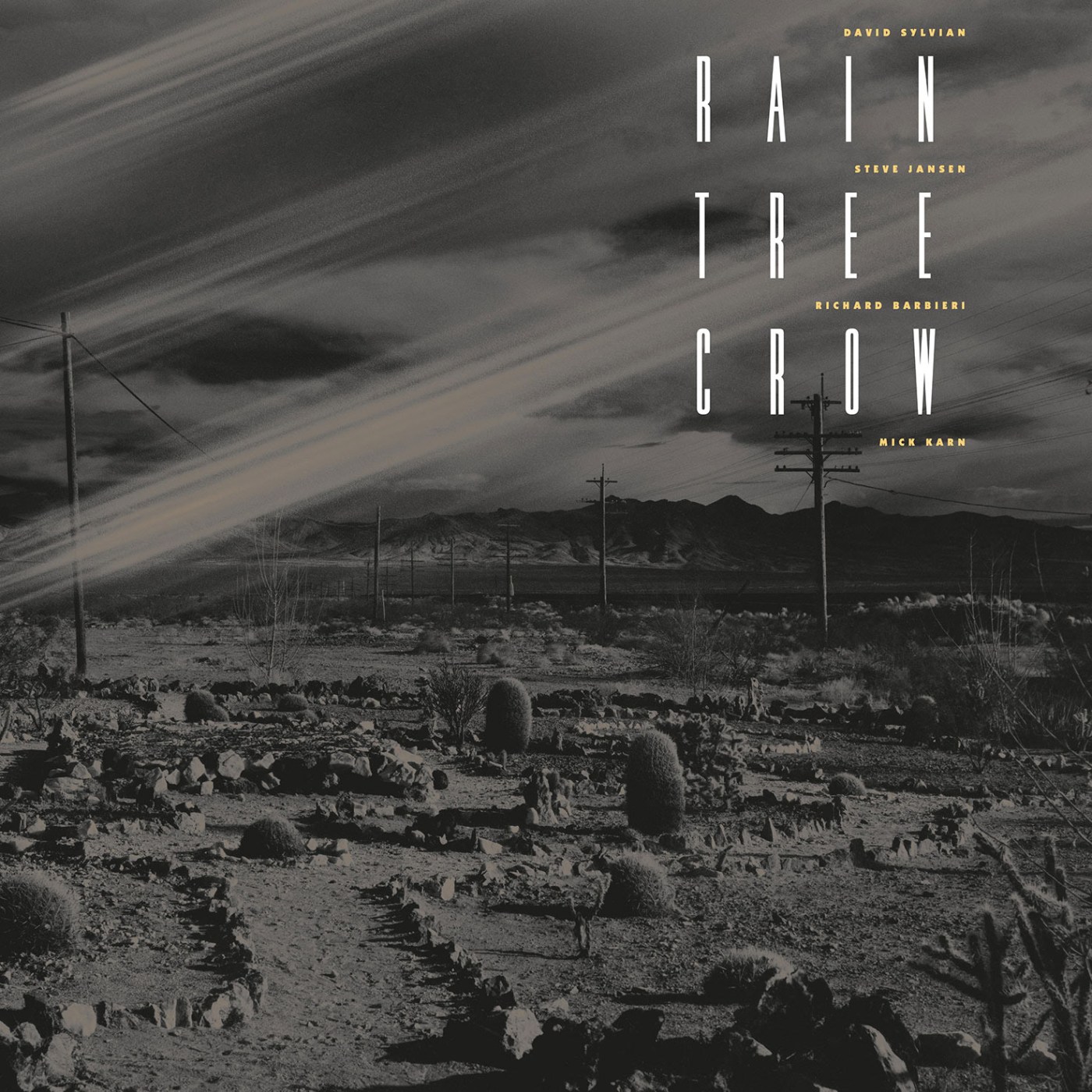
At first listen, Rain Tree Crow doesn’t sound much like Japan at all. Whereas Japan’s music was vibrant and urban, Rain Tree Crow’s music has a more open and pastoral atmosphere. This time, however, the pastoral feel doesn’t evoke England’s green moors, as is often the case with progressive rock. For me, the album conjures images of a wilderness or desert where prickly tumbleweeds slowly drift amid clouds of dust. In the sky, menacing dark birds circle. The entire album is colored by a languid and dreamlike atmosphere. The slowly pulsating music is supported by a rich, full-bodied sound.
Some of the tracks reveal their origins as improvisations a bit too clearly, coming across as rather inconsequential mood pieces. Even the most trivial tracks, however, always contain some interesting detail or texture that makes them worth listening to.
The standout tracks on the album are “Big Wheels In Shanty Town,” “Every Colour You Are,” “Red Earth (As Summertime Ends),” and “Blackwater.”
The album’s opening track, the seven-minute instrumental “Big Wheels In Shanty Town”—save for some wordless ethnic vocalizations—sounds, thanks to its hypnotic groove, almost like something from krautrock legends Can. This is probably no coincidence, as Sylvian had worked closely with Can member Holger Czukay. Rain Tree Crown’s sound, however, is softer and friendlier than that of the German mechanics. The quartet, in turn, distances itself from the original band not only with a generally more organic sound but also with a richer tonal palette; the quartet’s instrumentation is bolstered by horns and Bill Nelson’s electric guitar.
“Every Colour You Are,” which follows immediately after “Big Wheels In Shanty Town,” features Sylvian’s vocals and shifts the album’s mood slightly closer to pop music. In practice, however, the song—which moves forward slowly and evokes a mood with various strange guitar sounds and jangling percussion—navigates quite artistic waters. “Every Colour You Are” is perhaps the track on the album that most closely resembles the music of David Sylvian’s solo albums. A few years later, the song also made its way into the setlist of Sylvian’s and Robert Fripp’s joint touring band and was recorded on the excellent live album Damage (1994).
“Red Earth (As Summertime Ends)” represents the best of the album’s clearly improvisation-based instrumentals. Jansen’s hand drums and percussion create a playfully crackling foundation for Karn’s richly resonant bass guitar and various abstract wails and moans. Phil Palmer’s bright-sounding acoustic guitar briefly takes center stage, bringing a hint of melody to the abstract music.
“Blackwater,” which was also released as a single, is the album’s most pop-oriented track. Sylvian sings with her mellifluous, powerful voice over a lightly snapping rhythm track and hazy-sounding guitars. Once again, there’s something very American about the atmosphere. And by this I don’t mean the glitz of big cities or the glimmer of the pop world at all, but rather some small, godforsaken, dusty backwater in that famous Nevada wilderness.
Rain Tree Crow’s didn’t turn out to be as democratic a band as the quartet had originally envisioned, but the album is by no means a pure David Sylvian show either, as Karn’s thickly winding bass patterns, woven with a fretless bass, and Jansen’s constantly inventive and rich percussion parts are a significant part of the album’s overall sound. Barbieri seems to take a back seat, but on the other hand, he has always been a musician whose influence is subtle; you might not pay particular attention to his keyboards, but if they were removed from the soundscape, there would be a huge void.
Read also:
- Review: Rain Tree Crow – s/t (1991)
- Review: John G. Perry – Sunset Wading (1976)
- Levyarvio: Black Sabbath – Master Of Reality (1971)
- Review: Henry Cow – Concerts (1976)
- Levyarvio: Spock’s Beard – V (2000)
- Review: Cos – Viva Boma (1976)
- Levyarvio: King Crimson – The ConstruKction Of Light (2000)
- Review: Camel – Moonmadness (1976)
- Review: Gong – Gazeuse! (1976)
I wrote earlier that Rain Tree Crow doesn’t really sound like Japan. So would it have made any sense to release the album under that name, as three-quarters of the band ultimately hoped? In a way, no, but actually, I feel there would have been enough continuity. It’s very easy to imagine Rain Tree Crow’s debut as, say, Japan’s eighth studio album. That is, if the band—which in reality released only five studio albums—hadn’t disbanded in 1982 and had continued to make new albums on a regular yet irregular basis. In this scenario, the end result could very well have been something just like Rain Tree Crow.
Originally, Rain Tree Crow was supposed to be a long-term project, and the four members had already been discussing a second and even a third album. Of course, they also planned to go on tour. All of this fell apart due to a painful recording process. After the album’s release, Karn swore he would never work with Sylvian again. About ten years later, however, he was already musing that a Rain Tree Crow reunion might be an interesting experiment, while describing himself as a masochist. This never came to pass. Karn and Sylvian never worked together again. Karn died of brain cancer in 2011. Barbieri and Sylvian have not collaborated since then either. Blood is thicker than water, however, and the brothers Sylvian and Janseen have played together on numerous occasions. Perhaps most memorably in the short-lived Nine Horses project.
The Rain Tree Crow project probably left a rather bitter aftertaste for everyone involved, but if you look at it purely in terms of its musical merits, it’s a worthy addition to the extensive and distinctive catalogues of Sylvian, Karn, Jansen, and Barbier.
Best tracks: ””Big Wheels in Shanty Town”, ”Every Colour You Are”, ”Red Earth” ”New Moon at Red Deer Wallow”, ”Black Crow Hits Shoe Shine City”
Author: JANNE YLIRUUSI
Read also: Review: David Bowie – ★ [Blackstar] (2016)
Tracks
- Big Wheels in Shanty Town (7:08)
- Every Colour You Are (4:46)
- Rain Tree Crow (2:04)
- Red Earth (As Summertime Ends) (3:38)
- Pocket Full of Change (6:08)
- Boat’s for Burning (0:45)
- New Moon at Red Deer Wallow (5:12)
- Blackwater (4:19)
- A Reassuringly Dull Sunday (1:22)
- Blackcrow Hits Shoe Shine City (5:14)
- Scratchings on the Bible Belt (2:46)
- Cries and Whispers (2:31)
Rain Tree Crow
David Sylvian: vocals, electric and slide guitars (4), Hammond organ (1, 5, 9, 10), electric piano (1, 2, 10), synthesizer (4, 8–10), banjo (11), bass (7), harmonium and marimba (11), percussion (3), Indian drum (4), FX, processing, horn arrangements (1), keyboard programming Richard Barbieri: synthesizers, piano (9), sounds (11), keyboard programming Mick Karn: bass, saxophone, bass clarinet, flutes, tabla, horn arrangements (1) Steve Jansen: drums, percussion, Hammond (1,5), tambourine (6), Moroccan drum (7), marimba (9,11), processed piano (11), computer programming
Other musicians
Djene Doumbouya: vocals (1) Djanka Diabate: vocals (1) Bill Nelson: guitar (1,8) Phil Palmer: slide (2) & acoustic (4) guitar The Phantom Horns: horns (1) Brian Gascoigne: orchestration (4) Michael Brook: processing (5,11), percussion (9), congas (4)
 Pienemmät Purot
Jätä kommentti