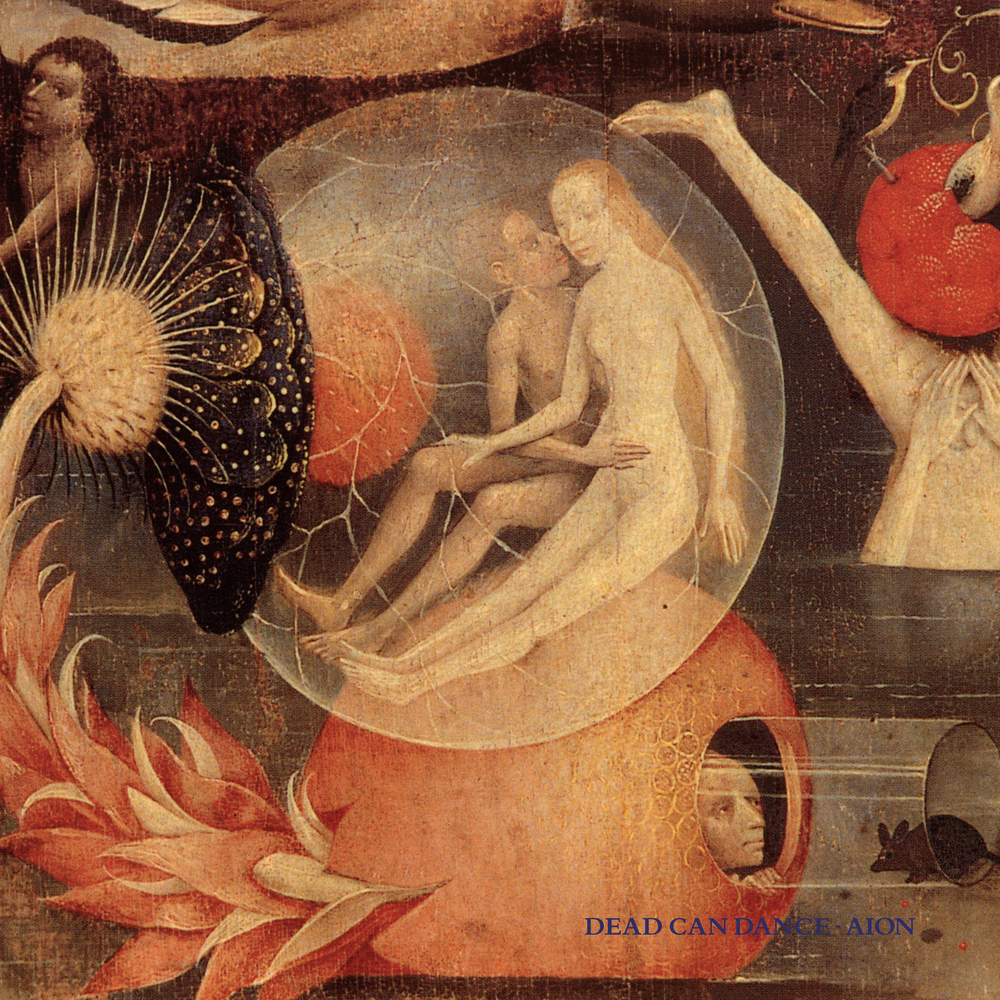
Aion is the fifth studio album by Dead Can Dance.
Many online sources associate Dead Can Dance with the rather comical genre definition “neoclassical dark wave”. Founded in Australia in 1981 by Brendan Perry (born 1959) and Lisa Gerrard (born 1961), Dead Can Dance was originally associated with the goth rock scene. Goth rock is also a somewhat vague concept for me. I have never really understood whether it is more about the music or the make-up style. From its goth roots, Dead Can Dance soon ventured into more esoteric waters.
The duo’s music is built on influences from world music from different cultures, while Perry and Gerrard also reached far back into the past, drawing inspiration from medieval and Renaissance music. The result is an intriguing combination of the new and the old. Ethnic and Western. Dead Can Dance’s music often has a spiritual and ethereal sound, but at the same time it has a strong rhythmic side, and at its most grandiose, the moods swell to become quite cinematic. It is not surprising that Gerrard later found an alternative career in film music.
Gerrard is actually the main culprit behind the so-called ‘wailing woman’ phenomenon in film music. In this clichéd format, a mournful, wordless female voice soars above dramatic music. Hans Zimmer and Gerrard popularised this musical motif in their score for the film Gladiator (2000), and since then it has been heard in almost every other film.
Read also: Steve Reich – Different Trains / Electric Counterpoint (1989)
Gerrard’s vocals play a central role in Dead Can Dance’s music, even though Perry sings some of the songs alone. Gerrard sings virtuosically in her contralto voice, and what makes her style particularly interesting is that she can sing very naturally with words that don’t really exist. So when Gerrard seems to be chanting something that sounds like Latin, Sanskrit or some other ancient language with her impressive three-octave voice, she is actually often singing words that mean nothing in her own made-up language.
Aion brings the influence of old music to the fore more strongly than ever before in Dead Can Dance’s music, and the instrumentation on the album is mainly acoustic. Only here and there are acoustic hand drums, wind instruments, bagpipes, hurdy-gurdies and string instruments complemented by synthesizers and programmed rhythms.
Aion (a Greek word meaning ‘life’ or ‘era’) consists of 12 tracks, the shortest of which are 1-2 minutes long, and the longest barely breaks the six-minute mark. At only 36 minutes long, the album feels a little fragmented due to the short tracks.
Aion alternates between ethereal, slow songs that exude lightness and faster, more rhythmic tracks. Both styles are quite far removed from rock and pop music, and I have often wondered how Dead Can Dance became so popular.
One of the gems on the rhythmic side of the album is ‘Saltarello’. It is an effective, fast-paced song that is actually an old dance from the 1400s. Built entirely on hand drums and a rattling bagpipe, this instrumental song is downright hypnotic. ‘Saltarello’ must have once driven the masses (or at least the aristocracy) wild, just like Beyonce does today. Hmm… maybe this isn’t as far from pop as I thought a moment ago…
The perfect contrast to the fast-paced and joyful ‘Saltarello’ is the solemn ‘The Song of the Sibyl,’ which slowly and arrhythmically swirls along, carried by drone-like instrumentation and occasional plucks of string instruments, bringing Gerrard’s impressive voice to the fore. ‘The Song of the Sibyl’ is an old Gregorian chant, the first versions of which date back to the 900s. However, as far as I know, Dead Can Dance’s version is based on a 1500s Catalan version. I must admit that I don’t know what language Gerrard is singing in! Catalan, her own made-up language, or perhaps something else entirely?
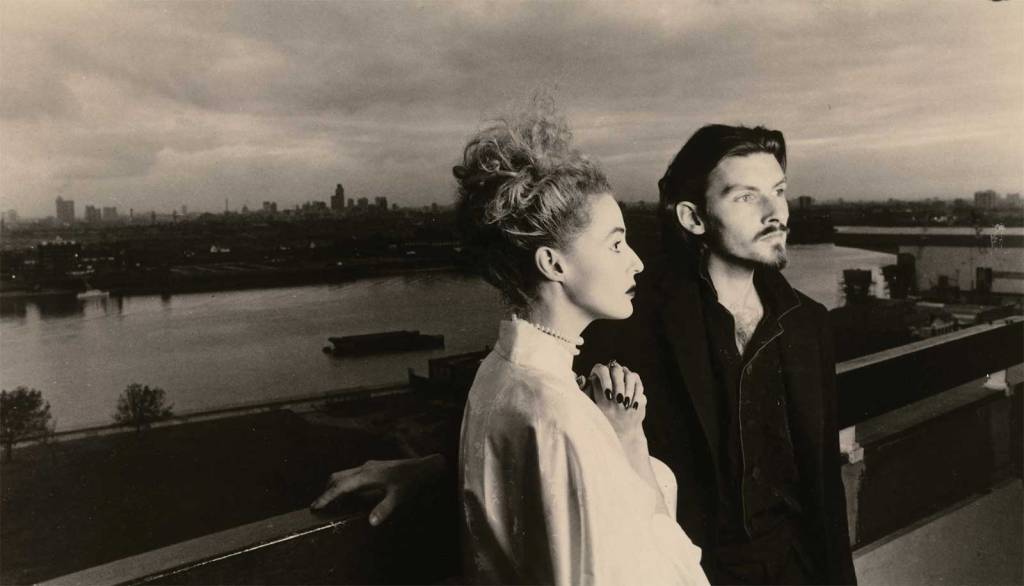
As I mentioned earlier, Perry also gets to sing lead vocals at times, and the songs he stars in tend to take the music in a slightly more modern direction. He sings in English on songs such as ‘Fortune Presents Gifts Not According to the Book’ and ‘Black Sun’. Although Perry’s voice is considerably more limited than Gerrard’s, it adds a nice variety to the album.
A departure from the album’s mid-tempo acoustic instrumentation comes in ‘As the Bell Rings the Maypole Spins,’ where bagpipes buzz and Gerrard’s voice is accompanied by sequenced electronic rhythms. The combination works surprisingly well, as the electronics are used with sufficient subtlety. Even more effectively, Perry’s melancholic ‘Black Sun’, sung with fateful emphasis, combines medieval-sounding jangling percussion, hand drums and piercing orchestral synthesizer lines. ‘Black Sun’ is the only song on the album where you can still hear some remnants of the duo’s gothic roots.
Give me 69 years
Another season in this hell
There is sex and death
In mother nature’s plans
Read also:
- Review: Cos – Viva Boma (1976)
- Levyarvio: King Crimson – The ConstruKction Of Light (2000)
- Review: Camel – Moonmadness (1976)
- Review: Gong – Gazeuse! (1976)
- Review: Mike Johnson – The Gardens Of Loss (2026)
- Levyarvio: Mike Johnson – The Gardens Of Loss (2026)
All in all, Aion is a fascinating and surprisingly natural combination of ancient and modern music with a strong emotional charge. Despite its slight disjointedness, Aion is clearly a more coherent whole than its predecessor, The Serpent’s Egg (1988). On that album, the band’s roots still clashed somewhat with the influences of old music.
After Aion, Dead Can Dance released two albums, Into the Labyrinth (1993) and Spiritchaser (1996), after which Perry and Gerrard (who had been a couple before the recording of Aion but had split up shortly afterwards) took a break from each other professionally and only got back together to make Dead Can Dance music in 2012. Into The Labyrinth, which followed Aion, became the band’s most successful album, selling a staggering half a million copies, but for me, Aion is Perry and Gerrard’s best album together.
Best tracks: ”Saltarello””, As the Bell Rings the Maypole Spins”, ”Black Sun”, ”Radharc”
Author: JANNE YLIRUUSI
Read also: Review: Scott Walker – Tilt (1995)
Tracks
- ”The Arrival and the Reunion” 1:38
- ”Saltarello” 2:33
- ”Mephisto” 0:54
- ”The Song of the Sibyl” 3:45
- ”Fortune Presents Gifts Not According to the Book” 6:03
- ”As the Bell Rings the Maypole Spins” 5:16
- ”The End of Words” 2:05
- ”Black Sun” 4:56
- ”Wilderness” 1:24
- ”The Promised Womb” 3:22
- ”The Garden of Zephirus” 1:20
- ”Radharc” 2:48
Dead Can Dance
Lisa Gerrard: vocals, instruments Brendan Perry: vocals, instruments
Other musicians:
David Navarro Sust: vocals (1, 7) John Bonnar: keyboards (5) Robert Perry: bagpipes (2, 6) Andrew Robinson: bass viol (10) Anne Robinson: bass viol (10) Honor Carmody: tenor viol (10) Lucy Robinson: tenor viol (10) Luis de Góngora: vocals (5)
 Pienemmät Purot
Jätä kommentti