
Aqualung is the fourth studio album by Jethro Tull, founded in 1967.
Jethro Tull, led by flute and acoustic guitarist Ian Anderson (b.1947), had already achieved relative success with their three previous albums, especially in their home market of Britain, but Aqualung opened the way to true rock stardom through the American market. The album was a huge success and is still today Jethro Tull’s most successful album with over seven million copies sold.
While the band’s previous albums were still relatively straightforward blues-rock, Aqualung is clearly a more eclectic affair. The blues influences are less present and Aqualung is more of a cross between folk, hard rock and progressive rock. But despite the diversity of influences, the album is first and foremost a rock album. And a very good one.
Aqualung has often been called a concept album, but in reality it is at most half of one. Three of the songs on the album deal with religion (from a very critical point of view) and a few others have a kind of theme of alienation and detachment.
More than any other Jethro Tull album,Aqualung is characterised by the massive guitar riffs of guitarist Martin Barre (b.1946), the best example of which is of course the simple, ingenious and catchy riff of the title track and the powerful guitar riffs of ”Cross-Eyed Mary”.
On the other hand, the album also offers plenty of beautiful melodies and clever acoustic guitar playing to counterbalance the raw riffs. Ian Anderson, who usually played acoustic guitars in Jethro Tullis, was already at this stage a very skilled and original acoustic guitar player.
In contrast to many of the heavier songs, ”Mother Goose” (probably my favourite of the whole album) and the beautiful ”Wond’ring Aloud” are almost entirely acoustic. The latter also uses a string quartet arranged by David Palmer (later Dee) as a nice support. In the acoustic tracks, as in the bitingly sarcastic tone of the album’s lyrics, the influence of the British folk rocker Roy Harper, who was greatly admired by Ian Anderson, is clearly evident.
Read also: Review: Jethro Tull – Thick As A Brick (1972)
At its heaviest, Tull is comparable to the likes of Deep Purple. The difference between the deeppurples and the blacksabbaths, however, was that Ian Anderson really knew how to write consistently great songs that had real variation and dynamics both within individual songs and on an album scale. And this great music was always topped off with clever lyrics.
Of course, what also set Aqualung apart from the grey hard rock mass was Ian Anderson’s original flute playing. Anderson may not have been particularly skilled as a flutist yet, but his simple flute interludes are a very personal addition to the band’s sound.
All in all, Aqualung is a near-perfect rock album and the starting point for the band’s most creative and progressive period, which stretched almost uninterrupted into the late 70s.
Best tracks: ”Aqualung”, ”Cross-Eyed Mary”, ”Mother Goose”, ”Locomotive Breath”, ”Wind Up”
Author: JANNE YLIRUUSI
Tracks:
1. ”Aqualung” 6:34
2. ”Cross-Eyed Mary” 4:06
3. ”Cheap Day Return” 1:21
4. ”Mother Goose” 3:51
5. ”Wond’ring Aloud” 1:53
6. ”Up to Me” 3:15
7. ”My God” 7:08
8. ”Hymn 43” 3:14
9. ”Slipstream” 1:13
10. ”Locomotive Breath” 4:23
11. ”Wind-Up” 6:01
Bändi:
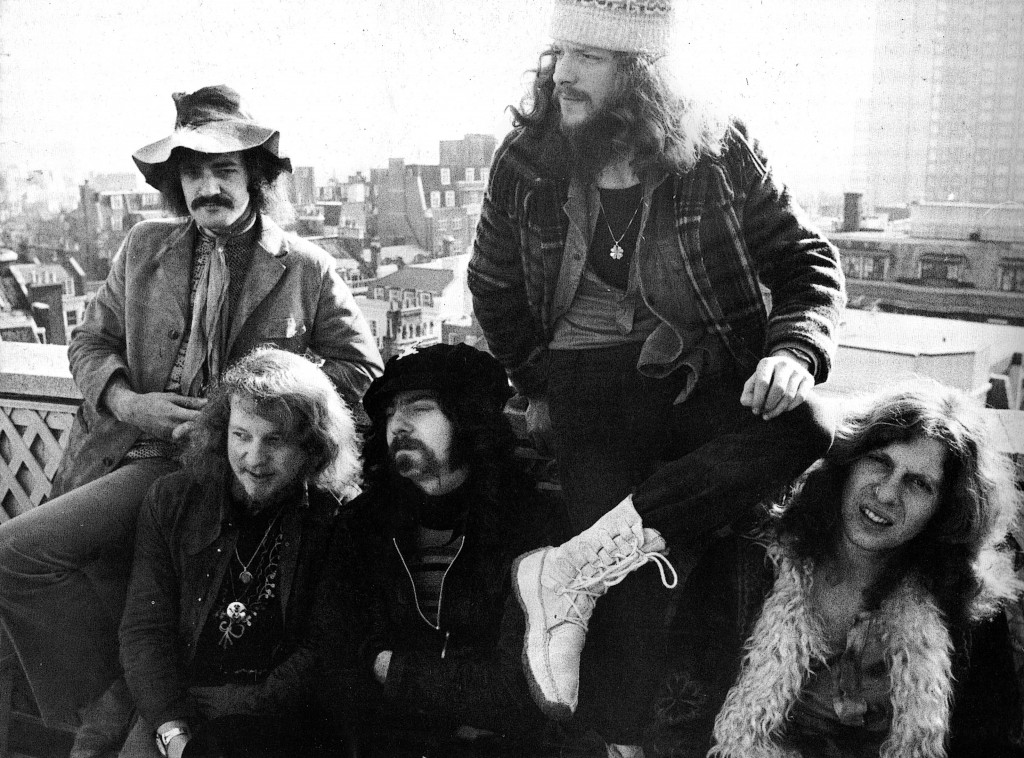
Ian Anderson: vocals, flute acoustic guitars Martin Barre: electric guitar Jeffrey Hammond: bass, backing vocals John Evan: piano, organ, mellotron Clive Bunker: drums, percussion
Producer: Ian Anderson, Terry Ellis
Label: Chrysalis/Islands
More reviews can be found here.
 Pienemmät Purot
Jätä kommentti