
The author’s picks for the best albums of 1970.
In the Year by Year series, I’ll go through my favourite albums from 1969 to the present day.
- King Crimson: Lizard (UK) *****
- Miles Davis: Bitches Brew (US) *****
- Emerson Lake & Palmer: s/t (UK) *****
- Caravan: If I Could Do It All Over Again, I’d Do It All Over You (UK) ****½
- King Crimson: In the Wake of Poseidon (UK) ****½
- Alice Coltrane : Ptah, The El Daoud (US) ****½
- Van Der Graaf Generator: The Least We Can Do Is Wave to Each Other (UK) ****
- Van Der Graaf Generator: H to He Who Am the Only One (UK) ****
- Genesis: Trespass (UK) ****
- Soft Machine: Third (UK) ****
Year by Year: Best Albums of 1970 – 11-22
1. King Crimson: Lizard

Lizard is King Crimson’s third studio album. King Crimson released two studio albums in 1970, the latter of which was released in December, only about seven months after In The Wake Of Poseidon.
After In The Wake Of Poseidon, King Crimson was in a state of turmoil. The original line-up was down to guitarist Robert Fripp (b.1946) and lyricist/general visionary Peter Sinfield (b.1943) and the band hadn’t been back on the road since the tour following their debut album. Simply because no band really existed anymore. Drummer Michael Giles and multi-instrumentalist Ian McDonald were working on their own duo album and bassist/vocalist Greg Lake had left to form the supergroup Emerson Lake & Palmer. The fact that the remaining duo of Fripp and Sinfield no longer got on well with each other also posed a further challenge. Their views on both a professional and personal level had begun to diverge…
2. Miles Davis: Bitches Brew
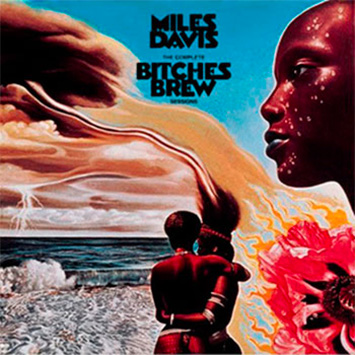
Released in March 1970, Bitches Brew was another seminal and ground-breaking album for the legendary Miles Davis. With it, Davis finally made the leap into electronic jazz-rock and, in one fell swoop, to the top of the genre.
Bitches Brew was recorded in August 1969 over three (only three!) intense days at Columbia Studio B in New York City. Davis invited a group of ten top young musicians to the studio who were given only indicative instructions on what to play. The music is mostly improvised.
Each song features two drummers (either Lenny White, Jack DeJohnette, Billy Cobham or Don Alias), two bassists (Dave Holland and Harvey Brooks) and two keyboard players (Joe Zawinul, Herbie Hancock, Chick Corea or Larry Young). And when you add Davis himself on trumpet and the occasional extra percussionist, Bennie Taupin on bass clarinet and John McLaughlin on electric guitar, it’s a miracle that the improvised music doesn’t get all choked up and messy.
Miles Davis deserves a lot of credit for leading the band in this situation, and a lot of the praise must also go to producer Teo Macaro, who wove the album together from the jumbled material created in the sessions. Indeed, Macero used the studio as an instrument on the album in the same way that the most advanced rock bands were beginning to do at the time. There are also tape loops and various reverb effects which can be heard, especially on the opening track ”Pharaoh’s Dance”.
One of the highlights of the album is the 27 minute title track, which has a really punchy, rhythmic trumpet playing at about 11 minutes which is a real treat to listen to. The level of intensity grows to unimaginable levels as Miles plays furiously in the background of the energetic rhythms. Davis’ soloing on the album is generally much more aggressive than what we had been used to hearing from him. He also often plays in a higher pitch range than usual (which is quite challenging on trumpet).
Other highlights on the 93-minute double album include the really sweet-sounding electric piano accompaniment of ”Miles Runs the Voodoo Down” against the backdrop of Davis’ soloing, and the ””car chase” jazz of ”Spanish Key” that has influenced probably hundreds of police show – and movie – theme songs.
The album is very long and the epic-length songs may not always convince you from start to finish, but on the other hand their somewhat psychedelic nature tends to put you in a kind of trance where you’re not actively listening to the music all the time, but you still feel it.
Bitches Brew is a spectacular trip that launched the jazz-rock genre in its infancy in much the same way that King Crimson’s debut album In The Court Of The Crimson King (1969) propelled progressive rock and has provided endless inspiration for jazz and rock musicians alike to this day.
Best tracks: ”Pharaoh’s Dance”, ”Miles Runs the Voodoo Down”, ”Spanish Key”
3. Emerson Lake & Palmer : s/t

Emerson Lake & Palmer’s eponymous album is not only the band’s debut but also the first so-called supergroup in progressive rock. The definition of a supergroup is that it is a band made up of members who are already famous. Fame is always relative, of course, but Messrs Emerson, Lake and Palmer can be said to have been, at the very least, well-known figures in their own scene.
The most famous member of the band at this stage, keyboardist Keith Emerson (1944-2016), could even be described as something of a star. Emerson was mostly a self-taught musician, but still able to draw fluently from classical music and jazz and bring their technical characteristics to rock music…
4. Caravan : If I Could Do It All Over Again, I’d Do It All Over You
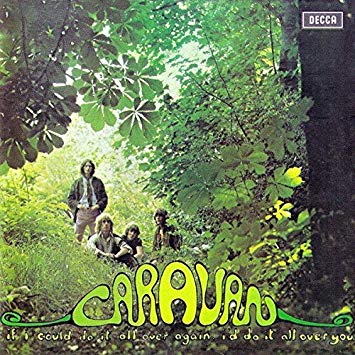
After their debut album, Caravan spent a lot of time living together in a commune, gigging a lot and playing with each other from dawn to dusk. With this in mind, it’s no wonder that the young band’s second album, the wonderfully double-entendre If I Could Do It All Over Again, I’d Do It All Over You, is a step up in every department from its 1969 predecessor.
The band (Pye Hastings, Richard Sinclar, Dave Sinclair and Richard Couchlan) are more assured across the board. The first album had several great tracks, but was still plagued by a slight unevenness. If I Couldn’t, on the other hand, is of a consistently high quality from start to finish, and there are no real dips or bumps.
The roaring title track shows right from the start the new efficiency of the band’s playing together and Dave Sinclair also gets to show that his organ work in particular has a whole new power. Sinclair plays the organ beautifully throughout the album.
The sympathetic second track of the album, the eight-minute ”And I Wish I Were Stoned / Don’t Worry” is somehow SO delightfully Canterbury-esque that it could almost be considered something of an anthem to that elusive sub-genre. The song phenomenally combines light jazz and folk influences as the band alternates between jamming instrumental parts and catchy, yet slightly sleepy vocal parts. Only Pye Hastings’ snoozy vocal performance slightly detracts from the song’s charm. But only a little.
”As I Feel I Die” is also a very successful song that starts with a calm and beautiful vocal part, only lightly accompanied by an organ until the song is blasted into full swing as the tempo picks up.
The nine-minute suite ”With an Ear to the Ground You Can Make It / Martinian / Only Cox / Reprise” has a deliciously determined groove and Sinclair gets to play a wonderful raw organ solo.
One of the little gems of the album is ”Hello Hello” which has an exciting, slightly medieval, tone to the music. The song serves as a great interlude between longer songs.
The album-closing 14-minute ”Can’t Be Long Now / Françoise / For Richard / Warlock” suite (usually known more simply as ”For Richard”) became a popular concert closer, and no wonder, as the song runs through its long duration in a truly addictive way, providing the band members with great opportunities for soloing. And yet they still sound natural in terms of the composition. Caravan’s jazz-rock influences are most evident in ”For Richard” and again guest vocals from the skilled Jimmy Hastings, who plays a big role on flute and saxophone, bring a touch of real jazz credibility to the song.
If I Could Do It All Over Again, I’d Do It All Over You is a charming combination of psychedelic pop and prog with a touch of jazz. One of the band’s finest albums.
Best tracks: ”If I Could Do It All Over Again, I’d Do It All Over You”, ”Hello Hello”
5. King Crimson: In The Wake Of Poseidon

Released in May 1970, In The Wake Of Poseidon is King Crimson’s second studio album and is somewhat problematic in that it largely repeats the structure and style of the band’s debut In The Court Of The Crimson King from the previous year.
The simplest way to sum it up is this:
”Pictures Of A City” = ”21st Century Schizoid Man”
”Cadence And Cascade” = ”I Talk To The Wind”
”In The Wake Of Poseidon” = ”Epitaph”
(The first are Poseidon songs and the second In The Court.)
Of course, Poseidon’s songs are not exact copies of their predecessors, but they still follow the structures of their predecessors very closely, and the feeling that the songs create dramaturgically is exactly the same. They serve the same purpose as their predecessors in terms of the overall arc of the album. ”Pictures Of A City” is a punchy and complex start to the album, ”Cadence And Cascade” a quietly pastoral mood piece (although it tells of two groupies) and ”In The Wake Of Poseidon” a darkly majestic prog anthem.
”Cat Food” is the most original song on the album, with a wry and ghoulish sense of humour. It has no clear predecessor in the Crimson catalogue and, as far as I know, nowhere else. Free jazz pianist Keith Tippett shines in the wild piano parts of the song.
The almost 12-minute instrumental ”The Devil’s Triangle” also has no counterpart on the debut, but it owes a lot to Gustav Holst’s Planets Symphony ”Mars The Bringer Of War”. Crimson was already playing ”Mars” live before the release of In The Court. ”Mars” was also intended to be recorded as such in the studio, but the Holst estate did not approve, so Fripp slightly altered the composition so that it could be called his own. The original is still clearly visible in the martial rhythms of the song.
Of course, there are also short acoustic ”Peace” interludes, but they are so insignificant that they don’t really matter one way or the other.
Times were challenging for Crimson so it’s perhaps understandable that Fripp ended up reusing the blue prints of the first album. Two of the debut’s three main composers had defected at this point, drummer Michael Giles and multi-instrumentalist Ian McDonald. Michael Giles, however, played as a studio musician on this album as well. Greg Lake (bass was handled by Michael’s brother Peter Giles) also sang on most of the album although he was no longer a member of the band. McDonald instead was replaced by young brass player Mel Collins who , after many phases, returned to King Crimson in 2010 and played with the band until its final days.
SoIn The Wake Of Poseidon is a bit of a curious case. On the one hand, the album can’t be called very innovative, but on the other hand, the music itself is really great across the board, and to its credit, the production is a little stronger than on the debut, and the playing is a bit more muscular in places.
Best tracks: ”Cat Food”, ”In The Wake Of Poseidon” ja ”Pictures Of A City”
6. Alice Coltrane : Ptah, The El Daoud
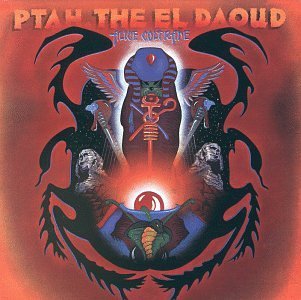
Ptah, The El Daoud is Alice Coltrane’s third solo album.
Around the time of Ptah, The El Daoud (Ptah is an Egyptian god and el daoud means ”beloved” in Arabic), pianist/harpist Alice Coltrane (1937-2007) was still in mourning after losing her husband John Coltrane to cancer just a few years earlier. Alice Coltrane had also begun a spiritual search. Coltrane was introduced to Hinduism and studied under the guru Swami Satchidananda Saraswati. These influences were also channelled into Coltrane’s music and she became one of the most important pioneers of spiritual jazz.
Coltrane’s first two solo albums are interesting, but with Ptah, The El Daoud his style bursts into full bloom and the music feels more confident than before.
A significant difference between Coltrane’s two previous albums is that for the first time in Coltrane’s music, wind instruments play a prominent role. Coltrane recruited two experienced wind players for the album. Joe Henderson came from a slightly more traditional jazz background and Pharoah Sanders, a few years younger, was the successor to John Coltrane’s avant-garde phase. Both gentlemen play tenor saxophones and flutes on the album. It is possible to follow and compare their work closely, as Henderson’s playing is mixed in the left channel and Sanderson’s in the right. The quintet is completed by Ron Carter, a limber bassist who played in Miles Davis’ band, and Ben Riley, a drummer who is a little less familiar to me.
Ptah, The El Daoud represents the early days of DIY as the album was recorded at Coltrane’s home which was still very rare in the early 70s. Perhaps the sound of the album lacks some of the crispness of a proper recording studio, but for personally, the homey nature of the album has never bothered me. On the contrary, there is something very inviting about its warm and perhaps slightly scruffy sound.
At almost 14 minutes, the swaying lead melody of the title track over the tight groove stomped by Riley always reminds me strongly of John Coltrane’s masterful album A Love Supreme (1965). The whole Ptah, The El Daoud album, but especially this title track seems to be Alice Coltrane’s way of honouring her late husband’s work and continuing it in her own way. She does not indulge in hollow imitation, but the influences are obvious. The title track contains delicious dialogue from Henderson and Sanders’ tenor saxophones, but Coltrane’s lush piano accompaniment is still the most memorable. Coltrane’s playing is simply delightful and somehow really effortless. Unfortunately, the song’s unnecessary drum solo takes a bit of a toll on the score.
In the second track, Henderson and Sanders are put on the bench. ”Turiya and Ramakrishna”, which plays without horns, offers a really beautiful melody and represents more traditional jazz than the title track, even including some blues tones. The song’s rattling percussions still carry the atmosphere of spiritual jazz. Carter plays an understated, elegant bass solo on the song.
The third song ”Blue Nile” dives into ethnic atmospheres, bringing mysteriously haunting alto flutes and Coltrane’s own magically ringing harp to the lead role. A very beautiful song.
The album closes with the 16 minute ”Mantra” which again gives plenty of space for saxophones, but also features some great piano work from Coltrane, bringing her Bud Powell influences to the surface. ”Mantra” is the most free-form song on the album and also contains some unnecessary idling. A little condensation wouldn’t have hurt.
Alice Coltrane’s Journey in Satchidananda, released the following year, is usually considered to be her masterpiece . Perhaps deservedly so, but the warm and inviting Ptah, The El Daoud is not far behind.
Best tracks: “Ptah, The El Daoud”, ”Turiya and Ramakrishna”, ”Blue Nile”
7. Van der Graaf Generator: The Least We Can Do Is Wave to Each Other

The Least We Can Do Is Wave to Each Other is the second studio album by Van der Graaf Generator, formed in 1967. In practice, however, it is actually the band’s first real album, as its predecessor, The Aerosol Grey Machine, released in 1969 by the American Mercury label, was actually intended as a solo album by vocalist/composer Peter Hammill (b.1948). However, as a result of complicated record company wrangling, the album was put under the VdGG label. The Aerosol Grey Machine also did not receive a very wide distribution and was only released in the USA.
With The Least We Can Do Is Wave to Each Other, VdGG found a fitting home as one of the first artists to join Rare Bird and The Nice on the new Charisma label, founded by ex-journalist Tony Stratton Smith. Stratton Smith was also VdGG’s manager, and had a strong faith in frontman Peter Hammill in particular…
8. Van Der Graaf Generator: H to He Who Am the Only One
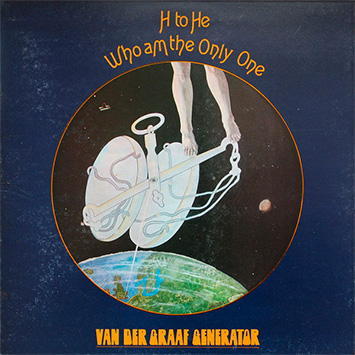
Van Der Graaf Generator’s third album H to He Who Am the Only One was released in December 1970, just 10 months after its predecessor The Least We Can Do Is Wave to Each Other.
H to He Who Am the Only One continues in the vein of its predecessor. The band’s line-up remained the same and even in the studio the same duo of producer John Anthony and engineer Robin Cable were still in the fold, this time backed up by assistant engineer David Hentschel who later went on to a relatively distinguished career as a producer himself (Genesis, Renaissance, Mike Oldfield, etc.).
Sound-wise, H to He has improved a lot compared to The Least We Can Do, but on the other hand, with a crisper and clearer sound, some of the strange mystique of the previous album is gone…
9. Genesis: Trespass

Genesis’ first album, From Genesis To Revelation (1969), was still teenage boys fumbling around with bland pop, but with Trespass the band took a giant leap forward.
After the flop of From Genesis To Revelation (the album originally sold around 600 copies), Genesis didn’t give up and started touring vigorously. The group worked hard to develop both their playing skills and their new style, which would have little to do with the light pop of their debut album. The band also recruited a new drummer, John Mayhew (1947-2009), and at this stage, without a record deal, the band eventually ended up on Tony Stratton Smith’s new Charisma label at the urging of producer John Anthony. In October 1970, under Anthony’s leadership, the band began recording Trespass at Trident Studios in London…
10. Soft Machine: Third
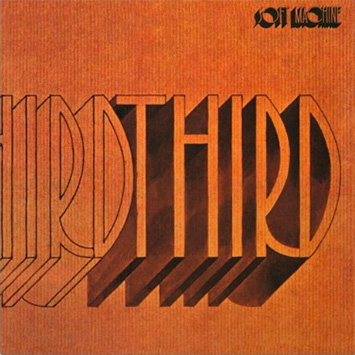
Third is the third studio album by Soft Machine, founded in 1966.
Soft Machine lived through a turbulent period during the Third era. Keyboardist Mike Ratledge (b.1943) and bassist Hugh Hopper (1945-2009), who had joined the band on the previous album, had strained relations with drummer/vocalist Robert Wyatt (b.1945). Problems arose in particular over musical differences. Ratledge and Hopper wanted to focus on complex instrumental music with a strong jazz leaning, while Wyatt would have preferred a simpler, more song-oriented approach. However, there were also personal problems between the trio which were at least partly due to Wyatt’s heavy drinking which made his behaviour sometimes intolerable. The band’s newest member, wind player Elton Dean (1945-2006), who had a strong experimental jazz background, also took the line of Ratledge and Hopper. Wyatt was left alone to fight for his own vision and felt increasingly overwhelmed…
Author: JANNE YLIRUUSI
Other parts of the Year by Year series can be found here

 Pienemmät Purot
Jätä kommentti