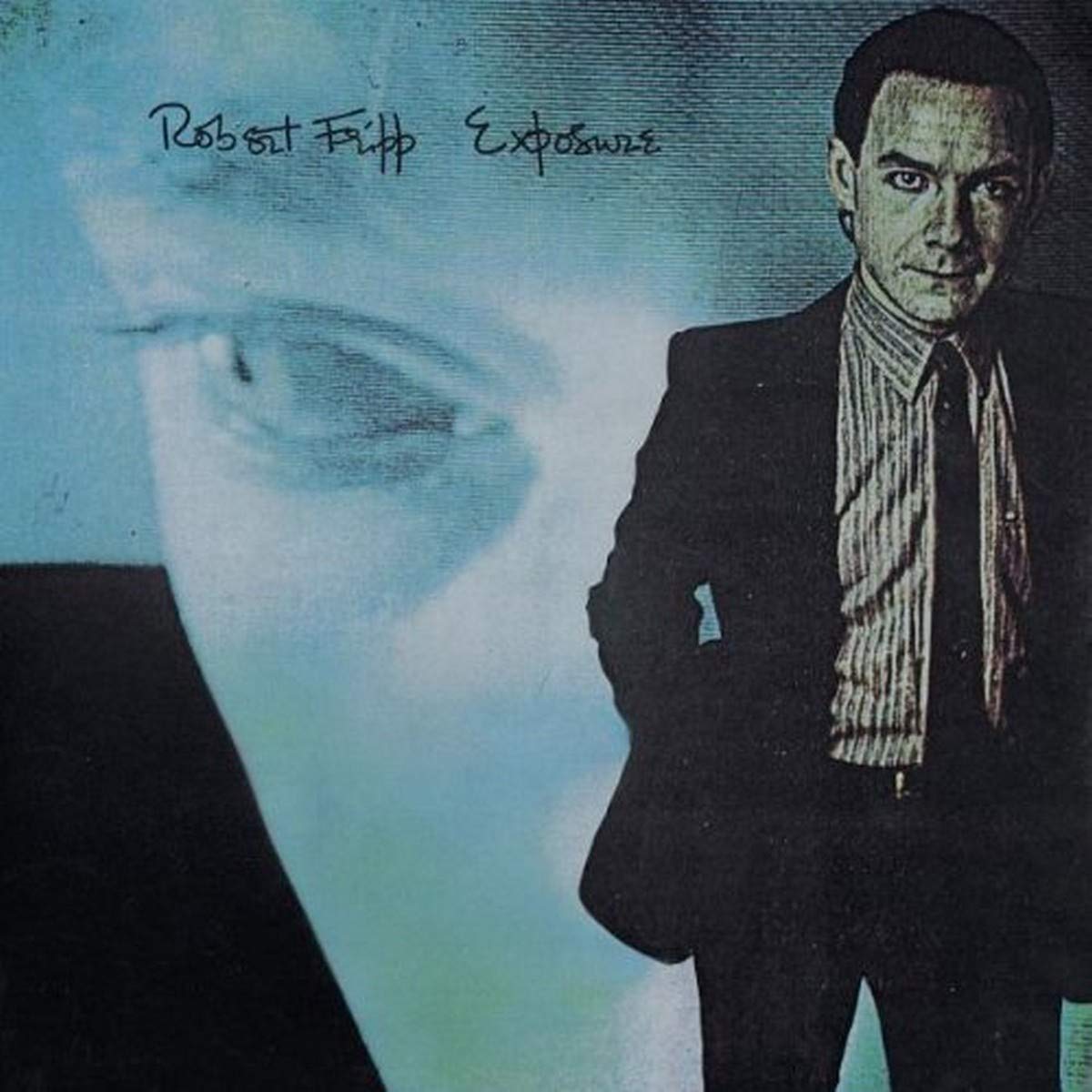
Exposure is guitarist/composer Robert Fripp’s first solo album.
Robert Fripp became one of the most important figures in the emerging progressive rock scene in 1969 with In The Court Of The Crimson King, the debut album of King Crimson, the band he founded. In The Court Of The Crimson King is probably the most influential single album in terms of the development of progressive rock. The album was also a commercial success and for a while it looked as if King Crimson might become one of the big rock bands of their era. However, the pressures of success were too much for some members of the band and the original line-up broke up shortly after the US tour that followed the album.
King Crimson was left in the hands of Robert Fripp, who directed it with a visionary approach, always looking for and trying new things. The popularity of the first line-up was not matched by the Crimson, but it took a firm place as one of the most respected and innovative bands of its genre, always featuring the best British musicians of its time.
The Drive to 1981 or 1981 is the year of the Fripp
However, Fripp unexpectedly broke up King Crimson in 1974 after the band’s seventh studio album. Fripp was fed up with the music business and feared that Crimson would also become the clumsy dinosaur band he felt many of his contemporaries had already become. Perhaps most significantly, however, Fripp experienced a mixture of enlightenment and nervous breakdown that led him to believe that the world would change radically by 1981. It has never been entirely clear to me what kind of upheaval Fripp was referring to, but apparently it was some kind of natural disaster combined with a complete breakdown of the economic system. Fripp retired from the music business to prepare for this new world. Fripp became interested in the teachings of the philosopher/mystic G. I. Gurdjieff, which he studied under the eccentric spiritual coach John G. Bennett in monastic surroundings.
In 1976, however, Fripp slowly began to make a return to music. He played session guitar on Peter Gabriel’s debut album, released in 1977, and also played on the promotional tour for that album. However, Fripp made his comeback to the stage in a very anonymous way: he played behind the curtain and, just to be on the safe side, under the jokey pseudonym ’Dusty Rhodes’. Fripp’s comeback continued when Brian Eno invited him to play on David Bowie’s album ”Heroes”. In 1978, his collaboration with Gabriel continued when he produced the former Genesis vocalist’s second studio album.
”Daryl’s pipes were a wonder. I have never worked with a more able singer.”
Robert Fripp
Between ”Heroes” and Gabriel’s second album, Fripp had also started working on material for his first solo album. The main collaborator was vocalist Daryl Hall, whom Fripp had met a few years earlier. Fripp and Hall came from very different musical worlds, but got on well and appreciated each other’s talents. The American Hall had achieved huge success as part of the duo Hall & Oates, who produced white soul pop slicked down for a middle-class audience. But Hall was frustrated with his role and wanted to make more artistic music. Hall recorded his first solo album Sacred Songs, produced by Fripp, in August 1977. The album did not hit the shelves until 1980, when Hall’s record company shelved what it considered to be a non-commercial art rock album. Also central to the decision was that the collaboration with Fripp was perceived as damaging Hall’s commercial potential in the long term.
The music business strikes back
Before the shelving of Sacred Songs, Fripp and Hall had also started working (originally sessions were started with John Wetton and Phil Collins, but Wetton’s playing didn’t end up on the album) on Fripp’s own album which was eventually to be called Exposure (the working title was The Last Great New York Heartthrob). The intention was that Hall would sing most of the songs on the album. Things didn’t turn out exactly as the duo had planned.
Exposure was recorded in New York. Fripp had moved to New York in the late 70s to the notorious Hell’s Kitchen neighborhood and drew inspiration from the city’s music scene. Born under new influences, Exposure is something quite different from the progressive rock of King Crimson that he had previously come to know. Exposure is a crazy and chaotic mix of new wave, rock and roll, prog, ambient and who knows what else. By all accounts, this mess shouldn’t work, but somehow the whole, which The Wire has called ”avant-punk Sgt. Pepper”, draws strength from the warring genres and is ultimately more than the sum of its parts.
For the album, Fripp assembled a hard-working group of musicians. The core group included bassist Tony Levin who plays all the bass guitar parts on the album and the drumming trio of Michael Narada Walden, Jerry Marotta and Phil Collins. Brian Eno plays synthesizers on a few tracks and Barry Andrews (XTC) plays organ.
One of the many interesting aspects of Exposure is that it is a very strong vocal album which is a bit surprising because in King Crimson Fripp had excelled especially as a composer of instrumental music and neither vocal melodies nor lyrics were of particular interest to him. Alongside Hall on vocals, Peter Hammill of Van der Graaf Generator fame and Terre Roche of the three siblings’ vocal group The Roches do a great job on the album.
Fripp was supported by a quality and enthusiastic group of musicians at Exposure, but the process was not without friction. Fripp found that the music business was more and more a business than ever before, and that artistic considerations were not the main concern of record company bosses when making decisions.
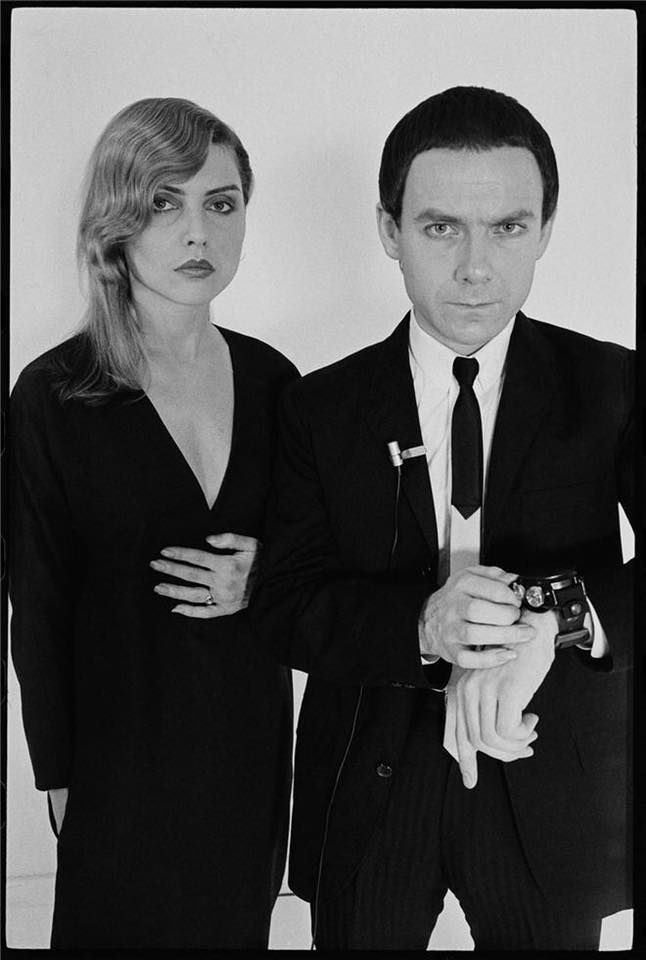
The first disappointment was the collapse of Fripp’s collaboration with new wave band Blondie vocalist Debbie Harry. Exposure was supposed to include a version of Donna Summer and Giorgio Moroder’s disco hit ”I Feel Love” sung by Debbie Harry. A remake of Jean-Luc Godard’s film Alphaville was also planned at the same time, with Fripp and Harry in the lead roles! In the end, ”I Feel Love” was not recorded due to opposition from Harry’s record company and the film never got beyond the script and a few test shots. Fripp did end up guesting on Blondie’s album Parallel Lines (1978).
The more critical problem, however, was with Daryl Hall. Hall’s influential manager Tommy Mottola was opposed to Fripp and his protégé working together because, as noted earlier, he felt that Fripp was souring Hall’s commercial potential with his bizarre avant-garde schemes. Contradictorily, Mottola, on the other hand, sometimes insisted that Exposure should be published equally under Fripp’s and Hall’s names. Reluctantly, Fripp eventually removed a significant part of Hall’s vocals from the album and replaced most of his interpretations with Hammill and Roche’s vocals.
The controversy delayed the release of Exposure and, together with the shelving of Sacred Songs for several years, torpedoed Fripp’s vision of a trilogy of albums (sometimes called the New York Trilogy or, somewhat paradoxically, the MOR (Middle-Of-The-Road) Trilogy). Indeed, Fripp saw Gabriel’s second album, Sacred Songs, and his own Exposure as a trilogy intended to ”explore the pop format”. What these albums undoubtedly have in common is that they all seem to stretch the boundaries of pop/rock songs in a very experimental way at times. Fripp’s Exposure, however, meanders into the avant-garde much more regularly than the other two albums. In any case, since the albums were released relatively far apart, Fripp felt that the trilogy concept had gone wrong (of course, in the perspective of 40 years, a period of about three years doesn’t seem like much anymore…).
I think it’s (pop song) an incredibly good way of putting forward ideas. I think it’s a supreme discipline to know that you have three to four minutes to get together all your lost emotions and find words of one syllable or less to put forward all your ideas. It’s a discipline of form that I don’t think is cheap or shoddy”
Rober Fripp
The good thing that came out of the label’s delays was that Fripp had more time to polish and review the album, and in the end Fripp prefers the version that ended up on store shelves to the original that was blocked by the label.
Several alternative versions of Exposure have since been released. The first new version was the Second Edition, remixed in 1983 and released in 1985. The more interesting alternative version, however, is the Third Edition, released in 2006. The Third Edition is a new version of the 1983 remixed version (i.e. Second Edition) originally released in 1985. In Third Edition, Hall’s vocals have been restored on three songs (”Chicago”, ”New York New York New York” and ”Mary”). This review deals mainly with the first version of the album to reach the shops, which Fripp now calls the First Edition. However, the track-by-track presentation also includes some comments on the Third Edition. First Edition and Third Edition can both be found on a double CD released by DGM in 2006.
Read also: Review: Peter Gabriel – Passion (1989)
Exposure track by track
Preface
The album begins with ”Preface” where Brian Eno’s voice states ”Uh… Can I play you… um… some of the new things I’ve been doing, which I think could be commercial?”. ”Preface”, however, is anything but commercial. It’s a strange sound collage that is a very uncommercial introduction to the album and feels like some sort of mischievous joke by Fripp. The most musical moment in the minute-long whole is the strange vocal harmonies that bring to mind the vocal intro to Emerson Lake & Palmer’s ”Tarkus” on the one hand and Mike Oldfield’s Incantations intro on the other.
You Burn Me Up I’m a Cigarette
From the avant-garde of Preface we move to a completely different atmosphere when Fripp suddenly turns on a rock’n’roll twist that takes us somewhere in the direction of GREAT BALLS OF FIRE…
”You Burn Me Up I’m a Cigarette” is also unique in that it’s probably the only lyric Fripp ever wrote. Strange in itself, since Fripp, who loves literature, is a hard-working and skilled writer (he has written a huge number of public diary entries, witty remarks for record covers and even articles for guitar magazines in his day). Fripp’s lyrics to ”You Burn Me Up I’m a Cigarette” are an interesting combination of deliberate rock clichés and sophisticated literary idioms. The lyrics to the other Exposure songs (with the exception of Peter Gabriel’s ”Here Comes The Flood”) were written by Fripp’s girlfriend at the time, Joanna Walton, who apparently also has the honour of the term ”Frippertronics”.
(Frippertronics is a guitar technique based on Fripp’s delay effect and real-time tape looping, which he uses to create layered sound layers that continue into eternity and wrap around themselves)
Breathless
The instrumental ”Breathless” takes the album in the direction of King Crimson and is a kind of remake of ”Red”. Played mainly by Fripp, Tony Levin and drummer Narada Michael Walden of Mahavisnu Orchestra fame, the song is a really powerful and confident performance. The trio’s playing is stunning to listen to. The song is based on irregular time signatures (the main theme in 7/8 and the middle sections where things get more complicated) and repetitive, insistently nagging riffs, the coarsest of which is very reminiscent of the main riff of ”Red”. However, ”Breathless” is a more versatile song than ”Red” and Fripp’s stunning use of guitar synth adds a new almost sci-fi flair to the proceedings and in this sense also anticipates 80’s King Crimson. ”Red” is a great song, but ”Breathless” is even better!
Read also: Review: King Crimson – Larks’ Tongues in Aspic (1973)
Disengage
Hammillin spits out broken glass and barbed wire in ”Disengage”. In Hammill’s long series of extreme vocal performances, the manic fury of ”Disengage” is one of the most extreme. An absolutely outrageous performance by Hammill! And I have to say that although the alternative version sung by Hall is fine, Hammill takes it to the next level.
It’s a pity that the song ends with a really jarring fade-out.
Fripp has told a funny story about how Hammill arrived at the studio fresh from London, smartly dressed and changed into a shitty pyjama suit and with a bottle of brandy waddled into the recording booth and fired away! Method vocalist! Hammill, by the way, would record his vocal part in one take without even having heard the song beforehand. Just hand over the lyrics on a piece of paper and go. Pretty wild!
North Star
The mood lightens with ”North Star” which sounds a bit like the King Crimson ballad ”Matte Kudasai”. The lightly accompanied song features Darryl Hall in the lead role for the first time on the album. Hall’s thrillingly writhing and swaying vocal performance is in its own way as impressive as Hammill’s fury on the previous track. The drums are played by Phil Collins, who has said that the song is one of his favourite pieces of music he has ever played.
Chicago
Chicago is a dramatic song that brings Hammill back into the spotlight. Hammill’s more deliberate and theatrical vocal style this time, where he moves from an exceptionally charmingly sung soul-inspired baritone section to high notes and jagged growls with virtuosic suppleness. Fripp’s ubiquitous buzzing guitars create a strange atmosphere in the background. But again the song is faded out in an annoying way! What a pity, because the song, which lasts only two minutes, would have been a pleasure to listen to for much longer. The version sung by Hall and heard on Third Edition is also great. Hall is, of course, more at home with soul than Hammill, but that’s partly why Hammill’s performance is so interesting because he’s in such unfamiliar territory.
NY3
”NY3” raises the tempo to breakneck speed and is, along with ”Disengage”, the most aggressive track on the album. Built on top of a secretly recorded neighbour dispute by Fripp, it’s also one of the strangest tracks on the album. Raging forward at a manic 17/8 time signature (kudos to Village Voice editor John Pareles for the math), the song effectively uses the secretly recorded riot of a father, mother and daughter arguing behind a wall. The father’s cry of ”Your house” serves as a kind of chorus to which the daughter always responds ”My House”. The effect is very strange, downright demonic, and the whole song could be described as an audio version of David Lynch’s films in which everyday life becomes a surreal nightmare.
Your house
My house
Your house
My house
Your house
My house
Your house
My house
Well get out, there’s the door
Well get out, there’s the door
Well get out, there’s the door
Well get out, there’s the door
It is not your house
It is not your house
It is not your house
It is not your house
It is not your house
And you’re a cocaine sniffer
And you’re a cocaine sniffer
And you’re a cocaine sniffer
And you’re a cocaine sniffer
Don’t call me a slut
The Third Edition features the original version of the song, ”New York New York New York”, where instead of the quirky family lyrics, we hear Hall’s exceptionally edgy lyrics (which are in no way related to the dialogue of the family lyrics). Hall’s Sacred Songs album features a slightly rockier and more straightforward version of the song, entitled ”NYCNY”.
Mary
The delicate ”Mary” closes the A-side of the album. Terre Roche sings beautifully and passionately while Fripp strums his electric guitar with a clean sound. Frippertronics also ring and buzz in the background.
Exposure
B-side opener ”Exposure” kicks off with flickering Frippetronics in the voice of J.G. Bennett who recites the words ”It is impossible to achieve the aim without suffering. It is impossible to achieve the aim without suffering”. The drums begin to pound out simple beat and the male voice spells out letter by letter the word combination E-X-P-O-S-U-R-E. Terre Roche returns as vocalist, this time sounding quite different from the gentle ”Mary” as she repeatedly sings ”EXPOSURE” with more and more intensity until her outburst is more like a full-on scream. Something you might imagine hearing in a primal therapy session. Roche’s vocal performance is nothing short of blood-curdling! ”Exposure” is a chilling and truly haunting track.
”Exposure” was given a less jarring interpretation on Peter Gabriel’s second album, but for my taste, this is definitely the definitive version of the song.
Hååden Two
Bennett’s voice returns: ”If you know you have an unpleasant nature and dislike people, this is no obstacle to work”. The song is based on various speech fragments, some of which are played backwards, and Fripp’s oppressive and haunting staccato strumming electric guitar chord sequence, which Eno’s voice describes very aptly in a way with the phrase ”An incredibly dismal, pathetic chord sequence”.
Urban Landscape
A dark-toned, two-minute quiet Frippertronics instrumental that leads directly into the next track. ”Urban Landscape” serves as a breather and adds some dynamics to the album.
I May Not Have Had Enough of Me but I’ve Had Enough of You
An intense and chaotic song sung as a duet by Hammill and Roche that sounds more or less like the band members playing different songs. But in a good way! At the end you can hear some wild, chainsaw-like guitar playing from Fripp.
First Inaugural Address to the I.A.C.E. Sherborne House
A seven-second interlude that apparently compresses J.G. Bennett’s 40-minute lecture into a few seconds by some technical trick. In practice, the song sounds like a tape noise!
Water Music I
A strangely moving-sounding Frippertronics song over which Bennett prophesies about the upheavals of nature. Bennett’s apocalyptic sermon leads directly into Peter Gabriel’s aptly titled ”Here Comes The Flood”.
Here Comes the Flood
Exposure’s version of ”Here Comes The Flood” is a delicate but emphatic interpretation of a classic from Gabriel’s debut album, stripping the composition of the original version’s pathos. Gabriel sings the song beautifully accompanied only by his own piano playing and Fripp’s subtle, and at times downright magical-sounding, Frippertronics guitar playing. In my opinion, this version is completely superior to the original Bob Ezrin’s overproduced version.
Water Music II
A Frippertronics instrumental that seems to describe the endless back and forth motion of waves.
Postscript
A counterpart to the album opener ”Preface”, the song consists only of sound effects and speech. Brian Eno is back on the scene and he says cheerfully: ”So the whole story is completely untrue, a big hoax, ha hah haa”.
As Eno’s comment at the end of the album suggests, listening to the wild and mischievous Exposure, one does wonder at times if this is just Fripp’s big joke. A strange middle finger not only to the music industry but also to his serious prog fans. Maybe, but in that case the joke is really good! Personally, I enjoy Exposure from start to finish. Exposure is an absurdly rich and detailed album and my descriptions above barely scratch the surface. Exposure’s lack of direction and occasional hiccups (those fade-outs…) somehow perversely translate into the album’s strength. Exposure is a completely unique album and it’s kind of a shame that Fripp never made another album that was anything like Exposure. On the other hand, maybe it’s better this way. For now, Exposure will forever remain a unique and crazy gem in the crown of the crimson guitar king’s solo career.
Best tracks ”Breathless”, ”Disengage”, ”North Star”, ”Chicago”, ”NY3”, ”Mary”, ”Exposure”, ”Here Comes The Blood”
Author: JANNE YLIRUUSI
Side A
- ”Preface” 1:16
- ”You Burn Me Up I’m a Cigarette” 2:24
- ”Breathless” Fripp 4:43
- ”Disengage” Peter Hammill, Joanna Walton, Fripp 2:46
- ”North Star” Daryl Hall, Joanna Walton, Fripp 3:06
- ”Chicago” Hall, Walton, Fripp 2:12
- ”NY3” Fripp 2:16
- ”Mary” Hall, Walton, Fripp 2:06
Side B
- ”Exposure” Peter Gabriel, Fripp 4:25
- ”Hååden Two” Fripp 2:53
- ”Urban Landscape” Fripp 2:35
- ”I May Not Have Had Enough of Me but I’ve Had Enough of You” Walton, Fripp 3:50
- ”First Inaugural Address to the I.A.C.E. Sherborne House” J. G. Bennett 0:07
- ”Water Music I” Fripp, Bennett 1:27
- ”Here Comes the Flood” Gabriel 4:01
- ”Water Music II” Fripp 4:16
- ”Postscript” Fripp 0:40
Musicians:
Robert Fripp: guitars, Frippertronics; vocals (”Exposure”) Daryl Hall: vocals on (”You Burn Me Up”, ”North Star”) Terre Roche: vocals (”Mary”, ”Exposure”, ”I’ve Had Enough of You”) Peter Hammill: vocals (”Disengage”, ”Chicago”, ”I’ve Had Enough of You”) Peter Gabriel: vocals and piano (”Here Comes the Flood”) vocals (”Preface”) Brian Eno: synthesizer (”North Star”, ”Here Comes the Flood”) vocals (”Preface”, ”Hååden Two”, ”Postscript”) Barry Andrews: organ (”Disengage”, ”NY3”, ”I’ve Had Enough of You”) Sid McGinnis: rhythm guitar (”Exposure”) pedal steel guitar (”North Star”) Tony Levin: bass guitar Jerry Marotta: drums (”You Burn Me Up”, ”Chicago”, ”Exposure”, ”Hååden Two”) Narada Michael Walden: drums on ”Breathless”, ”NY3”, ”I’ve Had Enough of You” Phil Collins: drums on (”Disengage”, ”North Star”)
 Pienemmät Purot
Jätä kommentti