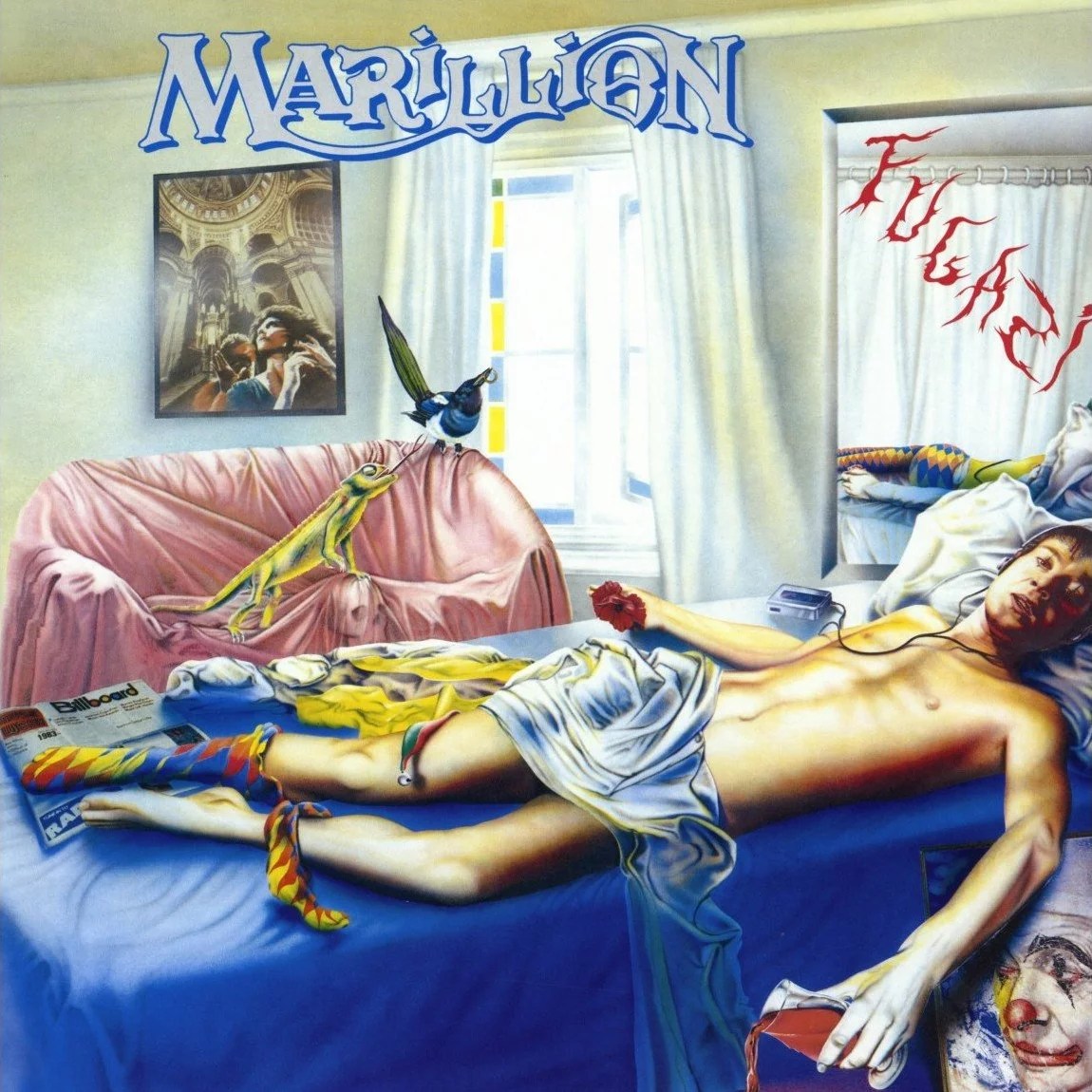
Fugazi is Marillion’s second studio album.
Formed in 1979, Marillion released their first studio album A Script For A Jester’s Tear in 1983. Against all expectations (prog had become a curse word at the beginning of the decade), the band’s debut album went to the top ten of the UK album charts, making Marillion the brightest star of the so-called neo-prog scene of the early 80s.
In a slightly simplistic way, neo-prog can be defined as a simplified version of the symphonic prog of the 70’s combined to varying degrees with the musical trends of the early 80’s (especially the new wave of British heavy metal and synth-pop on the other hand). While the original progressive rock was a very eclectic genre, with musicians drawing influences from jazz, art music, blues and numerous other genres, the main influence of neo-prog was progressive rock. Also, the more avant-garde experimentalism of the original prog was pruned away and its more complex intricacies were ironed out.
All this led to a much more homogeneous and narrow style than before. The styles of 70s prog bands may have been as different as night and day, but the biggest neo-prog bands like Marillion, Pendragon and IQ sounded very much like each other. Neo-prog’s main influences often seemed to come from a very limited group of progressive bands. The overall musical style owed much to Genesis, and guitarists drew inspiration from melodic and blues-based players, particularly David Gilmour and Andrew Latimer. By far the most important role model for the vocalists was Peter Gabriel, from whom they drew not only timbre and style but also his theatrical stylings.
In the wake of Marillion, a few neo-prog bands such as IQ and Pallas briefly made it to the big record labels, but their success was ultimately modest and many of these bands broke up in the 80s. The biggest names, however, returned in the 90s, releasing later albums independently and often doing their best work, often decades after their inception.
The term neo-prog has also often been used derisively, as if to describe watered-down progressive rock. Indeed, many neo-prog bands have taken a very negative view of the label, which is more than a little ironic, since in the same way the original prog bands were generally wary of the term prog while the neo-proggers would have gladly embraced it. Especially after the 80’s when the term was no longer considered a dirty word and a guarantee of total commercial failure.
It’s worth remembering that neo-prog as a genre term refers specifically to the style created by certain British bands and not all prog bands formed after the 70s should be called neo-prog. On the other hand, a band founded in 2022 may well deserve that name if they are stylistically similar to those early 80s British heroes. Of course, this also means that neo-prog will inevitably remain a kind of ”museum genre” that cannot change or evolve much because then it would no longer be neo-prog.
Marillion’s own music gradually lost its neo-prog influences over the years and during the era of vocalist Steve Hogarth, who later replaced Fish, the band became more of an art rock band with strong progressive rock influences here and there.
Read also: Review: Marillion – An Hour Before It’s Dark (2022)
But let’s go back to late 1983 when Marillion set out to build a follow-up to A Script For A Jester’s Tear under pressure. Suddenly, the label’s expectations were sky-high and, whereas the material for the debut had been slowly assembled over several years, the composition of new songs for the album, called Fugazi*, had to start from scratch. Problems also arose over who would eventually sit on the drum kit for the recording of the album.
*The word ”Fugazi” is basically a phrase used by American soldiers in the Vietnam War that roughly meant ”everything is fucked up”
The band’s original drummer and founding member Mick Pointer had been fired from the band because he simply wasn’t a very good drummer. After Pointer, the band was joined by the unknown John Marten and Andy Ward of Camel fame. Marillion were initially thrilled to have a former member of a band they admired join the group, but although Ward’s playing skills were still intact, the veteran’s rather serious substance abuse problems and his fragile mental health meant that the collaboration didn’t work out. Next to be tried was a young American rising drum star, Jonathan Mover. Mover was a technically skilled drummer, but he and Marillion vocalist Fish did not get along. Or rather, Fish didn’t get on with Mover. Mover was quickly dismissed after playing only a few gigs with the band. Eventually, Ian Mosley, who had played in Darryl Way’s Wolf and Steve Hackett’s band, was brought in and, being older than the other Marillion members, had a steady personality and more than adequate playing skills. Mosley still plays in Marillion to this day.
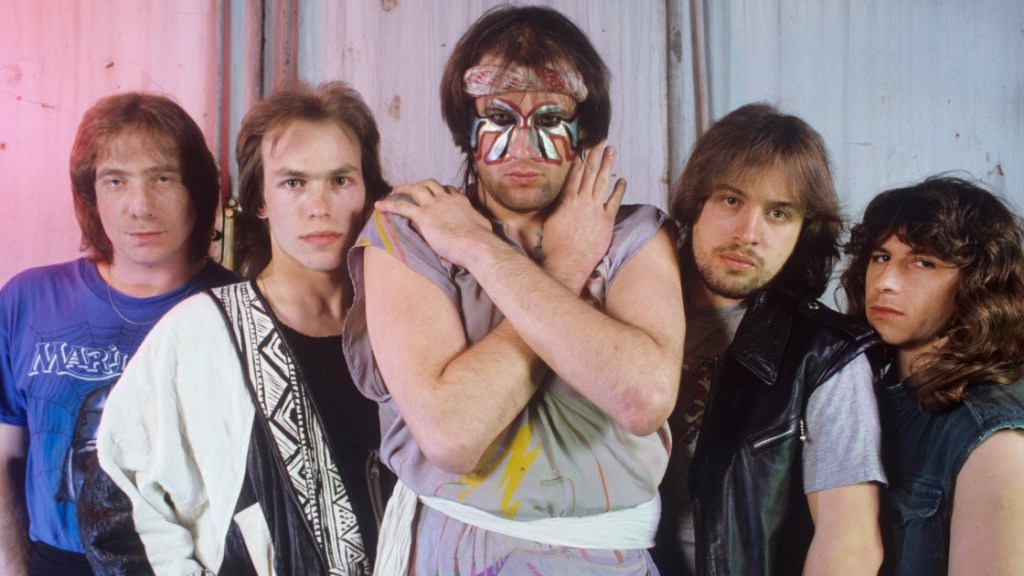
With Fugazi, Marillion manages to improve a bit in about every area compared to their debut, which was quite entertaining in itself. The music doesn’t owe quite so much to the old prog idols and the band plays together much more tightly than before. Instrumentation-wise, Mark Kelly’s keyboards in particular are better integrated into the music and he often plays tasty textural sections alongside the occasional flashy fast runs. On ”She Chameleon” his gloomy, ghostly organ work is stunning in the early part of the song. The synthesizer section of the same song, though, is a rather obvious Tony Banks pastiche. The rhythm section also performs better than before, especially thanks to Mosley’s contribution, of course. Still, the change is not yet revolutionary, perhaps because Mosley only jumped on board the Marillion train in the very last moments of Fugazi. There is still some rigidity in the rhythm section’s work and the opening track ’Assassing’, for example, would have benefited from a more lithe and daring rhythm. On the other hand, the band’s underrated bassist Pete Trewavas already shines on Fugazi in moments. Especially on the snappy ”Punch And Judy” his playing is quite tasty to listen to.
Stylistically, Marillion lean a little more towards hard rock or even heavy rock on their second album than on their debut, but the difference is not radical. The overall impression of the music is still ”what if Genesis had started in the early 80s?”. This doesn’t bother me too much, though, as the material is of a consistently high quality and sufficiently original, even if clear highlights like ”Forgotten Sons” are missing this time around. The best song on the album is, in my opinion, the 8-minute title track, composed in the studio at the last minute. I particularly like the slow section in the middle of the album, where Kelly’s synthesizers buzz menacingly, Mosley’s drums sound almost tribal and Fish recites his complex lyrics in a high, almost falsetto voice.
Waiting, the season of the button, the penultimate migration
Radioactive perfumes, for the fashionably, for the terminally insane, insane
In Marillion’s early years, it was vocalist Fish who was the band’s trump card, and on Fugazi he shines even brighter than on their debut album. Fish’s lyrics are at their most intricate on Fugazi and are quite entertaining to listen to in all their unconventionality. Not least because Fish spits out the lyrics with such ferocity and abandon. Fish’s melodramatic and downright labyrinthine lyrics, brimming with sophisticated words, still owe more than a little to his greatest idol Peter Hammill, but on the other hand they already have more of Fish’s own street-boy energy and brash sexuality that is very hard to imagine in the lyrics of the more sophisticated Hammill.
They know what they want, they sing your name
And glide between the sheets
I never say no, in chemical glow we’ll let our bodies meet
So was it just a fuck, was it just a fuck, just another fuck I said
Loving just for laughs, carnal autograph, lying on a lizard’s bed
Lue myös
- Review: Cos – Viva Boma (1976)
- Levyarvio: King Crimson – The ConstruKction Of Light (2000)
- Review: Camel – Moonmadness (1976)
- Review: Gong – Gazeuse! (1976)
- Review: Mike Johnson – The Gardens Of Loss (2026)
- Levyarvio: Mike Johnson – The Gardens Of Loss (2026)
I said earlier that Fugazi is slightly better than its predecessor in all areas. With one exception. The original Fugazi sounded a bit plastic and cold and didn’t sound as good as A Script For A Jester’s Tear. Fortunately, the Avril Mackintosh remix of 2021 improves Fugazi’s sounds in a big way, bringing plenty of extra oomph and warmth to the sound. Especially the bass guitar and Steve Rothery’s electric guitars sound much better with the remix.
When it was released, Fugazi did not live up to the commercial expectations that the debut had created for the label. Although the album reached number five in the UK album charts, it sold less well than A Script For A Jester’s Tear in the long run, which was not a positive sign, especially as Fugazi had cost considerably more to record than its predecessor. Marillion’s position in EMI’s books no longer looked particularly strong. The next album would be a real showcase for the band. Fish would have wanted to make a concept album out of Fugazi already and with Misplaced Childhood he would get his way.
Best tracks: ”Punch And Judy”, ”Emerald Lies”, ”She Chameleon”, ”Fugazi”
Author: JANNE YLIRUUSI
Read also Review: Genesis – Selling England By The Pound (1973)
Tracks
- ”Assassing” 7:03
- ”Punch & Judy” 3:22
- ”Jigsaw” 6:51
- ”Emerald Lies” 5:12
- ”She Chameleon” 6:55
- ”Incubus” 8:32
- ”Fugazi” 8:03
Marillion
Fish: vocals Steve Rothery: guitars Mark Kelly: keyboards Pete Trewavas: bass guitar Ian Mosley: drums
Guests
Sergey Nazmov: drum machine, shrieks Linda Pyke: backing vocals (”Incubus”) Chris Karan: percussion
 Pienemmät Purot
Jätä kommentti