
Brain Salad Surgery is the fourth studio album by Emerson Lake & Palmer, formed in 1970.
After the Trilogy tour, ELP was feeling strong and the trio was flushed with money The band set up their own record label, Manticore (which released records by Italian prog bands) and bought an old cinema to convert into a rehearsal space. In the same place Yes also practised as a tenant for their Tales From Topographic Oceans sessions that same year.
I don’t know what Yes was like as a tenant otherwise, but I think the band caused trouble for their landlords by stealing their recording engineer Eddie Offord. With Offord, who had recorded previous ELP albums, busy, not only with Yes studio albums but also with the live sound he had taken control of, ELP had to find a new engineer. The choice fell on Geoff Young, who gave the band’s music a new sharpness (some have called it coldness) and a modernist glow. The title of producer was taken by Greg Lake, although Keith Emerson later questioned the legitimacy of this.
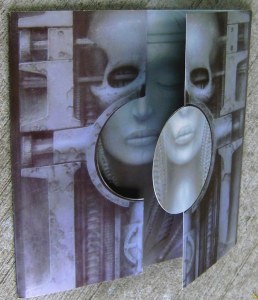
ELP spent three months recording their new album at Olympic and Advision studios, sparing no effort or money. The finished album was titled Brain Salad Surgery, a reference to oral sex, and wrapped in stunning cover art by Swiss surrealist H.R. Giger (creator of the Xenomorph monster from the Alien films) consisting of two paintings superimposed on each other. An ethereal female figure can be seen through the hole in the biomechanical skull figure on the outer cover, forming the second cover of the album. While the oral sex references were ok for ELP, the cock painted by Giger under the jaw of the aforementioned female figure was too much for the trio. The organ in question was painted hidden from the final work. According to some sources, however, the decision to censor was made by the record company. The album cover also featured a circular ELP logo drawn by Giger, which became a permanent part of the band’s iconography.

Jerusalem
Brain Salad Surgery starts off in style with the song ”Jerusalem”. ”Jerusalem” is a majestic anthem that Greg Lake was born to sing. The song is in a way distantly related to King Crimson’s ”Epitaph”, but where the mood of that song was despondent, in ”Jerusalem” Lake sings with a lofty and downright arrogant tone that brings an interesting almost fascist ”England über alles!” feel to the lyrics of William Blake (1757-1827). The song was originally composed by Sir Hubert Parry (1948-1919) and the lyrics are based on Blake’s poem which refers to the medieval myth of a young Jesus visiting ancient Britain.
ELP’s arrangement of Parry’s music is relatively conservative but effective. The band brings a lot of new rhythmic energy to it, e.g. with subtle variations in time signatures And of course, ELP’s instrumentation alone takes the composition in a whole new direction. The band’s new icy modernist sound also does the song justice and makes it really chilling. Emerson’s main instrument on the track is his trusty old Hammond, but Emerson also uses a polyphonic prototype synth on loan from Moog, which had been named Apollo. ”The handsome brass-bell-like fanfares of ’Jerusalem’ are played on that very same brand-new gadget. The Apollo, as I understand it, was never sold in the end and Emerson had to return the prototype to Moog after the Get Me A Ladder tour following Brain Salad Surgery.
Toccata
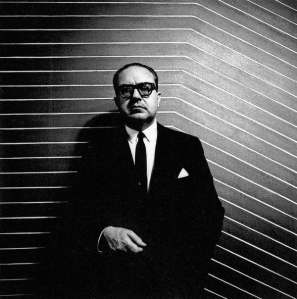
The album continues with an arrangement of art music, moving into more modern music with a passage from the ”Piano Concerto” by Argentinean Alberto Ginestera (1916-1983). The Toccata originated when Carl Palmer requested that a new drum solo he had developed be integrated into a composition. Emerson came up with the strongly rhythmic Ginastera composition as the perfect starting point to unleash Palmer’s virtuosity.
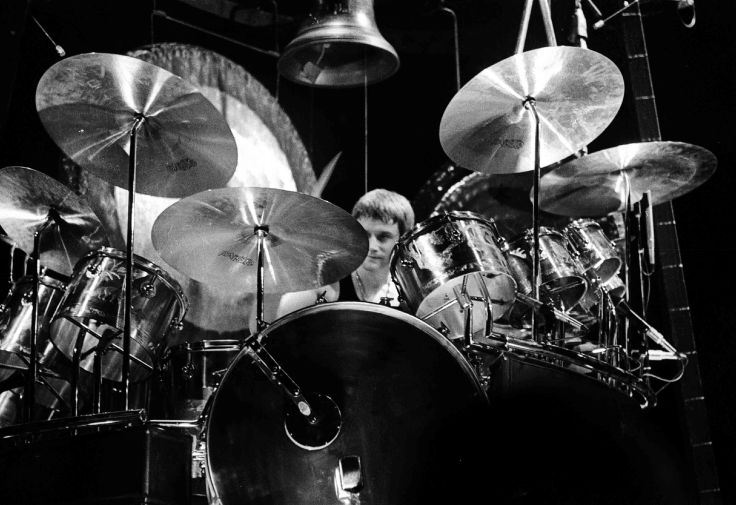
Emerson’s detailed and complex arrangement was a challenge for the ensemble. Recording the song was a painful process as Emerson had to teach the song beat by beat to Lake and Palmer, who could not read music properly (Palmer, however, could to some extent as he had recently begun studying percussion instruments at the conservatory). But the end result really paid off. ”Toccata” is by far ELP’s most stunning and creative arrangement of classical music, and a perfect example of how to ingeniously weave the ”drum solo” into the music without it becoming a detached display of rhythmic virtuosity. Carl Palmer had an apparatus on his drum set that he could use to trigger synthesizer sounds, and many of the synthesized sounds in Toccata that could easily be imagined as being produced by Emerson were actually played by Palmer on his prototype electric drum set.
When the song was finished, Emerson had to go hat in hand to the composer Ginastere himself to get permission to publish the song after the publisher had announced that the maestro would not allow any rearrangements of his music. However, upon hearing the song with an excited Emerson, Ginastera immediately exclaimed ”Diabolic!” exulting in the demonic power of the version. For Ginastera, Emerson had perfectly captured the idea of his wild composition. Ginastera even expressed his satisfaction in a small inscription that ended up on the album’s cover.
Still… You Turn Me On

From the fury of ”Toccata” we move to Greg Lake’s gentle balladic and semi-acoustic ”Still… You Turn Me On” which is about stardom and the illusions that come with it. It’s a beautiful and pleasant pop song in itself, but as a studio version it’s perhaps a little overproduced and Emerson’s synth stabs don’t quite work as part of the whole. The song works a little better as a more stripped down live version that was played on ELP’s next tour. ”Still… You Turn Me On” was not released as a single although it would seem a logical choice for that role. However, Emerson felt that the song (Palmer does not play on it) did not give the right overall impression of the album and ”Jerusalem” was chosen as the single.
Benny The Bouncer
After Lake’s ballad, the atmosphere gets rowdier again with ”ELP’s obligatory humour track”. ”Benny The Bouncer”, which only lasts a few minutes in this series, is fortunately on the better side. Emerson plays his beloved saloon piano at a brisk pace and the song moves with a bar atmosphere as the lyrics, sung with a furious cockney accent by Lake, deal with a bouncer who gets an axe to the head at the end of a particularly raucous evening. Palmer, playing with brushes, does a fine job on this track too. ”Benny The Bouncer” is a tasty interlude before moving on to the real main course of the album.
Karn Evil 9
The A-side of the album ends with ”Karn Evil 9: 1st Impression Part 1” which is the first of four parts of the epic ”Karn Evil 9”, lasting almost 30 minutes. The work is so long that it had to be annoyingly chopped up into two separate halves during the vinyl era. This meant that what was originally intended to be a three-part track was ripped into four parts, leaving ”1st Impression Part 1” as the last track on the A-side and ”1st Impression Part 2” to start the B-side. These two parts were joined together on vinyl by fading, but fortunately on the CD version they are firmly attached to each other.
Greg Lake wrote the colourful science fiction lyrics of the song with King Crimson’s Peter Sinfield, in which the remnants of a humanity that has experienced a world conflagration live in the exuberance of a new materialistic upsurge amidst an ever crazier entertainment (”We’ve got thrills and shocks, supersonic fighting cocks”) and has lost touch with humanity (”Soon the Gypsy Queen In a glaze of Vaseline Will perform on guillotine What a scene! What a scene”) and nature (”There behind a glass Stands a real blade of grass”). Ultimately, the development of the story ends with humanity having to fight for its existence against machines that have gained consciousness and consider themselves superior (”I Am perfect. Are You?”). I’m afraid the lyrics are much closer to the truth today than they were in 1973…
Musically, ”KE9” is even more amazing than lyrically. The monumental epic, meticulously composed on notes by Emerson and painstakingly taught to Lake and Palmer, is by far one of the band’s finest achievements. The first part, ”1st Impression Part 1”, introduces many of the song’s themes and serves up many great melodies and countermelodies. The song’s counterpoints have even been called Bach-like. In terms of sound, ELP returns to the band’s basics in the first half of the song, playing mainly a Hammond bass and drums trio without overdubbing Emerson, although sometimes colouring the sound with some nice Moog fanfares. ”1st Impression Part 2” starts with the famous verse ”Welcome back my friends to the show that never ends” and swells in the finale to a really intense and oppressive sound. And only in a good way. At just over 13 minutes, ”1st Impression” may well be the most impressive example of Emerson’s composing skills. The track progresses to its blistering finale with such jubilant irresistible force.
The beginning of ”2nd Impression” offers a moment of respite after all the intensity of the last song, when the sound becomes lighter for a moment as the band transforms into a jazz piano trio. Emerson wrote the music for ”2nd Impression” originally for his piano concerto and the music quickly becomes increasingly hectic and complex after the beginning. Indeed, the movement ends up being the fastest and most furious of ”KE9”. The band’s playing together is lightning fast and Emerson shines in the piano parts. Emerson also plays Moog with interesting steel drum sounds which creates a very distinctive Caribbean-meets-prog atmosphere.
The piano concerto background of the section is best seen in a beautifully lyrical piano solo lasting a couple of minutes that Emerson plays in the middle of ”2nd Impression”. The delicate pianism moves into an energetic jazzy section as the rest of the band returns. ”2nd Impression” is a more fragmented whole than the totally coherently evolving ”1st Impression”, but it’s still damn entertaining music. Thematically, ”2nd Impression” is apparently meant to reflect the passing of time and how machines are slowly and insidiously gaining power in society and turning against their masters.
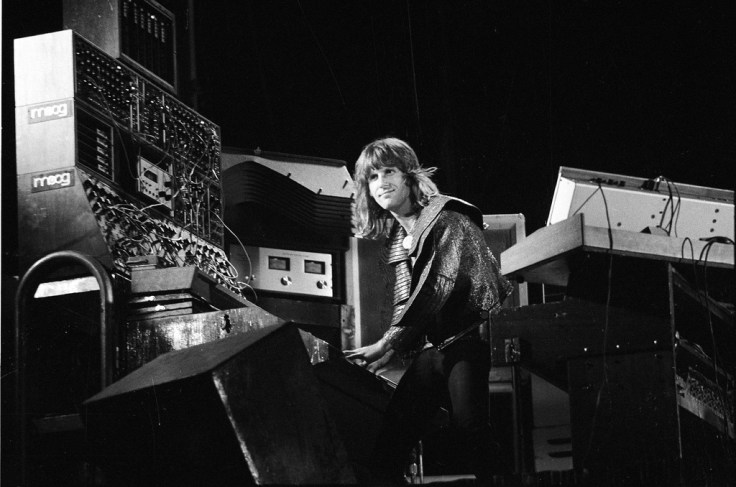
In ”3rd Impression”, the music becomes more epic and heroic, depicting humanity’s battle against intelligent machines in space (2001 A Space Odyssey influences!). Emerson plays many great Moog fanfares in the section. The section is also a celebration of a variety of creative synthesizer sounds. Emerson always had the best and most original sounds in British symphonic prog. And ”3rd Impression”, to me, does a fine job of proving that point. Emerson’s Hammond and Moog battle it out on the soundtrack, depicting a power struggle between man and machine. The organic Hammond of course represents people and the futuristic Moog represents machines. Hammond and Moog attack and counterattack each other relentlessly in turn after turn. The section is really fascinating because although it is instrumental music, this part of the narrative is still quite easy to follow. Eventually the battle subsides as Greg Lake sings in majestic triumph:
”Rejoice! Glory is ours!
Our young men have not died in vain
Their graves need no flowers
The tapes have recorded their names”
Mankind has won with great effort and without sparing any blood. The victory is so impressive that humans can even arrogantly claim to be the crown of creation again (especially since ”1st Impression” gave the impression that nature had been wiped out by the wars):
”I am all there is”
But the game is not clear because the machines have not fallen but are responding with electronic screech:
Negative! Primitive! Limited! I let you live!
The apparent defeat of the machines was just a sham and they are making a mockery of the people. People will appeal to the machines once more in their moment of despair
”But I gave you life”
But to no avail. The machines’ answer is coldly logical:
”What else could you do?”
I’m perfect! Are you?”
A simple programmed synth sequence is then heard, which speeds up and up, cyclically rotating around and around the stereo image. The dominance of the machines is absolute as they continue their march towards a technological singularity that is in every way beyond human comprehension.
A brilliant end to ELP’s most epic song.
Brain Salad Surgery was another huge success for ELP when it was released. The album went straight to number two in the UK album charts (the number one spot was taken by rival Yes’ Tales From Topographic Oceans…) and number 11 in America, after which it stayed on the US charts for 47 weeks. The album became the band’s biggest success.
However, Brain Salad Surgery remained ELP’s last master-class studio album. After the album, the band did become one of the biggest concert acts in the world for a while, but after a long tour, the exhausted band went on hiatus in 1974, which eventually stretched until 1977. A three-year break is nothing today but in the 70s it was an eternity for a rock band.
ELP finally released the uneven Works Volume 1 and Works Volume 2 in 1977 and went on an ill-fated tour with a large symphony orchestra that cost the band a fortune. ELP still got together unenthusiastically in 1979 at the insistence of their record company to make the all-round terrible Love Beach album and then hung up their gloves.
The 80s saw a few ELP projects, but it was not until the 90s that the original trio regrouped. ELP made two more studio albums at the time, but those albums didn’t come close to reaching the level of the 70s classics.
The fumbles of ELP’s later stages have tarnished the band’s reputation, but that doesn’t change the fact that the band’s early 70s albums can be shamelessly placed side by side with any 70s prog classic. This is especially true of Brain Salad Surgery, the culmination of the band’s skills and the perfect ELP album.
Best tracks: ”Jerusalem”, ”Toccata”, ”Karn Evil 9”
Rating: *****
Author: JANNE YLIRUUSI
Kappaleet:
A-puoli
- Jerusalem – 2.44 ( Parry/Blake, arr. Emerson, Lake & Palmer)
- Toccata – 7.22 (Ginastera, arr. Keith Emerson)
- Still… You Turn Me On – 2.53 (Lake)
- Benny the Bouncer – 2.21 (Emerson/Lake/Sinfield)
- Karn Evil 9 – 29.54 (Emerson, lyrics Lake/Sinfield)
Muusikot:
Keith Emerson: organ, piano, harpsichord, accordion, synthesizers Greg Lake: vocals, bass guitar, guitars Carl Palmer: drums, percussion, synthesizers
Producer: Greg Lake
Label: Manticore/Atlantic
 Pienemmät Purot
Jätä kommentti