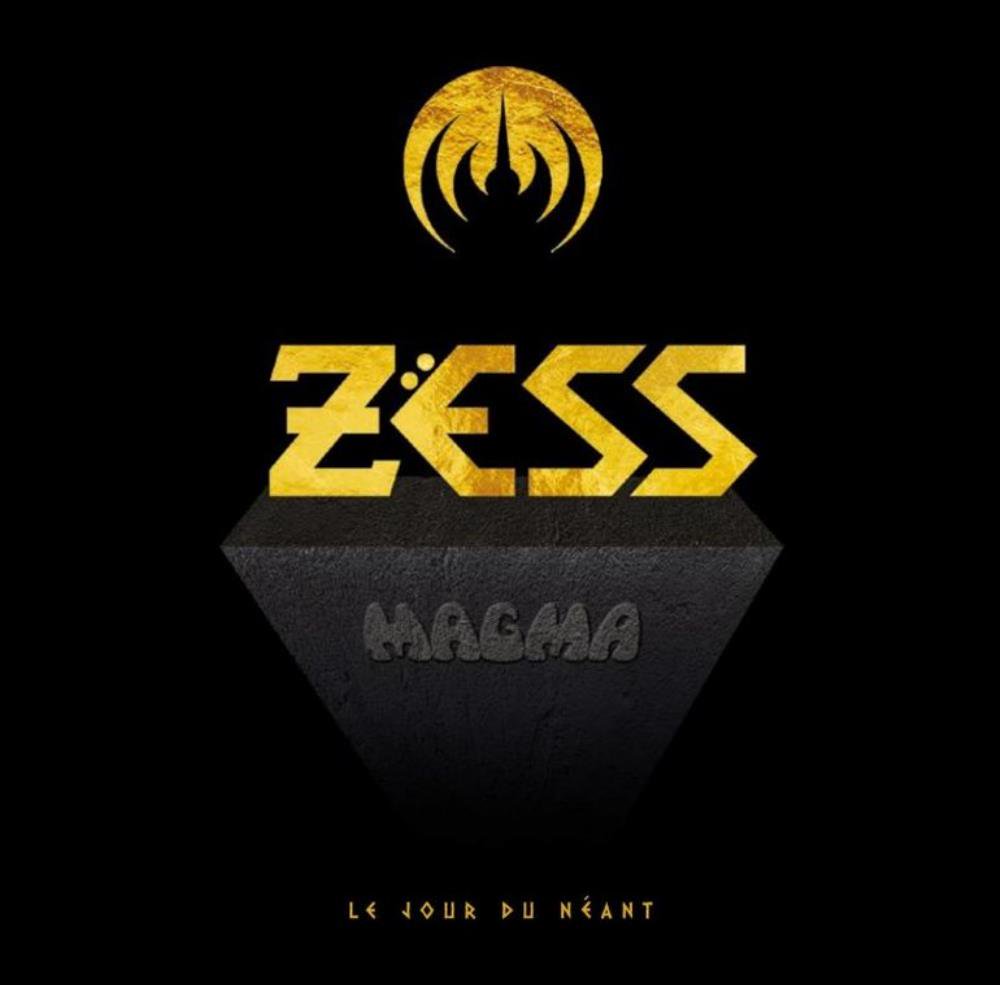
Zëss (also known as Zëss: Le Jour Du Néant) is the 14th studio album (depending on how you count it) by the French band Magma, founded in 1969.
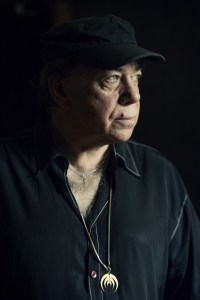
The roots of Zëss go back to the 70s. The composition originated in the sessions of the Attahk album in 1977. It made its live debut in a rough and shorter form in 1979. Since then, Zëss has appeared in Magma’s sets from time to time. The work gained a mythical reputation through interviews with Magma’s main man Christian Vander (b.1948) in which he sometimes declared that the final Zëss would be a spectacle lasting several hours, and sometimes specifically stressed that the appearance of this album would also mean the end of Magma. In the concept of the Zëss album, the world comes to an end and there is only emptiness. And in the void, not even Zeuhl music can be heard. Or can it? For the truth was no more wonderful than the fable this time. The studio version of Zëss is finally a reality. It lasts a compact 38 minutes instead of hours and Magma is still touring the world.
Champions in the arena
As Vander once proclaimed in interviews, Zëss is indeed about the end of the world. And not just the destruction of the human world, but some kind of cosmic resolution that will wipe out all that exists. The album begins and seems to take place more or less entirely in a galactic stadium floating in the darkness of space, where semi-godlike figures have gathered to await the end. These transcendental characters do not greet the end with fear but with joy. Today we die. And a good thing we shall. I wonder if Vander’s choice to treat the apocalypse from the perspective of the demigods is yet another indication of his tendency towards a kind of Nietzschean fascist superhumanism…
Slower, higher, stronger
Zëss is a slowly effervescent and hypnotic album. Although the CD version is indexed in seven different sections, there are virtually no breaks in the music. The composition is a seamless 38 minute whole that slowly builds and evolves towards a climactic end where the universes literally explode.
The album begins with a menacing cinematic atmosphere of buzzing strings and low-pitched horns, followed by the ghostly wordless sighs of female vocalists. Vander joins the chorus and sings a few verses with the women in dramatic Kobaian. The ethereal intro lasts for five minutes before the drums finally join in.
Since the beginning, Vander has only appeared as a singer on Zëss live versions and unfortunately the tradition continues with this studio version. Swedish virtuoso Morgan Ågren has been recruited to play drums. Unfortunately, he doesn’t have much to play as the insistently repetitive drum pattern composed by Vander is very simple. Ågren, for all his skills, can’t really get into the groove and it’s a shame that Vander didn’t play the drums himself this time as I think he could have done a bit better in that department. On the other hand, at times I wish the drums had been left out completely. In any case, Zëss is the closest thing to modern minimalist art music of all Magma’s albums, so maybe leaving out the drums would have been the last logical step. Now the drums feel a bit like a forced obligation along the lines of ”There MUST be drums on a Magma album!”.
Soon after the drums enter the music, Vander’s spoken monologue begins, which, very unusually for Magma, is in French. There is something truly captivating and hypnotic about Vander’s rant. Later in the album, at least, there is a change to the familiar and safe Kobaian language. Vander is supported by seven other singers (among them his trusted collaborators Stella Vander and Hervé Aknin), but he takes the lead role himself. Vander’s vocal performance on the album is strong, although he does not engage in any more intensive falsetto singing.
Philippe Bussonet’s bass guitar plays uncharacteristically muted in the background which is a bit of a shame. Magma’s music somehow has a kind of roaring bass that dominates the sound image. Otherwise it seems that the album is a bit reserved. It doesn’t go quite as far as it should.
The orchestra is used in a restrained and relatively low-key way, and that’s good, but a little more fireworks at times could have been in order. The orchestra doesn’t sound quite as sharp and incisive as one would hope and at certain points a larger orchestra would probably have been necessary.
Even though Zëss Magma is rather subdued for an album, the last 15-20 minutes of the album are really great to listen to, as the music grows and grows in intensity. Zëss is a cosmic mass of the soul without precedent. The end also contains a surprising twist in the form of the ”Jesus Christ sanctus sanctus” chant. Or at least I assume Ïëzüs krïstrüz is the same guy… Is Jesus of Nazareth promoted to the rank of Kobaian?
The end?
Is this then the definitive version of Zëss? Hard to say. As always, Magma’s music loses some of its intensity in the studio version compared to live, but this time the difference is even greater than usual. On the other hand, the strength of the studio Zëss is precisely its slowness and a certain fateful majesty. And in general, the fact that it sounds very unlike any other Magma album. That alone can be considered a triumph that a band almost 50 years old can make something so different and fresh in the last miles of their career. I think that many old Magma fans like myself were initially disappointed by Zëss because of its exceptionality, but at least after several listens I have come to appreciate its uniqueness. Magma is a singular band and Zëss is a particularly special piece of work among the band’s staggering catalogue.
Vander’s 38 minute seamless composition is a very impressive piece of work and although this album may not 100% live up to its potential. Zëss would have been a stunning end to the band’s career if it had remained Magma’s last word as Vander once threatened, but the band have since released their next studio album, Kãrtëhl. So the Magma story still goes on, despite the end of the world.
Rating: ****½
Author: JANNE YLIRUUSI
More reviews here
Tracks
- ”Wöhm Dëhm Zeuhl Stadium (Hymne au Néant)
- Da Zeuhl Wortz Dëhm Wrëhntt (Les Forces de l’Univers – Les Eléments)
- Dï Wööhr Spracer (La Voix Qui Parle)
- Streüm Ündëts Wëhëm (Pont de l’En-Delà)
- Zëss Mahntëhr Kantöhm (Le Maitre Chant)
- Zï Ïss Wöss Stëhëm (Vers l’Infiniment)
- Dümgëhl Blaö (Glas Ultime)
Musicians
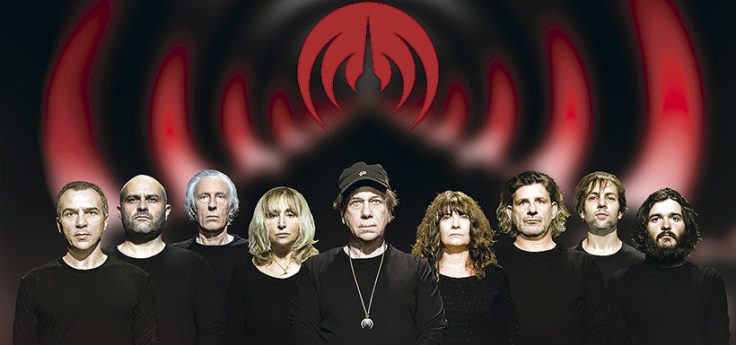
Christian Vander: compositions, lyrics, vocals Stella Vander: vocals Hervé Aknin: vocals Isabelle Feuillebois: vocals Julie Vander: vocals Laura Guarrato: vocals Marcus Linon: vocals Sandrine Destafanis: vocals Rudy Blas: guitar Philippe Bussonnet: bass Morgan Ågren: drums Simon Goubert: piano Sylvie Fisichella: vocals Remi Dumoulin: orchestration City of Prague Philharmonic Orchestra: orchestra Adam Klemens: conductor Lucie Svehlova: concertmaster
Label: Seventh Records
 Pienemmät Purot
Jätä kommentti