
The Dark Side Of The Moon is Pink Floyd’s eighth studio album.
Syd Barrett’s departure from the band in 1968 put Pink Floyd somewhat adrift for several years. The post-Barrett era is the band’s most experimental and left behind a lot of excellent music, but no fully coherent albums. With The Dark Side Of The Moon, bassist Roger Waters takes a tighter grip on the band than before, ushering in Pink Floyd’s strongest era artistically and commercially. However, the band is still a very equal group and guitarist David Gilmour and especially keyboardist Rick Wright (1944-2008) are able to make significant contributions to the compositions on the album.
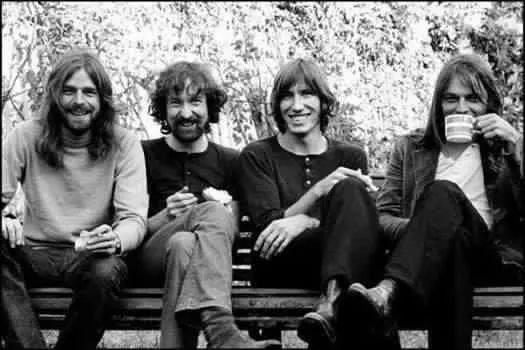
With The Dark Side Of The Moon, Pink Floyd moves into the stadium era. The songs are compact in length, extremely polished and the lyrics are much more direct than the psychedelic wanderings of their previous albums. The Dark Side Of The Moon is often brought up as an example of a concept album, but it’s actually rather difficult to define what the concept of the album actually is. Personally, I would see the album’s suite of ten tracks as being about the stress factors of human life. Roger Waters’ frank and sharply written lyrics deal with the relentless passage of time, greed, madness, human confrontation and war, among other things. Waters’ lyrics are at once precise yet universal. Almost fifty years after the album’s release, they still feel utterly relevant.
Musically, The Dark Side Of The Moon is also a precise work. The experimentalism typical of Floyd’s previous output has been largely shunned, or at least condensed to serve the narrative of the music and lyrics. The songs, relatively simple in themselves, are full of delicious little details, catchy melodies and riffs. Recorded by Alan Parsons with a wide variety of sound effects, the studio engineering is top notch. The album’s luxuriously rich soundscape literally envelops the listener.
What’s interesting about The Dark Side Of The Moon is how well it works as a whole, even though the songs differ quite a lot stylistically. The whole is seamless, yet almost every track offers some quite unique stylistic insights.
The album begins with a short ”Breathe” that acts as a kind of overture, mixing the sound effects heard later in the album. What follows is perhaps the most experimental part of the album. In ”On The Run” Pink Floyd experiment with electronic music and show that they can beat Tangerine Dream and Kraftwerk at their own game. The fast-paced ”On The Run” uses a manically propulsive EMS Synthi AKS synth sequenced rhythm track overlaid with effects such as crazy laughter and airplane rumbles.
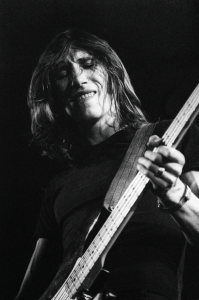
While the previous tracks are brilliant parts of the overall work of art that is The Dark Side Of The Moon, the fourth track ”Time” is the album’s first true masterpiece, also as a single track. ”Time” begins with an absolutely unholy cacophonous jumble of alarm clocks that is sure to wake up even the foggiest space cadets listening to the album. After the clocks we hear a great instrumental section where the rhythms take the lead. Waters creates a clever tick-tock effect with his bass, to which Nick Mason adds a drum solo with rototoms. Gilmour’s multi-layered epic guitar solo is at once melodically gliding and noisily slashing. Gilmour sings the chorus of the song beautifully and this is probably his best ’rock vocal’ ever. Wright handles the more laid-back parts of the song with style.
”The Great Gig In The Sky” is an ingenious song that came about somewhat fortuitously. Floyd had an instrumental composed by Rick Wright that didn’t quite work as such. At Alan Parsons’ suggestion, the band hired young singer Clare Torry to improvise on the instrumental track. Torry was told the song was about death and asked to sigh and howl orgasmically without words. The rest is history. Torry’s performance is truly stunning. At the same time virtuosic and emotional. In the 2000s, after a legal battle, Torry and Wright were given compositional credit for the song. Deservedly so, I would say.

”Money”, which effectively starts with a cash register rattling, is probably Dark Side’s most famous song. Bouncing and grooving in a tasty 7/4 time signature, the song rocks really nicely. The track features a stylish tenor saxophone solo by session musician Dick Parry that balances just the right amount of edgy tone with a slightly cheesy smoother sound. After Parry’s solo, the tempo changes to a steady beat and Gillmour plays a short but handsome blues-inspired guitar solo. ”Money” is a great rock song that for some reason the prog snobs have made a habit of despising. I don’t understand why. If rock was always this skilful and tastefully composed, this proge snob would listen to rock more!
”Us And Them”, composed by Wright, is the longest song on the album at 8 minutes and also one of its highlights. Lightly jazzy and quite laid-back to start, the song again makes use of Parry’s tenor saxophone. The song, which uses dynamics to great effect, grows tense in the chorus. ”Us And Them” is an atmospheric piece with just enough edge. Waters’ chilling lyrics speak in laconic style of the hierarchical world we live in. Others command. And others die carrying out those orders.
”Forward he cried from the rear
And the front rank died
And the general sat
And the lines on the map
Moved from side to side”
”Us And Them” moves into the psychedelic instrumental ”Any Colour You Like” which is perhaps most reminiscent of Floyd’s old output. This time the song lasts only three minutes, whereas before it could have lasted ten or twenty. Live, though, ”Any Colour You Like” could stretch up to 15 minutes when the four of them got really into jamming.

In ”Brain Damage”, Roger Waters finally gets to be the lead vocalist. The lyrics of this gentle song are about madness and this is the first time that Waters has used the fate of his ex-bandmate Syd Barrett in his lyrics.
From ”Brain Damage” we move seamlessly to the album’s closing track ”Eclipse” which sort of pulls together the themes of the whole album. Waters sings his list-like lyrics over an insistently repetitive melody and the album ends with the mystical verse ”and everything under the sun is in tune, but the sun is eclipsed by the moon.”
The Dark Side Of The Moon was an even bigger success than Mike Oldfield’s Tubular Bells, released the same year, and these albums together show how progressive music was for a brief moment in time, side by side in popularity with all other styles of popular music. The Dark Side Of The Moon propelled Pink Floyd to become one of the biggest bands in the world and it is estimated that the album has sold over 45 million copies over the decades, making it the third biggest selling record of all time.
The Dark Side Of The Moon is a timeless album that you never get tired of listening to, and it has unquestionably earned its classic status. The Dark Side Of The Moon is the perfect ambitious rock album that has inspired and continues to inspire countless bands from many different genres.
Best songs: ”Time”, ”Money”, ”Us And Them”, ”Brain Damage”
Rating: *****
Author: JANNE YLIRUUSI
Tracks:
A-puoli:
- Speak to Me – 1.00 (Nick Mason)
- Breathe – 2.43 (Waters, David Gilmour, Richard Wright)
- On the Run – 3.36 (Gilmour, Waters)
- Time / Breathe (Reprise) – 7.01 (Mason, Waters, Wright, Gilmour)
- The Great Gig in the Sky – 4.36 (Wright, Torry)
B-puoli:
- Money – 6.22 (Waters)
- Us and Them – 7.46 (Waters, Wright)
- Any Colour You Like – 3.25 (Gilmour, Mason, Wright)
- Brain Damage – 3.48 (Waters)
- Eclipse – 2.03 (Waters)
Muusikot:
David Gilmour: guitar, keyboards, vocals, VCS 3 synth Roger Waters: bass, electric guitar, keyboards, vocals, VCS 3 synth, tape effects Richard Wright: keyboards, vocals, VCS 3 synth Nick Mason: percussion, drums, tape effects
Lesley Duncan: backing vocals Doris Troy: backing vocals Dick Parry: saxophone Barry St. John: backing vocals Liza Strike: backing vocals Clare Torry: vocals (lead vocals on ”The Great Gig in the Sky”).
Producer: Pink Floyd
Label: Harvest
 Pienemmät Purot
Jätä kommentti