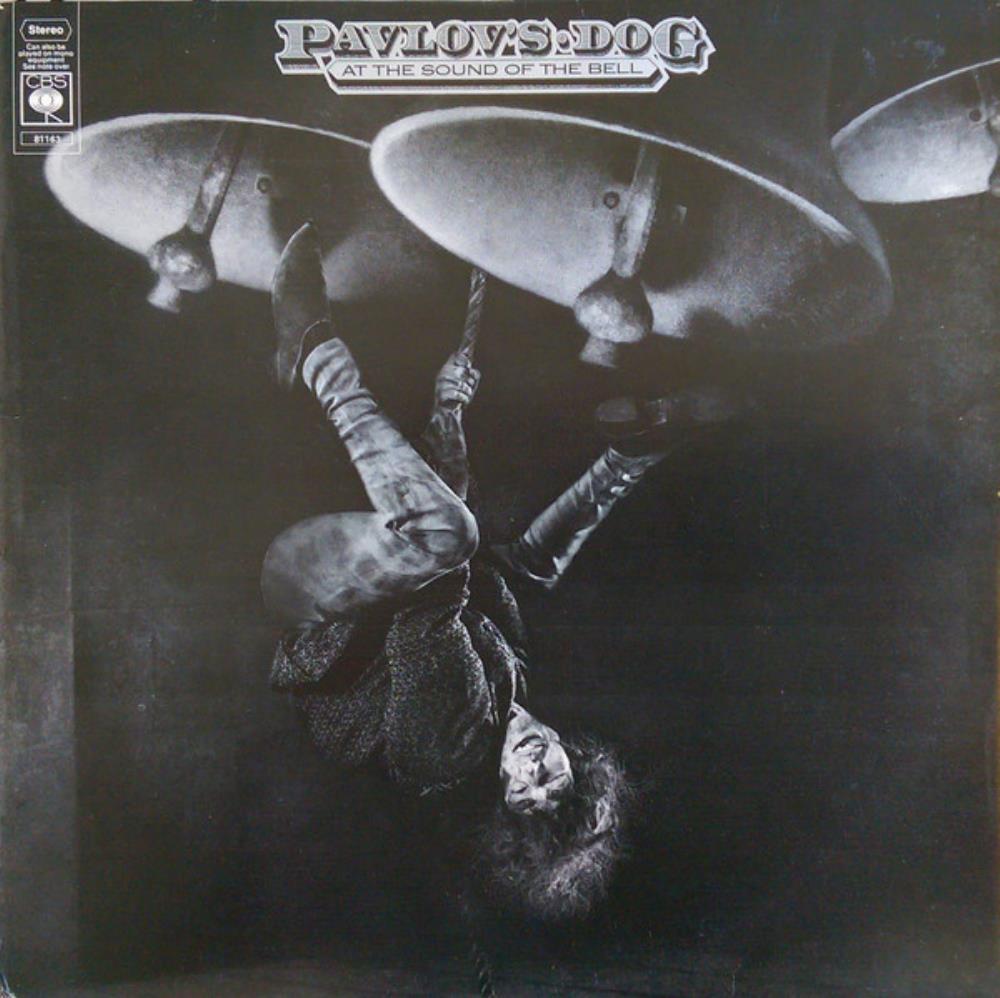
At The Sound Of The Bell is the second studio album by Pavlov’s Dog, an American band formed in Missouri in 1972.
Pavlov’s Dog released their debut album Pampered Menial last year, and At The Sound Of The Bell continues largely along the same lines, effectively combining pop and progressive rock. At The Sound Of The Bell takes the band’s music in a slightly lighter direction, however. The rock influences have been replaced by more pop-oriented and beautifully melodic atmospheres. At times, one could even speak of a kind of proto-AOR. The mood of the album is melancholic and mournful, and the lyrics seem to express a constant longing for the good old days.
At The Sound Of The Bell, the band’s lineup underwent changes when the violinist and drummer left, and the music was made even more by studio musicians led by vocalist/composer David Surkamp. The booklet lists nine guest musicians plus a string section and a small choir. Among the guest musicians are some big names, such as guitarist Elliot Randall, saxophonist Michael Brecker, Roxy Music horn player Andy MacKay, and most famously, Bill Bruford, who plays all the drums on the album. Apparently, the record company CBS had fairly high hopes for Pavlov’s Dog.
Yes and King Crimson virtuoso drummer Bruford’s discography does not include many albums like At The Sound Of The Bell, where he was clearly in the role of a session musician. At this point, however, Bruford did not have a permanent band after King Crimson broke up, so he tried his hand at all kinds of things. Including the role of studio musician.
Bruford is a somewhat strange choice for such pop-oriented material, but he certainly does a competent job. However, he doesn’t perform any particularly remarkable feats on the album. Bruford also sounds unusually unlike himself, so his presence is not a particular reason to buy the album.
At least Bruford’s playing is recognizable at times. An example of this is ”Valkeria,” the most progressive and intense track on the album, where Bruford gets to play a few of his trademark sharp fills. ”Valkeria,” which represents the most grandiose and symphonic side of the album, is also the highlight of the album. The song features choir singing and Andy MacKay’s melancholic saxophone solo. Progressive elements are also present in the album’s closing track, ”Did You See Him Cry?”, where Bruford is given free rein for a moment. ”Did You See Him Cry?” also features the wildest keyboard work on the album. There are nimble, fast piano runs, grandiose organ chords, and even a beautifully ringing harpsichord.
Read also:
- Year by Year : Best Albums of 1976 – 11-20
- Review: Wigwam – Lucky Golden Stripes And Starpose (1976)
- Review: Rain Tree Crow – s/t (1991)
- Review: John G. Perry – Sunset Wading (1976)
- Levyarvio: Black Sabbath – Master Of Reality (1971)
- Review: Henry Cow – Concerts (1976)
- Levyarvio: Spock’s Beard – V (2000)
- Review: Cos – Viva Boma (1976)
- Levyarvio: King Crimson – The ConstruKction Of Light (2000)
Pavlov’s Dog’s music also works on a smaller scale, as demonstrated by ”Gold Nuggets,” which is accompanied mainly by organ, acoustic guitar, and light drumming, with Surkamp’s mournful vocals working perfectly. The cleverly arranged song also features a mandolin and a short electric guitar solo towards the end.
David Surkamp’s helium-high, vibrato-heavy vocals once again make an impact throughout the album. Surkamp’s strange voice is certainly easy to hate, but I find it quite charming. Like an improved version of Rush’s Geddy Lee. Surkamp has developed as a singer and sings on this album with a much more controlled approach than on his debut.
At The Sound Of The Bell’s production is disappointing. The somewhat anemic and thin sounds take away from the power of the music.
The general consensus seems to be that Pampered Menial is better than Pavlov’s Dog’s first two albums, but I personally prefer At The Sound Of The Bell by a small margin. The compositions are considerably stronger and more professionally executed, although I do miss the slightly rockier and even proggier feel of the debut album at times.
At The Sound Of The Bell’s charming combination of pop and prog failed to win over the general public, which sealed the band’s fate. Albeit with a slight delay. Pavlov’s Dog recorded a third album in 1977, but the record company refused to release it, citing the poor sales of the first two albums. The band did not return until 1990, when they recorded the album Lost In America. Since then, Pavlov’s Dog has been active sporadically and released their latest album, Wonderlust, in 2025.
Best tracks: ”She Came Shining”, ”Mersey”, ”Valkerie”, ”Gold Nuggets”, ”Did You See Him Cry?”
Author: JANNE YLIRUUSI
Review: Rush – Grace Under Pressure (1984)
Tracks:
1. ”She Came Shining” 4:24
2. ”Standing Here With You (Megan’s Song)” 3:47
3. ”Mersey” 3:03
4. ”Valkerie” 5:22
5. ”Try To Hang On” 2:08
6. ”Gold Nuggets” 3:25
7. ”She Breaks Like A Morning Sky” 2:22
8. ”Early Morning On” 3:21
9. ”Did You See Him Cry” 5:36
Pavlov’s Dog:
David Surkamp: vocals, acoustic guitar, electric guitar Doug Rayburn: mellotron, bass, percussion Steve Scorfina: electric guitar David Hamilton: keyboards Rick Stockton: bass Thomas Nickeson: acoustic guitar
Vierailijat:
Bill Bruford: drums Mike Abene: organ Michael Brecker: saxophone George Gerich: organ Andy Mackay: saxophone Les Nicol: guitar Paul Prestopino: mandolin Elliott Randall: guitar Gavyn Wright: violin High Wycombe Boys’ Choir: vocals Mountain Fjord Orchestra: strings
Producer: Sandy Pearlman, Murray Krugman
Label: CBS
 Pienemmät Purot
Jätä kommentti